California’s iconic condors nearly vanished, with fewer than two dozen birds left in the wild. A captive breeding program became their lifeline, raising chicks with puppets to keep them wild.
The California condor is the largest flying land bird in North America, with a wingspan of about nine and a half feet and a weight of roughly 25 pounds. It can cover 150 miles in a day without flapping, riding warm air currents up to 15,000 feet. For tens of thousands of years, it scavenged across the continent. By 1987, however, the species was gone from the wild completely. The entire population consisted of 27 birds held in cages at two zoos in Southern California.
For the first time in at least 40,000 years, there were no condors in North American skies. Rebuilding the species from those 27 birds required a system that had never been attempted before. It was not a sanctuary or a traditional breeding program. It was a life-support machine spanning four states and two countries, designed to keep a single species alive indefinitely. Every wild condor on Earth is now captured twice a year to have lead filtered from its blood. The recovery effort is less a story of nature healing itself and more an ongoing engineering project with no planned end date.

The condor’s decline was not caused by habitat destruction in the usual sense. In the early 1980s, the mountains of Southern California were not stripped or cleared, and the rivers still ran. The landscape appeared healthy. The problem was invisible and came through the food supply. The condor’s diet consists of carcasses, and those carcasses often contained fragments of lead from hunting ammunition.
When a lead bullet hits an animal, it shatters into hundreds of microscopic pieces that scatter through the tissue, especially in the organs. Hunters often leave those organs behind after field dressing a kill, and wounded animals sometimes die in the backcountry. Condors, whose role in nature is to find and eat large dead animals, arrived at these remains.
The condor’s own biology made the situation worse. The bird evolved to eat rotting meat and developed one of the most powerful digestive systems in the bird world. Its stomach acid is strong enough to dissolve bone and neutralize pathogens like botulism and anthrax. That same acid dissolves lead fragments instantly, allowing the lead to be absorbed through the gut wall and into the bloodstream.
Lead poisoning causes systematic damage in condors. It mimics calcium at the cellular level, binds to the same receptors, and shuts down enzymes the body needs to carry oxygen. The bird becomes anemic, and its nervous system begins to fail. In the most distinctive effect, the muscles lining the crop, a pouch in the throat where the bird stores food, become paralyzed. Food sits in the throat and rots while the condor starves with a throat full of meat it cannot digest.
This death rate was unsustainable for a species that takes six to eight years to reach breeding age and lays one egg every one to two years. Between 1982 and 1986, the annual death rate among the remaining wild birds reached nearly 24 percent. With a population of only 22 birds, the species had only a few years left.
The standard conservation approach of the time was to protect habitat and leave the birds alone. Throughout the 1960s and 1970s, significant effort went into establishing sanctuaries in the Los Padres National Forest and other protected areas. Thousands of acres of legally protected wilderness were set aside. It did not work.
The diagnosis was wrong. The assumption was that the condor was declining because humans were getting too close and habitat was shrinking. But a condor can fly 150 miles in a day. It could roost on a protected cliff, fly out over private ranch land, eat a lead-contaminated carcass, and return to the sanctuary to die. The sanctuary protected the birds from everything except the actual cause of death. From roughly 50 birds in the 1970s, the population fell to 22 by 1982.
A field researcher named Noel Snyder concluded that the hands-off approach was not saving the condor but supervising its extinction. He proposed capturing every remaining bird and breeding them in captivity. The proposal met fierce opposition from mainstream conservation groups. Figures including David Brower of the Sierra Club argued that capturing the last condors would break something that could not be repaired, and that a condor in a cage was no longer a condor. Some argued it was better to let the species go extinct with dignity than to reduce it to a managed curiosity.
The capture program began in 1985. The last wild condor, a male given the studbook number AC-9, was taken from the sky on April 19, 1987. The species was now entirely in human hands.
Breeding condors in captivity presented several challenges. No one had done it at scale before. Condors are long-lived, potentially 60 or 70 years, and they bond as pairs over years, not weeks. Creating conditions that triggered natural breeding behavior in birds that had never experienced the wild required careful design.
Biologists developed a technique called double clutching. If a condor pair laid an egg, the egg was removed shortly after it was laid. The female would usually produce a replacement, sometimes two. This effectively doubled or tripled the breeding output of each pair. The removed eggs went into incubators, and hatched chicks needed to be raised without imprinting on humans.
Because condors learn by watching adults, chicks raised without parent birds would have no model for how to behave as condors. They would be capable of flying but would not know how to find food, interact with other condors, or navigate their social world. Handlers fed chicks using hand puppets shaped and colored like adult condor heads. Human faces and voices were kept entirely out of the chicks’ experience, so their earliest memories of food, warmth, and safety were associated with condor shapes.
For social learning, chicks were transferred to surrogate pairs of older, behaviorally competent condors who raised them as their own. The surrogates had learned from watching real adults, and the chicks learned from the surrogates, rebuilding a chain of behavioral transmission one link at a time.
Genetics posed another problem. Twenty-seven birds is a very narrow genetic base. Inbreeding was an immediate risk. The solution was a software system that tracked every bird’s lineage and modeled the genetic consequences of every possible pairing. The goal was to produce chicks that maximized the genetic diversity remaining in the population.
The fourth system was medical. The wild landscape was still contaminated with lead. California banned lead ammunition statewide in 2013, and voluntary non-lead programs in Arizona and Utah reached 80 percent compliance on key feeding grounds. But compliance was not elimination. Condors still found lead, and their stomach acid still dissolved it.
Every condor released into the wild carries a GPS transmitter and a numbered wing tag. Field teams track every bird daily. Twice a year, the entire free-flying population is trapped, tested for blood lead levels, and if a bird shows elevated lead, it is pulled from the wild for treatment.
Chelation therapy binds to lead molecules in the bloodstream so the bird can flush them out through its kidneys. In severe cases, where the crop is paralyzed and the bird cannot eat, surgeons install a feeding tube that bypasses the paralysis while the chelation works. This is not a temporary measure. As long as lead exists on the landscape, this medical system runs. Every bird, twice a year, indefinitely.
For the first five years, there were no results to show. From 1987 to 1992, no condors flew anywhere. The entire species sat in enclosures while biologists refined incubation protocols, tested rearing techniques, and practiced release logistics using Andean condors as stand-ins.
The first captive-bred California condors were released in 1992 into the mountains north of Los Angeles. Early problems were common. Puppet-reared birds with no adult role models collided with power lines, drank antifreeze from puddles, and scavenged human garbage. Several were recaptured, put through aversion training, including sessions with mildly electrified mock power poles to teach them that wires mean pain, and re-released. Progress was slow, but the system kept running.
In 2004, field biologists confirmed the first chick that had hatched and fledged entirely in the wild. No incubator, no puppet, no surrogate. Two condors had mated, nested, and raised a chick on their own on a cliff face.
In 2008, the number of condors flying free exceeded the number held in captivity for the first time since the crisis began. In 2019, in a cave in Zion National Park in Utah, monitors confirmed the hatching of the 1,000th condor chick since the breeding program began. The bird wore a wing tag reading 1K. It fledged and flew.
As of December 2025, 607 California condors exist on Earth. Of those, 392 are flying free across four distinct wild populations. There are 216 in Central and Southern California, 98 at the Grand Canyon spanning Arizona and Utah, 53 in Baja California, Mexico, and 25 in the Pacific Northwest. The remaining 215 birds are in captive breeding facilities. In 2024 alone, the Los Angeles Zoo hatched 17 chicks, a single-year record, using methods that did not exist seven years earlier.
The full picture requires noting the ongoing losses. Since reintroduction began in 1992, 161 free-flying condors have died from lead poisoning. Lead accounts for 50 percent of all wild condor deaths where the cause is known. In 2025, nine of 22 recorded wild deaths were attributed to lead. Population models are unambiguous. Without the bi-annual trapping and chelation, the wild population would immediately begin declining again. The system is keeping the species alive the way a dialysis machine keeps a patient alive. The underlying condition has not been cured.
The program costs roughly $5 million per year, covering breeding facilities, genetic software, GPS tracking, bi-annual trapping, blood testing, chelation therapy, surgical interventions, and field teams across four states and Mexico. That sum is comparable to the cost of building a single mile of highway in California.
The program’s work has extended beyond the condor itself. Forensic toxicology proved that the birds were being poisoned by ammunition lead, not background environmental lead. That evidence contributed to California’s statewide ban on lead ammunition. Follow-up studies found measurable drops in blood lead levels in golden eagles and turkey vultures across the same region.
When a strain of bird flu swept through the Arizona flock in 2023, killing 21 condors, the recovery team tested a poultry vaccine on black vultures, then deployed it across the wild condor population. By late 2024, 207 condors had been vaccinated, including 134 free-flying wild birds trapped specifically for the shot. It was the first emergency vaccination of an endangered wild bird species in history.
In 2022, the Yurok tribe released the first condors into their ancestral territory in Northern California, ending a 100-year absence. The Yurok call the condor prey-go-neesh, and its presence is part of their origin stories and renewal ceremonies. The birds received traditional Yurok names. In 2024, a female from that first released group laid an egg, the first condor nesting event in Yurok territory in over a century.
The California condor recovery is not a story about nature healing itself. It is a story about accepting that nature cannot heal itself under current conditions and building a system to do the job instead. There are 607 birds where there were once 22, and four wild populations where there were none. The machine cannot be turned off as long as lead persists on the landscape. The trapping continues, the blood draws continue, the chelation continues. The condor flies free, but it flies on a tether. Whether that tether is a bridge to something self-sustaining or permanently managed life support remains to be seen. Either way, the system works because it addresses every failure point simultaneously rather than hoping that fixing one will take care of the rest.
Recommended Stories

Scientists lowered a camera into a lake with no visible bottom, and the feed went dark. Then, hundreds of feet down, something massive moved past the lens.
A flooded sinkhole in Russia’s Kabardino-Balkaria region has been the subject of a 300-year-old myth claiming it has no bottom....
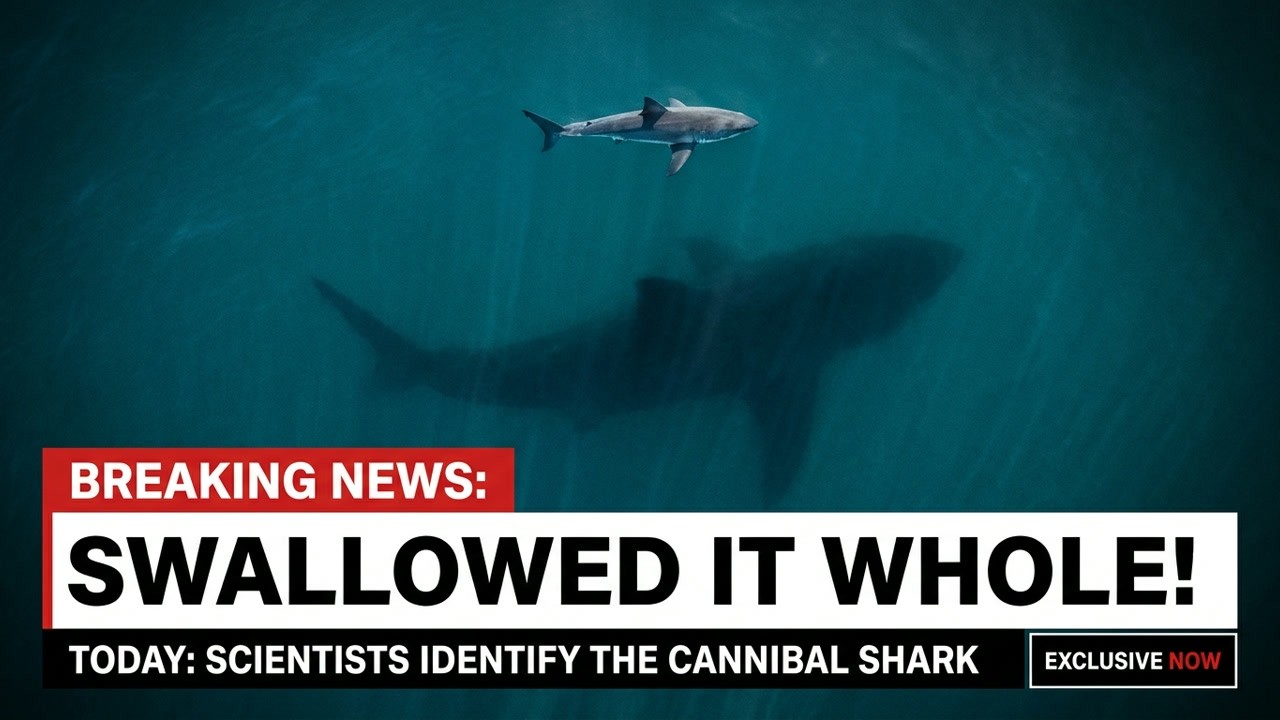
A great white shark was eaten whole, and scientists finally identified the predator. For months, researchers tracked a massive pregnant great white off the Southeast coast, only for its tag to suddenly surface in the deep ocean.
Off the eastern coast of Australia, there is a place where the seabed drops abruptly from shallow to deep. At...
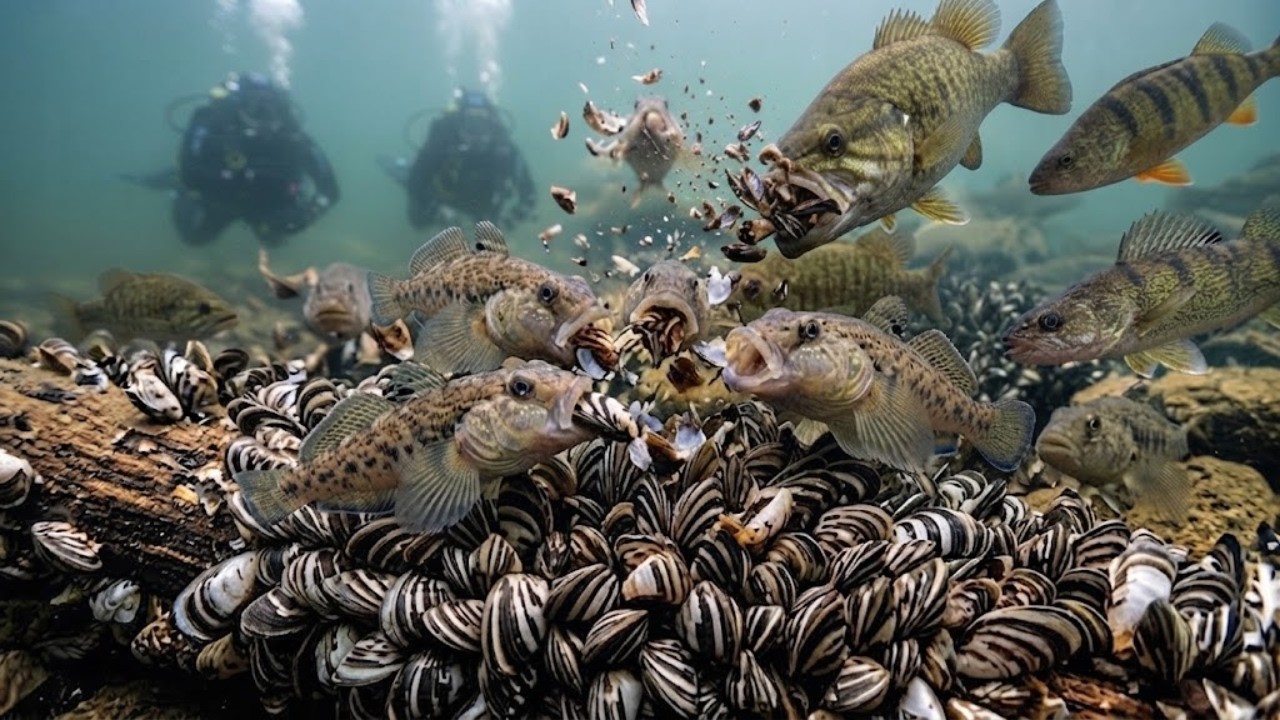
They’re vanishing across the Great Lakes, and scientists just caught the culprit in action. Zebra mussels, the invasive species that clogged pipes and reshaped the ecosystem for decades, are suddenly disappearing from lake floors.
Charlie Hendrickson was at his fishing nets off Bailey's Harbor, Wisconsin, by 5:00 in the morning, the same hour his...