Invasive pythons have been swallowing Florida wildlife for years, but new hunters are using a tactic that’s triggering intense backlash. These hunters don’t just remove the snakes killing them in a way critics describe as cruel and chaotic.
In the wetlands of southern Florida, an estimated 300,000 Burmese pythons now live across more than a thousand square miles, including the entirety of Everglades National Park. The invasive snakes, which can grow to 16 feet and consume prey as large as deer, have caused major declines in local mammal populations since establishing themselves in the region.
The pythons originated from Southeast Asia, where they are native to wetlands in Myanmar, Thailand, and Indonesia. Their arrival in Florida is partly attributed to Hurricane Andrew in August 1992, when the Category 5 storm destroyed reptile breeding facilities and allowed captive snakes to escape. However, the U.S. Geological Survey has found evidence of a breeding population dating back to the early 1980s, suggesting a quieter secondary source.
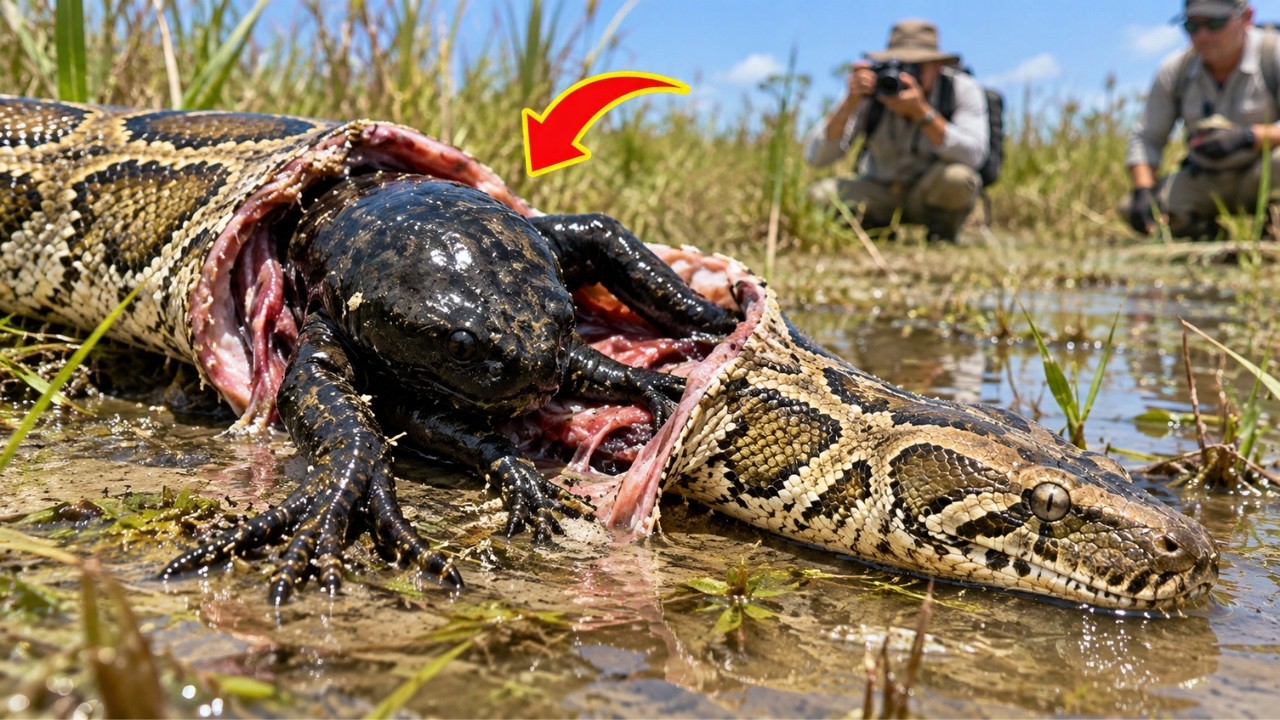
During the 1970s and 1980s, tens of thousands of Burmese pythons were imported and sold in the exotic pet trade. Many buyers underestimated how large the snakes would become. When owners could no longer manage them, some released the animals into canals or drainage ditches instead of surrendering them to shelters.
Florida’s climate proved nearly identical to the python’s native habitat. The year-round warmth, long rainy seasons, shallow standing water, and dense vegetation meant the snakes did not need to adapt to a new environment. They simply needed to arrive.
For years, biologists assumed that occasional python sightings were escaped pets rather than evidence of a breeding wild population. By the time researchers realized the snakes were reproducing on their own, the invasion had already progressed beyond early containment. The pythons’ camouflage is so effective that field researchers estimate the chance of spotting one in the open at about 1 in 20, a number that drops significantly when the snakes are concealed in thick grass or mangroves.
Once established, pythons proved highly adaptable in their diet. Researchers examining stomach contents have documented remains from more than 70 native species, ranging from small rodents and wading birds to raccoons, white-tailed deer, and at least one adult American alligator. The damage extended beyond direct predation. As raccoon and opossum populations collapsed, their role in raiding turtle and ground-nesting bird nests diminished, causing shifts in species several steps removed from the pythons in the food web.
Florida’s response has been ongoing and expensive, with limited effectiveness. The annual Python Challenge attracts hundreds of volunteer hunters who compete to remove as many snakes as possible within a set period. In 2024, 857 participants spent 10 days and removed 195 pythons. In 2025, nearly a thousand hunters caught 294. Against a population of hundreds of thousands, this removal rate has little measurable impact. The surviving snakes continue to reproduce faster than organized hunting campaigns can reduce their numbers.
One natural setback occurred in January 2010, when an unusually long cold spell struck southern Florida. Among a sample of radio-tracked pythons under observation, about nine in ten died from the cold. Necropsies of other snakes found later showed a similar mortality rate approaching 40 percent. Survivors hid in turtle burrows, drainage canals, and other insulated spaces above the lethal temperature threshold, demonstrating the resilience that makes the species difficult to eliminate through weather or chance alone.
Modern tracking methods have become more sophisticated without solving the underlying problem. Researchers implant radio transmitters in captured male pythons and release them during mating season, allowing the males to lead biologists to reproductive females and mating aggregations. The technique results in real removals but is slow, labor-intensive, and impossible to scale across the entire invaded area. Environmental DNA sampling, which tests water for microscopic traces of skin, mucus, or waste, can confirm a python’s presence in an area with over 90 percent accuracy. But confirming presence is not the same as capturing a snake.
Researchers have also attempted to create scent-based lures combining rabbit urine, feces, and combed fur, hoping to attract pythons to baited camera traps without the costs of live animals. The approach did not work. Camera traps recorded nearly identical low levels of snake activity at scented and unscented sites alike. The explanation lies in python physiology: the snakes are ambush predators with very slow metabolisms, capable of going months between meals. They have no evolutionary incentive to expend energy pursuing scent alone. Successful hunting depends on a full sensory package, including movement, infrared heat from a live body, and a recognizable silhouette.
In 2025, a different discovery added to the complexity rather than resolving it. Researchers dissecting captured pythons to check for disease and parasites began finding hard foreign objects lodged outside the digestive tract. In some cases, whole bird beaks were embedded in the snake’s body cavity. The mechanism was unusual. When a python swallows a bird whole and its stomach contracts powerfully to break down the meal, soft tissues dissolve quickly, but the sharp, hard beak does not. Under sufficient pressure, the beak can pierce the stomach wall and move deeper into the snake’s body. For almost any other animal, a perforated stomach would be fatal. In these pythons, the immune system simply walled off the foreign object inside a dense protective capsule, preventing infection. The snakes carrying embedded beaks showed no external signs of illness; they were healthy, active, and hunting normally.
This finding made the case of a python killed by prey more difficult to explain. While tracking small mammal populations across areas with high and low python density, researchers noticed one species behaving almost identically to how it had behaved before the pythons arrived. All other medium-sized mammals in the same habitat had collapsed. This species remained unchanged. Survival rates for radio-tagged individuals were essentially the same whether the surrounding marshes were full of pythons or nearly free of them. When biologists examined recorded deaths among this species, they found pythons responsible for only a small portion. Most mortality still came from the predators that had always hunted them, such as hawks, owls, and native snakes.
This led to a more precise question: had this animal simply failed to recognize pythons as a threat the way many native mammals clearly did, or did its behavior mean it had recognized the danger? Researchers conducted a direct comparison. They presented raccoons and this small mammal with a series of mounted models: a wolf representing a familiar threat, a native rattlesnake, a Burmese python, and a neutral object with no connection to any predator. They then measured anxiety during food-searching and avoidance behavior triggered by each model, tracking how long the animal hesitated near it and how far it detoured to avoid it entirely.
Raccoons reacted strongly to the wolf, reducing their foraging time and keeping a wide distance, but largely ignored both snakes, treating the python as background scenery and continuing to forage directly beside it without hesitation. The smaller mammal reacted to all three predators as genuine and immediate threats, freezing, changing direction, and reducing foraging time around each in statistically identical ways.
This kind of recognition does not emerge within 30 or 40 years, the approximate time pythons have existed in Florida. It must come from a much older origin. For this species, the answer reaches back millions of years of evolutionary history spent living alongside North American snakes as one of their usual prey. When a large, unfamiliar reptile appeared from the other side of the planet, this animal’s nervous system did not need to know its native range. The long body, distinctive smell, and familiar ground movement all classified accurately as a threat category. This species was programmed to recognize such dangers long before Florida existed as a named place.
The animal behind this is the hispid cotton rat, a common native rodent with no specialized predator role and nothing about it that would normally draw attention. This is the animal that attacked a young python and survived the encounter. When the python struck and began to coil, the cotton rat did not freeze. Cotton rats have unusually strong jaws and sharp incisors capable of tearing tough tissue. In the recorded confrontation, the rat delivered a series of severe bites directly to the snake’s head and neck during the struggle. The python died at the scene from those wounds.
Cotton rats are built for this kind of combat. They are stocky, with coarse fur, adapted for speed through dense grassy cover, and they move through complex networks of hidden tunnels maintained among thick vegetation. They have keen hearing and a strong sense of smell tuned to detect an approaching reptile through rustling grass or chemical signals alone. Their real advantage, however, is rapid reproduction. The gestation period for a cotton rat is about 27 days. A single litter can contain up to 15 young. Females reach sexual maturity within 30 to 40 days of birth and can become pregnant again within a day of giving birth. In practical terms, this makes the species operate almost like a continuous production line, where individual losses barely affect the rate at which new individuals are produced.
Cotton rats form an essential link in southern Florida’s food web, converting plant material into food for hawks, owls, bobcats, mountain lions, wolves, cottonmouths, rattlesnakes, and racers, all of which have exerted heavy predation pressure on this species far longer than anyone has known about Florida’s current climate. In short, the Burmese python has finally encountered prey capable of fighting back directly and capable of replacing losses faster than the snake can inflict them. A python that eats 100 cotton rats in a season makes little measurable difference by the time the next reproductive cycle closes that gap. Unlike raccoons and opossums, which have nearly disappeared from python-affected areas, cotton rat densities in heavily invaded regions have not shown a comparable collapse.
Researchers are cautious about describing the cotton rat as any kind of solution. There is no shortage of this rodent that needs addressing. Under good rainfall conditions, cotton rat populations increase on their own, and the consequences of that increase are serious in themselves. The species is officially classified as one of the most destructive agricultural pests in the Everglades farming region. Cotton rats gnaw sugarcane stalks near the base until whole sections of the field collapse, strip bark from young citrus trees until the trees die from interrupted nutrient flow, chew through drip irrigation lines so fields flood or dry out unpredictably, and burrow into irrigation canal banks until surrounding soil erodes and embankments weaken.
In large numbers, cotton rats invade ground nests and eat the eggs and chicks of northern bobwhite quail, wild turkeys, and rails. They directly compete with other native wildlife for available seeds. From a public health perspective, the situation may be worse. Cotton rats carry hantavirus, which can cause severe lung disease in people exposed to airborne particles from their dried feces or urine. They can contaminate standing water with bacteria linked to leptospirosis. They also serve as a major natural host for a virus capable of causing encephalitis in both humans and horses. Researchers have traced a concerning link back to the snake invasion itself: as raccoon, opossum, and rabbit populations declined sharply across vast stretches of the Everglades, local mosquitoes lost a large portion of their usual blood sources and shifted toward feeding on cotton rats instead. This shift has measurably increased the proportion of local mosquitoes carrying this virus, along with the risk of transmission to people and livestock across the region.
Four decades after the first pythons established themselves in the Everglades, the wetlands have moved from complete environmental shock toward something closer to an unstable adaptation that remains incomplete. Younger pythons increasingly appear as prey rather than pure predators, eaten by alligators, larger native snakes, and bobcats. Cotton rats hold their ground through enormous reproductive capacity and, in rare documented cases, direct combat. None of this amounts to a solution. Scientists still lack an effective means of clearing the wetlands of snakes, and deliberately encouraging cotton rats to fight that battle would replace one serious problem with several others, including agricultural losses, ecological disruption, and viral disease risks.
What is actually happening in the Everglades now is not a decisive victory for either side. It is a slow, ongoing renegotiation between an invasive predator that arrived without natural population controls and a native species that happened, through evolutionary history, to already know exactly what it was facing. Whether this recognition will develop into something that measurably slows the snake population, or remains a small and strange exception within a larger ecological collapse, is a question researchers say they cannot yet answer with confidence.
The significance of the discovery is not the single dead snake. One dead python out of a quarter million changes nothing by itself. What it changes is an assumption that has underpinned 20 years of snake research without being fully questioned: the idea that this snake had no natural enemies in its new environment, and that evolution simply had not had time to produce anything capable of resisting it. Cotton rats did not need 30 or 40 years to catch up. They arrived already equipped with millions of years of accumulated caution toward anything that looks like a snake. That caution crossed continents in a way none of the invasion timelines had predicted. For every other species still losing ground in the Everglades, the question becomes how much of that loss truly comes from the python’s size and appetite, and how much depends on whether the local animals already had the right instincts when it arrived.
Recommended Stories

Something Bigger Than a Python Is Hunting in Florida — Cameras Captured It. Locals thought the massive tracks belonged to an oversized python, but a trail cam caught something far stranger lurking near the Everglades.
Researchers at the Conservancy of Southwest Florida found a dead Burmese python roughly 15 miles deep in the Everglades. They...
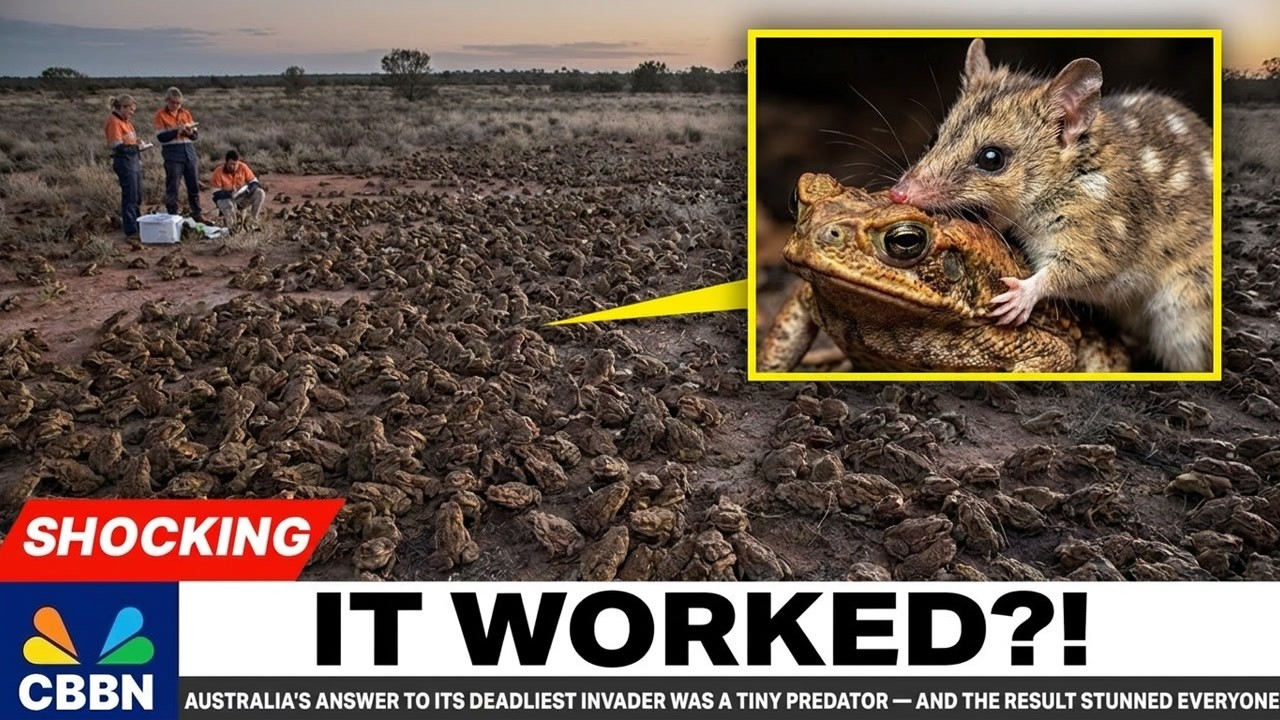
Australia’s deadliest invader met a surprising adversary: a tiny predator that officials deployed to stop its spread. The plan seemed straightforward—release this pint-sized hunter to curb an unstoppable menace disrupting ecosystems and agriculture across the country.
The cane toad is a medium-sized amphibian, typically no more than a few inches long. It has no notable features,...

Sharks in broad daylight off Israel’s coast stunned swimmers, but the newest predator stalking these waters wasn’t a shark at all. Authorities confirmed the arrival of a dangerous species never before documented in the region, sending marine experts into emergency response mode.
Since the 1980s, Yossi Leshem and Shaul Aviel have installed about fifty nesting boxes around their kibbutz in northern Israel....