They’re vanishing across the Great Lakes, and scientists just caught the culprit in action. Zebra mussels, the invasive species that clogged pipes and reshaped the ecosystem for decades, are suddenly disappearing from lake floors.
Charlie Hendrickson was at his fishing nets off Bailey’s Harbor, Wisconsin, by 5:00 in the morning, the same hour his father and grandfather had worked the same water before him. The catch coming over the rail was 200 pounds of lake whitefish, a species his grandfather had pulled from Lake Michigan when the bottom of that lake was a different world. By every scientific model published between 1989 and 2010, the fish in that net should not have existed. Their food supply had been destroyed by an invader the size of a thumbnail that arrived with no natural predators and no ceiling on its reproduction. The zebra mussel.
Then dock posts began going bare. Divers started finding beds of open, empty shells. A Hudson River colony that researchers had tracked since the early 1990s collapsed by 90 percent from its recorded peak. Something was reversing one of the most successful invasions in North American history, and the creatures responsible were not part of any management plan. They had been in the lakes the entire time.
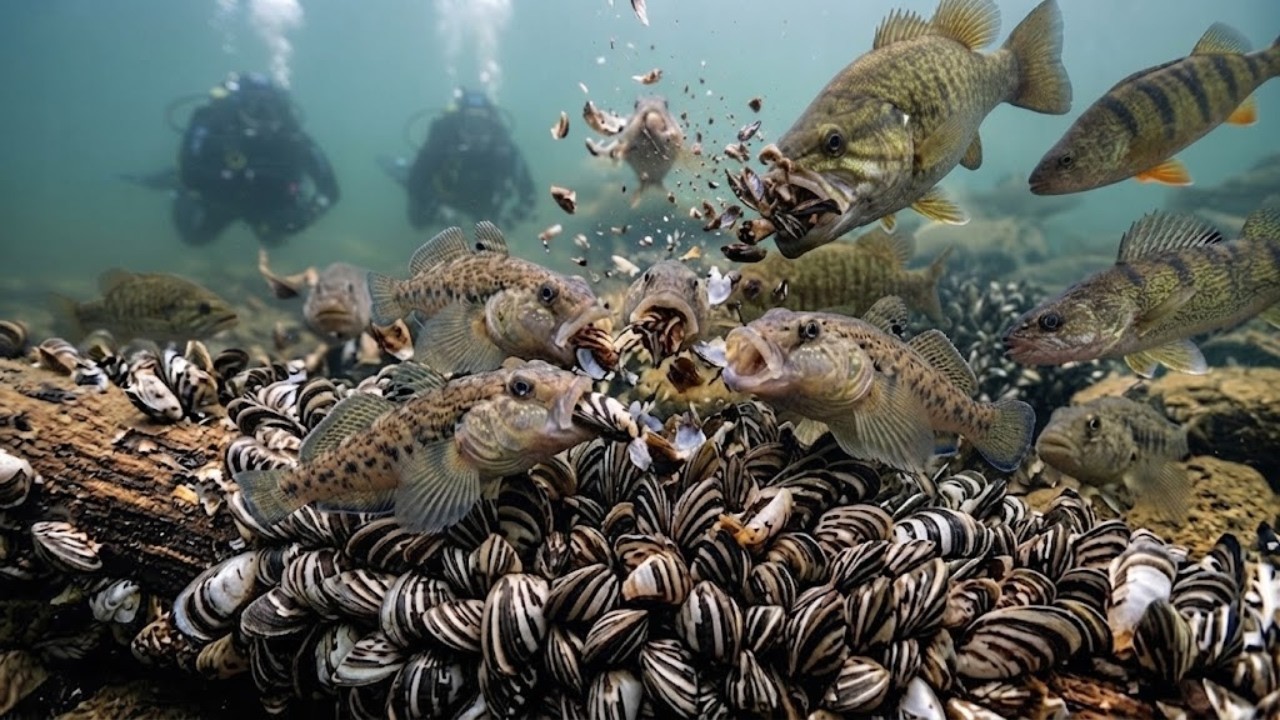
To understand why zebra mussel populations are declining across the Great Lakes, it helps to know what the mussel was expected to do to these waterways. In 1988, a freighter moving cargo out of the Black Sea drainage system pumped its ballast water into Lake St. Clair near Detroit. What came out with that water was a striped bivalve the size of a thumbnail with one biological statistic that defined everything that followed: a single female zebra mussel can produce up to one million eggs per year. Within ten years, the species was confirmed in all five Great Lakes. Today it is established in 38 states, joined in deep water zones by its cousin, the quagga mussel, which tolerates cold, soft-bottom habitats that zebra mussels cannot hold.
The pair have cost North America billions of dollars in infrastructure damage, municipal water system maintenance, power generation disruption, and commercial fishing losses since their introduction. The Great Lakes Sport Fishing Council put the annual cost to recreational fishing alone at hundreds of millions of dollars by the mid-1990s. The Army Corps of Engineers cataloged remediation costs across the Great Lakes basin that ran into the billions within the first decade of the invasion.
The mussel’s primary weapon against infrastructure is adhesion. It attaches to any hard surface in layers, gluing shell to shell until intake pipes that once supplied drinking water to entire cities run at a fraction of their designed capacity. In 1989, one year after the introduction event, the mussel had colonized the water intake at Monroe, Michigan, so completely that 30,000 people lost access to running water for three days in midsummer. No operational parameters had changed, and there was no warning that the species had reached colonizing density. The pipes simply stopped delivering the volume the system was designed to produce because every available hard surface inside the intake had been covered in living mussels holding position against the current.
The scientific consensus established by the early 2000s was uniformly bleak. The zebra mussel had no natural predators in North American freshwater systems capable of managing its population at any meaningful scale. No fish, bird, or invertebrate in the Great Lakes had evolved to eat a hard-shelled bivalve that had never been part of the lakes’ ecological history. The mussel was filtering the plankton base from the water column at a rate that collapsed the food web from the bottom upward. The tiny crustacean Diporeia, which had carpeted the lake bottom since the glaciers receded around 10,000 years ago and served as the primary food source for lake whitefish, alewives, and other commercially and ecologically significant species, had effectively disappeared from large sections of Lake Michigan by 2006. Hendrickson watched his catches collapse, and most of his crew found other work.
Then the dock posts started going bare. Homeowners on the southern shore of Lake Michigan noticed it first, the way homeowners often notice changes before monitoring programs register them. Dock posts that had accumulated two inches of mussel crust across a decade were going clean. Kayakers drifting over the shoals in the Thousand Islands reported bottoms littered with open shells. On the Hudson River, where researchers had been running continuous mussel population surveys since the early 1990s, the count data showed a 90 percent collapse from the population peak. No eradication program was running. No new chemical treatment had been deployed at scale. The species that every management agency had concluded could not be controlled by anything the lake contained was losing ground across multiple connected waterways simultaneously.
The first layer of the explanation came from rafts of five to eight thousand birds. Lesser scaup, greater scaup, goldeneye, bufflehead, and redhead—migrating diving ducks that, before the zebra mussel invasion, had fed on snails and amphipods in the shallows of the Great Lakes. From observation blinds on the Detroit River in the fall of 1992, biologists watched entire rafts of scaup tip forward and vanish beneath the surface, returning about 30 seconds later from the reef structures where mussel beds grew densest, surfacing with mussels swallowed whole.
Stomach content data from USGS surveys of western Lake Erie confirmed what observations suggested. Ten out of ten redheads examined carried zebra mussels in their stomach contents. Nearly 80 percent of the goldeneyes’ total diet by weight consisted of mussels across the survey period. At Point Pelee on the Canadian shore, researchers from the Canadian Wildlife Service ran a controlled field experiment. They installed caged sections of lake bottom that diving ducks could not access while leaving adjacent uncaged sections open to normal foraging. The caged sections held stable mussel density across the migration window. Outside the cages, where birds fed freely across a single migration season, bed density dropped 57 percent.
Every autumn, the Atlantic Flyway was running a large-scale mussel removal operation that no agency had designed and no budget had funded. The diving duck population running this operation had itself been rebuilt by programs that had nothing to do with zebra mussels. The Migratory Bird Treaty Act and the prohibitions on the pesticide DDT enacted in the early 1970s had rebuilt scaup, goldeneye, and redhead populations across their North American range during the two decades before the zebra mussel arrived. Those protections were designed to stop the poisoning of migratory birds and prevent the collapse of waterfowl populations. The mussel arrived in 1988. The bird populations that would become the most significant predator force the mussel faced in shallow reef zones had been recovering for 16 years before the first mussel was pumped into Lake St. Clair.
The second layer of the explanation involved a fish that had been thrown on the bank to rot for a century by people who did not know what they were discarding. The freshwater drum is among the most disliked fish in the Great Lakes fishery. Anglers who hook one often curse and discard it, and tournament rules in some events formally rewarded fishermen for not bringing one to the weigh-in. The only thing most Great Lakes families had ever kept from a freshwater drum was a pair of polished calcium deposits in its skull called lucky stones, which generations of children found on the beach and pocketed without knowing what animal they came from.
USGS biologist John French published an anatomical analysis in the 1990s that changed what the drum represented in the context of the mussel invasion. Inside the drum’s throat sits a pharyngeal mill—paired bone plates studded with teeth that transform as the fish matures. Juvenile drum carry fine, hair-like teeth suited for soft-bodied prey. As the fish passes roughly ten inches in length, a third tooth set develops that is broad, flat, and specifically structured for crushing hard-shelled prey. This is the same basic dental architecture that black sea sturgeon and Eurasian shell-eating fish developed over millions of years of evolutionary pressure from hard-shelled bivalve prey.
French and researcher Michael Burres’ Lake Erie data showed that by 15 inches, the freshwater drum feeds almost exclusively on zebra mussels. The fish that Great Lakes anglers had been discarding for a century carried the only crushing hardware in North American freshwater capable of processing the invader at the adult life stage, when the shell had fully calcified. No bass, walleye, or trout in the Great Lakes system has this equipment. The drum has had it for millions of years, having developed it in an evolutionary context that preceded the Great Lakes by a geological era. The mussel arrived and found the one fish in the lake that had been ready for it the entire time.
The lake whitefish completed the third layer of the explanation. When the Diporeia that had sustained whitefish populations for 10,000 years disappeared from large sections of Lake Michigan, the whitefish that survived did not follow their food source into collapse. USGS researchers documented a behavioral shift across Lakes Michigan, Huron, and Ontario. Lake whitefish, a species with no crushing dentition at all, had redirected their feeding toward zebra mussel larvae and soft-shell juveniles, targeting the invader at the pre-settlement life stage before the shell calcified and hardened. The species the mussel had been starving out was consuming the mussels’ own young in the water column before those larvae could anchor to any hard surface and begin building the colonies that had restructured the lake.
Hendrickson’s nets have been running heavy again for three seasons. The lake whitefish that every published model between 1989 and 2010 said should not exist is back in commercial quantities. The dock posts at Bailey’s Harbor are going bare in sections that have not been bare since before his father’s time. No one reintroduced the diving ducks that run the mussel removal operation across shallow reefs every autumn migration. No one designed the freshwater drum’s pharyngeal mill for this purpose. No one instructed the lake whitefish to switch prey species when its food base collapsed. The DDT ban that rebuilt the scaup populations was enacted 16 years before the first mussel arrived. The drum had been discarded by anglers for a century before anyone published the anatomy that explained what it was actually built to eat. The whitefish did what it did because it had no alternative and because a species that has been in a lake for 10,000 years carries more behavioral flexibility than any model built in the decade of the invasion could account for.
The decline of zebra mussel populations across the Great Lakes presents a question for future management strategy: what changes if the diving duck migration corridor, the freshwater drum population, and lake whitefish feeding behavior are incorporated into monitoring frameworks before the next infrastructure maintenance contract is written? The species that every management agency considered uncontrollable is being managed by the lake itself, through interactions that were already in place before the invader arrived.
Recommended Stories

In the world’s deepest abyss, fifteen hundred meters below even the Titanic’s grave, divers captured footage researchers say rewrote ocean science. The Mariana Trench’s crushing pressure was supposed to make life impossible, yet the cameras revealed something thriving where nothing should survive.
On January 23, 1960, Swiss engineer Jacques Piccard and U.S. Navy Lieutenant Don Walsh climbed into the bathyscaphe Trieste and...
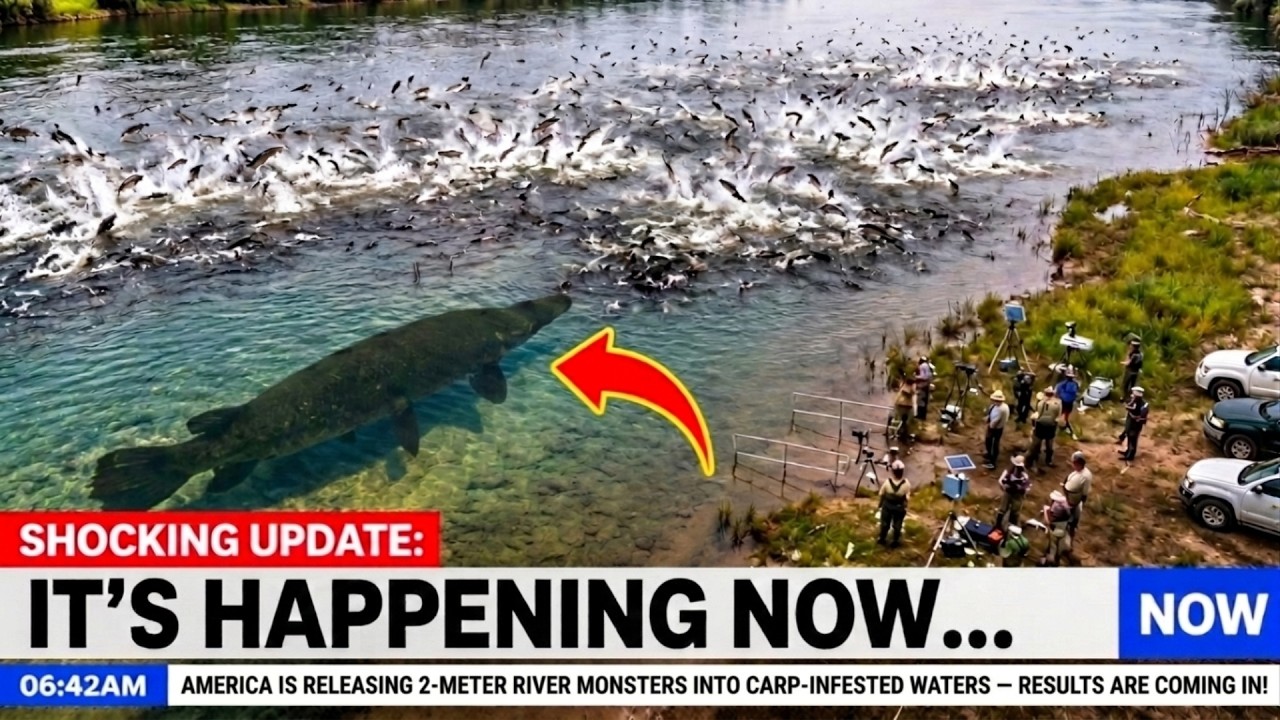
America is releasing 2-meter river monsters into carp-infested waters, and the results are coming in fast. These giant predatory fish were deployed to finally take down the invasive carp species that have been overwhelming entire waterways.
Illinois has been reintroducing alligator gar, a species that disappeared from the state’s rivers half a century ago, with state...
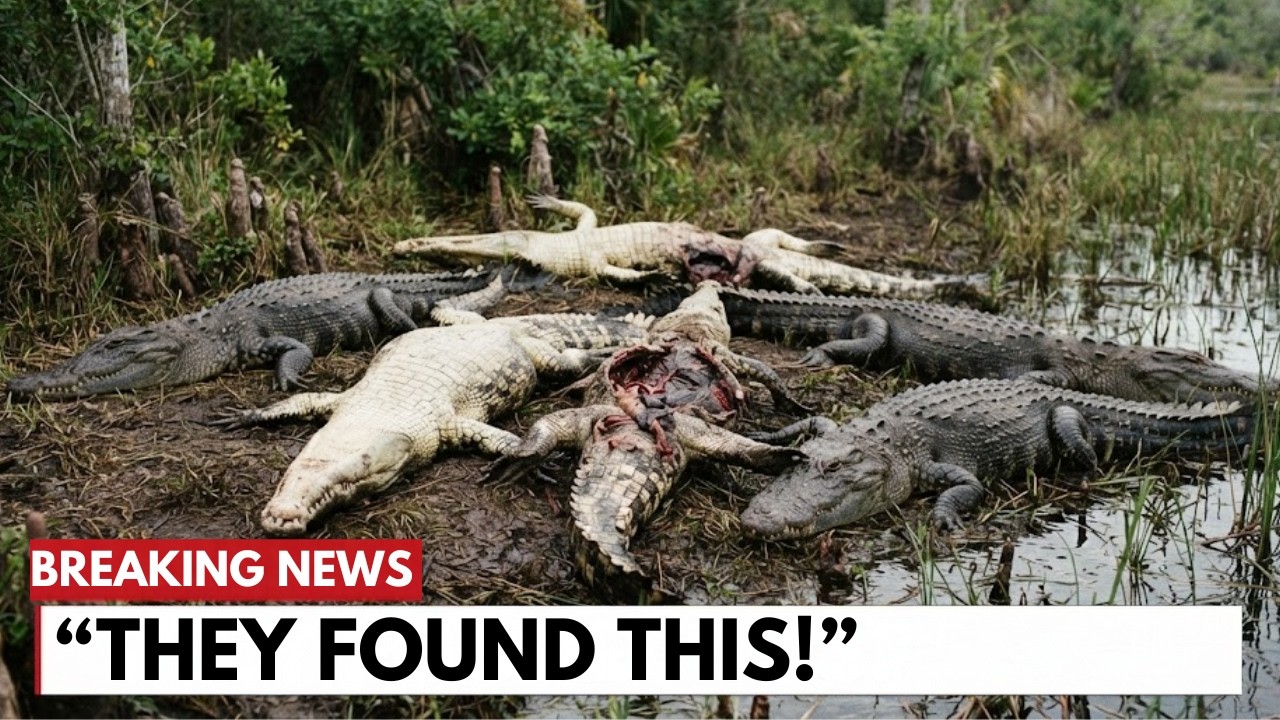
Wildlife researchers in southern Florida faced an unexplained problem in the early 2000s: adult American crocodiles were disappearing from the mangrove channels where they had lived for years. These
Wildlife researchers in southern Florida faced an unexplained problem in the early 2000s: adult American crocodiles were disappearing from the...