Researchers have finally confirmed the identity behind Alaska’s infamous lake monster, and the truth is more terrifying than folklore ever suggested. Locals had long dismissed the sightings as waves, logs, or overactive imaginations, yet the evidence kept piling up.
Iliamna Lake, in southwestern Alaska, has been the subject of reports of an unusual creature for decades. A long-standing reward of $100,000 for proof of such an animal has never been claimed. In 2024, researchers published a genetic study of the lake’s resident seal population, a finding unrelated to any monster but significant in its own right.
Iliamna Lake is roughly 80 miles long and covers close to 1,000 square miles, with depths approaching 1,000 feet in places. It is the largest lake entirely within Alaska and one of the deepest bodies of fresh water in the state. No roads reach it, so the only practical access is by floatplane.
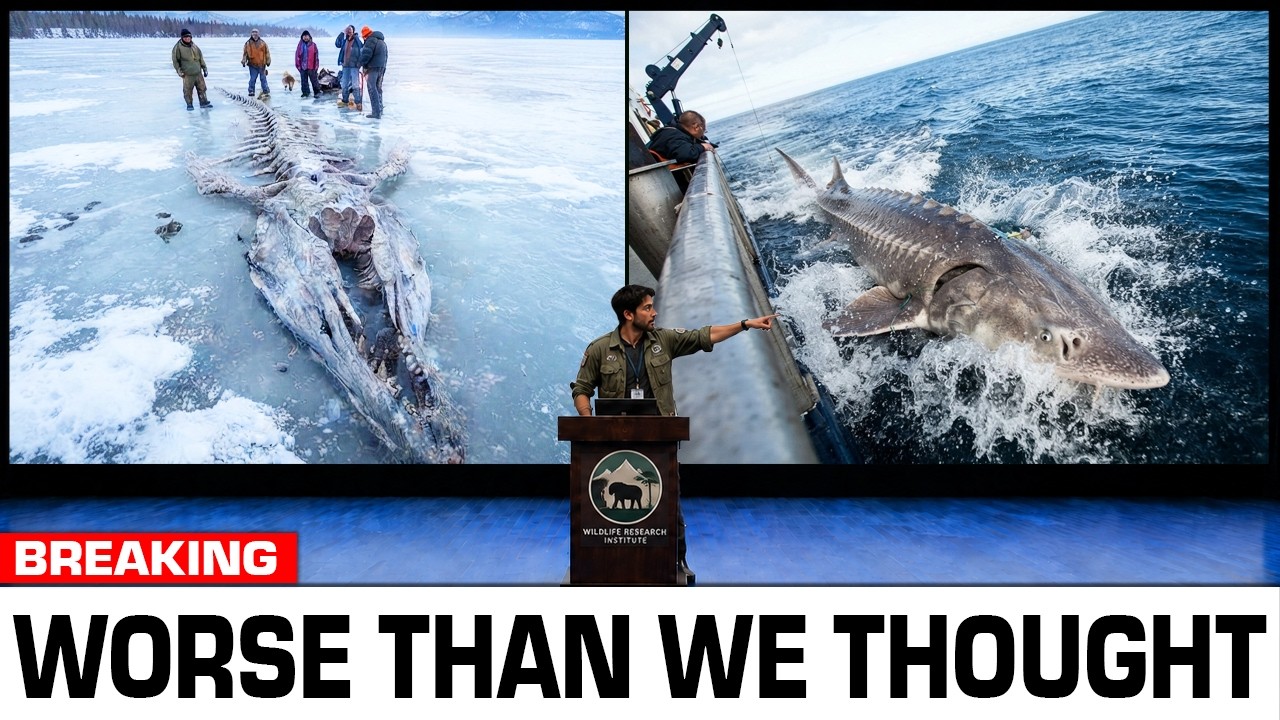
The lake supports the largest sockeye salmon run on Earth. Young salmon can spend up to half of their five-year lifespan in these waters before migrating to the ocean. This food source draws bears, eagles, and other wildlife to the shore each year during the salmon runs.
Several small Alaska Native villages are scattered along the shoreline, and for these communities the annual salmon run is a subsistence necessity. Residents spend considerably more time on and around the water than any visitor.
Before any modern sightings, indigenous peoples in the region told stories about something powerful living in the lake’s depths. The Tlingit described a spirit called the Gonakadet, sometimes compared to a dragon or a large aquatic beast. Some versions described the spirit as a protector; others spoke of its power to capsize boats or punish those who showed the lake disrespect.
These stories functioned as lessons about treating a dangerous and unpredictable body of water with caution. They were passed down through generations as part of a broader oral tradition that treated the lake as a spiritual center. The concept of something significant living in Iliamna Lake predates any contemporary reports.
Modern reports of something unusual in the lake have continued for decades. Witnesses typically describe a dark animal longer than 15 feet with a long head, a long tail, and distinct fins. Bush pilots and commercial fishing guides have filed such reports over the years.
The Anchorage Daily News eventually offered a $100,000 reward for proof that the creature existed. It has never been claimed. No confirmed photograph or physical specimen has been produced.
Bruce Wright, a former marine ecologist with the National Marine Fisheries Service, took the reports seriously enough to organize a search effort. He planned to sink an underwater video camera to the bottom of the lake to record continuously, letting the animal, whatever it was, appear on its own schedule.
Several theories have been proposed to explain the sightings. One involves the white sturgeon, a species capable of living more than a century and growing past 20 feet long. No confirmed evidence has placed white sturgeon inside Iliamna Lake specifically, although a related species, green sturgeon, was netted in the lake during the mid-1990s. Green sturgeon grow to about 7 feet long, considerably smaller than the animal most witnesses describe.
Another theory, championed by Wright himself, proposed a Pacific sleeper shark, a deepwater species capable of exceeding 20 feet in length and tolerant of cold, low-oxygen conditions. The lake connects to the ocean through the Kvichak River, which empties into Bristol Bay, so the route is technically possible. However, sleeper sharks are fundamentally open-ocean creatures, and freshwater presents a physiological challenge for saltwater-adapted fish. This theory gained mistaken momentum when a 2012 video of a dying sleeper shark at King Cove Lagoon, far from Iliamna Lake, was widely mislabeled as footage from the lake itself.
A third theory suggested beluga whales, which are known to follow migrating salmon considerable distances up Alaskan rivers. Belugas could potentially venture up the Kvichak River and explain sightings of pale or light-colored shapes.
What has been scientifically confirmed is a different matter. Iliamna Lake hosts a year-round population of harbor seals living entirely in freshwater, one of only five known populations of seals worldwide that live permanently in a lake. Local indigenous communities have hunted these seals for subsistence for generations and possess deep knowledge of their habits.
In 2024, researchers published a genetic study analyzing DNA from seal scat and tissue samples, some provided by local indigenous hunters. They compared the Iliamna seals against harbor seal populations from eight regions across the Pacific Ocean. The Iliamna seals formed a distinct genetic cluster, separated from all marine populations tested, and showed lower genetic diversity and higher inbreeding. Researchers concluded the population has likely been evolving in isolation for a considerable period.
This study did not confirm a 30-foot monster. It confirmed something scientifically notable on its own terms. The study’s authors called for further research into the evolutionary pressures that produced this distinct population, and into what steps might be needed to protect a small, isolated, and genetically inbred group with little capacity to recover from a serious threat.
The existence of the seal population also offers a partial explanation for some sightings. When multiple seals swim together, surfacing and diving in a group, they can create the illusion of a single larger creature. Seals are an unusual sight in freshwater, so a witness catching a brief glimpse from a boat or aircraft might not identify them immediately.
Research into similar legends elsewhere has pointed to other mundane explanations, including large logs, wave patterns, and large native fish such as lake trout or pike. Psychologists studying eyewitness perception have noted that brief, unexpected sightings are often unconsciously reconstructed by memory to match familiar stories.
In sum, the documented evidence does not support the existence of a large unidentified creature in Iliamna Lake. The lake’s legend has deep roots in indigenous tradition, and decades of reports from credible witnesses have produced no physical evidence despite a substantial reward. The confirmed finding is a genetically distinct population of freshwater harbor seals, documented through published genetic research that combined scientific analysis with indigenous knowledge.
Recommended Stories

A fishing crew in the Mariana Trench scanned the ocean floor when their sonar suddenly lit up with something massive lurking below. They weren’t hunting fish—they were testing deep-sea gear, and the reading was far larger than any known species.
In April 1977, a Japanese fishing trawler working off the coast of New Zealand pulled up a large, badly decomposed...
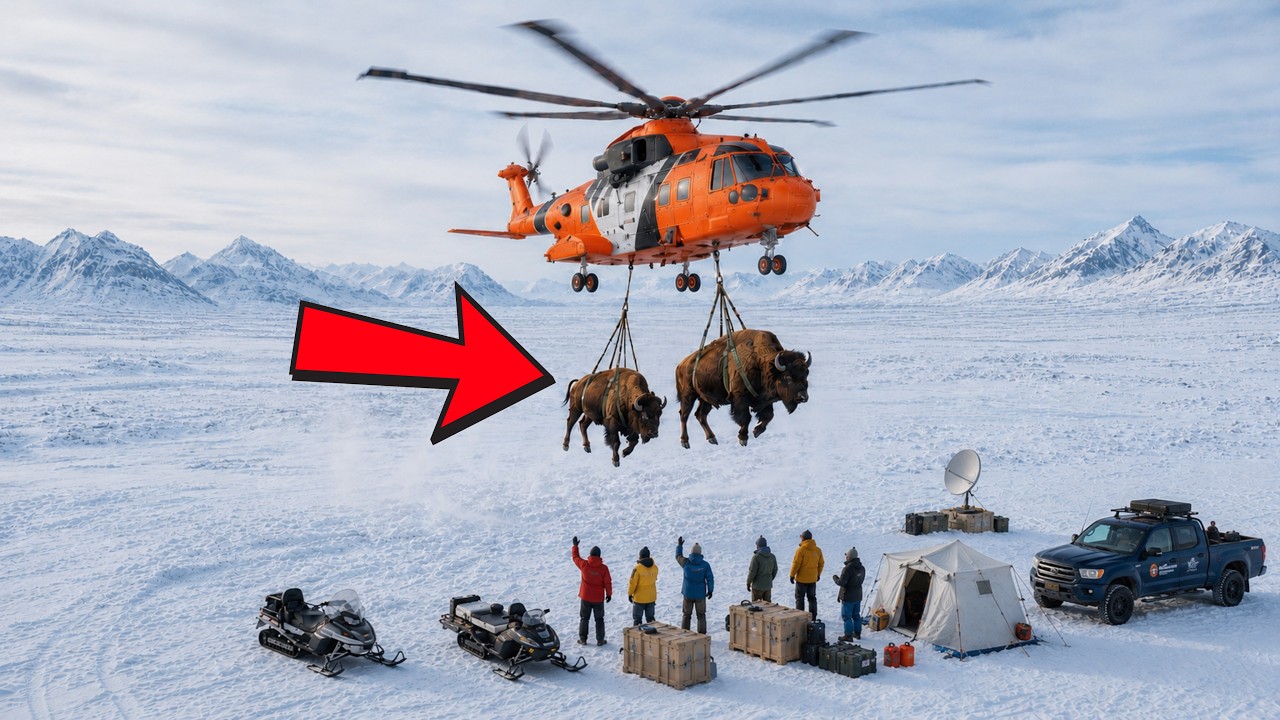
Eight months after Canada airlifted 28 bison into the remote Arctic, scientists returned to check on the herd—and what they found completely defied expectations. The animals had been relocated to a vast, barren landscape where survival seemed unlikely, yet their adaptation stunned even veteran researchers.
In June 1980, a Canadian military transport plane landed on a dirt airstrip near Nahanni Butte in the Northwest Territories...

An Australian surfer bought a 280-acre sheep farm in Ireland, stripped it of grazing animals, and just watched. Within years, the bare hills began to shift.
In October 2022, a cold-water surfer from Cornwall helped purchase an overgrazed sheep farm in western Ireland. The 280-acre property...