The invasive green iguana is vanishing from Florida’s landscape faster than anyone expected, and scientists say it’s not just because of the cold. For years, residents battled the reptiles tearing up seawalls and gardens, only for the population to suddenly crash in recent years.
Dr. Claire Mats had spent three years conducting green iguana surveys along the canal networks of the central Florida Keys. She knew exactly what a healthy canal edge should look like in the hours after sunrise: eight to twelve animals per hundred meters of shoreline, lined up along seawall caps and limestone edging, positioned to catch the morning sun. Iguanas are cold-blooded, and every degree of warmth absorbed from the stone was energy they would not need to obtain from food. She knew which individual animals occupied which basking sites. She had given them informal tracking labels based on size, color, and scar patterns, and recorded their positions daily.
In the spring of 2023, a stretch of canal frontage in Islamorada that had reliably held eleven animals in every early survey she had conducted for eighteen months dropped to four. Then to two. Then to none. The limestone was clean. The seawall caps were undisturbed. Native plants along the canal edge, which the iguanas had stripped consistently for three years, began showing their first signs of regrowth. Mats sat in her survey kayak for a long time trying to understand what had changed before she began looking at the canal itself.

To understand what Mats was witnessing, it helps to understand that the iguana problem in the Florida Keys differs from the iguana problem anywhere else in the state. Green iguanas arrived in South Florida through the exotic pet trade starting in the 1960s, established in Broward and Miami-Dade counties, and eventually reached the Keys through dispersal and intentional release. But the Keys present a sharper version of the problem. The archipelago has no interior. Every residential property and every road sits close to saltwater. The canal networks that cut through Key Largo, Islamorada, Marathon, and the lower islands were created through residential dredging beginning in the 1950s. Those canals produce exactly the conditions green iguanas require: warm, protected water margins lined with concrete and limestone that store solar heat efficiently, nearby vegetation for food and shelter, and no natural predators native to the Keys.
The damage iguanas cause in the Keys occurs at a scale that most people outside the archipelago do not fully appreciate. A female green iguana lays between twenty and seventy-six eggs per clutch in underground chambers she digs in any soft soil she can find on the islands. This includes seawalls, berm edges, road shoulders, private landscaping, and, most significantly, the levees that protect freshwater infrastructure. Researchers from the University of Florida, documenting iguana impacts in Monroe County, found levee integrity damage at water management sites across the Middle Keys attributed to iguana nest digging. The animals also consume native vegetation at rates that have eliminated certain plant species from specific island locations entirely. Native plants in endangered Key deer habitat on Big Pine Key have been stripped by iguana feeding in areas where monitoring recorded zero iguanas ten years ago.
Government removal programs, hunting initiatives, and local bounty systems had been in place for years before Mats began her surveys. Florida law has allowed iguanas to be hunted by any means on private property since 2019. Hunters with air rifles and professional trappers under homeowners’ association contracts organized removal campaigns. The numbers are real and they are substantial, but they are also consistently insufficient. A female iguana producing two clutches per year, averaging forty-five eggs each, in a canal-side environment with no natural predators for eggs and moderate juvenile survival, compensates for itself several times over in a single breeding season. Biology was winning. Mats was not monitoring a population trending downward due to management. The animals were disappearing from specific sites in ways removal programs could not explain. Something else was happening.
What she found when she looked at the canal was an American crocodile, not an alligator. Crocodylus acutus has a narrower snout and lighter coloring than an alligator, with the fourth tooth of the lower jaw visible when the mouth is closed. The species ranges from southern Mexico through Central America and into northern South America, with its northernmost population concentrated in South Florida, specifically the Florida Keys, Biscayne Bay, and the upper Florida Bay watershed canals. The same canal systems where Mats had been tracking iguana numbers for three years were also being used by the apex aquatic predator, occupying the same edges at the same times and for the same thermoregulation reasons.
The recovery of the American crocodile is one of the least discussed conservation successes in North American wildlife management. In the 1970s, the total US population was estimated at between seventy and one hundred animals, confined to a narrow strip of saltwater and brackish habitat in Monroe and Miami-Dade counties. Hunting, habitat destruction, and systematic persecution of any large reptile sharing Florida’s growing coastline had reduced a species that had existed since the Miocene to numbers that would fit in a single room. The species’ listing under the Endangered Species Act in 1975 changed that course. The cooling canal system at Turkey Point Nuclear Power Plant became a major nesting site. By 2007, numbers had recovered enough to downlist the species from endangered to threatened. Current estimates put the Florida population at over two thousand animals, concentrated in the Florida Keys canal systems.
American crocodiles are not freshwater animals. They are fully capable of living in saline environments and strongly prefer the brackish canal edges that thread through every developed island in the archipelago. They use the canals for thermoregulation, foraging, and traveling between feeding areas. The same limestone seawall caps and rocky edges where Mats recorded iguanas basking each morning were occupied by crocodiles engaging in the same behavior from the water’s edge. A green iguana basking on top of a seawall at sunrise is a large, warm, slow-moving animal positioned literally at the edge of a canal inhabited by an ambush predator that has spent millions of years perfecting the strike from water to shore.
The thermal overlap between the two species, their shared preference for the same microhabitats along canal sides, and the crocodile’s range expansion into canal systems that had been effectively predator-free for iguanas since their establishment in the 1980s produced a predation scenario no iguana management plan anticipated. Mats reviewed her own camera archive for the Islamorada canal section over the previous eight months. In the footage, she found three separate predation events by crocodiles on adult green iguanas documented at canal-side basking sites. All three events followed the same pattern. An adult iguana took a basking position atop a seawall cap or rocky edge, body flattened and oriented toward the sun, while the crocodile remained in the water below, outside the iguana’s field of view. Then came acceleration from the water surface that crossed the distance between the canal edge and the seawall cap faster than a cold iguana’s reaction time could process. Iguanas do not have the warm-muscle response speed of mammalian prey. During basking, while body temperature is still rising toward operational range, they have no reaction at all. The crocodile, whose jaws close with enough force to crush prey much larger than an iguana without mechanical effort, does not need to chase anything.
Mats also found something in the archive she was not looking for: evidence that crocodile presence was suppressing iguana basking behavior at canal sites where no direct predation had been documented. Camera stations recording continuous footage of specific seawall sections showed a pattern of iguana arrival, basking initiation, and sudden departure without clear external stimuli during hours when crocodile activity in adjacent waters peaked. Iguanas that detect a crocodile and retreat from the canal edge do not complete their thermoregulatory cycle that morning. They must find an inland basking site or abandon the thermal investment entirely. The fear landscape effect across multiple Keys canal sites, even without direct predation, reduces population density through chronic behavioral disruption. Camera data from stations with documented crocodile presence showed measurable reductions in iguana basking duration and frequency compared to stations without crocodile activity. Direct kills were one layer of pressure. Behavioral suppression across a broader range of canal sites was another.
The bald eagle was the second predator indicated by survey data. Key Largo hosts active bald eagle nesting areas monitored by Audubon Florida researchers for years. Eagle use of Keys canal corridors for foraging is well documented. When Mats compared her survey data with Keys eagle observation records, she found that iguanas had become a significant foraging target for nesting pairs during the breeding season, when adult birds feed growing chicks in addition to themselves. An adult iguana on top of a seawall is visible from altitude, thermally distinct from the background, and large enough to represent a substantial energy return. Documented eagle predation events in Key Largo and Key West entered the records during the same period as the observed decline in iguana numbers along canal edges. Eagles operate on a different spatial scale than crocodiles, covering canal systems, road edges, and open vegetation areas that crocodiles cannot reach. Their pressure is distributed more broadly and intensifies during nesting season, creating a seasonal pulse at the top of the iguana size range.
Raccoons completed the picture at the reproductive base of the population. University of Florida researchers monitoring nesting sites in the Middle Keys documented raccoon predation on iguana egg chambers over a two-year study period in the Islamorada and Marathon areas. Raccoon detection of buried iguana nests depends on locating the egg chamber by scent, and Keys raccoon populations, operating in an island environment with limited food availability, developed a consistent pattern of digging up egg chambers in known iguana nesting substrate. A female iguana that survives crocodile and eagle predation pressure in the adult class and completes an entire nesting cycle in Keys substrate loses a significant portion of her eggs to raccoon digging before hatching.
The three predators do not operate at the same stage of the iguana life cycle. Crocodiles and eagles exert pressure on adults. Raccoons eliminate eggs before they can reach maturity. This overlap means the Keys canal iguana population faces simultaneous mortality pressure at every age class from a different predator at each stage. None of these processes was coordinated by any program, and none existed at the observed operational levels during the decade when the iguana population was establishing and expanding.
A canal-front homeowner in Islamorada had lived alongside the same iguana colony on her seawall for nine years. She knew individual animals by size and position. She described the largest male, which she estimated at four feet long, as using the same concrete cap at the northwest corner of her dock as his primary basking site every morning for at least six years. In spring 2023, he stopped appearing. Then the animals at adjacent sites stopped appearing. She contacted her property manager to ask whether the county had conducted a removal program along her canal stretch without notifying her. The property manager had no record of any such program. She contacted the regional Florida Fish and Wildlife Conservation Commission contact and filed a report indicating that a colony she had been informally documenting for nearly a decade had left her canal frontage without explanation. Her canal frontage was two hundred meters from the Islamorada waterway section where the three camera-documented crocodile predation events occurred.
The American crocodile population dropped below one hundred animals in the United States by the time federal protection arrived in 1975. The recovery program that followed, with nest monitoring, habitat protection, and enforcement that stopped killing, produced a population that grew from the edge of functional extinction to more than two thousand individuals in five decades. That recovery was not designed as an iguana management strategy. No one who wrote the crocodile recovery plan in the 1970s was thinking about a South American lizard that had not yet established breeding populations in Monroe County. The crocodile was restored because it had the right to exist in the habitat that had always been its home.
In the canal systems and salty edges of the Florida Keys, a predation dynamic emerged that the iguana invasion had never faced and had no behavioral programming to handle. A species that had been basking on seawall caps in the Keys for forty years without losing a single animal to an aquatic ambush predator suddenly found itself sharing those caps with one of the most efficient ambush predators evolution has produced in a tropical waterway environment. The bald eagle returned from DDT contamination. Raccoons had always been present, but had lost the competition for access to egg nests due to iguana nesting density, until adult iguana numbers dropped enough to shift the balance. None of this was coordinated. None of this was planned. The Keys had simply recovered something they had lost, and that something turned out to matter in ways no one had accounted for.
Recommended Stories
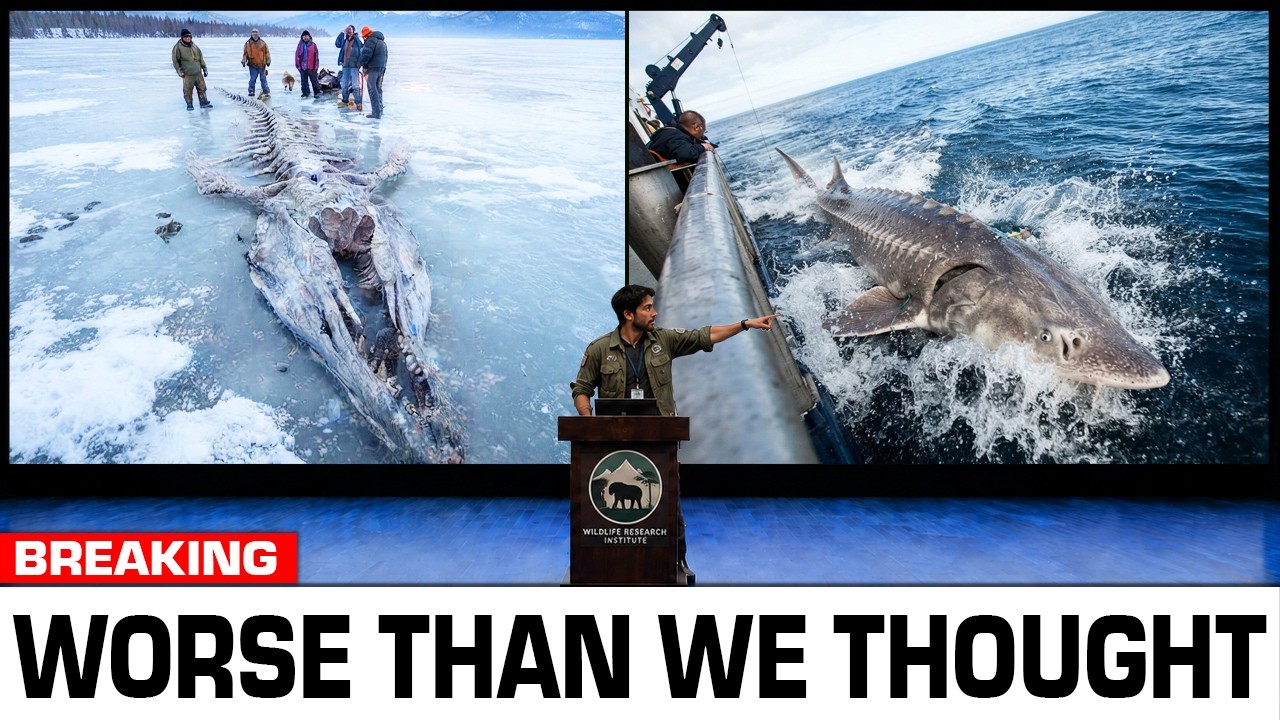
Researchers have finally confirmed the identity behind Alaska’s infamous lake monster, and the truth is more terrifying than folklore ever suggested. Locals had long dismissed the sightings as waves, logs, or overactive imaginations, yet the evidence kept piling up.
Iliamna Lake, in southwestern Alaska, has been the subject of reports of an unusual creature for decades. A long-standing reward...
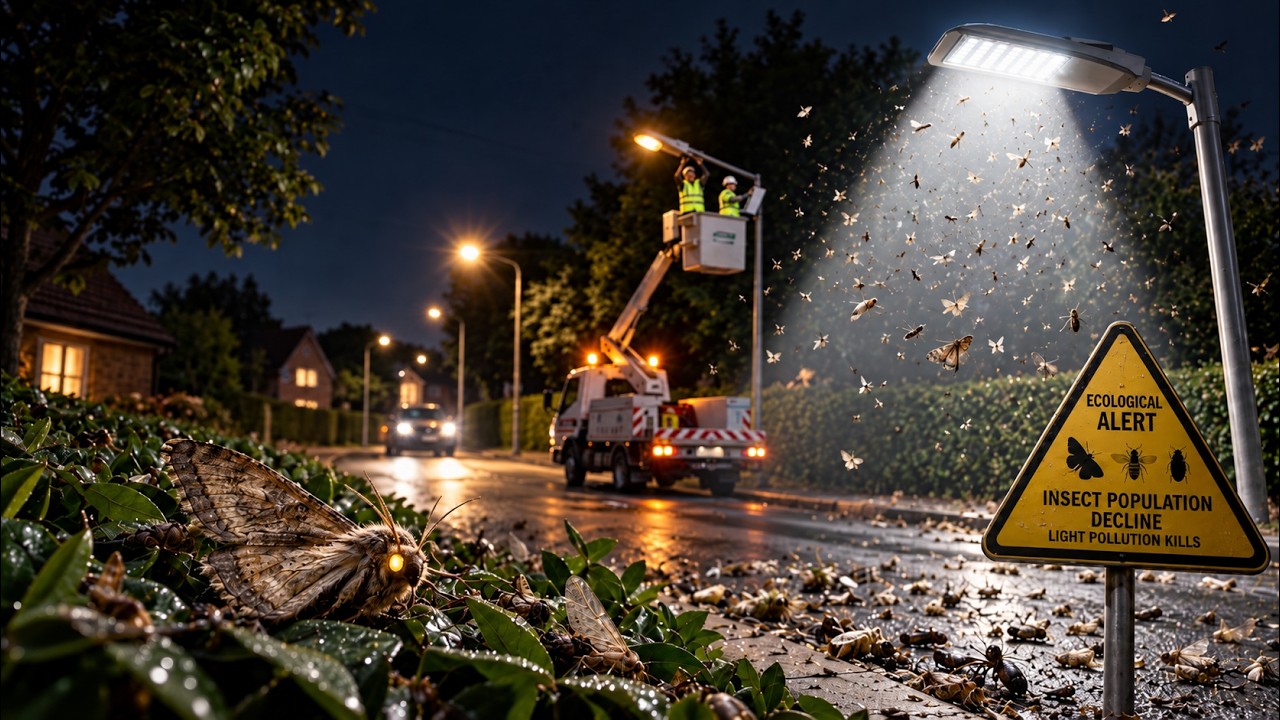
New LED street lights are silently slashing insect populations by nearly half, and the culprit is right above our heads. These modern fixtures emit specific wavelengths that disrupt nocturnal bugs’ navigation and breeding.
Across Britain and much of the world, cities have been replacing their old orange street lights with bright white LED...
Fishermen off Australia’s coast in 1918 claimed a colossal shark ripped their heavy crayfish pots straight off the seafloor, telling a stunned naturalist it was at least as long as the wharf shed—some estimated a staggering 300 feet. These were seasoned professionals who insisted the ghostly white animal was no whale.
In 1918, a group of professional crayfish fishermen working out of Port Stevens on the coast of New South Wales,...