A lone shipwreck survivor vanished from a lifeboat, and the only witness was the ocean itself—until a marksman’s dilemma resurfaced in a hunter’s shocking tale. A massive tiger shark, known only through whispered legend, was finally struck by an anchor, forcing a brutal encounter that no one could dismiss as myth.
A scientific account that had long classified the great white shark as an apex predator with no natural enemies has been revised over the past three decades through documented observations of killer whales hunting and feeding on them. Adult great whites can reach about 21 feet in length and weigh more than two and a half tons, and they were widely believed to face no regular threat from other marine animals. Killer whales are larger, with adults reaching up to roughly 30 feet and weights exceeding 13,000 pounds, and they hunt cooperatively in social groups, a strategy distinct from the largely solitary life of the great white.
The first formally recorded instance of orcas killing a great white occurred on October 4, 1997, near Southeast Farallon Island, about 26 miles west of San Francisco. Biologists with the Point Blue Conservation Science Research Station documented two female killer whales attacking and consuming a great white shark. The event was partially captured on video by tourists aboard a whale watching vessel. The orcas flipped the shark onto its back, a position that triggers a state known as tonic immobility, which leaves the animal effectively paralyzed. They then fed on the shark’s liver, an organ dense with fats and oils that sharks use for buoyancy.
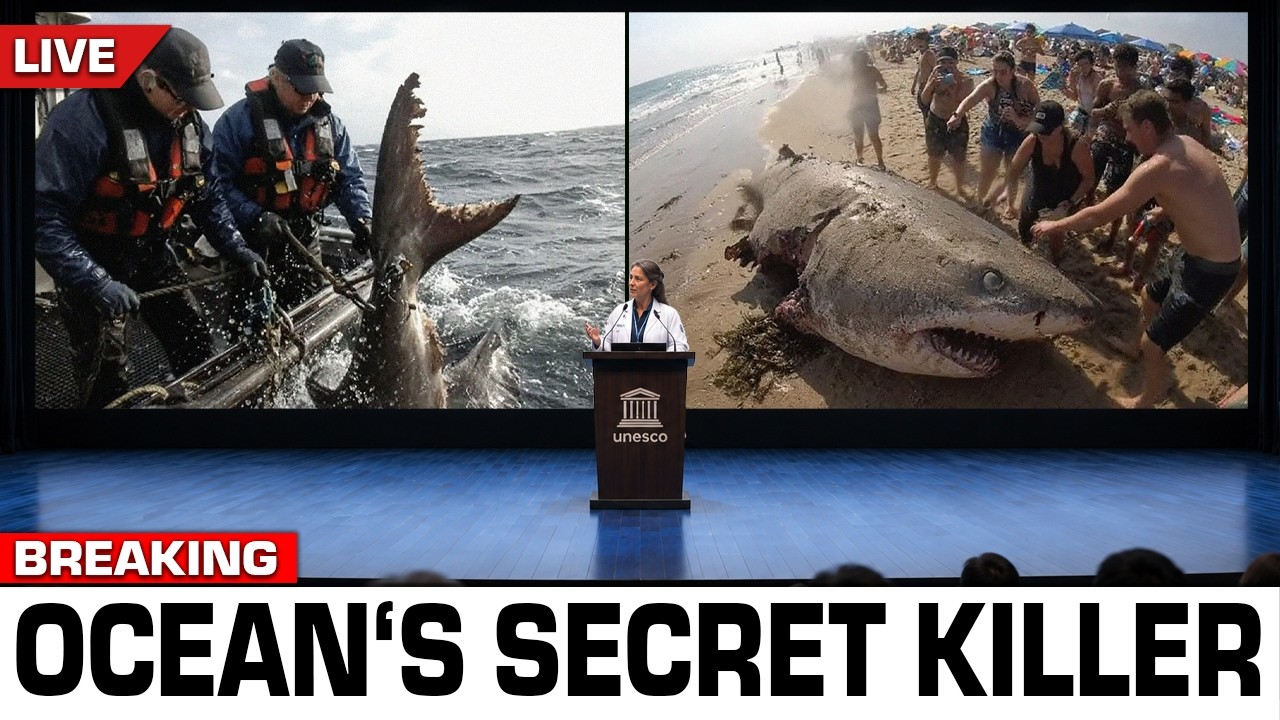
The aftermath of the encounter was as notable as the attack itself. Biologists had been tracking shark predation on seals in the area for years, typically recording around 40 seal kills by sharks during a normal season. In the season following the orca attack, researchers recorded only two shark predations on seals for the remainder of the year, a decline of roughly 95 percent. Tagging data later confirmed that the resident great white sharks had vacated the islands within a day of the encounter, relocating to other feeding grounds along the California coast. Researcher Scott Anderson, who has studied the Farallon Islands sharks for years, said the event permanently changed the scientific understanding of the relationship between orcas and great whites.
A second possible attack was recorded in November 2000, when a killer whale was sighted at nearly the same location carrying a large piece of white flesh, though researchers were unable to collect a genetic sample to confirm it. At the time, the 1997 encounter was treated largely as an isolated event rather than evidence of a repeatable hunting pattern.
That changed nearly two decades later off the coast of South Africa. In 2015, whale watching operator David Hurwitz spotted two adult male orcas off Cape Town, each identifiable by a distinctive collapsed dorsal fin, one folding left and one folding right. Hurwitz named the pair Port and Starboard. Researcher Simon Elwen, who heads the scientific collective Sea Search, noted the pair have been sighted across a wide range, from Namibia to Port Elizabeth, unlike many orca populations that stay closer to a single territory.
Between February and June 2017, five great white shark carcasses washed ashore near the fishing town of Gansbaai. Four had been cut open with their livers missing. Marine biologist Alison Towner, working with the Dyer Island Conservation Trust, began building a case connecting the carcasses to Port and Starboard, publishing a detailed scientific account in the African Journal of Marine Science in 2022. Towner’s research combined shark sighting records with GPS telemetry data from tagged sharks. Following a confirmed orca predation near Gansbaai, individual great whites would often vanish from the area for weeks or months. At Seal Island, annual great white sightings had once numbered around 200 per year, but by 2020 they had dropped to nearly zero. Fourteen GPS-tagged great white sharks were documented rapidly abandoning the wider area whenever Port and Starboard were sighted nearby. Towner compared the avoidance pattern to how wild dogs in the Serengeti react to pressure from lions. With the great whites gone, copper sharks moved into the vacant territory, taking over some of the same feeding grounds.
Port and Starboard were not limited to hunting great whites. In a single day in February 2023, researchers linked the pair to the deaths of 19 broadnose sevengill sharks and one spotted gully shark near Pearly Beach, with examinations confirming the same distinctive rake marks and extracted livers on every carcass. The consistent signature across different shark species and years convinced researchers this was a specialized hunting technique rather than a rare accident.
The core of the hunting method relies on tonic immobility. When a shark is flipped onto its back, its sensory and defensive responses are disrupted, leaving it in a trance-like state in which it stops resisting. Researchers studying recovered carcasses have consistently found the same targeted pattern: orcas tear open the pectoral girdle, the chest area near the front fins, and extract the liver directly. Marine biologist Ralph Watson, who has worked alongside Towner, described the technique as surgical, noting the orcas tear open the chest area until the liver becomes accessible, then move on, typically leaving the rest of the body largely untouched. Researchers have proposed that echolocation helps the whales locate the liver internally before making contact. Some researchers have also suggested that targeting smaller, younger sharks may be easier and safer, since a juvenile’s smaller bite force poses less risk during the struggle. Researchers studying juvenile white shark bite force have measured it at over 3,000 Newtons in a shark only about 8 feet long.
In 2023, researchers led by Alison Towner documented something that had never been formally recorded before: a single orca successfully hunting and killing a great white shark entirely alone. The event took place near Mossel Bay, South Africa, and involved Starboard targeting a juvenile great white measuring roughly 8 feet long. From first contact to the extraction of the liver, the entire event took less than 2 minutes. The team, publishing findings in the African Journal of Marine Science in 2024, described the kill as representing exceptional proficiency. Port had been swimming nearby, roughly 100 meters away, during the entire encounter without joining in. Marine conservationist Esther Jacobs, who was on the water that day, said she noticed the smell of shark liver oil and a visible oil slick on the water surface, clear signs a kill had just taken place. Co-author Primo Micarelli, who has studied the region for over two decades, called witnessing Starboard carry the shark’s liver past his research vessel unforgettable, while noting his concern about the broader ecological balance being reshaped along the coast. Towner noted the speed of the kill should not necessarily be read as evidence the orca had become more sophisticated over time, but it did demonstrate a remarkable level of individual skill.
The same behavior has been documented in other oceans. In 2015, passengers aboard a shark cage diving boat near Australia’s Neptune Islands witnessed a group of orcas kill a great white shark directly in front of them. Charlie Huveneers, director of the Flinders University Marine and Coastal Research Consortium in Australia, has confirmed that as far as researchers currently know, orcas remain the only known predator capable of killing an adult great white shark. Following that sighting, white sharks in the region disappeared for approximately 2 months. In 2023, researchers in Australian waters recovered a great white shark carcass showing the same signs, a missing liver and consistent bite patterns, and DNA testing confirmed killer whale predation, marking the first genetically confirmed instance of this behavior in Australian waters. Researcher Isabella Reeves, involved in the analysis, stated the findings provided compelling evidence that this kind of predation may be more widespread than scientists had previously believed.
In 2019, a research team led by Salvador Jorgensen of the Monterey Bay Aquarium published a study in the journal Scientific Reports, combining 27 years of wildlife survey data from the Farallon Islands with electronic tagging data from 165 individual great white sharks collected between 2006 and 2013. The results were clear. Whenever orcas appeared near Southeast Farallon Island, tagged great whites left the area almost immediately, in some cases within minutes, and did not return for the remainder of that season, sometimes staying away for up to a full year. This held true even when the orcas were only passing through briefly, sometimes present for less than an hour. Jim Teets, a co-author on the study, said the combination of tagging data and decades of field observation allowed researchers to show exactly how sharks clear out the moment orcas show up.
One detail complicated the picture. The waters around the Farallon Islands are notoriously murky, and researchers documented great white sharks fleeing the area even in cases where the orcas were far beyond the sharks’ visual range or hearing distance. Jorgensen proposed that sharks might be detecting some kind of chemical cue in the water, either the scent of the orcas themselves or a stress-related chemical signal released by another shark following a recent encounter. Supporting that theory, the research team tracked a separate group of great white sharks located hundreds of kilometers away at the exact time orcas arrived at the islands and documented those distant sharks arriving only after the orcas had already come and gone. The same research group documented this pattern repeating on at least three additional occasions in 2009, 2011, and 2013, each time recording a decline in shark predation on the island’s seal population following renewed orca activity, though the size of the decline in these later years averaged around 62 percent, lower than the 95 percent drop recorded after the original 1997 event.
Evidence outside South Africa and California came from the Gulf of California off the coast of Mexico. Researcher Jesus Eric Higuera Ribas and colleagues, publishing in the journal Frontiers in Marine Science, documented repeated predation events carried out by a specific pod nicknamed Moctezuma’s pod, filmed attacking juvenile great white sharks in August 2020 and again in August 2022. In the first recorded hunt, five female orcas worked together to push a young great white to the surface and flip it over, inducing the same tonic immobility response seen in South Africa. Once the liver was extracted, researchers observed the orcas sharing the organ among multiple pod members, including juvenile calves too young to hunt on their own yet. That detail, an entire family group sharing in the meal rather than a single individual feeding alone, suggested this hunting technique might function as an actively taught skill passed down within certain orca populations. Image analysis of the killer whales involved matched previous sightings of a pod already suspected of specializing in hunting sharks in the region.
The disappearance of great white sharks from parts of the South African coastline did not simply leave an empty gap in the water. Researchers studying the Gansbaai and False Bay region documented a measurable ripple effect moving through the local food chain once the sharks began avoiding their usual territory. With great whites gone, other species began moving into the vacant ecological space. Copper sharks started appearing in areas where great whites had once dominated, taking over some of the same prey and territory. Researchers have noted this shift with concern, since copper sharks do not necessarily fill the exact same ecological role great whites once played, and the broader effects on local seal colonies, penguin populations, and commercially valuable species like abalone remain an active area of study. A similar dynamic played out at the Farallon Islands decades earlier, where researcher Scott Anderson’s work showed that reduced shark predation pressure, triggered by orca presence, directly benefited the local elephant seal population that great whites normally hunt each autumn.
In a more recent analysis, marine biologist Enrico Gennari of the Oceans Research Institute in South Africa and colleagues examined the broader picture behind declining great white shark numbers along the coast. Between 2017 and 2025, researchers documented 11 confirmed occurrences of orca predation on great white sharks, the vast majority attributed to Port and Starboard specifically. Gennari’s analysis argued that while Port and Starboard’s impact on local shark behavior is real and well documented, human activity likely represents a considerably larger driver of the region’s declining shark numbers overall, through a combination of commercial fishing pressure, accidental bycatch, and other human-caused environmental disruption. In other words, even the ocean’s most effective known shark hunting specialists may not be the single largest factor pushing great white sharks out of their historic territory.
A separate study led by Charlie Huveneers in Australia, published in the journal Wildlife Research, reached a related but distinct conclusion after analyzing over a decade of acoustic tracking data and tourism sighting records at the Neptune Islands. That longer-term data set suggested orcas are not always the correct explanation behind every reported shark disappearance in the region, indicating that other environmental factors likely play a role in at least some of these cases, and that researchers should be cautious about attributing every sudden absence of sharks to orca activity without direct supporting evidence. That finding does not diminish what Port and Starboard, Moctezuma’s pod, and other documented orca populations have genuinely proven capable of doing. It adds nuance to the story, showing that even once you identify a genuine new apex predator capable of hunting the previous one, understanding exactly how much that new predator alone reshapes an entire coastline still requires carefully separating its specific impact from everything else already happening in the same waters.
Despite years of careful documentation, open questions remain about how widespread and significant this behavior truly is. Researchers cannot know with certainty how many great white sharks Port and Starboard or any other documented orca population actually kill in a given year, since humans are not present to witness every hunting event across such a vast stretch of ocean. The exact mechanism orcas use to locate a shark’s liver before attacking also remains an area of ongoing scientific interest, with echolocation proposed as a likely tool but not yet confirmed through direct controlled study. Researchers also do not yet fully understand how this hunting technique spreads between different orca populations, whether it represents a skill independently discovered by separate groups in South Africa, Australia, and Mexico, or whether some form of cultural transmission might connect these geographically distant populations. Where Port and Starboard originally came from before their first sighting near Cape Town in 2015 also remains unknown. Researcher Simon Elwen has said the pair likely arrived from elsewhere, possibly West Africa, East Africa, or the Southern Ocean, but exactly where remains an unanswered question even after a decade of observation.
Great white sharks were long treated as apex predators with no serious natural threat, an assumption that held up reasonably well until October 4th, 1997, when Point Blue biologists near California’s Farallon Islands documented two female orcas killing and eating a great white shark for the first time on record, an event followed by a documented 95 percent drop in local shark predation on seals that same season. Nearly two decades later, two specific orcas nicknamed Port and Starboard, first spotted off Cape Town in 2015, turned that isolated event into an extensively documented, repeated pattern along the South African coast, driving measurable declines in local great white sightings through a consistent, surgical liver extraction technique built around inducing tonic immobility. In 2024, researchers documented Starboard executing the same technique entirely alone for the first time, killing a juvenile great white in under 2 minutes without any assistance from other orcas. Similar confirmed cases have since emerged from Australia, backed by direct DNA evidence and a live tourist sighting at the Neptune Islands in 2015, and from an entirely separate orca population in Mexico’s Gulf of California, where researchers filmed multiple pod members, including calves, sharing extracted shark livers across repeated hunts. A 2019 tagging study at the Farallon Islands confirmed the effect with hard data, showing sharks fleeing within minutes of orcas arriving and staying away for up to a year. More recent analyses have also added an important caveat, suggesting human fishing pressure may still outweigh even these orcas as the single largest factor reshaping great white shark populations along the coast, while separate Australian research has shown orcas are not always the true cause behind every reported shark disappearance. None of this required guesswork. It required patient, repeated, peer-reviewed documentation, stretching from a single dramatic sighting in 1997 to a confirmed worldwide pattern nearly three decades later of one intelligent, coordinated predator proving capable of hunting an animal the ocean had never seriously threatened before.
Recommended Stories

Scientists set up cameras in the Chernobyl Exclusion Zone expecting ghosts of the past—but captured something entirely different. Wildlife supposedly missing from the region for a century has returned, and the footage is reshaping what experts believed about the disaster’s aftermath.
The Chernobyl Exclusion Zone, a 2,600-square-kilometer area of Ukraine and Belarus, was not created as a nature reserve. It came...
Biologists hunting Alaska’s remote rivers for giant salmon stumbled onto something no one expected, a shadow moving beneath the water so massive it dwarfed the biggest fish they had ever recorded. Their equipment was meant for trophy-sized catches, yet this presence ignored every lure and bait they deployed.
Lake Iliamna in southwest Alaska is the state's largest lake, roughly eighty miles long and twenty-five miles across at its...
Scientists spotted a 115-foot megalodon—and were immediately silenced. The massive predator, long believed extinct, appeared on sonar during a routine deep-sea expedition.
The viral claim that scientists filmed a living 115-foot megalodon and were silenced has circulated online for years. It carries...