Alaska’s real-life jaws just surfaced, and it’s bigger than anyone ever imagined. Divers off the coast spotted a massive creature that left even seasoned researchers stunned.
Scientists scanning the depths of Loch Ness reported detecting a large unidentified object on sonar. In 1942, a bush pilot flying low over Iliamna Lake in Alaska counted shapes below him and compared their measurements to his aircraft. He was not the first witness, and he would not be the last.
For three centuries, people on the shore have described the same creature, with each estimate of its length larger than the one before, exceeding the size of any shark science allows and larger than the largest fish in North America. No one has ever successfully caught one in a lake a thousand feet deep where no instrument has been able to see the bottom.
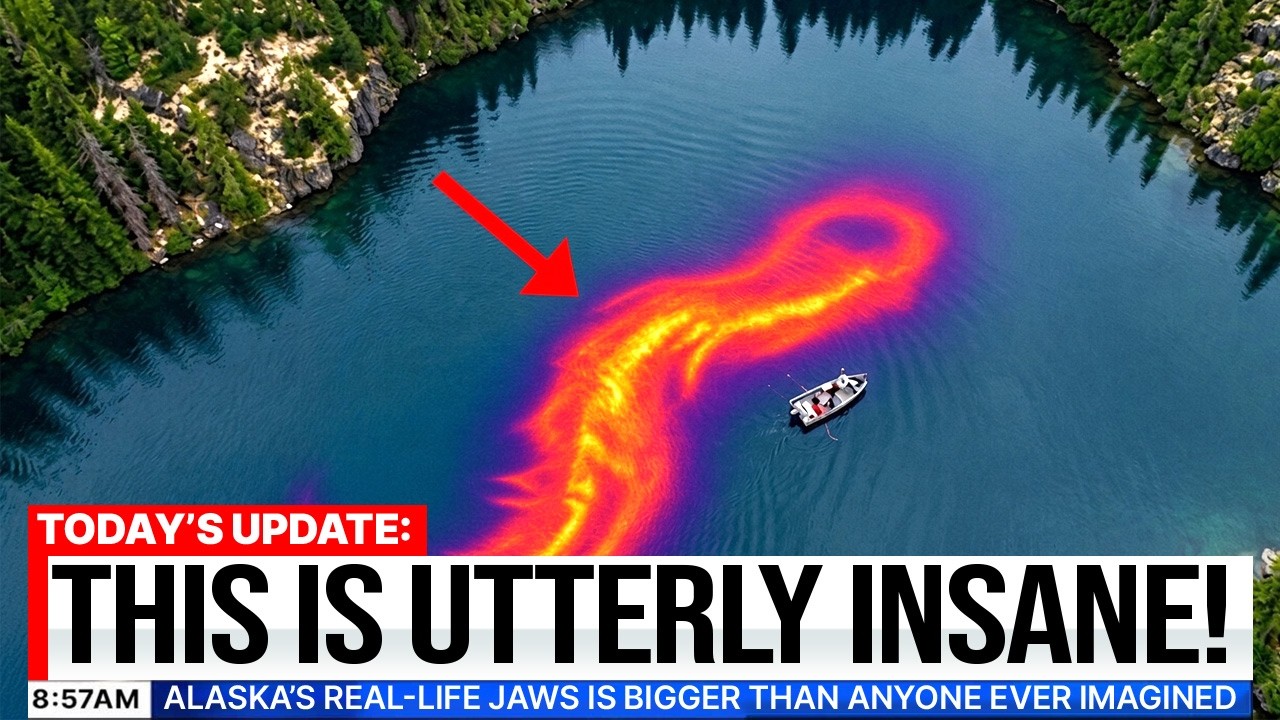
Alaska has more than three million lakes. On nearly every map, Iliamna is listed as the largest and calmest of them. Ask the fishermen there, and the story changes entirely. Nets come up torn, their fabric opened cleanly as if a blade passed through. Steel hooks are bent outward like paper clips, alongside holes left by something that was not a rock in waters with no rocks near the surface.
People who have lived on these shores have long spoken of something huge moving beneath them. They gave it names. Outsiders gave it a simpler one: Alaska’s jaws. The shark in the film was a machine built to a length chosen by a screenwriter. Nothing in Iliamna was designed or measured.
The lake covers roughly a thousand square miles, stretching 77 miles from end to end and reaching nearly a thousand feet deep at its deepest points. No roads reach it. Villages along the shore, such as Newhalen, Kokhanok, and Pedro Bay, are accessible almost exclusively by seaplane. Few people ever see the lake.
There is also the thermocline. A cold deep lake does not mix its water from top to bottom. During warmer months, the water settles into layers, with a warmer lighter layer resting above a dense frozen one. The boundary between them is a physical surface. A diver descending through it feels it touch the skin all at once. The upper water is sunny and green with suspended life, then the temperature drops suddenly, as if a door opened, within the space of a few feet. Below that line, cold seeps through the suit and the nature of the water changes. Light disappears with it.
Above that layer, the surface remains visible overhead, a rippling silver ceiling. Below, green turns to gray, gray to brown, then to nothing. There is a depth where a diver’s lamp illuminates only particles in front of the lens, and then the beam ends, going into darkness and returning nothing. Under that lies most of Iliamna, and virtually none of it has been properly surveyed.
Sound does not work much better. That boundary scatters acoustic signals, and fish finders often register the layer itself rather than anything beneath it. The screen shows a dense band across the width, and everything under it appears as emptiness, not as something unknown but as blank space. The device reads the ceiling of a room it cannot see inside and draws the bottom of the world at that ceiling.
An animal the size of a transport truck could remain forty feet under a boat in untouched darkness, and the screen above would draw a flat line and consider the water empty. Cold water holds oxygen far better than warm water. A shallow warm lake might suffocate an extremely large animal within a season. The freezing depths of Iliamna can support cold-blooded large life indefinitely. This is not folklore; it is basic lake science. The hiding place makes sense, which changes the entire nature of the question. The usual objection, that nothing that large could remain hidden, does not apply here. The lake is dark enough and rich enough to make concealment straightforward, meaning the question in Iliamna was never whether something was below, but how large that thing had been allowed to grow.
Iliamna is not isolated from the sea. The Kvichak River flows from the western end of the lake into Bristol Bay and the Bering Sea beyond. That river is a door, open in both directions. Things have already passed through it. Iliamna contains one of the strangest animal populations in North America. Harbor seals, real ones, hundreds of them, live in the lake year-round, hundreds of miles from the ocean in pure fresh water. Freshwater seals are almost unknown on the planet. Only a few groups exist anywhere, and researchers are still trying to understand how they reached Iliamna and how they survive winters under ice.
These seals hunt in near-total darkness beneath meters of ice, keeping breathing holes open for months across a frozen surface, then diving back into black freezing water where the legend supposedly lives. Some suspect the group has been isolated long enough to drift genetically from every other harbor seal on the coast. A marine creature entered a river, decided to stay, and adapted to lake life. If a seal can do that, the door is open. And the door does not check the size of what passes through it.
There is no shortage of food on the other side of that door. The Kvichak system feeds the largest sockeye salmon migration on the planet. In a strong year, tens of millions of salmon flow from Bristol Bay to spawn, so many that shallow water churns and rivers darken with moving bodies. Iliamna is the nursery at the heart of it all. None of this proves anything lives in the depths. It only means the geography refuses to dismiss the claims.
People who lived on these shores recognized danger long before anyone arrived with scientific instruments. Their warnings came through generations of oral history, passed down through stories rather than written records. There was a great creature in the water, strong enough to overturn a boat and pull a person under. What the elders passed on was not a story but a precaution.
On a quiet summer morning, the lake can become completely flat, like a glass mirror, a thousand square miles of water without a wrinkle. People fishing there knew what to watch for. A ripple with no cause behind it, not disturbance from wind, which announces itself in the grass on the bank before reaching the water. This was something different. A slight swell moving across still water with no visible reason while the air stayed calm. Or water clouding in a particular spot with no cloud above to cast a shadow. When that happened, the rule was absolute. Everyone left the lake. Nets were left behind. Fishing lines were cut if there was no time to pull them. Boats headed for shore without discussion. Those who ignored the warning did not always return.
There is a logical objection here. Cold deep lakes create their own hazards. Storms blow over the mountains without warning. Internal waves move along that thermal gradient in the depths and can push disturbances to the surface without any wind. A small boat can capsize from physics alone, and a community that loses people to a lake will make rules about it whether or not something lives there.
The descriptions remain consistent across villages with little contact between them. A long body, a wide back, a size that overwhelmed anything that could be mistaken for a seal or a salmon. Russian fur traders working these waters in the eighteenth century left accounts of boats struck from below by something they never saw, and of men who fell into the water and were never found. These men had every reason to dismiss local warnings as superstition, but a number of them stopped dismissing them. When two separate cultures, sharing neither language nor folklore, describe the same huge animal emerging from the same lake, that is no longer the myth of a single culture. It is a recurring pattern.
In the summer of 1942, that pattern gained a witness with clear vision and no reason to invent anything. A local pilot named Babe Alsorth was flying over the lake, carrying a passenger according to some accounts. The flight itself was routine. In that country, a light aircraft is not an adventure but a truck, moving mail and goods between villages, flying low for landmark visibility and to read the water for landings.
That day the water was clear, which made the observation possible. Aliimna is not always readable from the air. Wind roughens it, cloud shadows paint it, sediment dirties it. But in the right light the surface becomes a window, and a low-flying pilot can see the sloping bottom, the pale gravel, and the dark water where the floor drops away.
Alsorth was looking through that window when he saw shapes. His first interpretation was entirely ordinary, which is why this account has held up. He took them for logs, waterlogged driftwood floating just below the surface. Nothing exceptional about driftwood in an Alaskan lake. Then the logs moved together, not drifting but turning all at once, keeping their distances and changing direction as a group, in the way fish do and driftwood cannot. He counted them, more than a dozen. Then he did the thing that makes his account difficult to dismiss. He measured them against the only reliable scale at that altitude, the aircraft he was strapped inside. A pilot knows the length of his aircraft precisely because that number determines every landing he makes. Each of those shapes, by his estimate, was as long as his plane. They were not black. When they turned, their backs caught the sunlight and flashed a pale silver, with a flat metallic gleam like polished aluminum rather than the gloss of wet fish skin.
Alsorth knew that lake better than anyone alive and never retracted what he saw. The story spread beyond Alaska. A wealthy Texas oilman obsessed with unknown animals funded expeditions to hunt it. Fishermen kept adding their testimonies. By the 1970s and 1980s, reports came in clusters, with residents watching huge forms break the surface simultaneously, describing the same lengths, between 25 and 40 feet. Some moved in pairs. One account from the late 1980s mentions more than a dozen people on shore watching several huge shapes move across the water at once in broad daylight.
In 1979, the mystery went fully public. A reward of about 100,000 dollars was offered for tangible proof of the creature’s existence, and the effect was chaotic. Seaplanes crowded over the villages. Professional fishermen arrived with equipment and contracts. Hobbyists came with rifles. Thrill-seekers borrowed boats with no plan other than being present when something happened. For one season, a lake almost no one visited saw crowds on its shores watching the water in shifts.
Submersibles were lowered into the black water. Sonar swept the depths in long patient tracks. Hydrophones were lowered to listen. The results came almost immediately and never stopped being ambiguous. Sonar picked up large moving masses that did not behave like salmon or seals, targets that held their depth and vanished the next pass. Microphones recorded low sounds no one could match with a known animal.
Consider the calculations those crews faced. A thousand square miles of surface, nearly a thousand feet of depth under much of it, a dark zone that swallowed their lights. Everything they lowered had an operating range measured in meters. The area they searched was measured in miles. Season after season, results fell into three categories: blurry images, suggestive readings, and damaged equipment retrieved torn or bent. The reward was never claimed. The researchers proved something was hard to find. They did not come close to proving nothing was there.
Decades later, people arriving at Iliamna stopped carrying harpoons and started carrying scientific instruments. What they found did not close the case. It opened it in a direction no one expected, because for the first time the search had a specific animal to look for. The most serious explanation on offer comes from Alaska biologist Bruce Wright, who spent years studying the region’s waters. His candidate is the Pacific sleeper shark. Once the animal is properly described, the theory becomes difficult to dismiss.
Sleeper sharks are creatures of cold and darkness, swimming slowly through deep freezing water, expending no effort and hurrying nothing. They are ambush predators, built for the dark oxygen-rich depths that characterize Iliamna. They grow continuously, with some estimated at over 20 feet, exceeding most great whites ever measured. Their relative, the Greenland shark, turns this from curiosity into something else. Greenland sharks have been estimated to live for centuries, possibly the longest-lived vertebrates on the planet. Sharks in northern waters today were already mature when fur traders were writing their reports on Iliamna. They have been dissected and found with seals in their stomachs, and sometimes reindeer and polar bear remains, animals a slow shark should not be able to catch.
The most likely explanation involves attacking prey resting at the surface, which is concerning in a lake where people fish from small boats. Put one of these animals in a lake teeming with tens of millions of salmon, and it would need nothing, compete with no one, and never have to surface. Most Pacific sleeper sharks carry parasites that attach to the eye and gradually destroy it, blinding the animal slowly over years in water where vision was never of much value. What sounds like a fatal handicap becomes something else when the alternative sense is described. Beneath the layer where light ends, the shark does not move through a void.
It moves through a stream of information. Smell arrives first, a trace of blood or oil carried by the current, followed up through water the animal cannot see. Then the second sense takes over. Sharks possess a network of gel-filled canals around the head that detect electric fields. Every living body leaks electricity into the water simply by being alive and functioning. A muscle contraction is an electrical event. A heartbeat is an electrical event, rhythmic and unextinguishable. In the total darkness of Iliamna’s depths, a blind shark is not lost. It is reading a map nothing else below can perceive. A salmon hovering still in the cold is a broadcast. A seal descending from the ice above is a signal that cannot be missed. Such a hunter needs no sun, no surface, and no people. It could spend a century in the dark layer of Iliamna without ever appearing for anyone to notice.
The objection is real. Pacific sleeper sharks are oceanic creatures, and there is no confirmed record of any living permanently in fresh water as this theory requires. This is a genuine gap. But the seals in that lake are oceanic creatures too, and they are still there. The shark is not the only candidate, and the second one fails on the opposite side.
White sturgeon succeed exactly where the shark struggles. Sturgeon are living fossils, armored bottom-dwellers nearly unchanged for tens of millions of years, covered along the back with rows of bony plates instead of scales. The largest exceed 20 feet and live over a century. Before a hundred years ago, fishermen in the Pacific Northwest were pulling sturgeon from rivers at sizes that would not fit in a modern pickup truck. The name resurfaces for one reason. Ask a witness in Iliamna what they saw, and the answer is often not fins, not jaws, not teeth, but a back, a long ribbed back rising above the surface and then sinking again. That is not what a shark looks like breaking water. That is exactly what a large sturgeon looks like.
The aluminum gleam Alsorth saw in 1942 matches sturgeon armor better than shark skin. Sturgeon also tolerate fresh water effortlessly because fresh water is their native habitat. The shark theory must explain how a marine animal lives permanently in fresh water. The sturgeon theory never raises that question. What it must explain instead is access. White sturgeon are not native to Iliamna. There is no stable population, no confirmed catch, and no accepted record.
When television angler Jeremy Wade brought a film crew to Iliamna for the series River Monsters, these were the two suspects he focused on. He left as everyone leaves, convinced something real was out there but unable to identify it. The shark is the right creature in the wrong water. The sturgeon is the right shape in the wrong lake. The candidates do not cancel each other out because they fail independently from the same direction. A large Pacific sleeper shark is estimated at about 20 feet. The largest white sturgeon on record is about 20 feet. Two completely different animals from opposite branches of the tree of life, both reaching the end of their growth at nearly the same point. And the witnesses do not stop there. They start from there.
Researchers began sampling northern waters for environmental DNA, the genetic material every organism sheds simply by existing. Skin cells, mucus, and waste drift with the current and remain long after the animal has moved on. Water is filtered, what catches in the filter is analyzed genetically, and the result is a list of everything that has passed through recently. According to accounts from Iliamna, the samples show the expected creatures, salmon, seals, and the normal residents of a northern lake. Alongside them are genetic sequences that are difficult to identify with confidence. Environmental DNA is not a photograph. A sequence that matches nothing in the file may simply mean nothing in the file matches it yet. An unidentified sequence is not an unknown animal. It is an unanswered question, and there are many.
Sonar detected something large and unidentified. Hydrophones picked up a low sound with no match. Submersibles saw shapes that were never explained. Sampling found sequences that could not be classified. Four independent methods across five decades. Nothing found a void, and nothing found enough evidence. This failure to resolve is not unique to Alaska. Iliamna belongs to a club, the club of cold lakes. In Scotland, people have reported a long-necked form in the depths of Loch Ness for nearly a century. In British Columbia, the glacial lake Okanagan has Ogopogo. In Vermont, Lake Champlain has Champ.
The pattern behind these phenomena is more geological than mythological. These are almost all cold, deep northern lakes, formed or filled at the end of the last ice age. One theory that recurs is that as those waters formed, small groups of large marine animals were trapped inland, isolated in cold basins and left to adapt alone for thousands of years. Each of those lakes, including Iliamna, is connected or was connected to the ocean by a river, the same open door any trapped group would have crossed in the first place.
The skeptical version is simpler. Deep cold lakes are dark. They produce visual effects and strange waves, and people tend to fill in what they cannot see. Lakes have monsters because they resist reading, not because they are inhabited. But Iliamna differs on one point. It is the only lake in that club with a living, counted, photographed population of ocean predators that used the river and stayed. Loch Ness has a legend. Iliamna has seals. Of all the lakes in the club, this one has the space, darkness, and food for something to keep growing, raising a question the others do not have to answer. Growing into what?
Oral accounts describe an animal large enough to overturn a boat and pull a person under. Treat that as a minimum estimate. Anything capable of flipping a loaded boat from below is already far larger than a seal. In 1942, Babe Alsorth compared the size to his own aircraft. A typical bush plane of that era ran roughly 25 to 30 feet from nose to tail. He did not report one animal that size. He reported more than a dozen together. By the 1970s and 1980s, witnesses on shore in groups estimated lengths between 25 and 40 feet for shapes they saw in daylight. In some accounts, the number rises higher, reported at 60 feet.
Compare these figures to what science permits, about 20 feet for an exceptional sleeper shark and about 20 feet for a record sturgeon. Both are rare cases, the largest individuals their species can produce. The witnesses describe animals that begin where the scientific ceiling ends and keep growing. This is stranger than the question of existence itself. The problem in Iliamna was never that people described something impossible. It is that they described something nearly possible, then added twenty more feet.
There are three ways to interpret this. The first is that eyewitnesses over water always overestimate length. This is established and true. Distance is hard to judge across water, there is nothing beside the shape for comparison, and fear magnifies everything. Every figure should be reduced. The second is that the accounts describe multiple animals moving close together, supported by Alsorth’s report of a scattered formation that from shore or altitude would look like one continuous mass. The third possibility is the one the lake refuses to exclude. Something in the dark unsurveyed bottom of a thousand-foot lake has grown without competition, without predation, and without interruption for a very long time, and has surpassed the size its species was believed to stop at.
Every requirement for that is recorded and documented. The Greenland shark proves century-long life is possible. The salmon migration proves food has been available for centuries. The thermocline proves concealment for centuries is achievable. Nothing in this chain requires a new animal. It requires a known animal left alone longer than anyone has watched it. No one has caught it, so no one has had to acknowledge how large it has grown.
The conditions keeping it down there have begun to change. The lake is starting to lose its darkness. Sightings are not fading into history as old legends usually do. They have increased. The most likely reason is not supernatural. Alaska is warming faster than anywhere else on earth, several times the global average, with parts of the state up more than four degrees over half a century. Permafrost around the lake is starting to melt. Ice freezes later and melts earlier. The water itself is changing in temperature and currents in ways never seen before. These changes reach the deep layers where a large cold-water animal lives. If the dark zone it depends on is shrinking or thinning at its edges, the animal inside is pushed upward, toward the surface and toward shore, into the places where people are. At the same time, salmon runs arrive at stranger times, and the predator follows its food.
In 2019, drone operators over the lake filmed a long dark shape sliding beneath the surface, too large for a seal and too smooth and continuous for a school of fish. The creature may not be appearing more often. It may simply be running out of places to hide.
What survives scrutiny? A lake deep enough to swallow a skyscraper with a dark zone instruments cannot read, an open passage to the sea, seals proving marine predators used it and stayed, a food source unmatched anywhere on the planet, centuries of sightings from people with nothing to gain and no shared story describing the same body and the same impossible length. Real scientists name real animals that almost match, failing only on the final detail, always the same detail.
Across three centuries of reports, one summer of submersibles, and decades of instruments, one number has never changed. Zero. No carcass, no bone, no clear photograph. Whatever this thing is, it has never made the mistake that would end the mystery. Something that avoids capture this thoroughly for this long is either not there at all or is better at not being there than anyone is willing to admit.
Recommended Stories
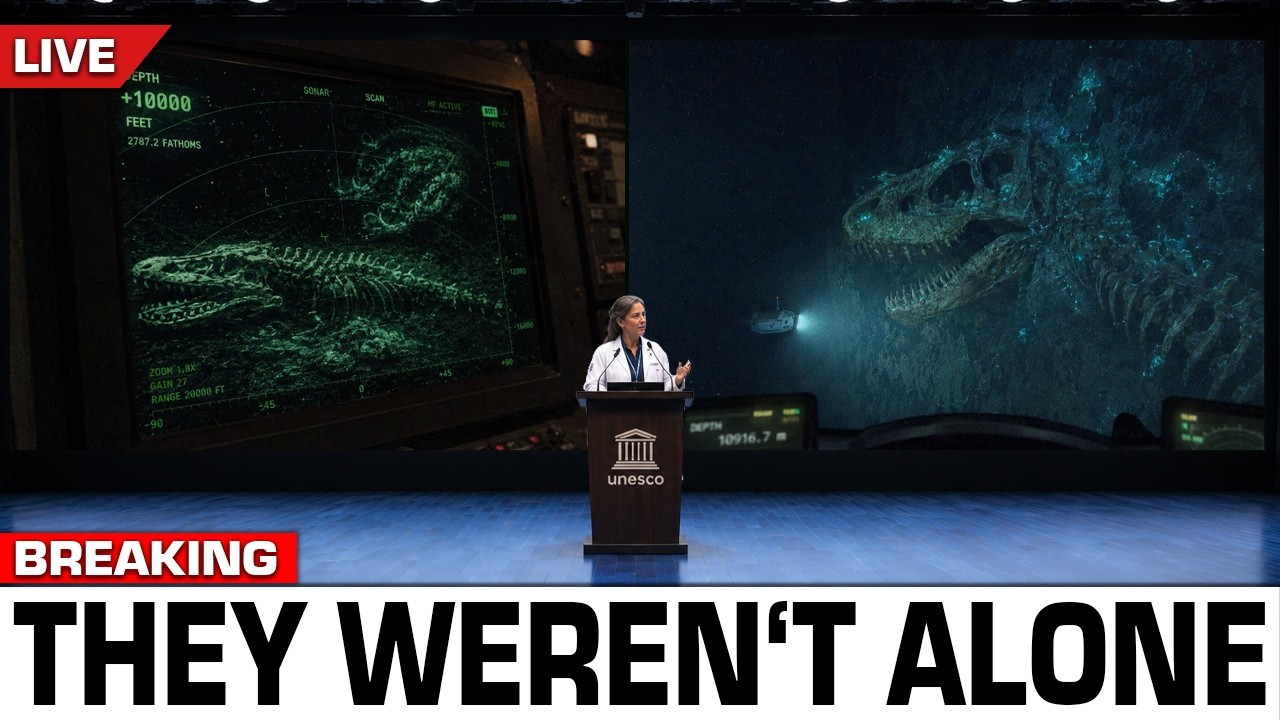
A deep-sea expedition sent divers to the bottom of the Mariana Trench, equipped with high-definition cameras to document the unexplored abyss. The mission aimed for a clear record of the ocean floor, but what the cameras caught on the descent was entirely unexpected.
The Mariana Trench, located in the western Pacific Ocean east of the Mariana Islands, contains the deepest known point on...
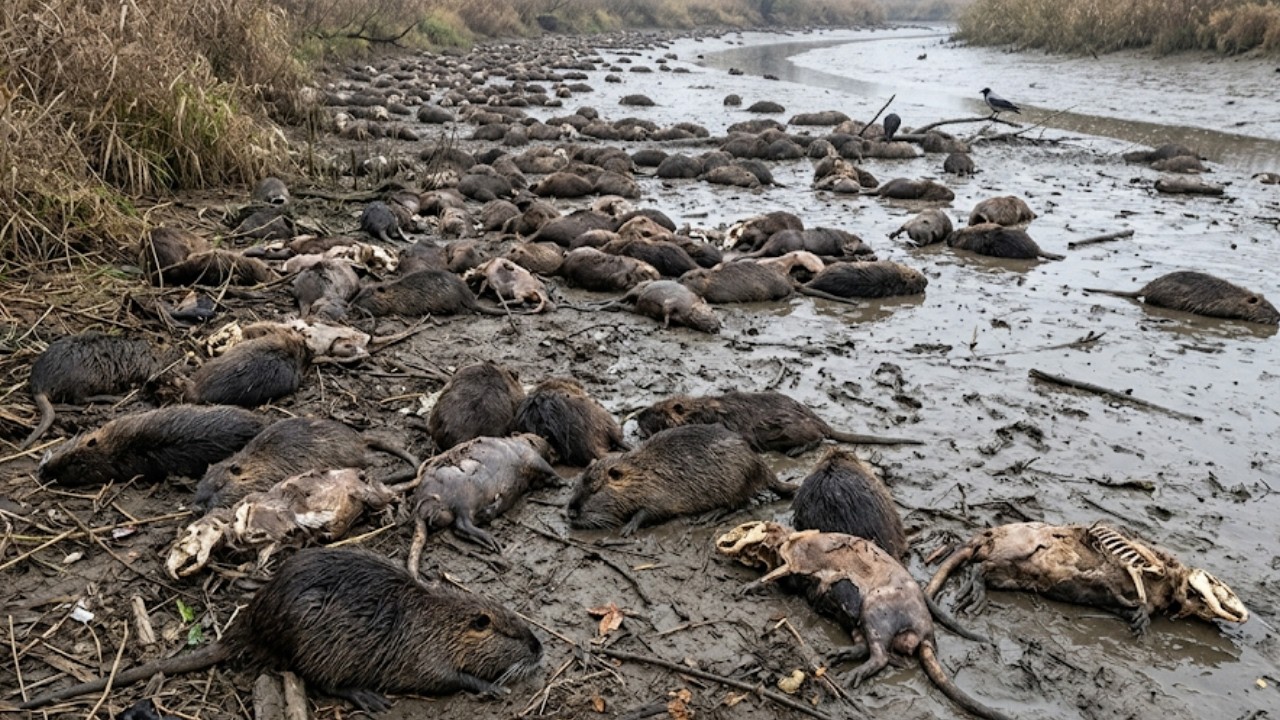
Nutria have quietly vanished from the Pacific Northwest, and scientists tracking the collapse suddenly uncovered an unexpected predator behind the disappearances. The invasive rodents once thrived in the region’s wetlands, but their numbers have plummeted so fast that researchers scrambled to identify the cause.
Elena Vasquez has spent nine years conducting nutria population surveys across the Willamette Valley wetlands in Oregon. Over that period,...
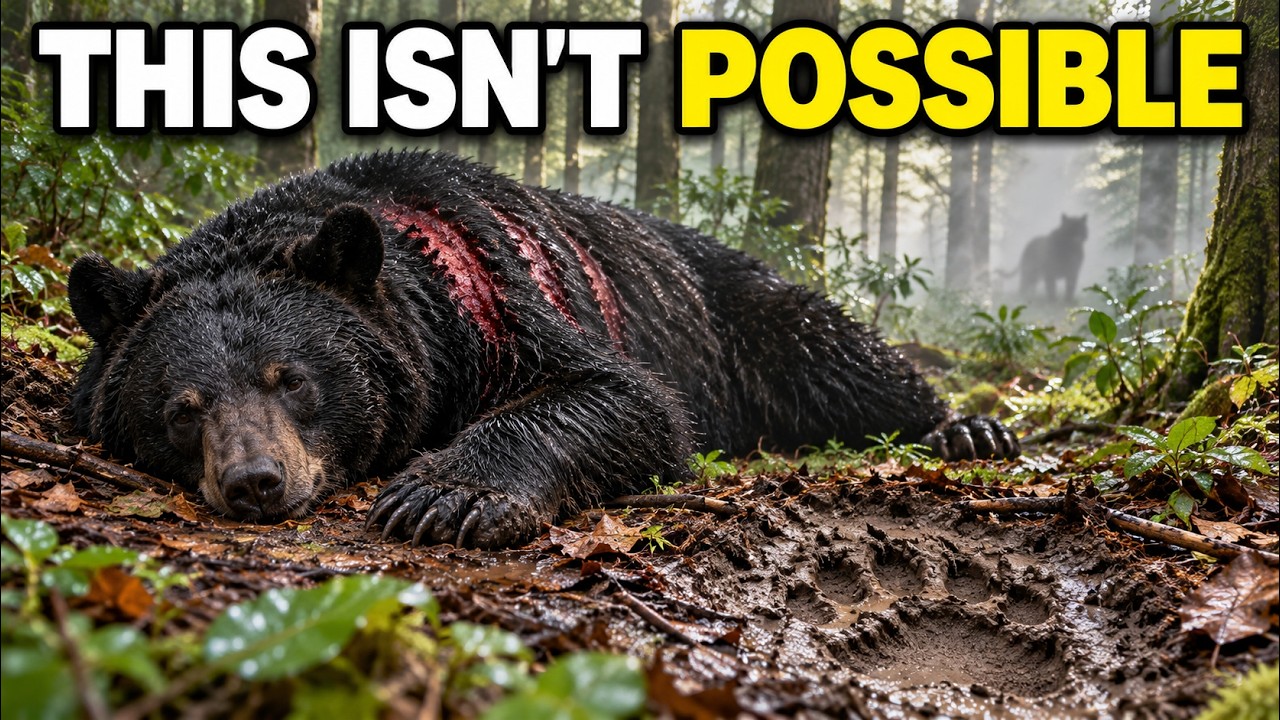
Biologists tracking black bears in the Smoky Mountains finally caught something on camera that they say changes everything they understood about the region’s top predator. For years, researchers assumed adult bears had no natural enemies, standing unchallenged at the top of the food chain.
For several years, biologists monitoring black bears in the Great Smoky Mountains National Park noticed a pattern in their data...