Kazakhstan released tigers back into the wild after a 70-year absence, marking a historic rewilding step. Scientists tracked the released predators closely, monitoring their movement in the vast, unfamiliar landscape of the Ili River delta.
Kazakhstan released a tiger into the wild in late July 2026 as part of a long-running reintroduction project, giving the country its first wild tiger in roughly seven decades.
An adult female Amur tiger named Umut, which means “hope” in Kazakh, left her transport cage on July 31 at the Ile-Balkash Nature Reserve near Lake Balkhash. She weighed about 180 kilograms. The release followed 15 years of preparation by authorities, conservationists, and scientists.

The tiger disappeared into the reed beds after circling briefly and pausing to look back at her handlers. For the first time since the 1940s, a tiger was living in the Kazakh wild.
Umut was one of two adult tigers brought from Russia in May 2026, along with two younger tigers named Turan and Oussouri. A captive-born pair named Kozya and Bogdana arrived from the Netherlands in September 2024 to breed inside a fenced enclosure, with the goal of producing offspring suited for eventual release.
The project aims to reestablish a self-sustaining population of about 50 wild tigers in the delta region by 2035.
Umut’s first ten days in the wild were monitored closely by satellite collar and a network of hidden cameras. Ten days after her release, camera footage confirmed her first successful hunt. The kill was not one of the deer or wild boar that had been carefully restocked for her arrival. It was a wolf. She fed on the carcass over several days.
Her second confirmed kill was a wild boar. This was seen as significant because wild boar populations had expanded after tigers disappeared locally. No confirmed cases of Umut hunting the reintroduced Bukhara deer were reported in her first ten days.
Sergey Aramilev, director general of the Amur Tiger Center, said researchers deliberately kept their distance from the kills to avoid disturbing the tiger, preferring to let her eat in peace rather than risk scattering her by getting too close.
The project began with a genetic study published in 2009, led by geneticist Carlos Driscoll. Researchers sequenced DNA from museum specimens of the extinct Caspian tiger. The results showed that the Caspian tiger had been part of the same population as the Amur tiger until relatively recently, making the Amur tiger the closest living relative and the most realistic replacement species.
Kazakhstan announced its intention to reintroduce tigers in 2010, but actual preparation took years.
Biological surveys found that many former tiger habitats had been converted to farmland or broken into disconnected patches. The Ile River delta and the southern shore of Lake Balkhash were considered the most suitable remaining habitat. In 2018, Kazakhstan created the Ile-Balkhash State Nature Reserve as the core protected area.
Restoration work then began in stages. Around 37,000 saplings were planted to help restore riparian tugai forests and reed thickets, which provide cover and hunting conditions for tigers. Roughly 205 Bukhara deer, a rare subspecies of red deer native to Central Asia, were translocated to the reserve, fitted with tracking collars for monitoring. More than 100 kulan, the Asian wild ass, were also introduced. Fenced breeding areas allowed these hoofed animals to increase their numbers under protection before wider release.
Automatic watering systems were installed, supplementary feeding supported new arrivals during adjustment, and anti-poaching patrols worked to protect recovering populations of local wild boar and roe deer.
Before release, each tiger had to pass two tests. The first was successful hunting of live prey within an enclosure. The second was avoiding humans. According to the Amur Tiger Center, when the tigers detected people at a distance of about 150 meters from their enclosure, they moved away and avoided being seen. They showed no curiosity or aggression. This evasive behavior was considered exactly what experts needed to see.
The World Wildlife Fund and partners also worked directly with communities near the reserve. Local residents who had lived for generations without tigers needed preparation for the return of a large predator. Umut’s satellite collar gives monitoring teams early warning if her movements head toward populated areas.
Long-term success will depend on several factors beyond the tiger itself. The Ile River carries roughly 75 to 80 percent of the water flowing into Lake Balkhash, and it crosses an international border from China’s Xinjiang region into Kazakhstan. Reduced water flow could weaken the wetlands and vegetation that support the prey base. A historical example exists: beginning in 1970, the filling of the Kapchagay Reservoir on the Ile, along with climate conditions and water use, contributed to falling lake levels. By 1987, the lake sat about two meters lower than in 1970, and fisheries came under serious pressure. The lake later recovered in phases, but the lesson remains that river management decisions in both upstream and downstream countries will shape the reserve’s future.
The project’s eventual success will be measured not only by tiger tracks along the riverbanks, but by whether local families can continue their daily lives without feeling that tigers pose an unacceptable threat. The fear that drove the Caspian tiger to extinction could, if left unaddressed, threaten the population now being restored.
As of late August 2026, Umut had confirmed at least two successful kills in her new territory and had avoided populated areas. The other tigers remained in their enclosures awaiting their own readiness assessments. Turan and Oussouri were expected to need more time before facing release.
The broader effort now depends on whether Umut can hold her territory across the delta’s harsh seasons, whether the remaining tigers pass their tests, whether enough water flows through the Ile system to keep the habitat healthy, and whether the people living beside the reserve see the tigers as part of the land rather than a danger to it.
Recommended Stories
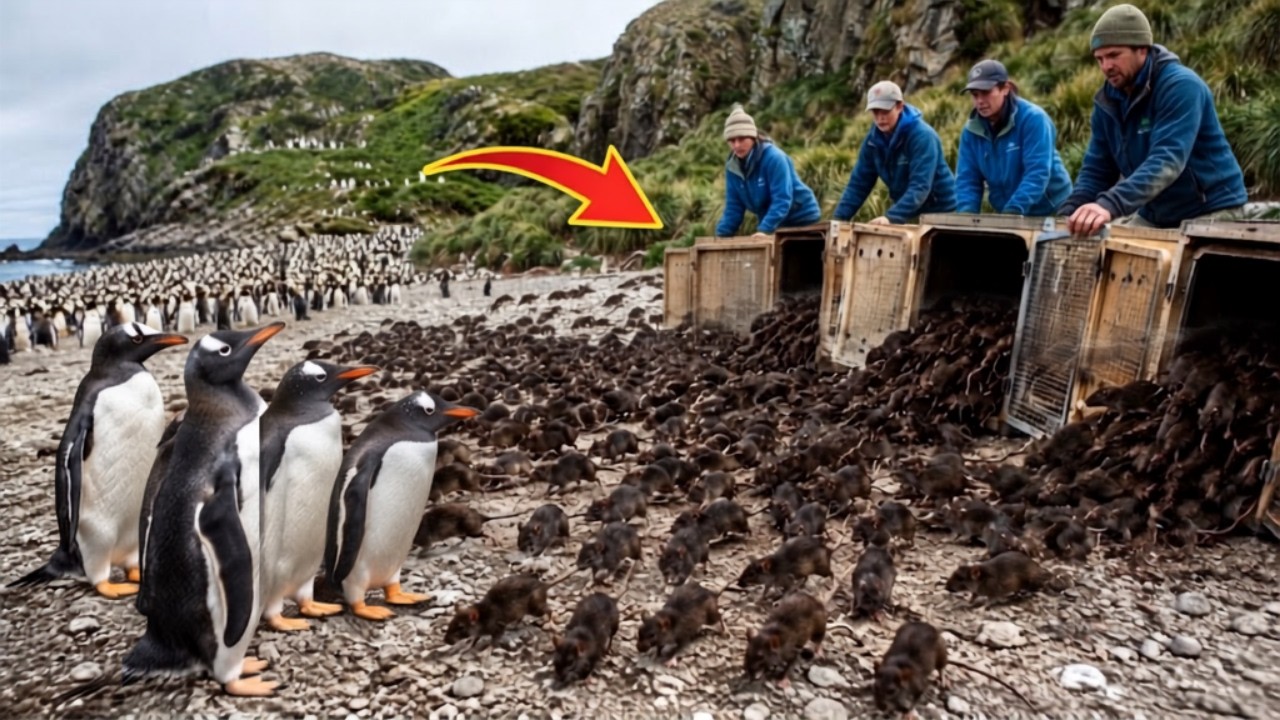
They left thousands of rats on an island full of penguins—24 years later, nobody expected this. The rodents were accidentally introduced decades ago, and by the time researchers returned, the rat population had exploded into the millions, devastating the penguin colonies.
In 1810, the first sealing ship anchored off an island in the Southern Ocean, roughly midway between Tasmania and Antarctica....
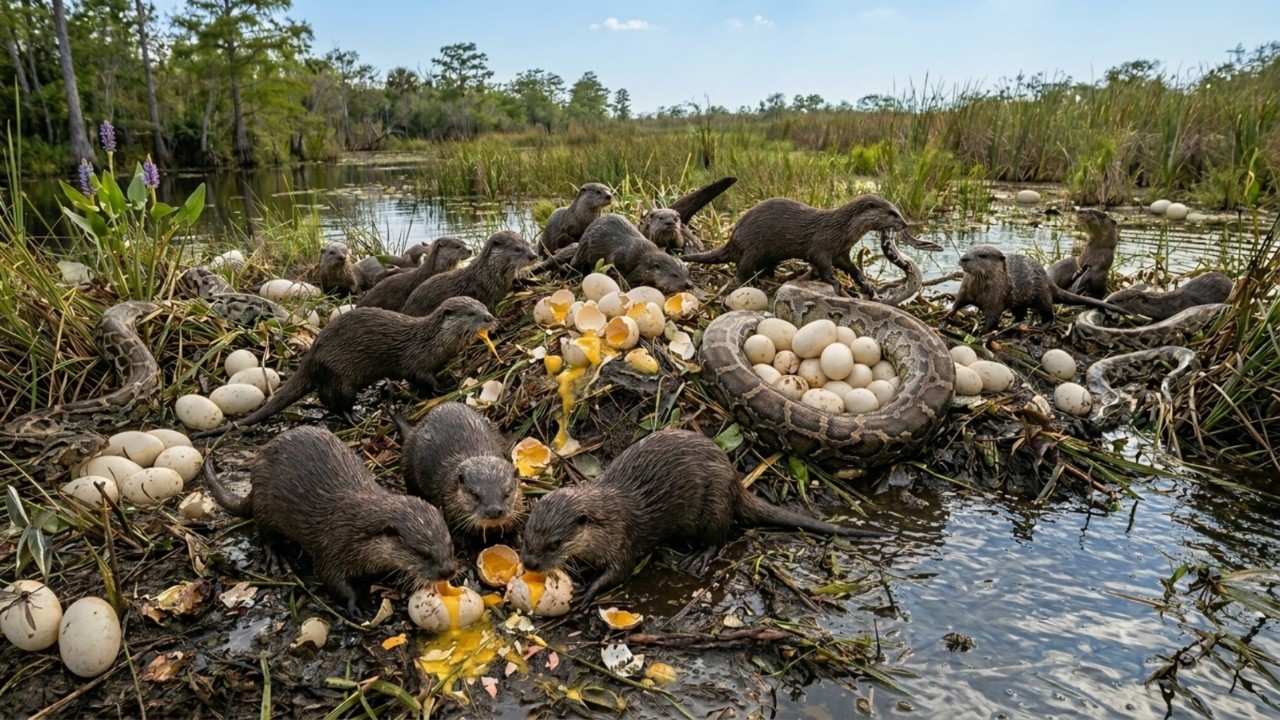
Scientists are watching Florida’s Burmese python nests vanish at an alarming rate, and the culprit isn’t what anyone expected. These massive invasive snakes, already notorious for devastating local wildlife, are suddenly seeing their eggs disappear before they can hatch.
A python nest camera deployed in the Loxahatchee River corridor of the Florida Everglades recorded 37 hours of footage during...

Minnesota was America’s last wolf refuge—until something impossible happened there. For decades, the state’s forests sheltered the only significant wolf population in the lower 48, a rare conservation success story that researchers carefully monitored.
By the mid-20th century, the United States had nearly eliminated the gray wolf from the continental map. Once among the...