Minnesota was America’s last wolf refuge—until something impossible happened there. For decades, the state’s forests sheltered the only significant wolf population in the lower 48, a rare conservation success story that researchers carefully monitored.
By the mid-20th century, the United States had nearly eliminated the gray wolf from the continental map. Once among the most widely distributed land mammals on Earth, the species had been reduced by hunting, trapping, and poisoning campaigns that stretched back to colonial times. In one remote corner of northern Minnesota, however, a small population managed to survive. Over the next fifty years, those survivors would become the foundation for one of the most significant predator recoveries in American wildlife history.
The campaign against wolves began in earnest in 1630, when Massachusetts colonial authorities issued the first documented wolf bounty in North America. The goal was total eradication, driven by the need to protect livestock and clear land for settlement. As the frontier expanded westward, so did the bounties. When Minnesota became a U.S. territory in 1849, one of its first legislative acts was to place a price on wolves, offering $3 per animal.
Federal hunting programs intensified in the early 20th century. Between 1915 and 1942, government hunters killed more than 24,000 wolves, often using poisoned carcasses that could eliminate entire packs. By the 1950s, wolves had disappeared from most of the lower 48 states. The northern Rockies were empty, the Great Plains silent, and the Midwest quiet. The eradication campaign had nearly succeeded.
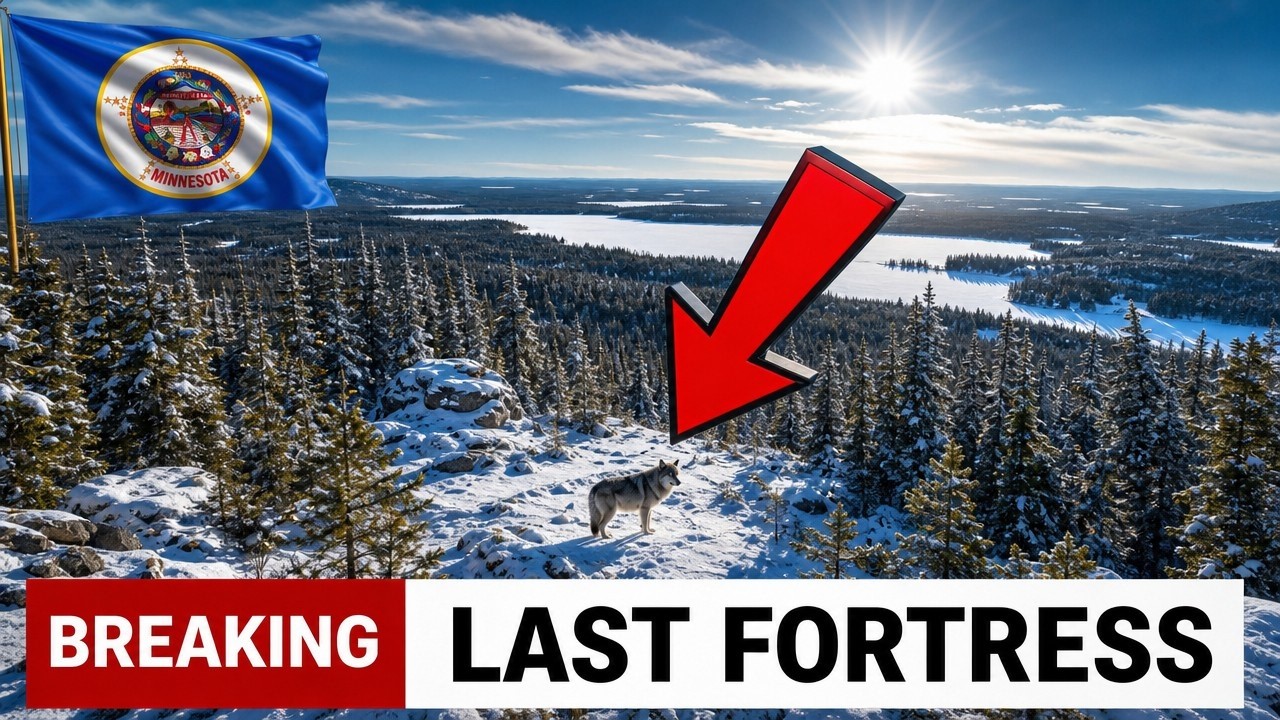
What saved the wolf in Minnesota was not a change of heart but geography. The far northeastern corner of the state is a dense tangle of lakes, bogs, and boreal forest, terrain so difficult to access that the hunters tasked with exterminating wolves often could not reach them. The same wilderness that frustrated loggers and trappers became an accidental refuge. As Dan Stark, a large carnivore specialist with the Minnesota Department of Natural Resources, noted, there was little access to the areas where wolves lived, no livestock to protect there, and after the bounties faded, little incentive to pursue them.
Nancy Gibson, co-founder of the International Wolf Center in Ely, Minnesota, described the situation similarly. What some once considered a failure of development turned out to be a great asset for wolf recovery. While the rest of the country removed wolves from its landscapes, this one roadless region kept a wild, breeding population alive.
Early surveys by state biologist Milt Stenlund in the 1950s estimated that only about 350 to 700 wolves remained, all of them confined to the Superior National Forest. That small group represented the entire future of the species in the mainland United States.
The turning point came from research rather than policy. In 1958, biologist L. David Mech began studying wolves on Isle Royale in Lake Superior. A few years later, he extended his work into the Superior National Forest, where he would study wolves for more than six decades. At the time, little was known about wild wolves. Mech approached them as a scientific subject, fitting them with radio collars and documenting their hunting behavior, social structure, and territory patterns. His work helped dismantle long-standing myths. Wolves, he found, were highly social animals organized around family groups and generally wary of people.
Mech published his findings in a 1970 book titled “The Wolf,” which became a foundational text in wolf biology. His research later informed the reintroduction of wolves in Yellowstone. By the 1960s, public attitudes were beginning to shift. Minnesota paid its last wolf bounty in 1965, closing a system that had operated since territorial days. Wolves could still be killed year-round at that point, and roughly 250 were taken annually through the early 1970s.
Federal protection arrived in 1974, when the gray wolf was listed as endangered under the Endangered Species Act. For the first time in 350 years, killing a wolf in the lower 48 states was a federal crime. At that moment, Minnesota held roughly 750 wolves. Four years later, the listing was refined: the wolf remained endangered across most of the country but was classified as threatened in Minnesota, acknowledging that the species had never fully collapsed there.
A recovery plan set a target of 1,200 to 1,400 wolves in Minnesota by the year 2000. The wolves reached that goal in the early 1980s and kept growing. By the late 1990s, the population had climbed past 2,400 animals spread across roughly 34,000 square miles of forest. The expansion was driven by abundant deer populations, and unlike the Yellowstone reintroduction, it required no human intervention. Wolves dispersed naturally from established packs, colonizing new territory on their own.
Researchers tracked one pack southeast of Hill City, Minnesota, from 1969 to 1980. That pack helped seed at least five neighboring packs and produced dispersing wolves that traveled between 28 and 135 miles. Recent counts have identified more than 600 separate packs in the region. The wolves also expanded beyond Minnesota, re-establishing themselves in Wisconsin and Michigan without assistance. The Great Lakes region now holds an estimated 4,400 wolves, nearly all descended from the survivors in northern Minnesota.
The recovery was widely regarded as a conservation success. That stability was tested in 2012, when the federal government removed Great Lakes wolves from the endangered species list and returned management authority to the states. Minnesota opened its first modern wolf hunting and trapping season that year, with 413 wolves killed. Two more seasons followed, with 238 and 272 wolves taken respectively.
Research conducted during this period found that annual wolf mortality roughly doubled when hunting began, rising from under 22 percent of the population to more than 40 percent, with most of the increase attributable to human activity. Federal agents also continued to trap wolves near farms in response to livestock depredation, a program that removes roughly 200 wolves per year in Minnesota.
A federal judge struck down the delisting in late 2014, returning wolves to threatened status and halting the hunt. Protections were removed again in 2020 and restored once more in 2022, leaving the wolf’s legal status subject to repeated legal challenges. Public opinion has remained broadly supportive of wolf presence, with surveys finding that nearly nine in ten Minnesota residents consider maintaining a wolf population important.
The Ojibwe nations in wolf country have consistently opposed hunting on their lands. The wolf, known as Ma’iingan, holds a significant place in Ojibwe tradition as a brother figure and protector. Oral histories include accounts of wolves guiding lost individuals to safety. The creation story describes the original man and the wolf walking the earth together, with the understanding that what happened to one would happen to the other.
More recently, the population has shown signs of decline. A survey from the winter of 2024–2025 estimated just under 2,300 wolves in Minnesota, down from recent peaks near 3,000. Around Voyageurs National Park, the local population fell to roughly 100 animals, its lowest level in more than a decade. At the same time, the occupied wolf range has continued to expand, covering more than 70,000 square kilometers and growing by another 6 percent into central Minnesota, where new packs have been documented in areas that had not held wolves in living memory.
Several factors may explain the decline. Two severe winters in 2022 and 2023 created deep snow that lingered into spring, which is hard on deer populations. The following two winters were among the mildest on record. A study from the Voyageurs Project also suggested that human activity, including logging, roads, and trail traffic, has begun to affect the hunting relationship between wolves and deer.
The research infrastructure built to study wolves has also produced unexpected findings. The Voyageurs Wolf Project recently captured the first video evidence in more than a century of cougars reproducing in Minnesota, with four animals recorded on camera. The species had vanished from the region about a hundred years ago.
As of the most recent winter, Minnesota holds roughly 2,300 wolves. The population faces ongoing pressure, while its range continues to expand. Legal disputes over its management remain unresolved. The species survived centuries of organized eradication due to a few hundred animals in a remote forest, then rebuilt its presence across an entire region without assistance. The story of that recovery remains incomplete.
Recommended Stories

Officials have spent over $600 million since 2004 fighting Asian carp, an invasive species devouring the food supply as it pushes toward the Great Lakes. Electric barriers, commercial fishing contracts, and sound barriers have all failed to fully stop the spread.
Wildlife officials in the United States have spent more than $600 million since 2004 trying to control Asian carp, an...

A robot was sent 31,000 feet to the ocean floor on a routine mission, and what it recorded left the entire research team silent. The descent took hours, passing through pitch-black waters where sunlight has never reached.
A Chinese submersible has completed its latest mission in the Mariana Trench, marking the fourth time the vehicle has descended...

Everyone said a broken canyon couldn’t be healed—then volunteers rebuilt it by hand, one rock at a time. In northern New Mexico, crews rejected heavy machinery for a simple method developed by retired biologist Bill Zeedyk.
In northern New Mexico, volunteers have worked to restore eroded creek beds using a method that relies on hand-placed rocks...