Florida fishermen just hauled up sonar readings of a colossal shark so massive they believe it could be the legendary Megalodon. The crew was scanning deep waters off the coast when their equipment locked onto a shadowy shape over fifty feet long, far larger than any known living species.
The ocean floor remains largely unmapped, with only about 27 percent of the seafloor charted in modern detail and far less observed directly. That leaves the possibility of undiscovered animals, which occasionally fuels speculation that the Megalodon, a prehistoric shark long considered extinct, might still exist. Each year, reports of unusually large sharks add to that speculation.
One team of scientists, however, believes the great white shark may have played a role in the Megalodon’s extinction. A 2019 study from the College of Charleston reexamined the fossil record and concluded that Megalodon disappeared about 3.6 million years ago, roughly a million years earlier than previously thought. Around that time, great whites were spreading from the Pacific into oceans worldwide. The researchers suggest that competition with great whites may have contributed to the Megalodon’s decline.
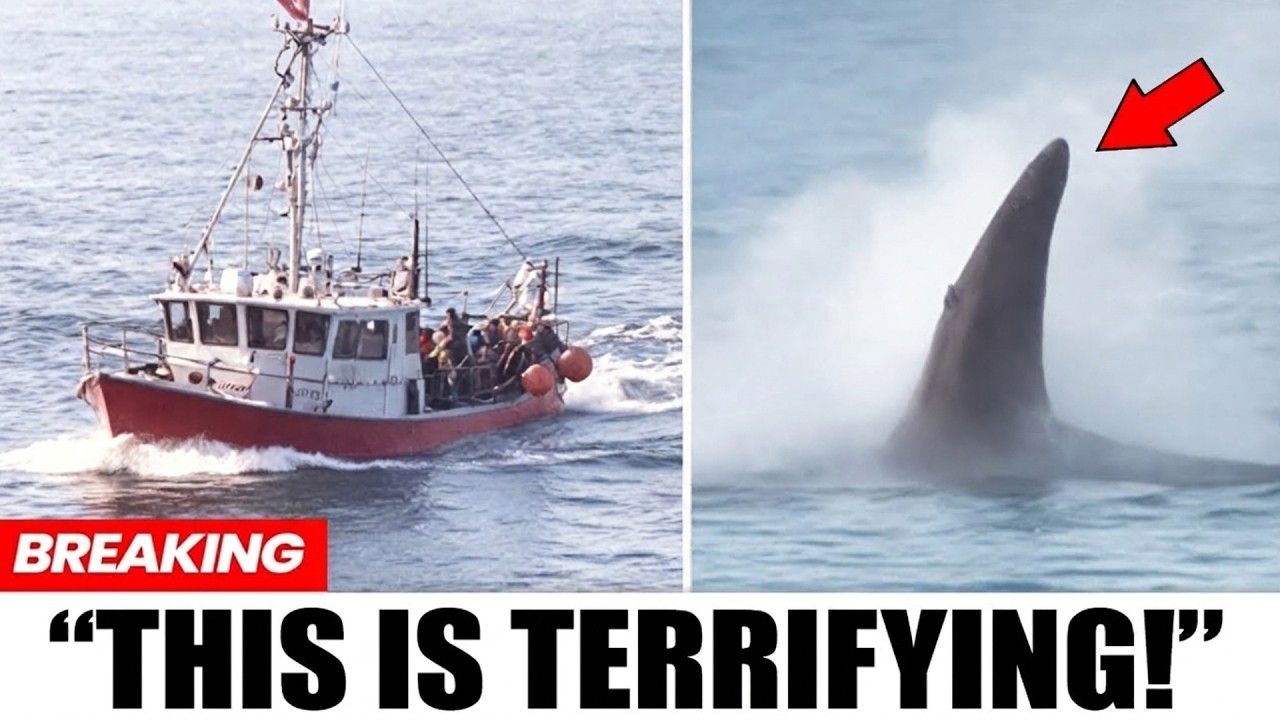
Most large shark sightings, when investigated, turn out to be great whites. One notable example is Deep Blue, a great white estimated at around 20 feet long and believed to be more than 50 years old. In 2013, researcher Mauricio Hoyos Padilla filmed her near Guadalupe Island off Mexico during Shark Week. The shark approached a dive cage, was observed by the crew, and then swam off. Researchers have since tagged her to track her movements and diving patterns.
The age estimate for Deep Blue has scientific support. A 2014 study from the Woods Hole Oceanographic Institution used carbon left over from mid-20th-century nuclear bomb tests to date great white vertebrae. The oldest male tested was up to 73 years old, and the oldest female was 40. A 50-year-old great white is therefore within established limits.
Some reported encounters have produced claims of enormous sizes that remain difficult to verify. In April 1987, a Maltese fisherman named Alfredo Cutajar caught a large shark off Wied iz-Zurrieq. Reports varied over time, with measurements given between 23 and 23.7 feet. The catch reportedly contained a whole blue shark, a dolphin cut in half, and a sea turtle. Given the multiple retellings, no definitive measurement was ever confirmed.
Other reports describe sharks that show signs of encounters with even larger animals. In Nova Scotia, researchers with the group OCEARCH caught a 13-foot male great white named Seven. The shark had a fresh wound and scars, leading the group to suggest an attacker of at least 14 feet. Bites during mating are common among sharks, and no specific explanation was confirmed.
Not all large sharks are predators of large prey. Basking sharks, the second-largest fish species after the whale shark, can reach lengths of up to 12 meters and weigh up to six tons. They feed on zooplankton, filtering around two million liters of seawater per hour. In one 2021 incident filmed from a cruise ship, a large shark circling near the surface was widely speculated to be a Megalodon. Experts identified it as a basking shark, which is harmless to people.
Some of the largest great whites on record have been measured after being caught incidentally. In 1983, a great white found dead in a fishing net off western Prince Edward Island was measured at 5.2 meters, or about 17 feet. A fisheries officer exhumed it from a gravel pit two weeks later to take the measurement. Researchers later determined the female was around 19 years old, young for a species that can live past 70. This slow maturation rate makes great white populations slow to recover from declines.
In March 2018, two fishermen from Port Orange, Florida, encountered a great white approximately 12 to 15 feet long while bottom fishing about 26 miles offshore near Ponce Inlet. Kyle Morningstar and Ian Smith filmed the shark as it circled their 23-foot boat twice. Morningstar later said he was in shock and that the shark did not appear scared.
Similar sightings have occurred elsewhere in Florida. In August 2020, Carl Rosenblatt filmed a great white about 20 miles off Jupiter Inlet that stayed near his boat for roughly half an hour. He described the shark as calm and said he was only borrowing the ocean for the day. In January 2025, tagged great whites named Breton and Bob were tracked off Florida’s East Coast. Breton, about 13 feet long and tagged off Nova Scotia in 2020, pinged near Volusia County, while Bob, a similar-sized shark, pinged off Brevard County.
Claims of Megalodon sightings have occasionally circulated. In 2016, an April Fools’ Day story claimed a 100-foot Megalodon carcass had washed up in South Africa. The story cited a Coast Guard officer and a scientist, but no evidence of either person was found outside the article. The video used in the story had been online for about three years.
The idea of a living Megalodon gained wider attention in 2013, when Discovery aired “Megalodon: The Monster Shark Lives” during Shark Week. The program presented Megalodon’s survival as fact and featured an expert who was actually an actor. It became one of the most-watched programs in Shark Week history at the time. Discovery added a short fiction disclaimer only after public criticism.
Fossil evidence still provides some context for the Megalodon’s possible size. A March 2025 study led by Kenshu Shimada at DePaul University estimated the largest reasonable Megalodon at about 80 feet, with a cruising speed of 1.3 to 2.2 mph. The study also found that newborn Megalodons were already 12 to 13 feet long at birth.
In August 2024, a female great white estimated at around five meters circled a boat off Mooloolaba, Australia, for about 45 minutes and then bit it. Jayden Grace and Joe Cook, the two men on board, were not injured. Cook initially thought the shark was a baby whale before realizing it was a great white.
Other large sharks have been documented in various locations. A 16.4-foot great white named Slash has been observed off New Zealand. The shark’s name comes from a deep cut along the side of its mouth, which Peter Scott of Shark Dive New Zealand attributed to a tagging attempt. Off Stewart Island, some of the largest and most assertive great whites in the world have been filmed for a Shark Week episode.
Deep-sea sharks remain less studied. In one project, researchers from OceanX spent four days and about 300 pounds of bait trying to tag a bluntnose sixgill shark from a submarine. They became the first team to tag an animal from inside a submersible. Several sixgills up to 16 feet long were observed, and one large female approached the submarine closely. These sharks typically live at depths up to 3,300 feet and have been recorded at around 5,000 feet. Their lineage goes back roughly 180 million years.
Some encounters are captured from the air. In 2020, Matthew Smith was fishing from a kayak about a mile off Blackhead Beach in New South Wales when a 13-foot great white approached him. His friend Nico Bryant filmed the encounter with a drone. The shark showed interest in Smith’s sea anchor, which he cut loose, and the shark eventually swam away without biting.
Tiger sharks also produce notable sightings. A crew from a fishing charter off Sydney caught a tiger shark large enough that they had to haul it aboard by hand and transport it to Port Hacking for weighing. The catch drew criticism online once it became public. Tiger sharks can grow past 16 feet and are responsible for the second-highest number of fatal attacks on people after great whites. Far more tiger sharks are killed by fishing than by any other cause.
In South Carolina, Chip Michalove’s charter operation sees at least ten great whites each winter. On one trip, he hooked a 12-foot female off Hilton Head Island. He and an assistant fitted her with tags before releasing her, and the data was forwarded to scientists in Massachusetts. These winter sharks often move south to Florida.
At Seal Island near Cape Town, South Africa, great whites occasionally launch themselves out of the water to catch Cape fur seals from below. Photographer Chris McLennan documented more than two dozen breaches in a single hour while towing a seal-shaped decoy.
One of the larger great whites on record was caught near Kangaroo Island in South Australia in 1987. Reports initially put the shark at more than seven meters, close to 23 feet. Researchers later revisited the remains and photographs and concluded that a figure around 19 to 21 feet was plausible, with the larger original estimate difficult to rule out entirely.
In a more recent sighting off Marino Bay, South Australia, a crew from a nonprofit group reported a great white they estimated at roughly 23 feet, longer than their own 20-foot jet boat. Marine scientist Colin Simpfendorfer of James Cook University noted that estimating size from photographs can be unreliable when there is little in the frame for scale. The crew, however, stood by their measurement.
For all the reported encounters, the scientific consensus remains that Megalodon is extinct. Most of what is known about the species comes from teeth and a few vertebrae, since shark skeletons are mostly cartilage and rarely fossilize. Most Megalodon teeth found measure four to five inches. In 2023, a charter boat captain named Michael Nastazio found an intact tooth over six inches long off the southern coast of Sarasota County, Florida.
Large sharks seen near boats in Florida, Australia, and elsewhere consistently turn out to be great whites rather than Megalodons. Great whites, which may have outcompeted Megalodon millions of years ago, remain the largest predatory sharks commonly encountered today.
Recommended Stories
Jeremy Wade kept finding things too dangerous to show—and that may be exactly why River Monsters was cancelled. For years, the show thrilled millions with giant catfish, alligator gar, and Amazonian killers, each episode pushing further into uncharted waters.
The documentary series River Monsters ended in 2017 after nine seasons, and its star, Jeremy Wade, has continued to work...
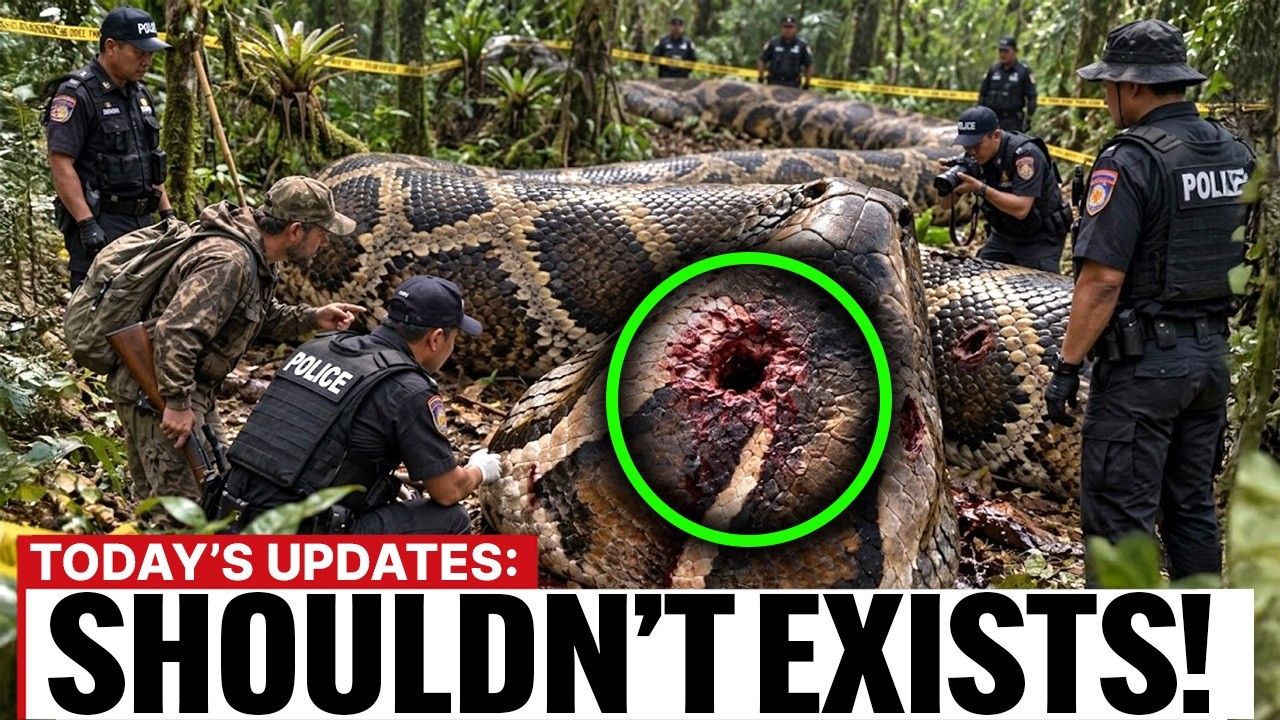
Australia’s biggest python ever found has surfaced, and overnight, photos of the massive serpent broke the internet. The reptile, reportedly measuring over twenty feet, was discovered by locals before being taken into custody by wildlife authorities.
A group of hunters walking near the Daintree River in far north Queensland initially passed what they thought was a...
In the world’s deepest abyss, fifteen hundred meters below even the Titanic’s grave, divers captured footage researchers say rewrote ocean science. The Mariana Trench’s crushing pressure was supposed to make life impossible, yet the cameras revealed something thriving where nothing should survive.
On January 23, 1960, Swiss engineer Jacques Piccard and U.S. Navy Lieutenant Don Walsh climbed into the bathyscaphe Trieste and...