Wild horses are vanishing from American rangeland, and scientists just identified the new hunter moving in. Federal data shows wild herds are increasingly attacked at night, with horses found injured and exhausted across the West.
In late October, a wildlife biologist conducting aerial horse population surveys over a remote range in central Nevada pulled her data from a pasture and trail near Eureka, then sat in her truck for a long time before making a call. She had been running the same surveys for 11 years. Across that time, she had come to know the land’s patterns: the ridgelines, the clustering of horses at water sources, the distribution of bands across valley floors in dry years versus wet ones. Her professional work rested on knowing what the landscape was supposed to contain.
The current data did not match those expectations. The horse bands she had monitored at consistent density across three defined basin areas throughout her survey period were not appearing. They had not decreased gradually, nor had they moved to adjacent terrain or to water. She flew the route a second time before landing. Then she sat in the truck again, and called the research station with a brief message: something had shifted.
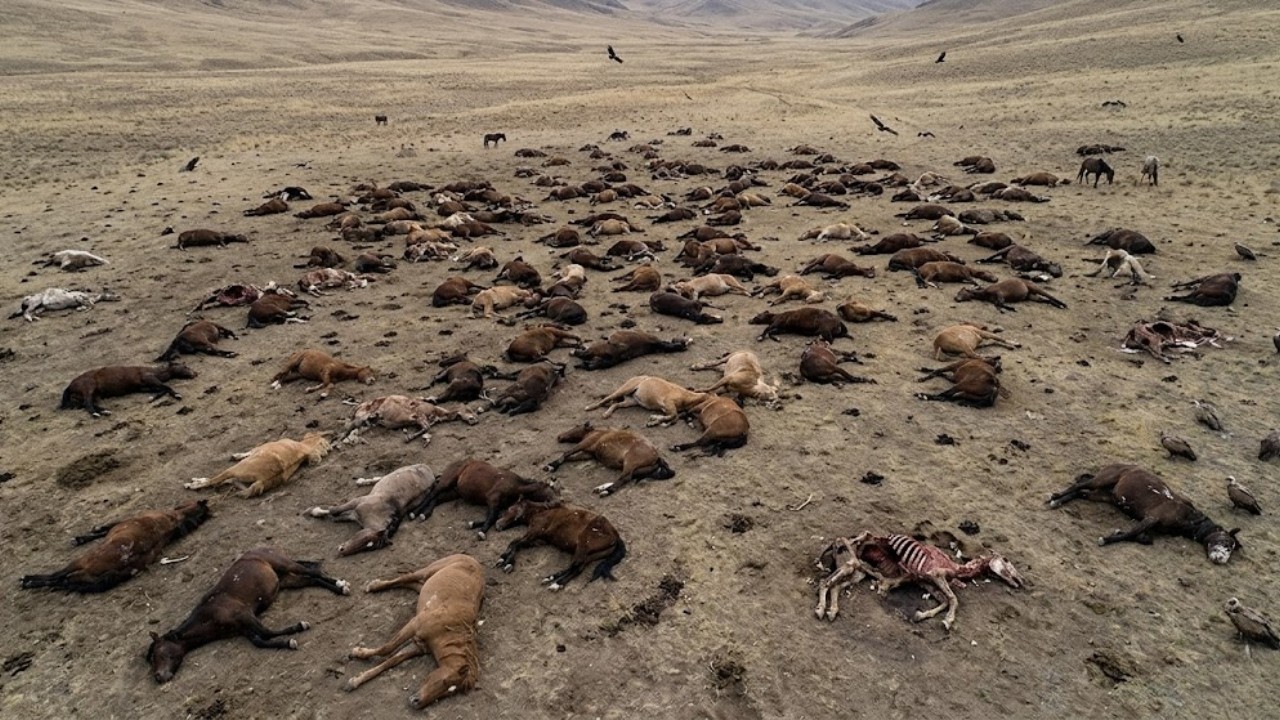
The story now unfolding in the Great Basin of Nevada, Utah, and Wyoming involves an ecological development that has drawn less attention than its implications might suggest. Across specific basin corridors, wild horse numbers are declining without any corresponding increase in federal management activity—no roundups, no fertility control programs, no adoption campaigns, no removals to account for the change. Survey data recorded four consecutive seasons of decline in those corridors.
The explanation points to a native predator. Mountain lions, once nearly eradicated from the western United States, have been recovering for reasons unrelated to wild horse management. Their resurgence had been tracked by wildlife agencies monitoring other dynamics, such as mule deer populations and livestock conflicts. The lions have now established territories overlapping the basins where horse numbers are falling. The geographic match is clear across all seasons of available data.
To understand what the surveys show, it helps to understand the position of wild horses in the modern American West. Biologically, horses are not native to the region. The species that evolved on the continent went extinct roughly ten thousand years ago. The animals on today’s rangelands descend from Spanish colonial horses that escaped or were released beginning in the 1500s, with continued escapes through the cattle-ranching era of the nineteenth century. They arrived into an ecosystem that had no evolved mechanism to manage them, and they reproduced accordingly.
A wild mare typically gives birth to one foal per year starting at age three. In favorable range conditions, populations can double every four to five years. The Bureau of Land Management currently estimates more than 80,000 wild horses and burros occupy federal lands across ten western states, while the land’s carrying capacity is set at roughly 27,000. That gap has widened since the Wild Free-Roaming Horses and Burros Act of 1971 made federally managed removal the primary administrative tool, reducing most natural population pressure.
Gather operations remove tens of thousands of animals annually, but herds often replenish within a single breeding cycle. Government holding facilities currently house upwards of 60,000 removed animals, with lifetime care costs per animal exceeding $50,000. The program faces financial and logistical strain with no apparent ceiling.
When aerial survey data from three specific basin corridors in central Nevada began showing declines across four consecutive survey seasons with no corresponding removals, researchers initially questioned their measurement methods rather than assuming a solution had emerged. Dr. James Coldwater, who coordinated predator monitoring for Nevada’s wildlife department for eight years, was asked to assess whether predator activity could explain the numbers. He compared his monitoring data against the horse surveys and spent three months building a spatial analysis before presenting his findings.
His maps showed that mountain lions had established permanent territories overlapping all three declining basins. The cats were not transient visitors from neighboring ranges. They had settled in the area. The overlap matched survey data across every available season.
Mountain lions are the largest wild cats in North America. Adult males can weigh around 220 pounds and measure up to nine feet from nose to tail. They are ambush predators, adapted to locate prey, select an individual, position themselves above and behind, and close in a final rush covering about thirty feet in under two seconds. Historically, mule deer were their preferred prey throughout the Great Basin. But mountain lions feed on what is available within acceptable risk levels. Young wild horse foals in Nevada’s protected herds present a vulnerability that mountain lions exploit naturally.
Foals are born weighing between 80 and 150 pounds. They can stand within two hours and run within hours more. But during their first three to four weeks, their speed, stamina, and awareness are insufficient to escape a pursuing predator. Stallions offer protection; mares form a defensive circle around threatened foals. Mountain lions, however, target the moments when a foal drifts to the edge of the group while feeding or resting, closing the gap before the defensive formation can organize. Adult horses are not the target. The vulnerable period for foals spans weeks, not months.
The Great Basin’s mountain lion population reached its recorded low in the 1960s and 1970s, following a century of hunting, predator control programs, and deliberate eradication efforts by federal agencies and private landowners. That period of lowest lion density coincided with rapid growth in wild horse numbers across the same region. The two trends ran parallel for decades, tracked by separate agencies with separate mandates and data systems that were never connected.
Nevada extended protections to mountain lions in 1967. Utah followed with regulated hunting seasons that replaced bounty systems and removed the most intense persecution pressure. Recovery was gradual, spanning decades, and was monitored by wildlife agencies for reasons unrelated to wild horses. For forty years, the lion recovery program and the wild horse management program operated in parallel without any formal inquiry into what happens when a stable lion territory overlaps a wild horse herd management area at basin scale. Coldwater’s analysis raised that question for the first time.
Field cameras across the three declining basins documented a consistent pattern. Territorial lions moved through basin ranges on patrol routes that crossed resident horse band territories several times per week. Predation events concentrated during the first three weeks of foaling season, when young animals were most vulnerable. Camera footage also captured herd dispersal events: a mountain lion moving through a stable horse band territory pushed the entire group away from water or forage, forcing movement and separating young animals from the protection of dominant mares.
The cumulative effect of predator presence altered daily herd behavior in ways that aerial surveys were not designed to capture. The population-level impact was not dramatic in any single season. Mountain lions do not cause the kind of sudden collapses that disease or drought can produce. Instead, they create a steady annual reduction in foals surviving to reproductive age. Survival rates in the three declining basins fell below the threshold needed to sustain population growth. Adult populations appeared stable in aerial counts, but not all generations were surviving their first year at the rates the population required.
A population that stops recruiting young does not collapse suddenly. It ages and contracts from within—a slow process, invisible to a survey counting adults, and consistent with what the basin data recorded across four consecutive seasons.
Coldwater returned to the three basins four times during the survey season after his initial analysis. On one visit to the largest corridor, he drove to the valley as dawn broke and stopped at a rise overlooking the main valley floor. A band of eleven horses moved along the valley edge in the early light, the stallion at the rear. He watched the ridgeline for twenty minutes before continuing. Returning late in the afternoon, he stopped at the same point. The band had moved to a distant water hole. The stallion faced the ridgeline. Coldwater did not see a lion, but the stallion had. He recorded his field notes and wrote a final line: some landscapes recover in the way they always recovered, before anyone thought to manage them.
Whether the mountain lion recovery will expand across enough of the Great Basin to generate sustained pressure on foal recruitment across the full geographic range where wild horse numbers exceed carrying capacity remains an open question. The pace of lion territorial expansion relative to the need for a self-sustaining balance is what the seasonal aerial surveys are now watching.
Recommended Stories

Forty years after Tampa Bay’s own cold case was solved, the Everglades still guards secrets that should be front page news. Beneath the river of grass, a 200,000-strong alligator population shares swamp with crocodiles, while Burmese pythons—hundreds of thousands strong—have silently erased 99% of local raccoons and opossums.
The Florida Everglades is often described as a swamp, but it is more accurately understood as a slow-moving river, roughly...
A secret cache of naked beavers might be wilder than any story ever told. In Canada, they were released onto barren land to revive it.
In the summer of 1948, wildlife officials in Idaho carried out an unusual relocation program: they dropped beavers from airplanes...
Invasive pythons have been swallowing Florida wildlife for years, but new hunters are using a tactic that’s triggering intense backlash. These hunters don’t just remove the snakes killing them in a way critics describe as cruel and chaotic.
In the wetlands of southern Florida, an estimated 300,000 Burmese pythons now live across more than a thousand square miles,...