For 70 years, America dumped fish into supposedly empty mountain lakes to boost recreation, but scientists just uncovered what those aerial stockings accidentally destroyed. The program seeded hundreds of remote alpine waters, transforming them into fishing destinations.
For more than seven decades, a small plane has flown over remote mountain lakes in the American West and released thousands of tiny fish into the water below. The method, called aerial fish stocking, began in Utah in 1956, though the first flight was not recorded. The practice later spread to other Western states.
Before airplanes were used, stocking high-altitude lakes required crews to carry young fish in milk cans strapped to horses or mules, often on multi-day climbs through rough terrain. Many fish did not survive the journey.

Aircraft changed that. A single-engine Cessna 185 Skywagon, fitted with a tank that has seven compartments, can stock seven different lakes in one flight. The pilot descends to between 50 and 150 feet above the surface and slows to about 70 miles per hour, while a crew member releases the fish through a hatch. Because the fish are small, only 1 to 3 inches long, their fall is slowed by air resistance, and survival rates are high. A single flight can carry tens of thousands of fish, and a crew can stock 50 to 60 lakes in one morning. In 2025, Utah reported releasing more than 11.5 million fish across all its waters.
The practice became widely known only about a decade ago, when a hatchery supervisor in Utah mounted a camera to the underside of a plane during a drop. The footage drew millions of views. For anglers who hike long distances to reach high lakes, the program is valued and has come to feel like a tradition.
But the practice had an unintended ecological consequence that took decades to fully understand.
The high lakes of the western mountains formed after glaciers retreated thousands of years ago. Because of waterfalls and other natural barriers, most lakes above roughly 6,000 feet had no fish at all for about 10,000 years. These waters developed an ecosystem that did not include fish.
In the Sierra Nevada, the most common animal in these lakes was the mountain yellow-legged frog. A 1915 survey led by a University of California biologist noted that frogs were so numerous that surveyors stepped on them along shorelines. The frogs were central to the alpine ecosystem. Their tadpoles grazed on algae, and the adult frogs were prey for garter snakes and birds. The frogs carried energy from the water to the surrounding land.
That system remained intact until the late 1800s, when trout were first carried by mule to a small number of lakes. But the difficulty of the terrain meant most lakes remained untouched.
The change came in the 1950s and 1960s, when airplanes made it possible to stock fish in nearly any lake, regardless of how remote it was. An estimated 17,000 mountain lakes in the West were eventually stocked with fish. In the Sierra Nevada, roughly 90 percent of the mountain yellow-legged frog’s habitat came to contain introduced trout.
Trout fed on tadpoles, and in lakes where they were introduced, the frogs gradually declined. The decline was slow and difficult to notice partly because adult frogs can live for a decade or more. A lake could appear healthy, with adult frogs present, even as tadpoles disappeared and no young frogs survived to replace them.
By the 1980s, biologists began to document that the mountain yellow-legged frog was disappearing from the very wilderness areas set aside for protection.
In 1996, a University of California, Berkeley researcher named Vance Vredenburg began a long-term study in the 60 Lake Basin in the Sierra Nevada, a rugged area about a two-day hike from the nearest road. Over several years, he conducted more than 900 frog censuses, implanted microchips in more than a thousand frogs, and used radio transmitters to track others. He found that lakes with fish had almost no frogs or tadpoles, while fishless lakes still had healthy frog populations.
To test the connection directly, Vredenburg removed trout from five lakes using gill nets between 1996 and 2003. He also conducted a smaller experiment in which he placed trout into fenced sections of shallow water where frogs were spawning. The trout ate every tadpole in those enclosures.
In the lakes where trout were removed, the frog population recovered within three years. A separate set of removal experiments by another researcher, Roland Knapp, produced the same result. Trout have since been removed from at least 70 mountain lakes in the Sierra Nevada, and the frogs have returned and expanded on their own into neighboring waters.
The recovery also benefits other species. With tadpoles back in the shallows, garter snakes and birds that depend on frogs as a food source have returned to restored shorelines.
In many areas, the fish stocked into high lakes are sterile, so their populations last only as long as managers continue to add new fish. If stocking stops, the lake returns to a fishless state on its own within a generation.
This does not mean the stocking program should be seen as having been done with ill intent. Hatchery crews and anglers have supported the practice as part of an outdoor tradition. The ecological harm was unintended.
There is room for both activities. Many thousands of lakes can remain stocked for fishing, while networks of restored fishless lakes can be set aside to protect the mountain yellow-legged frog and related species.
The frog now faces an additional threat. A fungus that has affected amphibians worldwide was detected in the Sierra in 2001. Healthier and more numerous frog populations, supported by restored fishless lakes, are in a better position to withstand that disease. The restored lakes function as refuges.
The larger point is that a previously degraded ecosystem has shown the capacity to recover. After several years of targeted removal, frogs returned to lakes that had been largely silent. The recovery was described by researchers as dramatic and rapid. Ecosystems that changed over a century are now being given the opportunity to return to their earlier state.
Recommended Stories
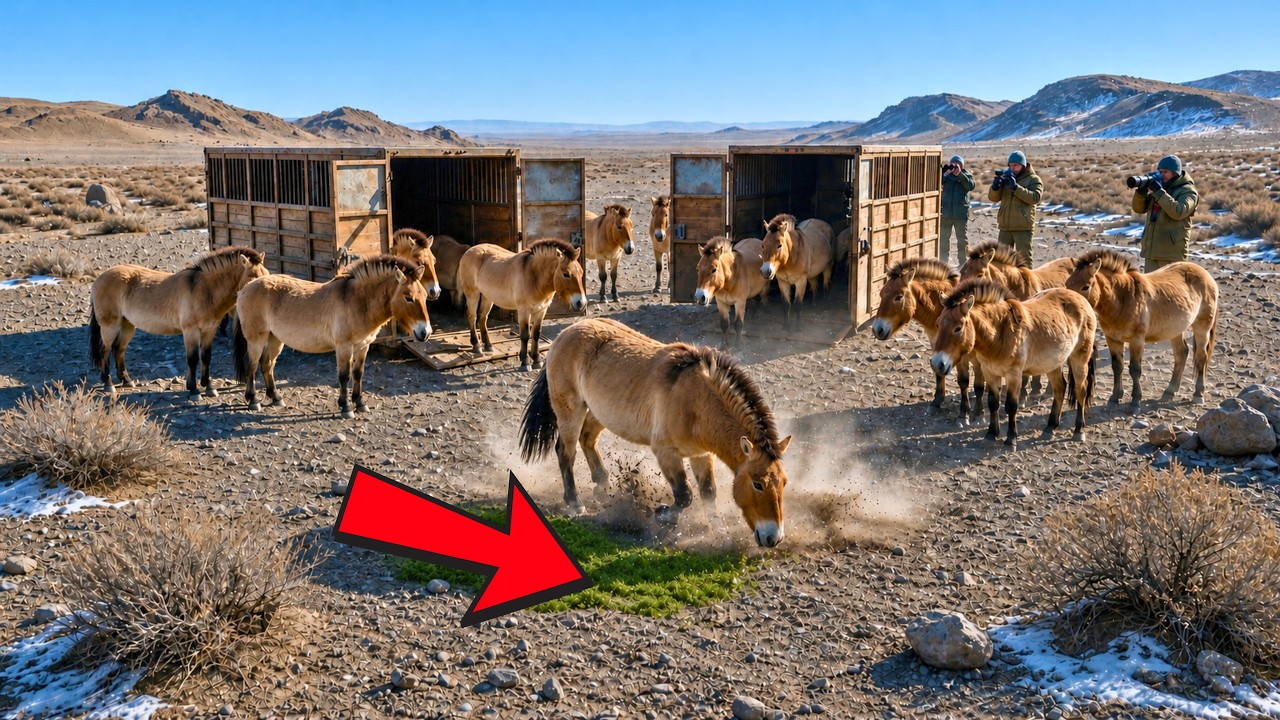
China released 11 horses into a desert with zero grass—and what they did with their hooves stunned researchers. The herd was transported to a barren, arid landscape where survival seemed impossible, with no visible vegetation or water sources.
In December 1986, eleven Przewalski's horses arrived at the edge of the Junggar Basin in northwestern China, transported from zoos...
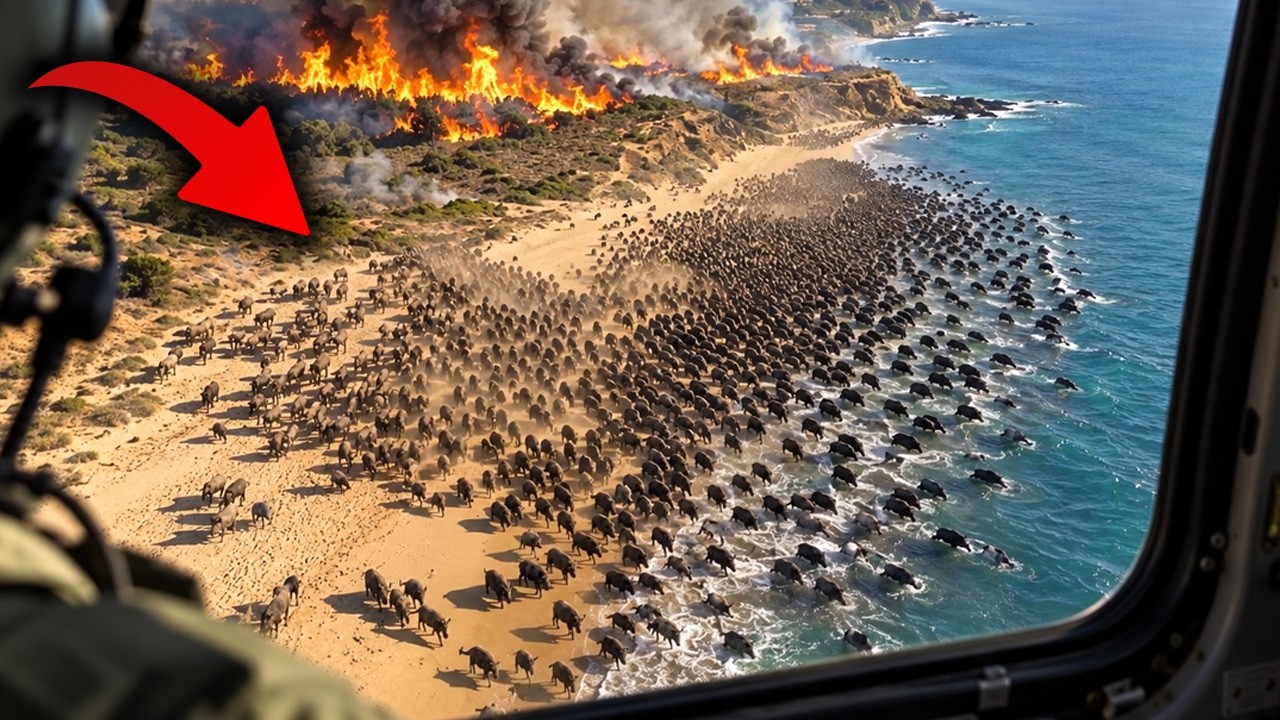
Australia’s biggest wild pig eradication succeeded far beyond expectations, stunning officials who braced for a predictable failure after years of failed attempts. The massive campaign targeted millions of ferals wreaking havoc on crops and native wildlife, with teams deploying traps, aerial shooting, and poison across vast outback terrain.
For more than two centuries, feral pigs thrived on Kangaroo Island, despite ongoing efforts by hunters and farmers to remove...
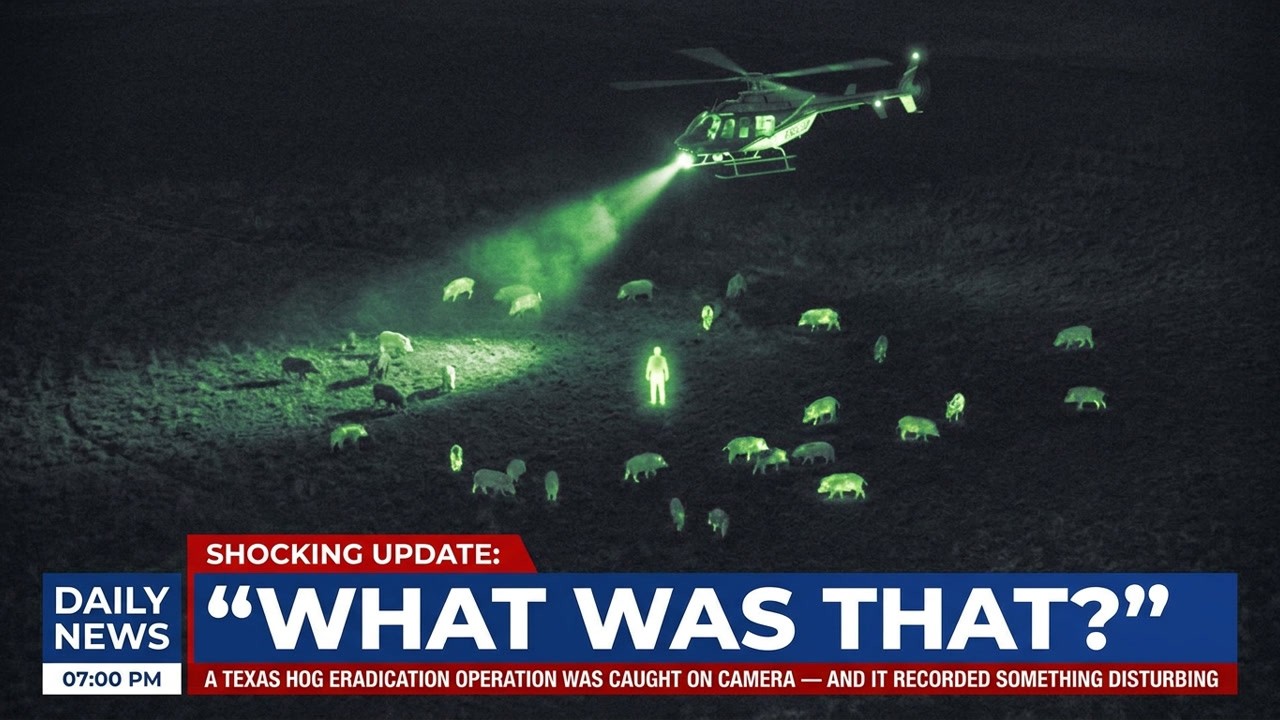
A Texas hog eradication operation was caught on camera in a way no one expected. The team was hired to control the exploding feral pig population, which causes millions in damage across the state.
In Blanco County, Texas, wildlife technicians conducted an operation that looked like a success on paper. Over the course of...