Fourteen bison were released onto a barren Kansas prairie in 2015, a landscape empty of their kind for over a century. Within years, the herd had exploded to over 400 animals under a groundbreaking rewilding project.
In the winter of 2022, 414 wild bison were transported from Yellowstone National Park to Sicangu Lakota land in South Dakota, marking a significant step in the restoration of an animal that had been nearly eliminated from the continent. The transfer was the result of decades of planning by tribal nations, federal agencies, and conservation partners working together to return bison to land where they had not roamed freely in more than a century.
The bison that arrived at the Wolakota Buffalo Range in South Dakota were descended from a small group of animals that survived in Yellowstone at the turn of the 20th century. In 1902, the number of wild bison remaining in the United States had fallen to just 23 animals, all located in a single valley within the park.
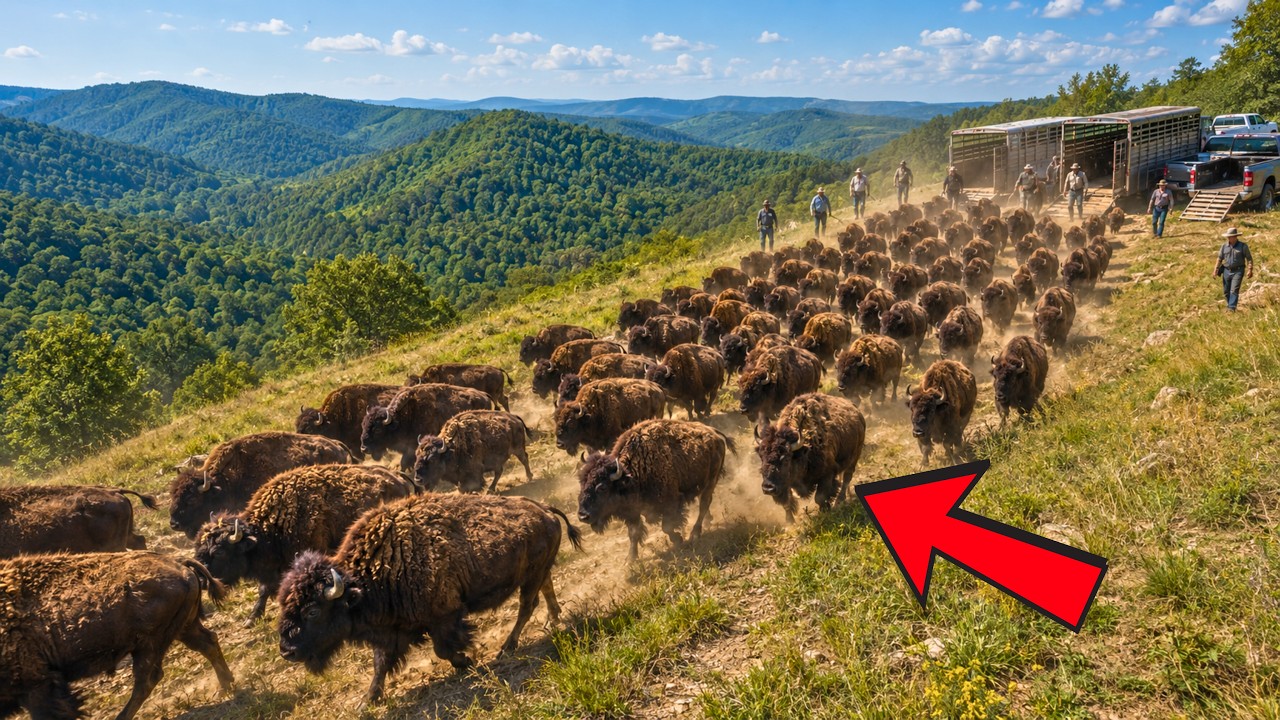
At the beginning of the 19th century, an estimated 30 to 60 million bison moved across North America. By 1889, fewer than 1,000 remained. The rapid decline was driven by the commercial hide trade, which saw professional hunters kill large numbers of animals in a single day and leave the carcasses to rot. Federal officials also encouraged the slaughter as a strategy to weaken Plains Indian nations, since bison were central to their economy and way of life.
For the Sicangu Lakota, the loss of the bison had profound consequences. The seasonal hunt organized daily life, including labor, ceremonies, camp movements, food storage, and trade with neighboring nations. When the bison disappeared, this entire framework collapsed. The land that became the Rosebud Reservation was later reshaped for cattle ranching, a practice promoted by federal allotment programs as an alternative to the bison hunt.
Yellowstone National Park was established in 1872 to protect geological features such as geysers and hot springs. The fact that it also contained the last wild bison herd was largely an accident of geography. The park’s remote terrain made commercial hunting more difficult, and the Lacey Act of 1894 provided legal protection against poaching inside its boundaries.
Recovery from the 23 surviving animals was slow. By the 1930s, the Yellowstone herd had grown to a few hundred animals, but park managers regularly culled the population to keep it at what they considered the park’s capacity. Animals were shipped to zoos, sold to private ranches, or fatal incident. For much of the 20th century, bison that crossed the park’s northern boundary into Montana were also shot, driven by concerns from cattle ranchers about brucellosis, a bacterial infection that bison can carry without symptoms and that can cause cattle to abort pregnancies.
In 1992, a coalition of tribal nations founded the InterTribal Buffalo Council with the goal of returning bison to native lands. The organization grew to represent 88 tribes and now manages a collective herd of more than 20,000 animals. The breakthrough for transferring Yellowstone bison came with the development of the Bison Conservation Transfer Program, a quarantine protocol established by the National Park Service, tribal nations, and the InterTribal Buffalo Council. This program allowed captured bison to be held and tested for brucellosis over multiple years before being transferred to tribal herds.
The Wolakota Buffalo Range is a 28,000-acre project developed by the Rosebud Sioux Tribe through its enterprise arm, Sicangu Company. The name Wolakota is a Lakota word that means to live in the Lakota way. The project was never intended as a conservation project alone but as a framework for managing land differently after decades of cattle ranching.
Converting the land required significant work. Fencing grids built for cattle had to be reconfigured into larger units that allow bison to move across the landscape, water sources were repositioned, and native grasses were reseeded in areas where decades of cattle use had left bare ground. The World Wildlife Fund provided funding, technical support, and ecological monitoring, but management authority rests with the Rosebud Sioux Tribe.
The first bison from Yellowstone arrived at Wolakota in 2020. By 2022, the herd had grown enough that a planned expansion made sense, leading to the request for 414 additional animals. Each of those animals had passed through years of quarantine testing and was descended from the 23 wild bison that survived in Yellowstone in 1902.
Ecological research has documented significant differences between bison and cattle grazing. Bison move across the landscape in patterns that allow native grasses to recover fully between grazing events. They also create wallows by rolling in dry soil, which form temporary pools that support a variety of plant and animal species. A 2019 study in South Dakota shortgrass prairie found that bison grazing increased soil carbon, improved water infiltration, and reduced invasive plant cover compared to cattle grazing. A 2022 study published in PNAS found that bison reintroduction doubled native plant species richness compared to ungrazed prairie, outperforming prescribed burning as a grassland management tool.
For the Sicangu Lakota, the return of bison has restored a connection that had been absent for generations. The knowledge of bison behavior and their relationship to the land had been preserved in oral tradition and the memories of elders, but it had no living referent for more than a century. The bison at Wolakota now provide that referent, allowing ceremonial knowledge to attach to living animals. The project also addresses food sovereignty, providing meat to tribal members and reconnecting nutrition with cultural practice.
The Wolakota Buffalo Range now carries more than 1,200 bison, making it the largest tribally owned herd in North America. The 414 animals transferred in 2022 represented years of accumulated quarantine work. The quarantine process takes four to five years per cohort, which limits how quickly transfers can be scaled.
The structure of the Wolakota project is notable for its arrangement. Tribal management authority, a federal transfer pipeline, peer-reviewed ecological science, and cultural restoration goals all function together. The Rosebud Sioux Tribe owns decision-making authority, which means the project’s continuity does not depend on shifting political winds. The combination of generational ecological knowledge and Western conservation science produces management decisions that neither system would reach alone.
For most of the 20th century, bison conservation was primarily a federal project. The InterTribal Buffalo Council and the Bison Conservation Transfer Program have shifted the center of gravity. Tribal lands are now where the most significant bison conservation work is happening, and the structure allows what Wolakota demonstrates to be replicated by other nations across the continent.
When the trailers carrying the 414 bison arrived on Rosebud land and the gates opened, the animals moved out onto ground their species had not touched in more than a century. The recovery that followed was not immediately visible, but within the first seasons, wallows began forming in areas that had been flat cattle pasture for decades, native grasses moved back into bare patches, and bird species that need varied grass structure appeared in areas they had not used before.
The journey from 23 surviving wild bison to a tribally managed herd of 1,200 animals represents a specific outcome of 120 years of policy decisions, some of which were destructive and some of which were constructive. The bison are back on Lakota land, the prairie is responding, and the people and the landscape are relearning each other after a long separation.
Recommended Stories
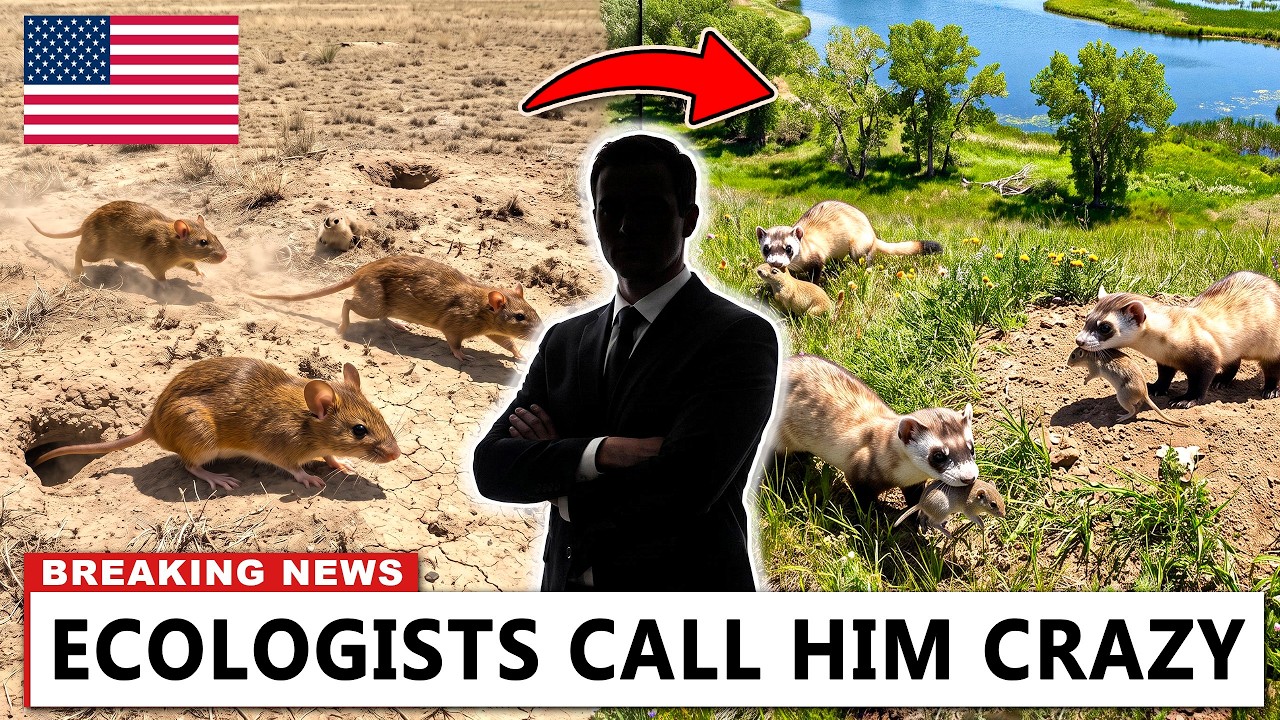
Ted Turner poured millions into New Mexico ranchland to save black-footed ferrets—so-called pests lawmakers once mocked as a waste of money. Critics called him crazy for breeding an animal many believed was doomed to extinction.
In 1997, Ted Turner purchased a ranch in New Mexico that had been used for cattle grazing for decades. Instead...
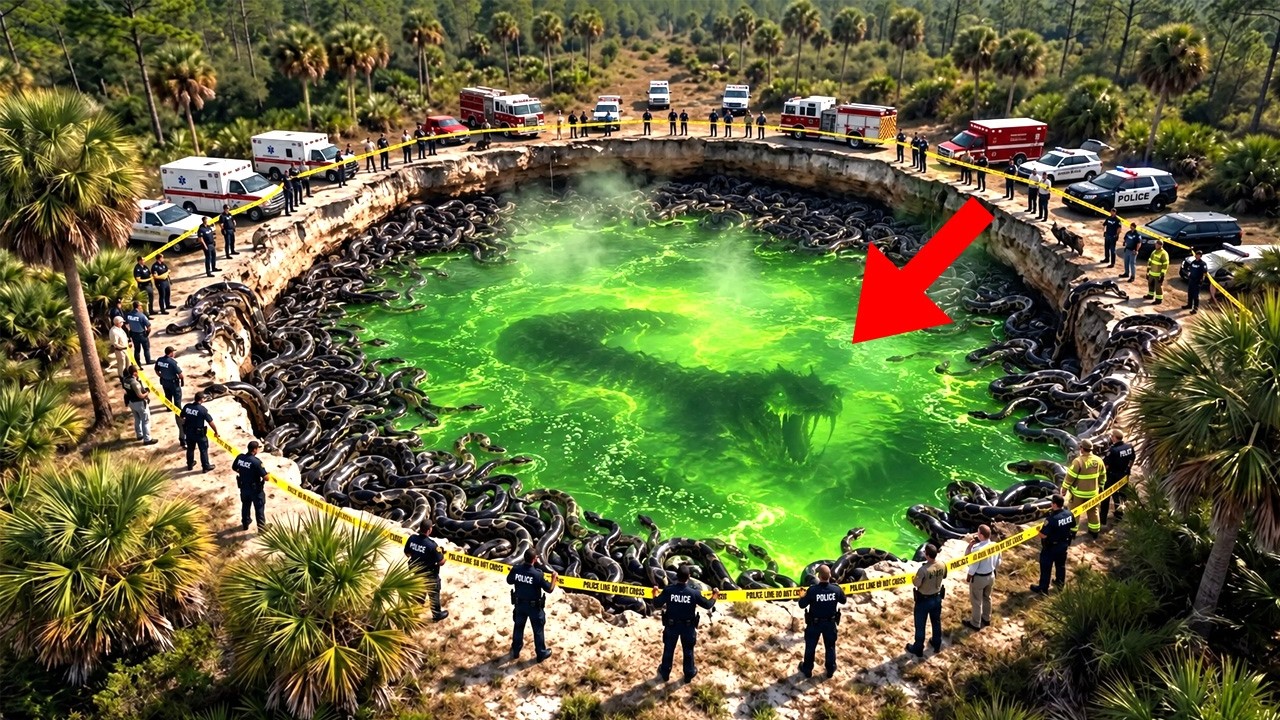
A swamp full of hungry predators and giant pythons had Florida scientists desperate for a solution. For years, invasive Burmese pythons wiped out native wildlife across the Everglades, and typical removal methods simply could not keep pace.
Burmese pythons in Florida can swallow an adult deer whole. The snakes have severely reduced raccoon, rabbit, and fox populations...
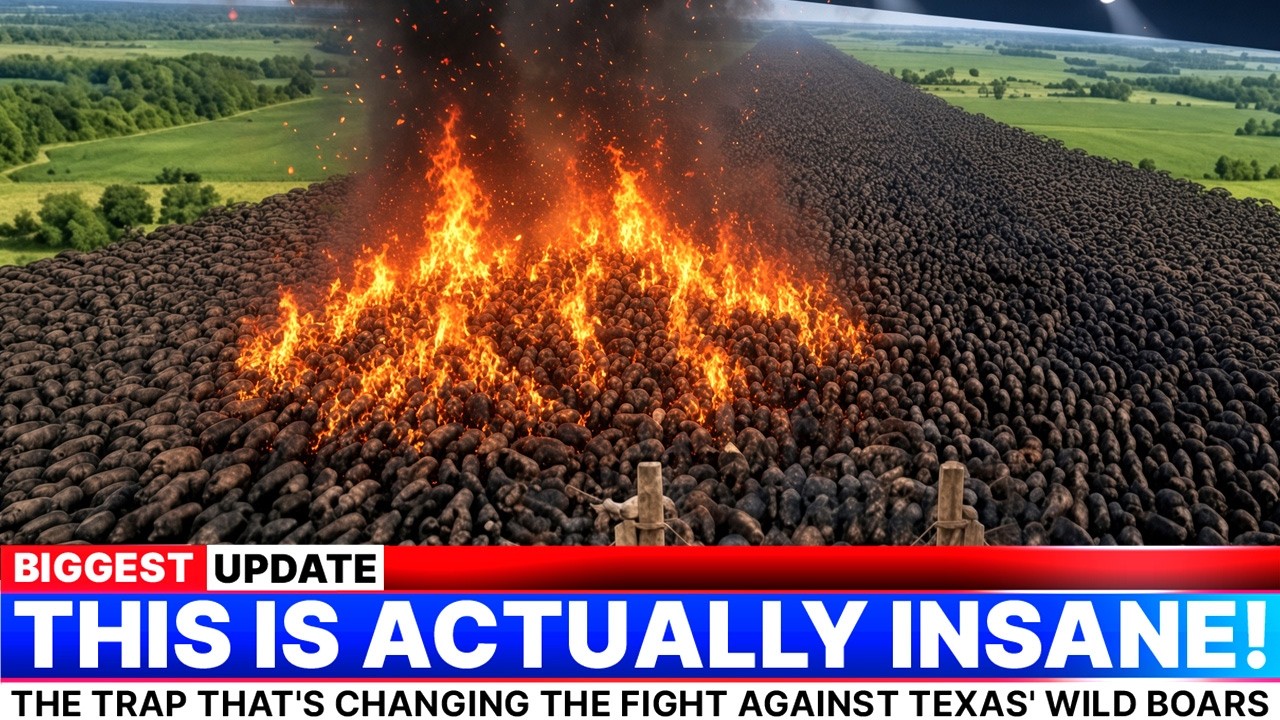
Texas has a wild boar problem so severe that ranchers call them living bulldozers, tearing up millions in farmland every year. Hunters have tried trapping, sharpshooters, and even helicopters, but the pigs adapt faster than any method thrown at them.
Texas ranchers and farmers have spent decades trying to control the state’s estimated 2.6 million feral hogs. Methods have included...