Australia’s biggest wild pig eradication succeeded far beyond expectations, stunning officials who braced for a predictable failure after years of failed attempts. The massive campaign targeted millions of ferals wreaking havoc on crops and native wildlife, with teams deploying traps, aerial shooting, and poison across vast outback terrain.
For more than two centuries, feral pigs thrived on Kangaroo Island, despite ongoing efforts by hunters and farmers to remove them. Even one of Australia’s most severe bushfire seasons failed to eliminate them entirely. In response, a team launched an eradication program on a scale never attempted on an island of this size, with a goal of complete removal. Most observers doubted it could succeed. After the final three female pigs were captured, an unexpected discovery revealed that none of them had given birth. The population had not merely declined; it had effectively stopped reproducing.
To understand what these pigs meant to the island, it helps to look at the experience of local farmers. Rick Morris worked in agriculture on Kangaroo Island for roughly 20 years and served as head of its farming organization. He saw the damage firsthand. The pigs tore through his barbed wire fences, churned his paddocks into overturned soil, and ruined crops overnight. On more than one occasion, they charged him on his own land. A farmer could go to bed with a field ready for the season, then wake to find the fencing flattened and the ground dug up. After repairing the damage and replanting, the same scenario would repeat within days.
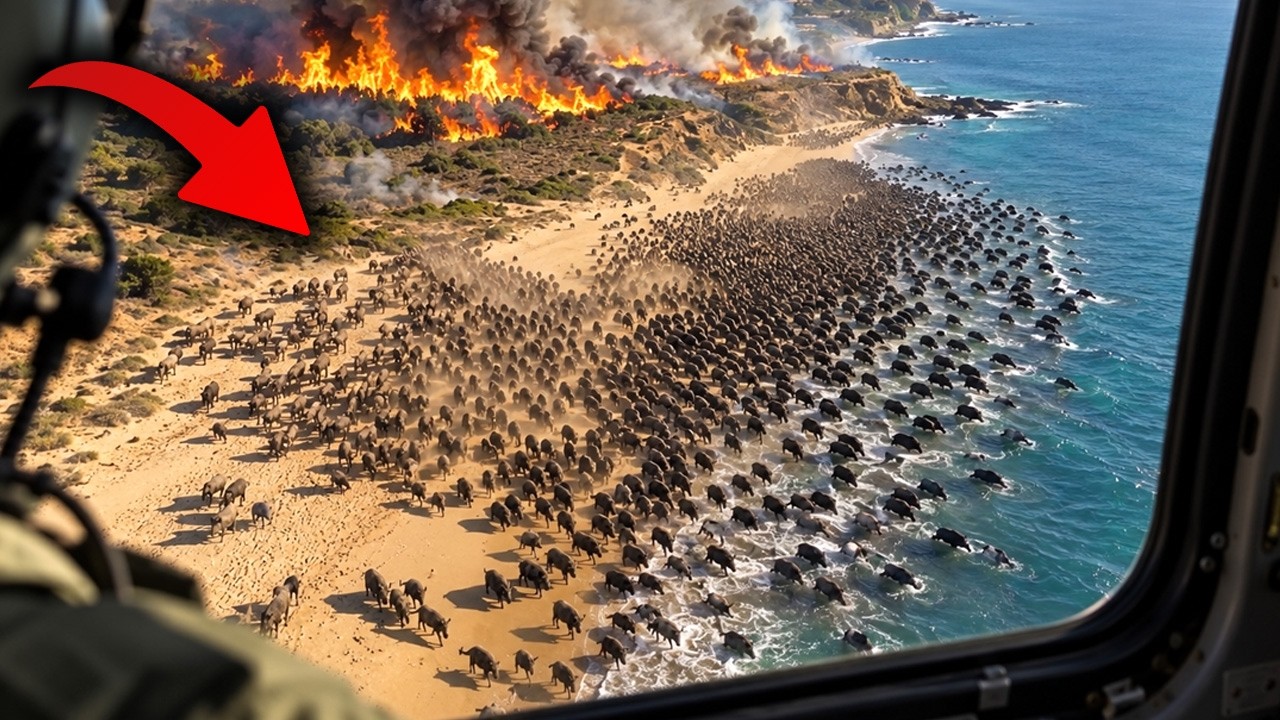
Morris did what many farmers would do: he spent about $3,000 to hire hunters. The results lasted only one season before the pigs returned, with some appearing more aggressive than before. Similar accounts could be heard across the island, with farmers describing torn fences, lost crops, and collapsed dam banks. The pigs seemed to be a permanent part of life.
The source of the problem dated to 1803, when French explorer Nicolas Baudin was mapping the southern coast of Australia. Long voyages often meant hunger for crews, and an island without a reliable food source could become a deadly trap. In a sheltered spot later known as Pig Bay, the expedition released a male and female pig onto the shore. The intention was simple: the pigs would breed and provide fresh meat for future sailors. It seemed a practical decision at the time, with no way to predict what would follow.
Wild pigs are efficient breeders. A single sow can produce large litters, reportedly up to 20 piglets in some cases, and can breed more than once a year. Their offspring mature quickly and begin reproducing as well. On the mainland, dingoes and other predators limit pig numbers, but Kangaroo Island had no dingoes and few natural predators capable of taking down an adult pig. Food was rarely a limiting factor, as pigs eat nearly anything, including roots, fungi, insects, eggs, and carrion. The population grew steadily through the 19th and 20th centuries, with estimates by the early 2000s ranging from 5,000 to as many as 10,000 animals spread across forests, bushland, and farms.
The pigs did much of their damage at night. By day they rested in dense vegetation; by night they descended on pastures in groups and rooted through the soil with their snouts, searching for food. A single group could make a paddock look like it had been ploughed. They destroyed crops, undermined farm dam banks, and wallowed in muddy water, contaminating it and sending sediment into streams. Beyond farming losses, they ate native plants, ground-nesting birds’ eggs, frogs, reptiles, and small animals. Their rooting spread weeds, and soil carried on their bodies could transport Phytophthora, a pathogen that causes root rot and kills native plants and is difficult to remove once established.
The estimated damage on Kangaroo Island reached over one million dollars annually, factoring in repairs, lost production, and control programs. Yet the core difficulty was not the number of pigs. A few thousand animals should not have been an impossible target. The real challenge was distribution. Pigs were spread across an island of more than 4,000 square kilometers, covered largely in dense scrub, steep slopes, timber plantations, and rugged wilderness. Hunters might remove 20 pigs on one farm while another 50 continued breeding in an inaccessible gully. Controlling such a population required a strategy that could reach pigs in every location at once.
In December 2019, a series of events created that opening. Dry lightning strikes sparked fires in the island’s north, followed by another fire in the west. The fires were part of Australia’s Black Summer, one of the worst bushfire seasons on record. For a time, containment lines appeared to hold. On January 3, 2020, extreme heat and strong winds caused the fires to breach those lines, merging into a massive front moving faster than people could evacuate.
The fires burned for weeks. When they were finally controlled, close to half of Kangaroo Island, over 210,000 hectares, had been scorched. Two people lost their lives, dozens of homes and hundreds of other structures were destroyed, and roughly 59,000 sheep and cattle died. Large numbers of koalas, kangaroos, birds, and other native animals also perished, and there were concerns about species such as the Kangaroo Island dunnart. It was a disaster by any measure.
In the weeks after the fires, wildlife officials surveying the scorched landscape noticed something missing: the pigs. Most of the island’s feral pigs had concentrated in the west, where the fire burned hottest and fastest. Pigs are resilient and intelligent, but they could not outrun a firestorm, and the landscape that followed offered little food or shelter. Some speculated the fire might have eliminated them entirely, but field surveys eventually found survivors moving through the ashes. Estimates suggested around 90 percent of the island’s feral pig population had died.
This was not a solution in itself, since pigs reproduce quickly and a small number of survivors could eventually rebuild the problem. But it created a rare opening. The vegetation that had hidden the pigs for generations had burned away, and once it regrew, survivors would disappear back into it. Officials decided to attempt something not previously done on an island this size: eliminate the population entirely.
Eradication is far more demanding than population reduction. Leaving behind even one pregnant sow or a single breeding pair would undo everything. A program that removed 99 percent of pigs would still count as failure. The effort, launched in 2020, used every available method simultaneously. Teams built large trap yards capable of capturing whole groups at once. Poison baits were deployed carefully to target pigs. Ground shooters moved through forests and scrub that had survived the fires. Helicopters flew low over creeks, valleys, and farms, allowing shooters to reach animals that ground teams might spend days tracking. Camera traps monitored water points and trails around the clock, some connected to mobile networks with image recognition software to flag photos containing pigs.
Detection dogs worked through vegetation too thick for human visibility. Field teams looked for fresh tracks, disturbed soil, droppings, and wallows. The program also tested water samples from creeks and dams for environmental DNA, traces of genetic material left behind by pigs. A pig that drank from a creek could leave evidence long after it moved on.
In the first three months, the program removed 165 pigs. The early pace reflected the fact that the easiest animals were taken first: those that entered traps, fed in the open, or moved in large, noisy groups. What remained were the most cautious and elusive pigs on the island. Survivors retreated to the most remote areas, deeper into creek lines and pockets of unburned vegetation. Large groups broke into smaller ones, and small groups into individuals. Cameras that once captured pigs every night now went weeks without a sighting. Helicopter crews flew for hours without seeing anything. The work became slower and more discouraging.
In 2021, the program changed its aerial approach. Helicopters began flying with a thermal camera operator who could detect heat signatures hidden beneath vegetation. Pigs lying still under trees were invisible to the naked eye but glowed clearly on a thermal screen. In about 36 hours of flight time, thermal teams detected 138 pigs and removed 122 of them, nearly triple the detection rate of previous aerial work. Many were found in the dense forests over which helicopters had previously flown without seeing anything.
Still, 16 of the detected pigs escaped into cover, and the program continued. By around 2023, more than 850 pigs had been removed. New signs of activity became rare. Large groups that once appeared on cameras had essentially vanished, and no known sows remained pregnant or raising piglets. Then a camera near Six Mile Lake captured a single image of an adult male. No further images appeared, and there was no record of it being shot or trapped. It may have died naturally in dense scrub, moved to another part of the island, or remained hidden in an area the cameras did not cover.
In mid-2023, the program shifted toward a verification phase, with less hunting and more monitoring. Then another camera showed three females, all alive. This was enough to reset the program to high alert. If even one male remained free, those three sows could produce dozens of piglets within a year, and regrowing vegetation would give them more places to hide.
In March 2024, a dedicated operation was launched to find these animals. Detection dogs worked slowly through scrub to narrow the search range. Helicopters then scanned the area with thermal cameras day after day. On the sixth day, they found the first sow. By the ninth day, all three had been located and removed.
Examination of those three females revealed something unexpected. All were old enough to breed, yet none was pregnant and none showed signs of having given birth. Two sows removed earlier had shown the same pattern. The explanation was simple: so few pigs remained, scattered so widely, that they could no longer find each other. When a population falls low enough, contact between individuals becomes so rare that reproduction collapses. The eradication teams had pushed the Kangaroo Island pigs past that point.
By then, the program had removed 878 pigs in total, in addition to the majority lost in the fires. No pigs were known to remain, but no one declared victory because proving a population is gone is different from believing it is gone. You cannot photograph an animal that does not exist. You can only search with every available method for a very long time and keep finding nothing.
For two years, staff kept roughly 500 cameras monitoring forests that had once been full of pigs. Detection dogs continued working through valleys and creek lines. Field teams walked long distances looking for any fresh track or dig. Water samples were collected and tested for pig DNA. Every empty memory card and clean water sample added to the evidence. Months passed, then a year, then two, without a confirmed sign of a feral pig anywhere on the island.
On June 10, 2026, Kangaroo Island was officially declared free of feral pigs. It became the largest island in the world to eliminate its feral pig population. The effort had required helicopters, thermal cameras, dogs, camera networks, artificial intelligence, environmental DNA analysis, years of fieldwork, and funding of about 7.5 million Australian dollars.
For people like Rick Morris, the outcome meant an end to a constant battle. For the first time in anyone’s memory, fences, crops, and fields were no longer under nightly attack. The decision made on a beach in 1803 had finally been reversed.
The eradication of pigs did not solve every problem on the island. Feral cats still hunt native wildlife. Weeds continue to spread. Phytophthora remains in the soil, and forests burned in the Black Summer fires will need years or decades to recover. But the soil is no longer torn up every night, creek banks are no longer trampled, and regenerating bushland has a chance to grow.
Kangaroo Island had previous experience with eradication programs, having removed feral goats and deer by 2018. Those programs left behind trained teams, monitoring networks, trust with landowners, and a working mindset. That experience is now being applied to a new target: feral cats in the Dudley Peninsula at the island’s eastern end. The goal is to make that area the largest permanently inhabited region in the world free of feral cats, in part to protect species such as the Kangaroo Island dunnart and echidna.
The success on Kangaroo Island raises the question of whether the same approach could work on the Australian mainland. The comparison is complicated. Kangaroo Island is surrounded by ocean, so once the last pig was gone, new ones could not simply walk in. The mainland, by contrast, has open borders, and pigs from neighboring areas would quickly repopulate a cleared region. The scale differs as well: the island covers about 4,000 square kilometers, while the mainland covers roughly 7.7 million, with feral pigs estimated to occupy about 40 percent or more of it.
Large-scale mainland eradication remains unlikely, but isolated pockets, such as peninsulas bounded by water on three sides, fenced reserves, or contained catchments, can be treated like islands. Within those boundaries, teams can reduce numbers quickly, chase survivors with thermal cameras, dogs, and DNA sampling, and monitor carefully. Some programs also use a “Judas pig” fitted with a GPS collar, which seeks out other pigs for social reasons and leads teams to the last hidden groups.
The Kangaroo Island story does not suggest that bushfires are a solution. The fires were a tragedy for the people and wildlife of the island, and no one would wish for a repeat. The lesson lies in what was done in the aftermath. The fires created a brief window of opportunity that required planning, persistence, technology, and a refusal to accept partial success. Nature opened the window, but it was people who decided to use it. The clearest sign of success came not from a helicopter or a camera, but from three sows that had not produced a single piglet.
Recommended Stories
Saltwater crocodiles are eating cane toads, and scientists say the predator’s survival could now be reshaping an entire ecosystem. For decades, toxic cane toads have been lethal to native animals that bite them, yet crocodiles appear to be developing a tolerance that changes their role in the food chain.
Cane toads have spread across northern Australia and into the Kimberley wilderness since their introduction in 1935, causing significant harm...
The broken 600-meter pipe snapped within months, seemingly proving critics right that ocean cleanup was a fantasy. Boyan Slat’s Dutch startup had raised millions, only to watch its first prototype split apart in the Great Pacific Garbage Patch.
In 2018, a prototype floating barrier designed to collect plastic from the Pacific Ocean broke apart within months of deployment....

A mysterious sighting off Australia’s coast has sailors suddenly changing course and grabbing their phones. Multiple crews reported an enormous, dark shape moving beneath the surface near a remote shipping lane, prompting frantic radio chatter and instant speculation online.
In 1918, a crew of experienced lobster fishermen off the coast of New South Wales reported an encounter with a...