When Mount St. Helens erupted in 1980, the blast leveled forests and buried the landscape under thick volcanic ash, making survival seem impossible.
Two years after Mount St. Helens erupted in 1980, the pumice plain north of the crater was considered the most sterile landscape in North America. Six square miles of gray, porous volcanic rock covered the ground, with chemical analysis showing zero measurable carbon and nitrogen on the surface. Standard ecological models predicted that recovery would take centuries, with soil building up gradually through the slow weathering of bare rock by lichens.
The solution that eventually worked involved helicoptering a small number of pocket gophers onto the ash, allowing them to dig for exactly 24 hours, and then removing them. Within six years, 40,000 plants had established in the specific areas where the gophers had been enclosed. The surrounding plain remained mostly barren, and when scientists returned four decades later to take soil samples from the same locations, the chemistry was still measurably different from everything around it.

The explanation has little to do with the holes themselves.
On the morning of May 18, 1980, a magnitude 5.1 earthquake collapsed the northern face of Mount St. Helens, triggering the largest debris avalanche in recorded history. A lateral blast of superheated gas and pulverized rock traveling at over 600 mph flattened old-growth forest across 230 square miles. Fifty-seven people died, and billions of board feet of commercial timber were destroyed.
The pumice plain absorbed the worst of the impact. Successive waves of volcanic flow, reaching temperatures above 1,500 degrees, buried the ground under deposits of ash and pumice up to 130 feet deep. Everything above the surface was incinerated. What remained was a flat, pale gray expanse of volcanic glass, porous enough to drain rainfall within minutes, too chemically empty to anchor a single root.
The reason it stayed that way comes down to one factor. The eruption did not just destroy the surface, it sealed what was underneath. Before 1980, this land had been old-growth coniferous forest anchored by deep soil accumulated over millennia, soil rich with dormant fungal spores, bacteria, and organic nutrients. The volcanic deposits locked all of it beneath roughly 10 to 25 centimeters of sterile rock. The dead surface could not reach the living ground below, and the living ground could not reach the surface.
Seeds arrived on the wind. They germinated, then starved. Without the symbiotic fungi that healthy plants depend on to extract water and nutrients from raw mineral soil, each seedling was running on the energy stored inside its own seed. In sterile pumice, that energy ran out quickly.
Evidence elsewhere on the mountain was stark. Old-growth forest buried under the same ash recovered within years because its surviving trees still maintained fungal networks underground. Clear-cut zones next to them, stripped of trees and their fungal partners before the eruption, stayed barren for decades. Same ash, same rain. The only difference was biology.
The pumice plain was the worst version of that problem. No trees, no roots, no fungal networks. The cure was buried directly under the disease, separated by a barrier less than a foot thick. The buried soil had survived because the mountain erupted in mid-May, when deep winter snowpack still insulated the higher elevations. The ice absorbed the heat of the surface flows while shielding the ground just centimeters below.
Two researchers proposed a way to breach the barrier. Michael Allen, a microbiologist from UC Riverside, and James McMahon, an ecologist from Utah State, chose the northern pocket gopher. These compact, thick-bodied rodents have oversized front claws and forward-angled incisors evolved to chew through compacted earth. Their lips seal shut behind the teeth, so they do not swallow what they excavate. A single individual can displace up to 500 pounds of soil in a month while weighing about 160 grams.
The gophers were captured from intact forest on the mountain’s unblasted southern flank and flown by helicopter onto the pumice plain. Each was placed inside a one-meter square wire enclosure built around an isolated lupine seedling, one of the few plants that had managed to germinate from windblown seeds in the ash. One gopher was deployed in 1982, with eight or nine more in 1983. Each was allowed to dig for exactly 24 hours. After one day, the researchers returned by helicopter, recaptured every animal, and flew them home.
The stated goal was not landscape restoration. It was a localized test of soil mixing, to see whether a burrowing rodent could marginally improve survival for a few isolated plants in a few square meters of ash. A few rodents, a few wire squares, a single day on a landscape where the expected timeline was centuries.
In those 24 hours, the gophers did what pocket gophers do. They dug aggressively through the volcanic crust, pushing buried pre-eruption soil to the surface in fan-shaped mounds that reshaped the flat ground into a patchwork of tiny ridges and hollows. Those hollows trapped windblown seeds and held moisture against the desiccating surface conditions.
But the gophers also did something no bulldozer could replicate. Their fur was coated in dormant fungal spores from their home forest. Their digestive tracts carried the same. As they moved through the legacy soil and deposited fecal pellets into the sterile pumice, they delivered concentrated packets of viable fungal spores, bacteria, and raw organic carbon directly into ground that contained none.
Then they were removed. For two years, nothing visible happened. Between 1983 and 1985, the Pacific Northwest entered a severe drought cycle. Across the broader blast zone, seedlings that had colonized the ash via wind dispersal died in enormous numbers. The pumice could not hold moisture. On the surface, the gopher plots looked exactly like every other patch of gray rock on the plain.
But underneath, the clock was running. The fungal spores deposited in the gopher waste germinated. Microscopic threads radiated outward through the mineral ash and found the roots of the struggling lupine seedlings. Once contact was made, an exchange began. The fungi mined phosphorus and water from deep in the pumice and delivered them to the plant. The plant fed photosynthesized carbon back to the fungus.
Because prairie lupines are legumes, the same family as beans and peas, they carry bacteria in their roots that can pull nitrogen directly from the air. The fungi provided the water and phosphorus the lupines needed to run that process. The lupines provided the nitrogen the soil had never contained. For the first time since the eruption, something was building instead of breaking down.
By the late 1980s, the lupines inside the gopher plots had multiplied. They reproduced and died, and their decaying biomass created the first post-eruption layers of organic matter on the pumice surface. That new soil trapped windblown seeds of secondary species. Those seeds germinated, grew, and added more biomass. The cycle compounded.
When researchers returned in 1989 for a full vegetation count, they documented 40,000 individual plants growing inside the historic Goat Rock enclosures. The surrounding pumice, with the same weather, same wind-blown seeds, and same sunlight, held almost nothing. The entire federal post-eruption effort on the pumice plain, backed by helicopters and thousands of pounds of aerially sprayed grass seed and synthetic fertilizer, had not produced results in the deep ash zones that matched 24 hours of work by animals that weighed less than a baseball.
Through the 1990s, the plots stopped being isolated green patches and started functioning as anchor points for the broader landscape. The dense vegetation stabilized the loose ash and halted local wind erosion. The accumulating organic layer allowed woody shrubs, willows, and early conifer seedlings to take hold, species that could not survive in raw pumice but thrived in the enriched soil the lupines had manufactured.
The system also attracted elk herds, drawn by the only concentrated forage on the pumice plain. They browsed heavily, stripped young willows, and rubbed antlers against conifer saplings. This browsing slowed the transition to closed canopy forest and held the landscape in a state of permanent meadow. But the elk were also importing biology, nutrient-dense dung and seeds from intact forest carried in fur and through digestive tracts. And quietly, wild pocket gophers from intact populations on the mountain’s unblasted southern slopes began migrating onto the pumice plain on their own, colonizing the enriched ground and pushing the soil mixing process outward at the edges.
In 2024, a research team from UC Riverside, the University of Connecticut, and Yale published a study in Frontiers in Microbiomes that refined the understanding of the gopher experiment. Using DNA sequencing on soil cores extracted from the exact coordinates of the 1982 and 1983 enclosures, 40 years after the gophers had been removed, they found that the microbial communities in the gopher plots were not just richer than the surrounding pumice. They were structurally different, with higher fungal diversity, more complex bacterial architecture, and measurably elevated carbon and nitrogen concentrations.
Four decades later, the biological fingerprint of those 24 hours was still written into the soil chemistry. The gophers had not been plows. They had been delivery vehicles. The holes mattered, but what mattered far more were the microscopic fungal spores carried on their fur and deposited in their waste, the living architecture that connected to plant roots, mined the mineral ground for nutrients, and built a self-sustaining biological network from nothing.
By 1987, just five years after the first enclosure, carbon in the treated soil had climbed from zero to 840 milligrams per kilogram. Nitrogen rose from zero to 53. The surrounding pumice had not moved. By 2000, carbon had surged to 4.6 grams per kilogram, and nitrogen reached 384 milligrams per kilogram. Twenty years of identical weather on adjacent ground had done nothing to close the distance. It was still widening.
The total biological labor required to start that trajectory weighed less than a pound. The material cost was helicopter fuel and wire mesh. No fertilizer, no follow-up, no maintenance budget for four decades. The system has run itself since the enclosures came down.
The pumice plain is still recovering. The soils are geologically young, and elk browsing still holds the canopy back. But the biological engine underneath is permanent, self-sustaining, and expanding outward from the same coordinates where a few gophers dug for 24 hours in 1982. The principle, that on sterilized ground, reviving the invisible microbial network has to come before anything else, carries implications beyond a single volcano. Start with the microbes. The plants follow.
Recommended Stories

A massive dark shape moved deliberately through the green water of the Gulf of Mexico, and marine biologists monitoring the feed fell silent—it wasn’t debris, but something alive. Researchers had come to study dredged sediment along Yucatán’s coast, part of a massive restoration plan pumping millions of cubic meters of seafloor onto eroding shorelines.
A research vessel working off the coast of Yucatán recorded an unexpected sight within seconds of its camera beginning to...
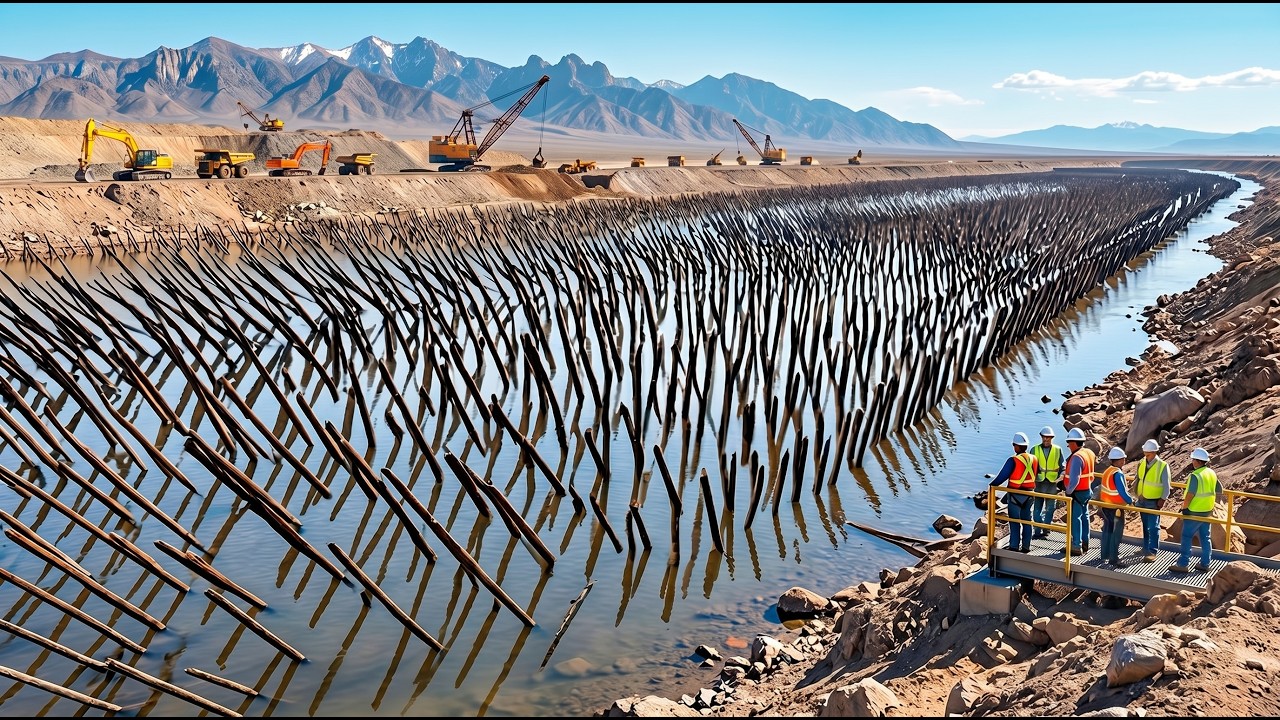
In 2009, researchers planted 76 fake beaver dams in Oregon’s dying Bridge Creek, hoping the struggling locals would take over. For a century, the river had been destroying itself, stripped of beavers by fur trapping and left a deep, narrow trench by cattle grazing.
In 2009, a team of researchers installed 76 simple structures made of wooden posts and woven willow branches across a...
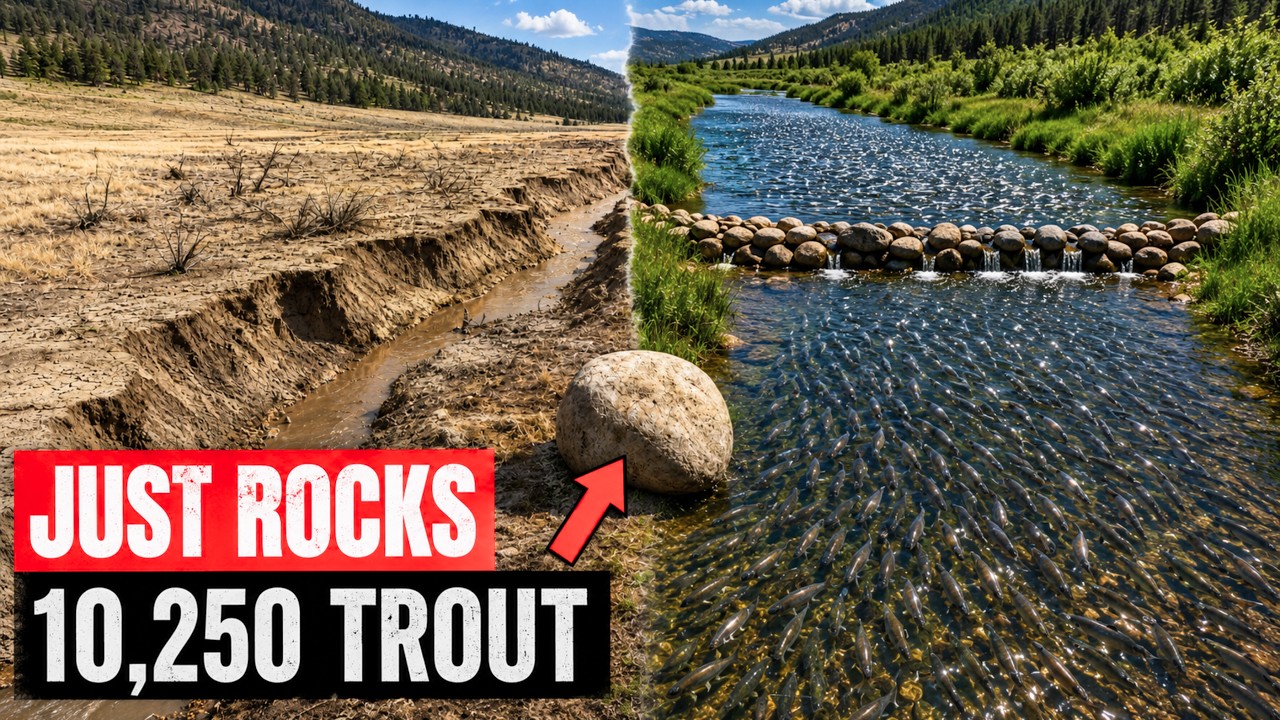
A US biologist made scientists laugh out loud. They mocked his rocks-based method.
In 1982, an oil company transferred ownership of a valley in northern New Mexico to the U.S. Forest Service. The...