Yellowstone’s elk had nearly destroyed the park for decades, but one surprising reintroduction changed everything. For 70 years, without natural predators, the land was stripped bare, rivers eroded, and entire species vanished.
In January 1995, the United States released 14 gray wolves into Yellowstone National Park. Over the following three decades, their presence triggered a series of ecological changes that reshaped the park’s plant and animal life, and even influenced the course of its rivers. The reintroduction is now the subject of a significant scientific debate about how much of the recovery can be attributed to the wolves themselves.
The story begins with the wolves’ original disappearance. When Yellowstone was established in 1872, gray wolves were a natural part of the landscape. However, as westward expansion brought settlers and livestock into the region, wolves came into direct conflict with agricultural interests. Government-backed extermination programs using rifles, traps, and poison were carried out across the American West. Within Yellowstone, at least 136 wolves were destroyed between 1914 and 1926 under official predator control orders. The last known wolf pack in the park was killed in 1926, and by the mid-20th century, wolves were virtually extinct across the lower 48 states.
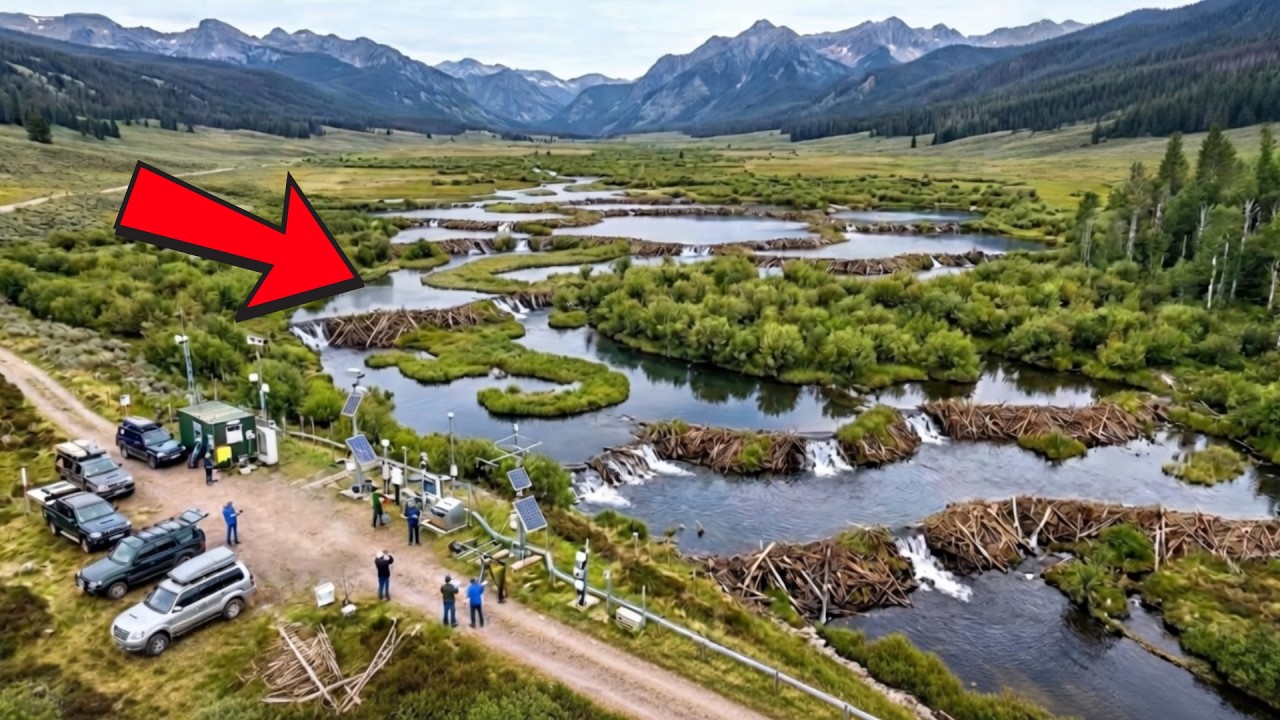
The absence of wolves had a profound effect on the park’s ecosystem. Elk, no longer facing pressure from their primary predator, multiplied unchecked. By the early 1990s, the northern range elk herd had grown to nearly 19,000 animals. Without fear of ambush, the elk browsed heavily along riverbanks and in willow thickets, stripping young aspens and willows before they could grow large enough to anchor the soil. This led to riverbank erosion, as root systems disappeared and stream channels widened and fractured. The loss of vegetation also devastated the beaver population, which depended on willows and aspens for food and building materials. By 1995, only a single beaver colony remained in the entire park, and the wetlands they once maintained had dried up.
Restoring wolves to Yellowstone required a long and contentious political effort. In 1973, the gray wolf was listed under the Endangered Species Act, and the greater Yellowstone ecosystem was designated as a recovery area. The proposal to reintroduce wolves drew fierce opposition from ranchers concerned about livestock losses and hunters worried about shrinking elk herds. The environmental impact statement completed in 1994 drew over 160,000 public comments, the largest response to any federal proposal at the time. The plan was approved that year, with the wolves classified as an experimental, nonessential population. Lawsuits followed, and a federal judge ordered the removal of the reintroduced wolves in 1997 before that ruling was reversed in 2000.
On January 12, 1995, eight wolves captured in Alberta, Canada, were brought into Yellowstone, followed by six more a week later. An additional 17 wolves arrived from British Columbia in January 1996. The animals were kept in enclosed pens for several weeks to acclimate to their new environment before being released in March 1995. The reintroduction plan had anticipated a five-year effort, but no further transplants were needed after 1996.
Within months, the wolves formed packs and established territories across the park. The Druid Peak pack became particularly well known, and its lead male, a large black wolf known as 21M, was noted by researchers for his restraint in territorial conflicts. The wolves’ presence also introduced a new dynamic for the elk, which began avoiding open riverbanks and dense thickets where they were most vulnerable to ambush. This shift in behavior allowed young willows and aspens to grow in some areas for the first time in decades. The recovering vegetation helped stabilize riverbanks in certain valleys, and beaver colonies increased from a single colony in 1995 to 121 colonies by 2024. The dams built by beavers created new ponds and wetlands, which attracted fish, birds, and otters.
The narrative that wolves saved Yellowstone by changing the course of its rivers has spread widely online. Parts of that story are supported by the evidence, but the full picture is more complex. The scientific community is divided over the strength of the wolves’ effect. In 2025, ecologist William Ripple and colleagues published a study arguing that carnivore recovery produced one of the strongest trophic cascades ever measured, citing a large increase in willow crown volume. Daniel MacNulty of Utah State University published a rebuttal the same year, arguing that the statistical method relied on plant height to both define and predict volume, creating a circular calculation. A separate 20-year field experiment by ecologists at Colorado State University concluded that removing apex predators creates lasting changes that are not quickly reversed simply by returning the predators.
What is not in dispute is that a trophic cascade has occurred. Wolves increased the supply of carrion for scavenger species, reduced coyote populations, and shifted elk behavior in measurable ways. The effects are real, but they are shaped by other factors, including climate, hydrology, and the actions of other predators and herbivores. The ecological recovery in Yellowstone is the result of many interacting forces, with wolves acting as a powerful catalyst rather than a simple solution.
The reintroduction also had economic consequences for surrounding communities. Wolf-related tourism contributes an estimated $82 million annually to the gateway communities near Yellowstone. Meanwhile, livestock losses were lower than opponents had predicted, with wolves killing 256 sheep and 41 cattle across the region between 1995 and 2003. The Fish and Wildlife Service spent roughly $30 million to restore the wolves over a generation, an amount now generated nearly three times over each year in economic activity.
Today, between 100 and 120 wolves roam Yellowstone in roughly nine packs. Willow growth has increased in some valleys, and beaver colonies have multiplied significantly. The recovery is uneven and shaped by forces beyond the wolves themselves, but it demonstrates that ecosystems can respond when previously removed species are restored. The Yellowstone experience now serves as a reference point for other countries considering predator reintroduction efforts, from wolves in Colorado to lynx in Scotland.
Recommended Stories

A hungry predator is devouring Florida’s invasive pythons on camera. Wildlife officials hoped this natural hunter could curb the snake explosion devastating local mammals, but the captured footage reveals something far more unsettling.
In southwest Florida, biologists tracking Burmese pythons have found that some hatchlings are being eaten by native predators, including a...
A massive dead shark found off Australia triggered immediate alarm when experts arrived to examine it. The creature was far larger than any typical specimen recorded along that coastline.
Very little is known about the ocean. Scientists estimate that only about 20 percent of it has been mapped, and...

Something Is Hunting America’s Feral Hogs, and the culprit shocked researchers tracking the exploding population. Across multiple states, wild boars—already notorious for destroying crops—were turning up dead under baffling circumstances.
In parts of Central Texas, wildlife officials have observed a significant decline in feral hog populations over the past two...