New Mexico’s African oryx are spreading fast—and they’re far more dangerous than anyone expected. These massive antelope, imported decades ago for hunting, have thrived in the desert, their population exploding beyond control.
In the desert between White Sands and Highway 70 in Southern New Mexico, a large antelope stands in the brush. It stands about four feet at the shoulder, with long, dark horns reaching nearly three feet above its head. Its gray body and black-and-white face distinguish it from native pronghorn or mule deer. This is the gemsbok, an African antelope species whose origins trace to the Kalahari.
Several thousand gemsbok now live across Southern New Mexico. The entire population descends from fewer than 100 animals released on White Sands Missile Range in the early 1970s. The state expected the herd to remain small and contained. Instead, it has grown into a wild population that hunting has not been able to reduce.

The animals were introduced at the initiative of Frank Hibben, an archaeologist and big-game hunter who chaired the New Mexico Game Commission from 1961 to 1971. After hunting oryx in Africa in the 1940s, he believed the New Mexico desert resembled the Kalahari and proposed stocking the state with exotic game. The state also considered ibex, Barbary sheep, and greater kudu. only the oryx established a self-sustaining population.
Because federal law barred importing wild animals for release, the first gemsbok were captured in the Kalahari and brought to the Albuquerque Zoo. Their captive-born offspring were kept at an experimental range at Red Rock, New Mexico. Beginning in 1969, the Game and Fish Department and the Department of Defense released 95 of these animals onto White Sands Missile Range. By 1977, the entire founding population was in place.
The people involved expected the herd to stabilize at roughly 500 to 600 animals and remain inside the Tularosa Basin. A graduate study in 1975 supported this expectation, finding that the oryx did not compete significantly with native big game because they used different habitat.
The gemsbok proved well suited to the region. In the Kalahari, the animal obtains water from wild melons and cucumbers, and it does the same in New Mexico by eating desert grasses, yucca, buffalo gourds, and mesquite bean pods. It needs little or no drinking water, a trait that gives it an advantage over mule deer and bighorn sheep. Adult males weigh 300 to 500 pounds. Females are smaller. Both sexes carry horns, and females grow longer, thinner ones. The animals travel in groups of around 40 and can run at 37 miles per hour. They can breed at any time of year.
In their native habitat, lions kill enough calves to control the population. New Mexico has no such predator. Coyotes and mountain lions take calves, and a mountain lion may kill adult oryx on occasion, but predation does not meaningfully limit the herd. As one missile range biologist put it, the oryx’s only predator is man.
The population did not stop at 600. By 2001, game managers estimated about 3,000 oryx on the missile range, with some observers placing the number higher. The missile range’s environmental office now estimates between 4,000 and 6,000 oryx on the installation, plus roughly 2,000 on surrounding land. Other estimates run lower, but all indicate a population in the thousands, spread across terrain that makes exact counting difficult.
The animals expanded beyond the basin floor. They moved into the San Andres Mountains, then north toward Albuquerque and south into West Texas. They have entered the Jornada Basin, and a herd was photographed within El Paso city limits in 2023. A 2025 study published in the Journal of Mammalogy found that gemsbok have spread more than 60 miles from their release point. The study also found that warmer winters are helping the animals persist in areas that once would have been too cold.
The one place managers tried to keep them out was White Sands National Park. In 1996, the Park Service built a 67-mile boundary fence at a cost of just over $1 million. When the fence was completed, more than 200 oryx were inside it. It took several years, live capture, and nearly $400,000 to move them out. A small number remained, and park officials acknowledged the difficulty of keeping the park clear of the animals.
Outside the park, the ecological effects have been gradual. On private land, ranchers report overgrazing. A wildlife biologist called the animal a classic invasive species, highly adapted to the Chihuahuan Desert. Researchers have documented declines in mule deer in the San Andres Mountains since the oryx arrived, though they have not proven that competition with oryx is the cause. In the Alamogordo area, pronghorn numbers have declined while oryx numbers have grown, and the cause remains uncertain.
The animals also cause practical problems. On the missile range, they have wandered onto the runway and into roads, causing vehicle collisions. The range’s safety office advises drivers that seeing one oryx usually means there are 15 to 30 more in the brush nearby.
The greatest concern among wildlife biologists is disease. In 2001, a team sampled 50 gemsbok on the missile range and tested their blood. Results published in 2003 showed that 49 of the 50 carried antibodies to malignant catarrhal fever virus, 48 showed exposure to bluetongue virus, 33 had been exposed to bovine respiratory syncytial virus, and 10 to parainfluenza 3. All four diseases have been linked to die-offs in desert bighorn sheep and desert mule deer. The authors noted that oryx numbers had grown while native hoofed animal numbers declined.
The findings concern desert bighorn conservation in particular. In 1941, the federal government set aside land in the San Andres Mountains as a wildlife refuge for desert bighorn sheep. That refuge lies within White Sands Missile Range, where the first oryx were released. After scabies mites were found in the herd in 1978, the bighorn population declined sharply. By 1997, it was down to a single ewe. Transplants and years of effort brought the herd back to about 200 animals, and desert bighorn came off the state endangered list in 2011.
Antibodies indicate exposure to a virus, not necessarily current illness, and the 2003 study did not prove that oryx transmitted disease to bighorn sheep. But the findings show that these viruses are common in the oryx herd, which is large, mobile, and shares habitat with native wildlife and cattle. Managers are already looking at ways to modify water sources on private land so native wildlife can drink but oryx cannot.
The herd continues to grow despite hunting. New Mexico has issued hunting permits for oryx since 1974. The yearly harvest has exceeded 1,500 animals in recent years, and the department has increased permit numbers because the population remains large. Hunting the animals is difficult because they are wary and live on a military base and surrounding private land. Each hunter on the missile range gets one permit in a lifetime. The revenue from oryx licenses helps fund the agency that manages the species, a tension noted by wildlife professionals.
The 2025 study projected the species’ future range. Using citizen-reported sightings and climate models, the researchers found suitable habitat extending beyond New Mexico into Texas, Arizona, Utah, and California by 2100, and possibly further north into Washington and Montana. Pockets of suitable habitat that are currently isolated may become connected. The researchers flagged western Texas, western New Mexico, Arizona, and parts of California as areas of particular concern, along with cattle, pronghorn, and bison that share the animals’ diet. During drought, ranchers pull their cattle off the land to protect grass, but nothing removes the gemsbok.
The introduction of the gemsbok to New Mexico began as a state project intended to create new hunting opportunities. More than 50 years later, the population has exceeded every expectation, spread across state lines, and adapted to the region better than the native species it now shares territory with. The animals carry signs of viruses linked to declines in native wildlife, and climate change is expected to expand their range further. Removing the herd would require coordination across multiple jurisdictions and landowners, and there is no current plan to do so. The gemsbok remain.
Recommended Stories

A research team reported a live object moving beneath Antarctica’s ice—and no one has returned since. The discovery came during a routine deep-ice survey, when sensors suddenly detected biological activity far below the surface where life should be impossible.
In 2021, a team drilling for sediment samples on the Filchner-Ronne Ice Shelf in Antarctica made an unexpected biological discovery....

France sprayed its wildest wetland to target mosquitoes, but the fallout has left scientists unsettled. The chemical assault aimed to curb swarming insects, yet within weeks, something shifted among the birds that nest along the marsh’s edge.
In a small village at the edge of the Rhône delta, four chicks wait inside a clay cup tucked under...
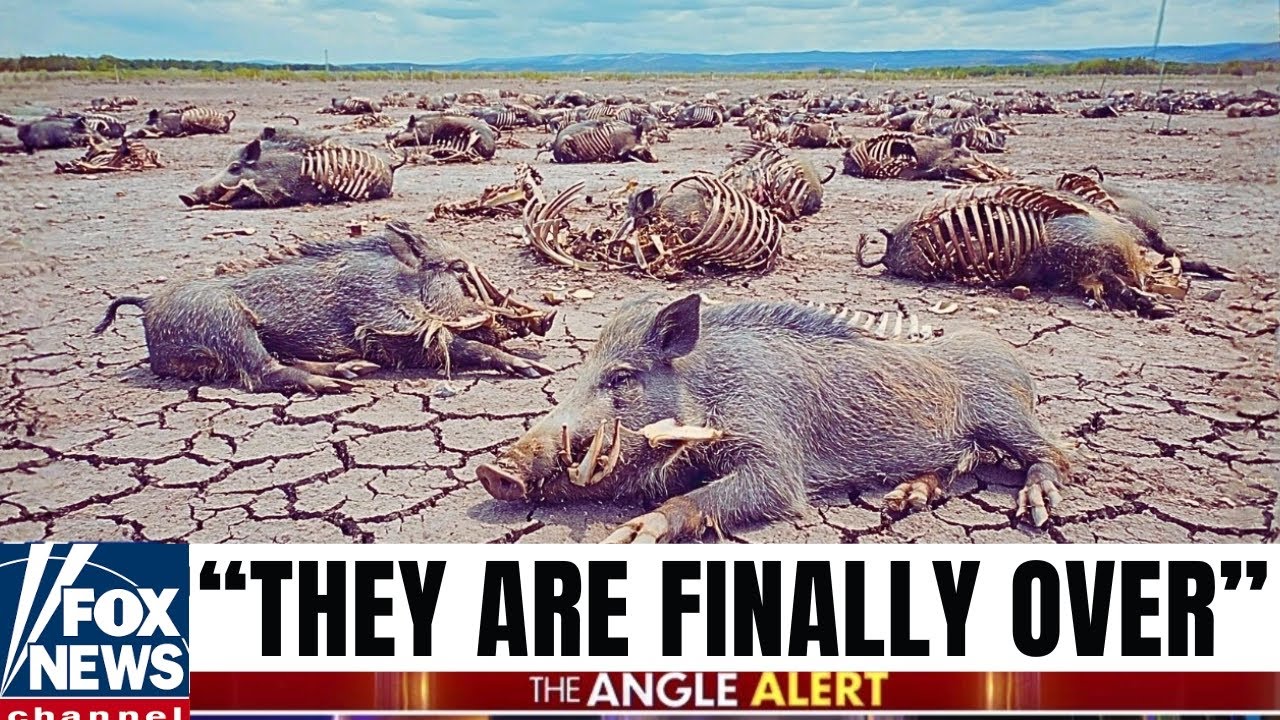
A helicopter pilot over Texas spots hundreds of wild hogs tearing through farmland, a swarm so destructive it seems unstoppable. Aerial eradication crews move in with precision, dropping from the sky to cull the massive population in one explosive operation.
The spread of feral hogs in Texas has grown from a localized nuisance into a statewide problem, prompting aggressive control...