Canada released 89 sea otters into a dead bay—what they did to 1,000 km of coast stunned scientists. Once hunted to near extinction for their fur, the otters vanished, leaving kelp forests destroyed and the ecosystem collapsing.
In 1969, Canada’s Pacific coast had no sea otters. That year, 89 animals were released into a bay in British Columbia as part of an experimental reintroduction. By 2008, surveys recorded more than 4,000 otters along the west coast of Vancouver Island, with the population expanding at roughly 11% per year. Kelp forests that had been stripped bare for over a century were regrowing, and coastal waters that had been ecologically depleted since the 1800s showed signs of recovery.
The decline began with the maritime fur trade. Before that period, sea otters ranged from northern Japan through the Aleutian Islands to central Baja California, forming a continuous population of hundreds of thousands. They fed on shellfish, consuming about a third of their body weight daily. After Russian fur hunters reached the Aleutians in 1741, commercial harvesting spread across the North Pacific over the next century, driving otters to the edge of extinction. By 1850, they were commercially extinct in Canadian waters. By 1911, fewer than 2,000 remained globally. In 1929, the last verified sea otter in British Columbia was shot near Kyuquot.

Without otters, sea urchin populations grew rapidly. Urchins grazed on kelp and could clear underwater forests within months. In some cases, urchins lived more than 200 years without predators, forming what marine biologists call urchin barrens: stretches of seabed stripped of kelp and largely devoid of the rockfish, lingcod, herring, and salmon that depended on the canopy. Indigenous communities that had harvested shellfish along the coast for over 2,000 years observed changes in nearshore waters that their oral histories had no precedent for.
The first serious proposal to reintroduce sea otters came in the late 1960s. The two surviving source populations were in Alaska, one at Amchitka Island in the western Aleutians and the other in Prince William Sound. The translocation required coordination between Canadian and American agencies, including the Canadian Armed Forces, Fisheries and Oceans Canada, the U.S. Bureau of Sport Fisheries and Wildlife, and the Alaska Fish and Game Department. The U.S. Atomic Energy Commission was also involved because Amchitka was being used as a nuclear test site; the otters were partly relocated to protect them from planned underground detonations.
Three releases took place: 29 animals in 1969, 14 in 1970, and 46 in 1972, all into Checheset Bay. Many did not survive. Researchers later estimated that the founding population may have dropped to as few as 28 animals before stabilizing. The first aerial survey in 1977 found only 70 otters along the entire Vancouver Island coast. The population had passed through a genetic bottleneck, with the gene pool of the regional population determined by a small number of survivors.
Local reactions were mixed. Commercial shellfish harvesters had built businesses around the abundant urchin, abalone, and clam populations that had flourished without their natural predator. First Nations communities had varied perspectives: some welcomed the return of a culturally significant species, while others were concerned about the impact on traditional shellfish harvests. In 1981, the provincial government established the Checheset Bay Ecological Reserve, covering 33,321 hectares of marine habitat. Federal restrictions under the Marine Mammal Regulations and the Fisheries Act followed.
The recovery was gradual rather than sudden. Researchers including Jane Watson, then at Vancouver Island University, and Linda Nichol, a biologist with Fisheries and Oceans Canada, tracked the population through aerial surveys. From 1977 to 1995, the Vancouver Island population grew at about 18.6% per year, among the fastest growth rates documented for a reintroduced marine mammal. By 1989, mothers with pups were reported near the Goose Islands, more than 125 kilometers north of the original release site. By 1992, the Vancouver Island range was continuous from Estevan Point to Quatsino Sound. By 2008, otters had expanded from Vargas Island to Cape Scott and into Queen Charlotte Strait, with a separate population established along the central mainland coast.
The ecological effects followed. Where otters became established, urchin populations dropped sharply and kelp regrew. A peer-reviewed study published in the Proceedings of the National Academy of Sciences in 2025, based on 30 years of observational data, described the pattern as a textbook trophic cascade. Kelp forests grew roughly 20-fold in regions where otters became established. Marine life in otter-populated areas increased by approximately 37% according to ecosystem assessments. A 2025 review in Frontiers in Ecology and Evolution found that kelp forests under otter influence supported significantly higher species richness than nearby urchin barrens.
Ecologist James Estes, a founding figure in trophic cascade research and a co-author on multiple British Columbia studies, described the early decades of recovery as textbook, a term researchers use when real-world data closely matches theoretical models. The otter-urchin-kelp dynamic became one of the most cited examples of keystone species effects in marine ecology.
There were additional effects. A 2012 study in Frontiers in Ecology and the Environment estimated that recovered kelp forests across the otter range stored between 4.4 and 8.7 teragrams of additional carbon, the result of restored photosynthesis on a large scale. Coastal ocean acidification was partially buffered in areas where kelp returned. Rockfish, herring, lingcod, and juvenile salmon populations benefited from the restored canopy habitat. A 2020 analysis published through the Hakai Institute research program estimated that the economic benefits of sea otter recovery, including ecotourism, finfish yields, and sequestered carbon, outweighed the costs of reduced shellfish harvests. Tourism built around otter rafts in Clayoquot Sound became a recognized part of the regional coastal economy.
By 2008, surveys recorded 4,110 otters along the Vancouver Island coast and 602 on the central coast. More recent estimates place the British Columbia population above 6,500 animals, all descended from the 89 released between 1969 and 1972.
The recovery also created economic and cultural friction. Commercial harvesters of red sea urchin, geoduck, and Dungeness crab faced reduced harvests in areas where otters became established. A study referenced in Canada’s National Observer estimated fishery losses across clam, crab, and urchin operations at approximately $7.3 million over the studied period. For coastal First Nations communities, the situation was layered. Sea otters hold cultural significance and appear in oral histories and ceremonial traditions, but the recovery also reduced access to abalone, urchins, clams, and other shellfish central to food security. Northern abalone had already been driven to commercial extinction by over-harvesting in the 1970s and 1980s, and the fishery remains closed, with otter predation compounding the species’ difficulty in recovering.
Research published by Simon Fraser University and West Coast First Nations collaborators in People and Nature in 2020 recommended restructuring how sea otter recovery is governed in Canada, calling for greater Indigenous authority and input and drawing on traditional management practices that had historically maintained balance between otters, shellfish, and human communities. Some Nuu-chah-nulth community leaders have called for a regulated sea otter harvest as a means of reasserting stewardship. The compensation frameworks measured quantifiable losses but were less equipped for what could not be quantified.
The coast remains a work in progress. The full pre-fur trade range, estimated at 100,000 to 150,000 otters along the historic British Columbia coast, has not been reached and may not be. Within decades of the second translocation, however, kelp was returning to seabed that had been bare since before the First World War. The ecosystem reorganized around the predator that had been missing. Researchers note that the system’s recovery has not required ongoing human assistance beyond the initial reintroduction and subsequent protection. The coast has the potential to support over 100,000 sea otters at its historical carrying capacity. There are roughly 7,000 there now.
Recommended Stories
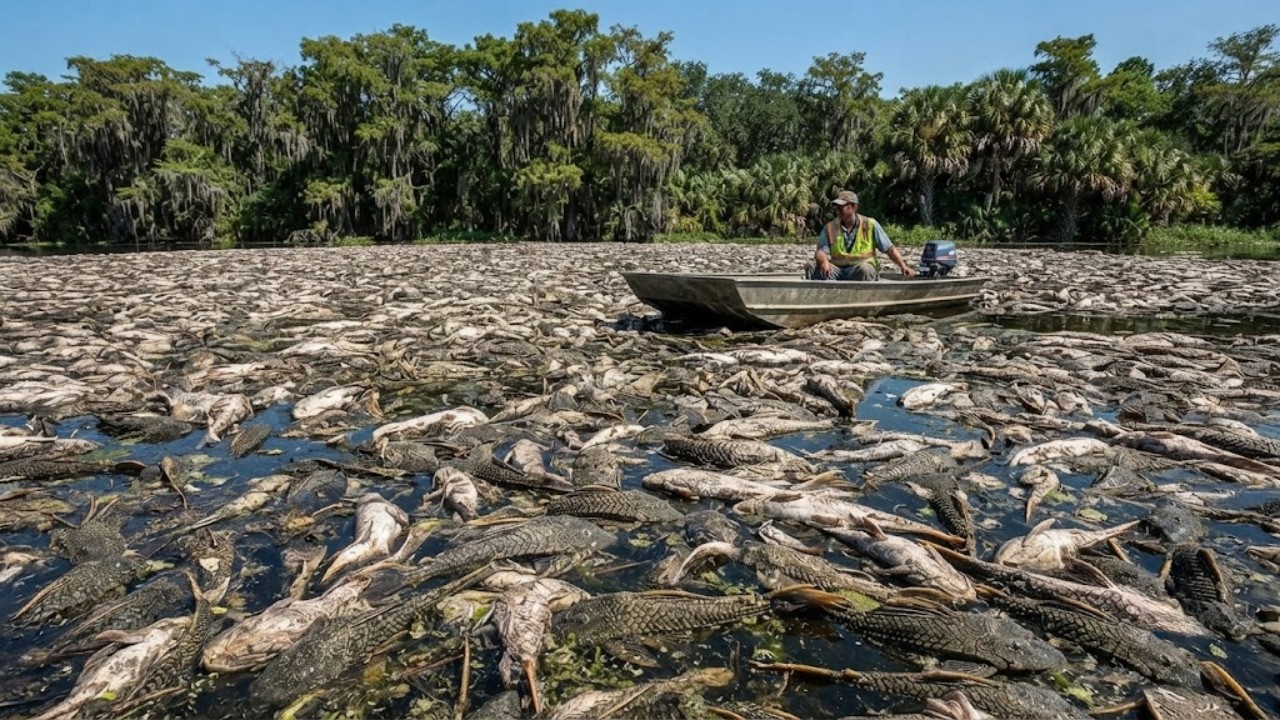
Armored catfish are vanishing from Florida’s rivers, and scientists have finally identified what’s preying on them. These invasive fish, protected by tough bony plates, seemed nearly untouchable in the state’s waterways.
For four years, Dr. Ryan Allisson had been conducting population density surveys in Florida's Peace and Hillsborough rivers. He knew...
Researchers think Grok AI just uncovered something hidden in whale language, and they’re stunned by what the pattern might mean. Feeding thousands of hours of recorded whale calls into the model, the team noticed a structure far more complex than simple songs, hinting at a possible grammar-like system.
In 2023, researchers off the coast of Alaska conducted an experiment in marine biology. They anchored a small research vessel...
A lone shipwreck survivor vanished from a lifeboat, and the only witness was the ocean itself—until a marksman’s dilemma resurfaced in a hunter’s shocking tale. A massive tiger shark, known only through whispered legend, was finally struck by an anchor, forcing a brutal encounter that no one could dismiss as myth.
A scientific account that had long classified the great white shark as an apex predator with no natural enemies has...