A bold experiment once unleashed thousands of piranhas into a thriving lake, aiming to wipe out a massive snake infestation that had turned the water into a danger zone. The plan seemed brilliant: release the fierce fish to slash the serpent population and restore balance fast.
Piranhas, known for their sharp teeth and fast movements, are among the most powerful predators in the Amazon’s murky waters. They do not simply hunt alone but coordinate in groups, showing advanced survival strategies. The idea of shipping thousands of red-bellied piranhas from the Amazon to flooded rice fields in South Asia to hunt cobras hiding in the water has been proposed as a theoretical solution to a serious problem. The logic behind the idea is that a predator would be sent to eliminate another predator, though the plan has significant flaws when examined closely.
To understand why such an extreme solution has been considered, it helps to start with the rice itself. Across South and Southeast Asia, hundreds of millions of people depend on flooded rice paddies for food. Farmers intentionally flood their fields, leveling the land, surrounding it with low mud banks, and keeping it under shallow standing water for months at a time. During monsoon season, farmland looks like it disappears, replaced by what appears to be a brown inland sea crossed only by thin mud lines where the banks remain visible. For months, this flooded area is where the work happens, with planting, weeding, and water checks all done on foot, often barefoot. For humans, the water is a workplace. For snakes, it is an attractive habitat.
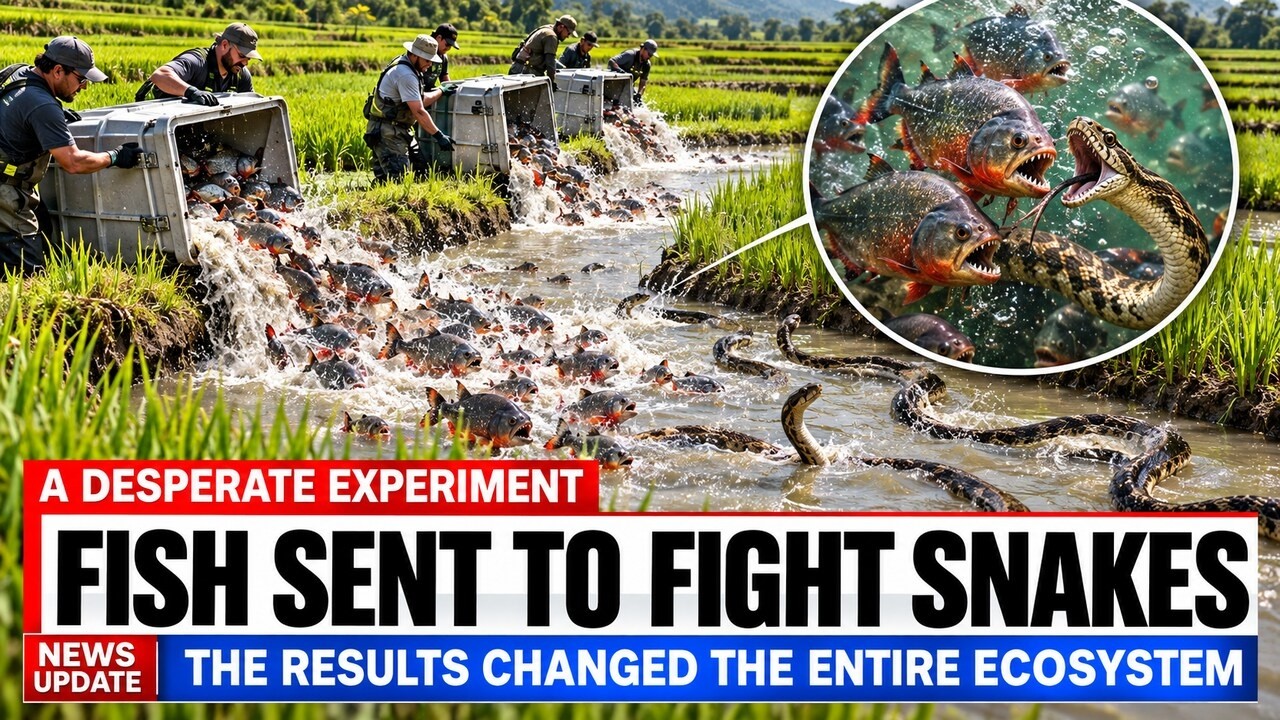
Cobras, kraits, and vipers do not flee when land is flooded; they follow the water. Flooded rice fields offer them everything they need, including warm, shallow water, an abundant supply of frogs, rats, and small fish, and endless cover among submerged plants. Four species in particular are often described as the most medically important in South Asia, collectively known as the Big Four: the Indian cobra, the common krait, Russell’s viper, and the saw-scaled viper. Cobras are better swimmers than one might expect, gliding across the surface almost silently and hunting as efficiently in water as on land. A flooded rice field does not repel snakes; it attracts them.
Every day, often before sunrise, farmers walk barefoot into these fields with no protection. The water around their legs turns to thick mud, and visibility is nearly zero. They cannot distinguish a rice stalk from a coiled snake tail, and they cannot see their own feet. They move by memory and touch, the same way they have done a thousand times before. When a farmer steps on a snake, for the snake it is not a passing shadow it can escape. It is a large animal pinning it in place with no way out. The snake does the only thing left to it and bites. A person may feel a prick or a sharp pressure somewhere below the waterline, and may not even be sure what has just happened. But if the snake was a cobra, the clock has started ticking.
Cobra venom is mostly neurotoxic. It does not merely damage tissue around the wound; it attacks the nervous system, blocking signals from nerves to muscles. Paralysis spreads outward, muscle by muscle, eventually reaching the diaphragm. When the diaphragm stops responding to the brain, the victim begins to suffocate while still fully conscious, sometimes within a few hours of the bite, and standing in water is the worst possible place to lose the ability to breathe.
Snakebite is not a rare tragedy in this part of the world. It is one of the most neglected mass killers on the planet. In 2017, the World Health Organization formally added snakebite envenoming to its list of neglected tropical diseases. Each year, roughly two million people worldwide are poisoned by snakebites. Tens of thousands die, and hundreds of thousands more suffer amputations and permanent disabilities. No region bears this burden more than South Asia. India alone is estimated to account for about half of all snakebite deaths worldwide. These are not a series of strange accidents; they are a slow, silent epidemic that mostly kills rural poor people, far from the cities where policy is written.
Anyone trying to stop it hits a wall that no ordinary solution can get past. The first instinct might be to drain the fields, but that is not possible because the water is the crop, and the crop is food. Trying to catch the snakes by hand across thousands of square kilometers of water where no one can see inside would never end. Poisoning the water would poison the rice, the fish, and every family that eats them. Every ordinary answer hits the same wall. The threat is everywhere, and the same water that keeps the entire region alive hides it. This is the kind of wall that makes desperate ideas seem logical. If humans cannot see the snakes, the idea is to send a hunter that does not need to see.
On the other side of the world, in the Amazon, the water is often dark, the color of concentrated tea, too murky for sight to matter much. Red-bellied piranhas have adapted to that darkness. Along their sides runs a sensory system called the lateral line, a row of small receptors that detect pressure and movement in the water, similar to how skin senses a breeze. A piranha does not need its eyes in murky water; it feels every movement around it before seeing anything at all. On paper, this makes them look like a theoretically perfect weapon for fighting snakes. They sense movement in darkness, they move in shoals, and they have a reputation that makes people fear putting their hands in the water.
The theoretical plan was neat and self-contained. Release piranhas into flooded rice fields during the rainy season, let them fill the water to chase anything that moves like a snake, then when the season dries and the fields drain, the piranhas trapped in shrinking pools would die or be collected by villagers for cooking. One season of organized removal, then a clean reset. A tidy, controlled, finished plan. Before seeing how this plan would collide with reality, it is worth noting that humanity has run this exact experiment before, not with piranhas, but with the same logic, and history shows how it ends.
In the nineteenth century, a sugar cane farm in Jamaica had a rat problem. Rats gnawed the stalks, destroyed crops, and ate away at farmers’ wealth, season after season. In 1872, farmers brought in a predator from Asia, a small, fierce hunter called the small Indian mongoose, and released it. Hawaii followed in 1883, and mongooses were released across the Caribbean. On paper, the plan was perfect. The mongoose is fast, brave, and a famous killer, the animal that famously faces cobras. But in practice, it became one of the worst wildlife management decisions ever made. The mongoose hunts by day, while many of the rats it was sent to kill come out at night. The two animals rarely met. The mongoose ignored the problem it was brought to solve and ate whatever was easiest instead, including ground-nesting birds, lizards, snakes, frogs, and sea turtle eggs. It contributed to the decline of many native species and is now ranked among the most destructive invasive predators in the world. The rat problem was never solved.
In Queensland, Australia, in 1935, the enemy was a beetle that destroyed sugar cane, and the chosen weapon was a toad. About 100 cane toads were released in the hope they would eat the beetles and save the crop. But adult beetles spent most of their time high on the cane stalks, out of reach of the toads. The toads could not climb the stalks to get to them. The beetles kept doing their work, and the toads went looking for other things to do. They bred, spread, and with each rainy season gained new territory. They spread across a large part of the continent, poisoning native predators that tried to eat them. From about 100 animals came the invasion, and nearly a century later, they are still spreading. These examples follow a pattern that approaches a rule of nature. Throw a hungry, adaptable predator into an ecosystem that never evolved alongside it, and it will not politely attack the target you chose. It will attack whatever requires the least effort, and a fast, venomous cobra is never the easiest meal in the pond.
In a flooded rice field full of small, soft, slow, unprepared animals, the piranhas would make the same brutal calculation every predator makes. On one side, a large, fast, fully capable cobra with a lethal counterstrike. On the other side, the ordinary residents of the field, including small carp, shrimp, snails, frogs, tadpoles, and juveniles of a dozen local fish species, none of which had ever faced a group predator with teeth like these. The piranha would choose the buffet. Studies of red-bellied piranhas indicate they are opportunistic feeders that eat anything available, and their shoaling behavior is primarily for protection from predators, not coordinated hunting. The real fish is cautious. It goes for what is small, easy, wounded, or already dead, which is exactly the kind of animal least likely to fight a cobra. The hunter that looked perfect on paper turns out in the water to be a different creature entirely.
What follows is one of the most predictable chain reactions in ecology, called a trophic cascade. Hit one layer of the food web hard enough, and the damage does not stay in that layer. It spreads up and down through the entire structure to places no one was watching. Small local fish in rice fields do more than just exist in the background. They are workers, and one of their most important jobs is eating mosquito larvae from standing water. People know this well enough that fish have been used as living mosquito control for more than a century. There is even a species literally called the mosquito fish, shipped around the world deliberately for this exact task. In many countries where it was introduced, the mosquito fish itself became an invasive pest. In parts of Asia, farmers raise fish directly in rice fields partly for this reason. When piranhas strip the fields of local larvae-eaters, they are not just removing a few small fish. They are eliminating a frontline defense against disease. The stagnant water that nothing eats from anymore develops more larvae. More larvae turn into mosquitoes. A flooded rice field is not a small pond; it is vast expanses of warm, still, shallow water, exactly where mosquitoes look to breed. The fields that quietly helped curb malaria, dengue, and Japanese encephalitis could turn into breeding grounds for all of them.
The next blow comes faster and lands at dinner time. For millions of families in South and Southeast Asia, the small wild fish, snails, and shrimp caught from fields and nearby canals are not just a side dish. They are a major source of animal protein, often the cheapest and most reliable food poor households have. When piranhas empty the fields of these creatures, the families who depended on them eat less. Fishing rates collapse, the price of remaining protein rises beyond reach, children stop gaining weight, and the most vulnerable families slide toward hunger. A plan marketed as protecting farmers would quietly begin to starve them.
The worst turn comes from the direction the plan was supposed to address, the snakes. At first, when the piranhas arrive and easy food is everywhere, they leave the cobras alone. But sooner or later, that easy food runs out. Once the fields are empty of fish, shrimp, and fry, hungry piranhas become less picky. Anything that moves in the water becomes a target, and that may eventually include snakes. But the dramatic version of the story misses a crucial point. Hungry fish attacking a large, strong, fast-moving animal do not kill it with one clean blow. They cause wounds, tail tears, and constant harassment every time the snake slips back into the water. The result is a population of snakes driven into a state of constant stress without being eliminated. A stressed snake does not produce stronger venom, but it changes how it uses what it has. A calm cobra that feels mildly threatened often delivers what herpetologists call a dry bite, a warning strike that injects little or no venom, because producing venom is costly. A trapped, exhausted, panicked snake does the opposite. It defends its life with everything it has, which means more attacks, more aggressive attacks, and a much greater chance each one delivers a full dose. The danger does not come from stronger venom; it comes from snakes pushed into survival mode. For a farmer standing in the water, the difference does not matter. The snakes have simply become more likely to bite and with real intent.
The snakes have one more move that carries the danger to a place the piranhas cannot follow. They move indoors. After being harassed in their habitat, snakes may leave the flooded rice fields earlier and in greater numbers than usual, heading for the only dry ground nearby, which is village paths, grain storage, houses, kitchens, and bedrooms. To understand why this is so deadly, one fact is necessary. A significant portion of the most fatal bites in rural South Asia does not happen in the fields at all. It happens at night, inside homes, to sleeping people. The common krait, one of the most venomous land snakes in Asia, is known for entering houses after dark and crawling over sleeping people on the floor. Its bite is often almost painless. Victims can sleep through it and wake up already paralyzed, or never wake up at all. Pushing snakes out of the water and into the places where families sleep would not be a minor side effect. It would be a direct route to one of the deadliest types of snakebite there is. The bites would not just increase; they would move to the worst possible place at the worst possible hour, delivered by animals already primed to inject everything they have.
The plan still held one safety net, built around it from the start. It relied on the comfortable belief that the dry season would act as an off switch, trapping the piranhas in shrinking pools where they would die quietly and end the experiment. But a flooded rice field is not a closed aquarium. During the peak of the monsoon, heavy rain for days swells the fields. The low mud banks separating one field from another sink underwater. Water flows from field to ditch, from ditch to canal, from canal to river, in a vast water network connecting the entire region. From above, the boundaries between farms simply vanish. What was a patchwork of separate fields becomes a connected water body, and any creature living in one field now has a path to every other field and beyond, to the rivers. Piranhas are skilled swimmers. They can ride the high water out of the fields and reach rivers and lakes that stay warm all year and are full of food. At that moment, the piranha stops being a pest control tool and becomes what every ecologist fears, an established invasive species. The rule is unforgiving. Once a breeding population settles across a connected river system spanning thousands of square kilometers, you will never get it back. The United States spent enormous sums trying to prevent invasive carp from spreading through the Mississippi basin and toward the Great Lakes. Lake Victoria in East Africa saw introduced Nile perch contribute to the extinction of hundreds of native fish species. The Atlantic and Caribbean reefs were overrun by lionfish that no net, bounty, or campaign has eliminated. You cannot poison piranhas in a living river without poisoning the water itself, the water people drink, bathe in, and use for their crops. The plan would turn from a bad idea into a permanent reality. The fish would stay forever.
Stepping back to look at the full picture, the most unsettling part is not the fish at all. A plan to remove one threat ends up creating several. On land, displaced, agitated, more defensive snakes live closer to people than ever before. In the water, a foreign predator that will never leave. A rise in mosquito-borne disease. The fish that fed the poorest families are wiped out. The real problem was never the snake. For most dangerous species in this region, an effective treatment already exists, antivenom. When given in time, it saves the vast majority of victims. People do not die in these numbers because the venom cannot be stopped. They die because antivenom does not reach them. The reasons have nothing to do with biology and everything to do with logistics and poverty.
Many antivenoms are fragile biological products that must be kept cold, usually between two and eight degrees Celsius, all the way from factory to patient. That unbroken chain of cooling is called the cold chain. If it breaks anywhere along the way, the drug may degrade into something that might not work when a life depends on it. In places where electricity is unreliable or absent, a village clinic has no safe way to keep antivenom cold. The vials sit in a hospital tens of kilometers away, down roads that turn to mud in the same season as the peak of bites. The journey to reach them is a race against time, and many people do not make it. Others lose precious hours first with traditional healers whose treatments cost them the most important time of all. There is also a quieter failure beneath all this. Antivenom is made using venom from specific snake species, and a product designed for one region’s species may be weak or ineffective against snakes from another region. A clinic can have antivenom on the shelf and still lose patients because it is the wrong antivenom for the snakes actually biting people. This is why the World Health Organization launched a global strategy in 2019 aiming to halve snakebite deaths and disabilities by 2030. Almost none of it is about killing snakes. It is about getting the right treatment to the right people while there is still time.
If the real killers are distance, heat, and the wrong vial, what it actually takes to fight them is far less than a shipment of piranhas, and the answer is almost embarrassingly ordinary. A sturdy pair of boots can prevent many of the bites that occur on feet and legs, and costs only a few dollars. A solar-powered refrigerator allows a rural clinic to store antivenom safely, no power grid needed, so the vial is close instead of hours away. A cheap flashlight, and the habit of not walking at night without one. A stick to tap the ground ahead. A raised bed and a tightly tucked mosquito net, which also helps keep reptiles out of bedding. Basic first aid that teaches people to keep the bitten limb still and get to a hospital quickly, instead of a tourniquet or folk remedy that wastes critical hours. None of this requires changing an ecosystem. It only requires changing the few seconds when a body and a snake occupy the same space. None of it is dramatic. None of it would make a headline. But all of it saves more lives per dollar than any predator. This is exactly why programs making real progress against snakebite focus on these unglamorous solutions, not on monsters imported from the Amazon.
An ecosystem is not a machine with one broken part you can remove and replace. It is a web, and every strand is connected to another. When you pull hard on one strand to solve a problem, you are not making a small, clean change. You are sending force through the entire structure to corners you were not watching and could not easily predict. And that web is not obligated to break in your favor. Nature will not defeat a plan out of revenge. It will simply follow its own rules, the same rules it has always followed, the ones we keep convincing ourselves we are finally smart enough to beat.
Recommended Stories
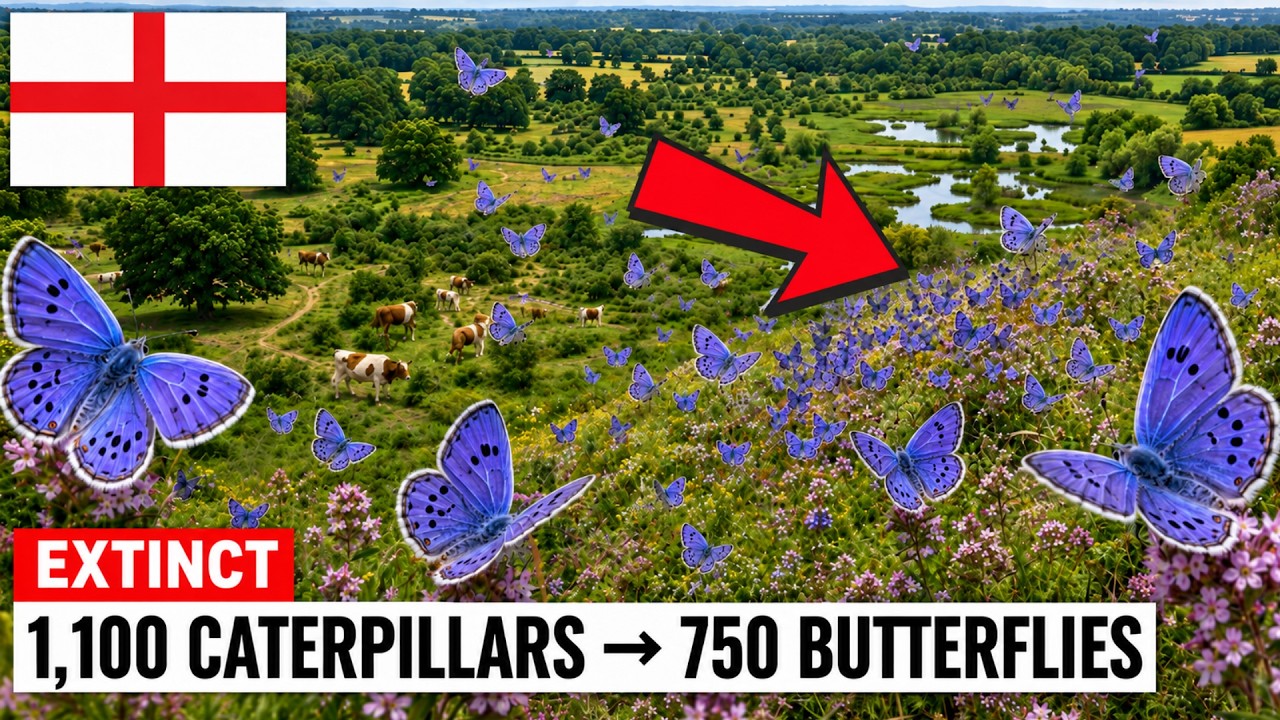
After 1,100 caterpillars were placed on a barren, dead hill in England, something impossible occurred one year later—an extinct butterfly species was suddenly facing a stunning comeback. Conservationists had released the rare insects into a landscape stripped of life, betting everything on restoration nobody believed would work.
In August 2019, the National Trust released 1,100 large blue caterpillars onto Rodborough Common, a limestone hillside in Gloucestershire where...
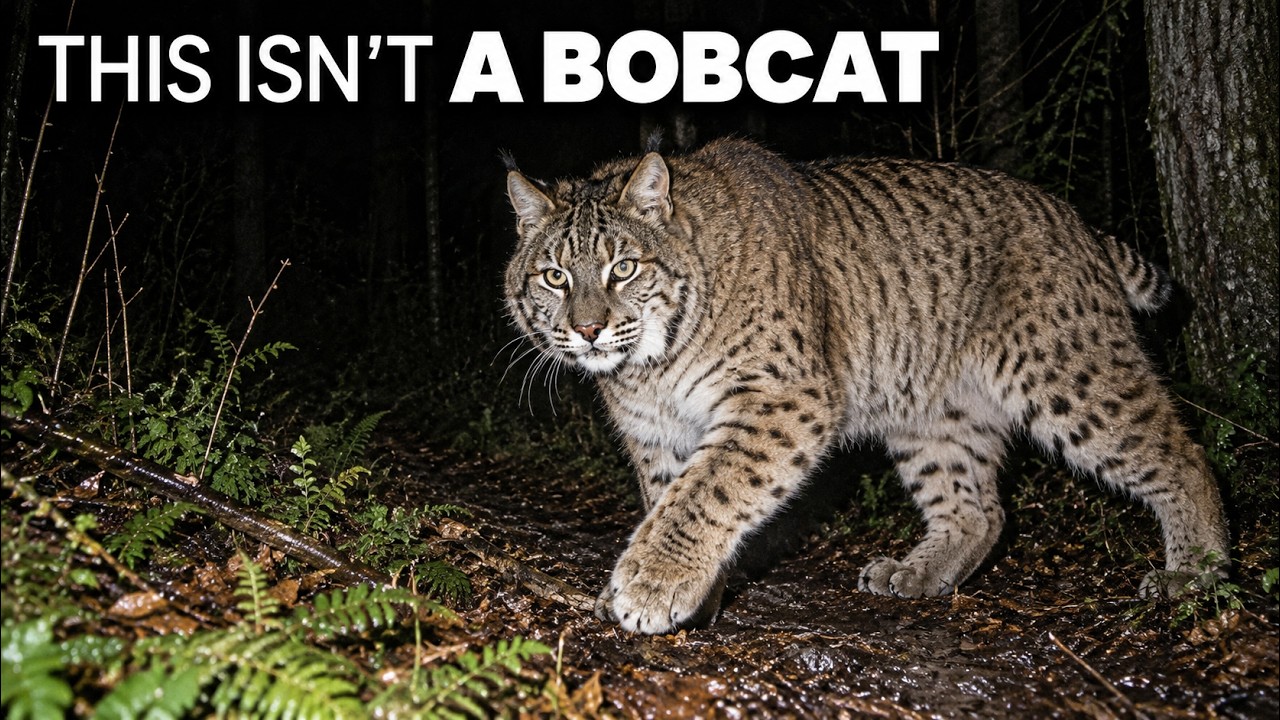
Wildlife biologists conducting routine animal surveys across the upper Midwest over the past fifteen years have encountered a consistent surprise. Bobcats captured in traps or recorded by trail
Wildlife biologists conducting routine animal surveys across the upper Midwest over the past fifteen years have encountered a consistent surprise....
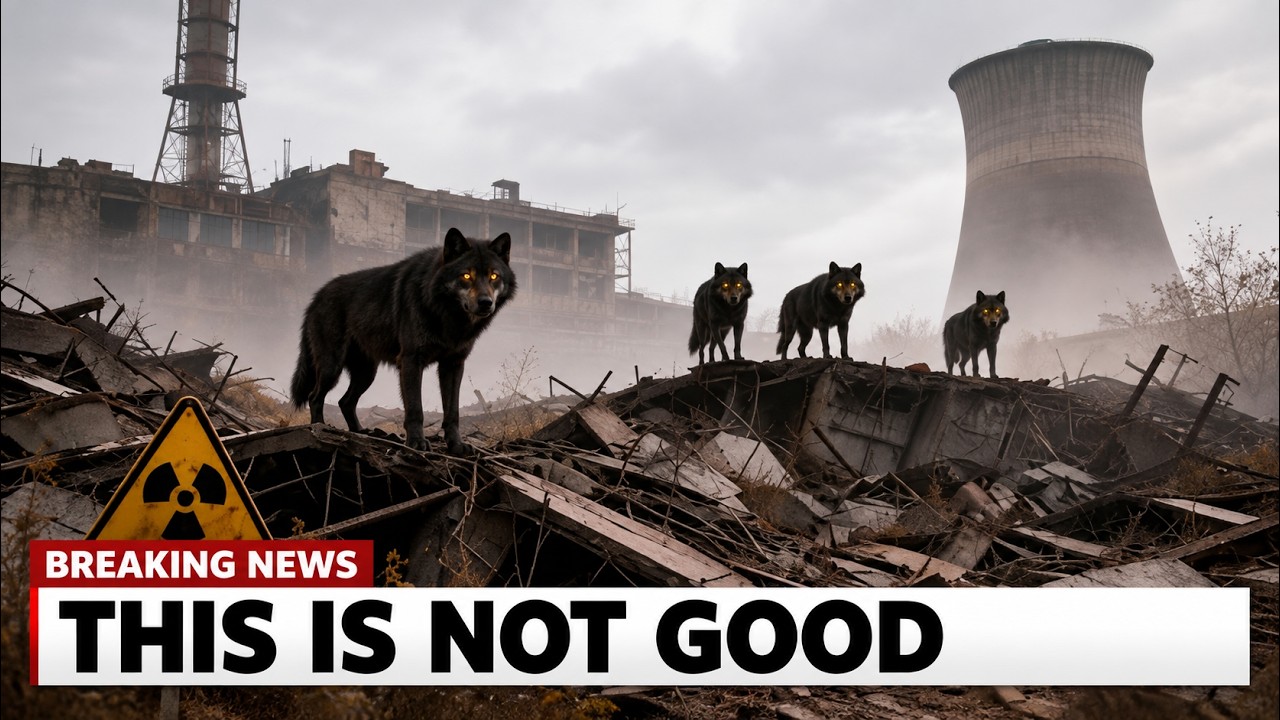
Scientists set up cameras in the Chernobyl Exclusion Zone expecting ghosts of the past—but captured something entirely different. Wildlife supposedly missing from the region for a century has returned, and the footage is reshaping what experts believed about the disaster’s aftermath.
The Chernobyl Exclusion Zone, a 2,600-square-kilometer area of Ukraine and Belarus, was not created as a nature reserve. It came...