A New Zealand botanist famously refused to kill an invasive weed, choosing to plant it instead. For 39 years, he meticulously cultivated the offspring of a scraggly tree known as “theworld’s most hated plant.”
In September 1987, Hugh Wilson took over management of 109 hectares of former farmland on New Zealand’s Banks Peninsula. The land had been cleared of native forest generations earlier and was covered in gorse, an invasive European shrub that farmers had struggled to control for decades. Wilson’s plan was to leave the gorse alone and let native forest regenerate through it. The approach was unusual, and one neighboring farmer wrote to the local paper that it was the business of fools and dreamers.
The reserve, known as Hinewai, has grown from 109 hectares to roughly 1,700 hectares over nearly four decades. Around 350 plant species and 35 species of native birds have returned, and 47 permanent waterfalls now run through the property. No trees were planted. The entire transformation resulted from removing grazing animals and allowing natural succession to take its course.
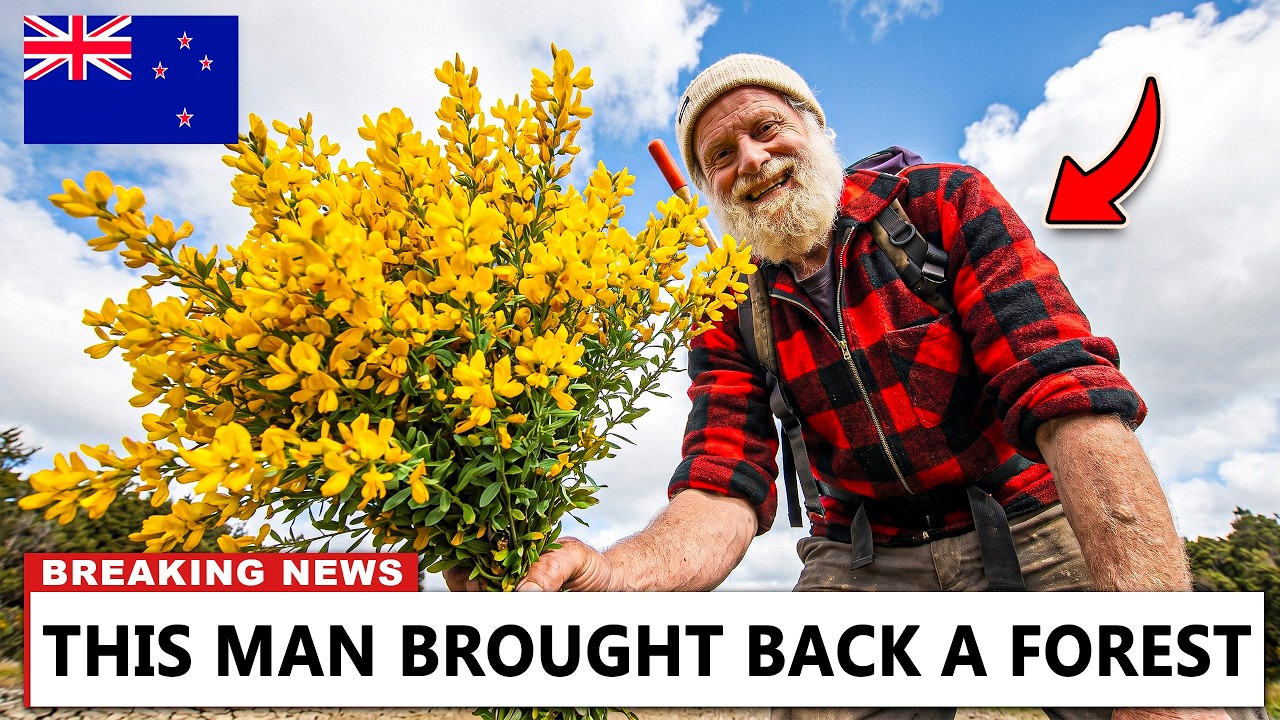
New Zealand was almost entirely forested before human settlement, but European colonists cleared most of it for pasture. Gorse was introduced from Europe and spread widely. By 1900, it was declared a noxious weed, but it proved extremely difficult to eliminate. Farmers who burned or bulldozed gorse found that seeds, which can lie dormant in soil for decades, germinated in the newly exposed ground and produced even thicker regrowth.
Wilson had spent years conducting botanical surveys on the peninsula before taking on Hinewai. During that work, he noticed something that underpinned his approach. Native seedlings such as kanuka and totara were growing beneath established gorse, protected from livestock by the thorns. The gorse also improved depleted soil by fixing nitrogen, adding up to 200 kilograms per hectare per year. Once native trees grew tall enough to shade the gorse, the gorse died and decomposed, adding further nutrients to the soil.
The main condition was removing animals that would eat native seedlings. Wilson fenced off neighboring stock, trapped wild goats, and later addressed possums, stoats, and rats. The pest control work required continuous effort, including traps, night shooting, and licensed poison programs. Wilson described the work as endless.
The first year brought practical difficulties, including a severe drought. Wilson allowed a neighbor’s starving cattle onto parts of the reserve where grass remained. The gesture improved relations with nearby farmers, and in later years some neighbors came to support the project. One neighbor eventually donated a section of land after Wilson informed him that a helicopter spraying gorse had destroyed rare orchids on a slope.
Regulations required gorse control along property boundaries, so Wilson cleared the edges of the reserve while leaving the interior to regenerate. In 2011, a lightning fire burned roughly a third of the reserve. Gorse regrew on the burned ground and once again sheltered native seedlings. By 2017, vegetation in the burned sections had largely recovered.
Wilson had predicted in 1990 that native trees would overtake the gorse in about ten years in moist gullies and thirty years or more on drier ridges. The timeline held. During the late 1990s, kanuka canopies began appearing above the gorse in scattered areas, and the gorse disappeared in those places.
In December 2021, record rainfall caused large landslides across the reserve, including one 90 meters wide. Tracks were damaged and parts of the restored forest were lost. Wilson documented the damage and noted that young gorse was already regrowing on the bare ground, continuing its role as a pioneer species that prepares the land for later native growth.
The reserve now earns roughly 100,000 New Zealand dollars annually from carbon credits. The income funds purchases of additional land. Wilson sells credits only to companies with public zero-emissions commitments.
The method has drawn some interest beyond Hinewai. Neighboring farmers have begun fencing off steep gullies on their own land and allowing natural regeneration. The Department of Conservation has published practical guidance on the approach. However, ecologists note that forests growing through gorse may differ from those that would have developed without it, and the long-term consequences are not fully known. Regional authorities have not adopted the Hinewai method as a standard approach.
Wilson, now 81, continues to manage the reserve with three younger assistants. He lives in a solar-powered hut without internet or a phone and keeps a daily field journal recording observations of plants, animals, weather, and landscape changes. The reserve publishes a hand-drawn bulletin twice a year.
A local radio station incorrectly reported that Wilson had died. He learned of the report, wrote about it in the bulletin, and described the episode as funny.
Wild deer, escaped from neighboring farms, have become a new concern. They are more difficult to trap than goats, which took twelve years to eliminate. The team has begun addressing the problem.
The future of Hinewai depends partly on whether Wilson’s methods can be passed on. His assistants have received training, but the project’s long-term continuity remains an open question. The reserve continues to expand where ecologically linked parcels of land become available.
Recommended Stories

California released 37 orphaned sea otters into a bay scientists had already written off as dead — a desperate experiment that few believed could work. For fifteen years, the marine ecosystem showed no obvious signs of recovery, and experts quietly assumed the otters had vanished.
In 2001, biologists in California took 37 orphaned sea otter pups that had been found sick or stranded along the...

Researchers used artificial intelligence to analyze thousands of cat vocalizations, and the machines identified patterns humans have never heard. Cats produce far more variation in their meows than previously believed, with distinct acoustic signatures for hunger, irritation, and affection.
Researchers at the University of Milan have used artificial intelligence to analyze thousands of cat vocalizations and found a distinct...
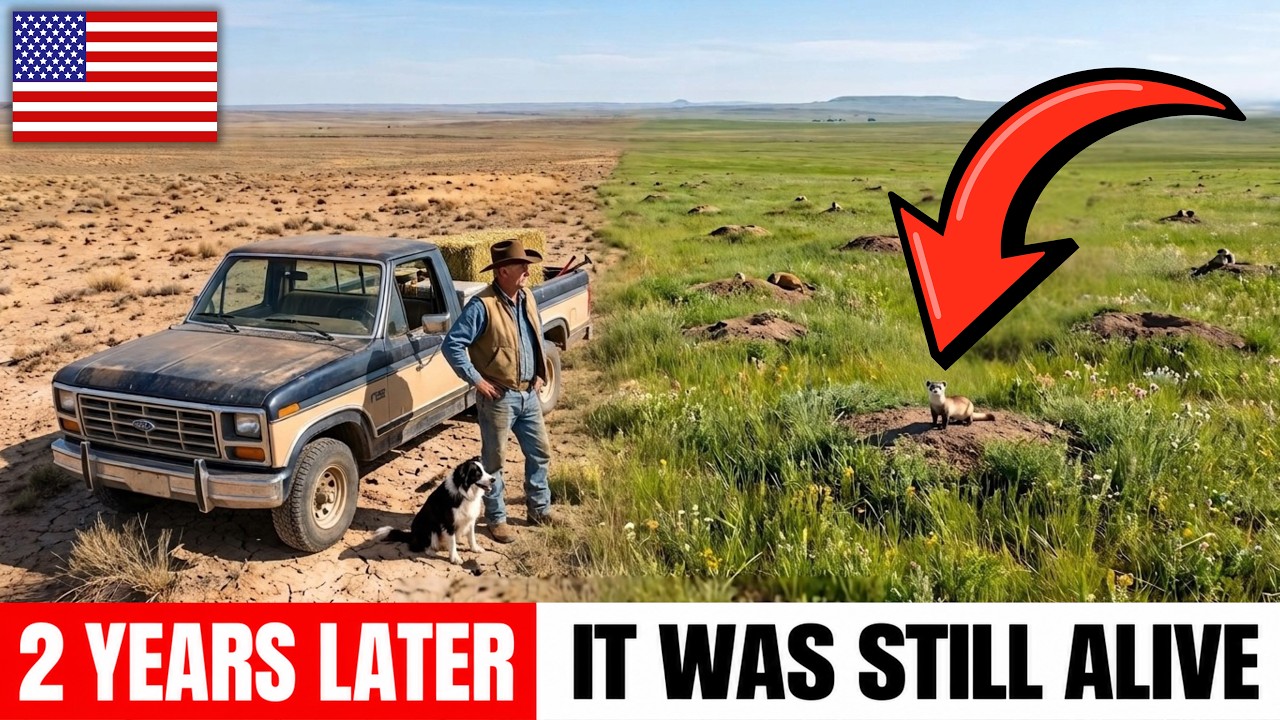
In September 1981, a ranch dog named Shep dropped a dead animal on the Hoggs’ Wyoming doorstep, and the species they identified had been declared extinct just two years earlier. Scientists had written off the black-footed ferret in 1979, yet the dog found one in a place biologists had abandoned.
In September 1981, a ranch dog named Shep brought a dead animal to the doorstep of John and Lucille Hogg's...