In September 1981, a ranch dog named Shep dropped a dead animal on the Hoggs’ Wyoming doorstep, and the species they identified had been declared extinct just two years earlier. Scientists had written off the black-footed ferret in 1979, yet the dog found one in a place biologists had abandoned.
In September 1981, a ranch dog named Shep brought a dead animal to the doorstep of John and Lucille Hogg’s home in Wyoming. The animal was a small weasel-like creature with black feet and a banded face. The Hoggs did not recognize it, so they took it to a taxidermist in Meeteetse.
The taxidermist identified it as a black-footed ferret. This was unexpected. In 1979, the last known black-footed ferret had died in captivity, and scientists had declared the species extinct. The Hoggs’ dog had found one on their property, an area where biologists had stopped searching.
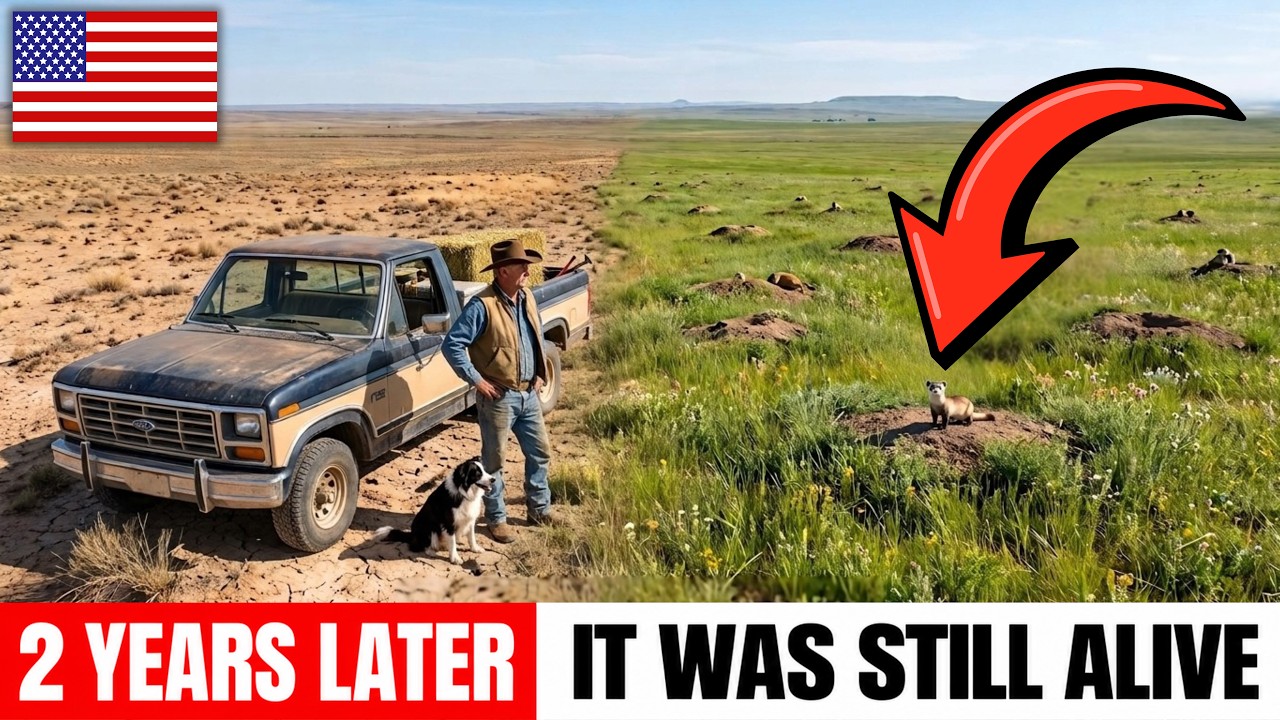
The taxidermist notified the Wyoming Game and Fish Department. Biologists returned to the Hogg ranch and began searching the surrounding land at night with spotlights. Black-footed ferrets are nocturnal, and their eyes reflect light in the dark. The surveys revealed not one ferret but a living colony. By 1984, researchers estimated that around 129 ferrets were living near Meeteetse.
The discovery was significant because the black-footed ferret’s decline was tied directly to the decline of the prairie dog. Black-footed ferrets depend on prairie dogs for nearly all of their food and shelter. They eat prairie dogs and live in their burrows, relying on prairie dog towns for survival.
For most of the 20th century, prairie dogs were considered pests and were targeted by widespread poisoning campaigns across the American West. These campaigns reduced prairie dog populations to roughly two percent of their former range. Where prairie dog towns disappeared, the ferrets that depended on them disappeared as well. The Meeteetse ferrets had survived because the prairie dog towns in that area had survived.
In 1985, the Meeteetse population began to decline sharply. Canine distemper, a virus nearly always fatal to ferrets, moved through the colony. At the same time, sylvatic plague, the same bacterium responsible for the Black Death, decimated the prairie dog population, cutting off the ferrets’ food supply.
Faced with the collapse, wildlife officials made the decision to capture the remaining ferrets. Between 1985 and 1987, teams caught the survivors. When the effort was complete, only 18 ferrets remained in human care. Of those, a smaller group eventually passed their genes forward. The entire modern black-footed ferret population descends from roughly seven founding animals, a genetic bottleneck that still affects the species.
Captive breeding succeeded where earlier efforts had failed. The ferrets reproduced at facilities in Wyoming and later at other breeding centers. In 1991, the first captive-bred black-footed ferrets were released into the wild at Shirley Basin, Wyoming.
Early releases showed that pen-raised ferrets had difficulty surviving in the wild. Many were killed by predators such as coyotes. To address this, keepers began raising kits in outdoor pens with real burrows and live prey so they would learn to hunt before release. Even after these adjustments, only a portion of released ferrets survived their first winter. Successful reintroductions depended on prairie dog towns that were large and healthy enough to support them.
Reintroduction sites eventually expanded across the western United States, including Wyoming, South Dakota, Montana, and Arizona. Ferrets were also released in Chihuahua, Mexico, and Saskatchewan, Canada. Wild-born kits appeared at several sites, indicating that released ferrets were breeding on their own.
The genetic bottleneck from the seven founders remained a long-term concern. A narrow gene pool leaves the species more vulnerable to disease and limits its ability to adapt. In the 1980s, researchers froze cells from some wild ferrets for future use. Among these was a female named Willa, whose genetic line had not contributed to the breeding population. Her cells were stored in what became known as a frozen zoo.
In December 2020, a black-footed ferret named Elizabeth Ann was born using cells from Willa, cloned more than 30 years after they were collected. Additional clones followed, and some later bred. If those lines continue, they would add genetic variation that had been absent from the population for a generation.
Plague remains the most serious ongoing threat to wild ferrets, because it continues to kill prairie dogs. Researchers developed an oral plague vaccine that is mixed into bait pellets and scattered across prairie dog colonies. The vaccine is intended for the prairie dogs themselves, whose health is directly tied to that of the ferrets.
The black-footed ferret remains listed as endangered. The wild population is still in the hundreds, and the species remains vulnerable to disease and the ongoing loss of prairie dog towns. The recovery has been the result of sustained management: captive breeding, pre-release training, vaccination of prairie dogs, and protection of the grassland habitats where both species live.
Recommended Stories

Scotland released 11 beavers into a dead river, and what they did with mud and sticks astonished scientists. For 400 years, the species had been wiped out, leaving rivers fast, straight, and prone to catastrophic flooding that concrete walls couldn’t fix.
In May 2009, on the west coast of Scotland, a wooden crate was opened in the rain. Inside was a...
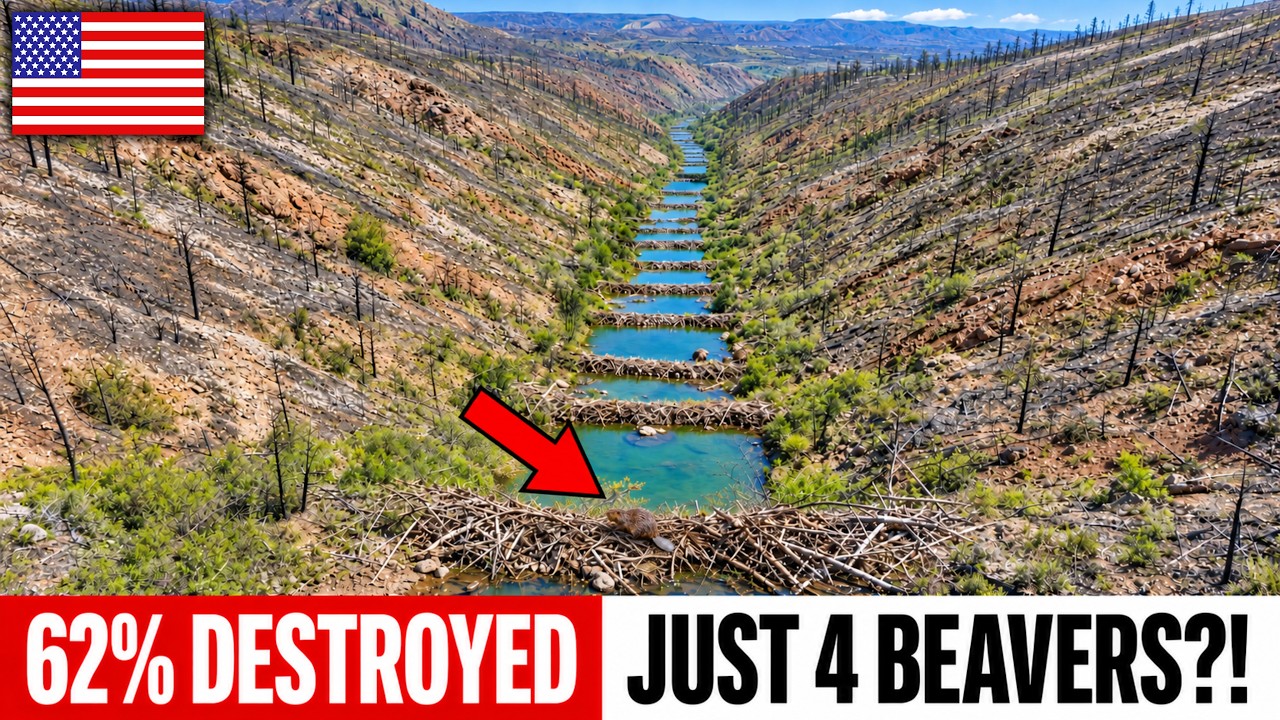
In June 2011, a wildfire scorched 156,000 acres of New Mexico canyon, then erosion nearly destroyed what the flames left behind. Park managers watched the streambed carve down to bedrock, floods accelerating until someone proposed a radical fix: bring back the beavers.
In June 2011, a falling tree knocked out a power line southwest of Santa Fe, New Mexico, sparking the Las...
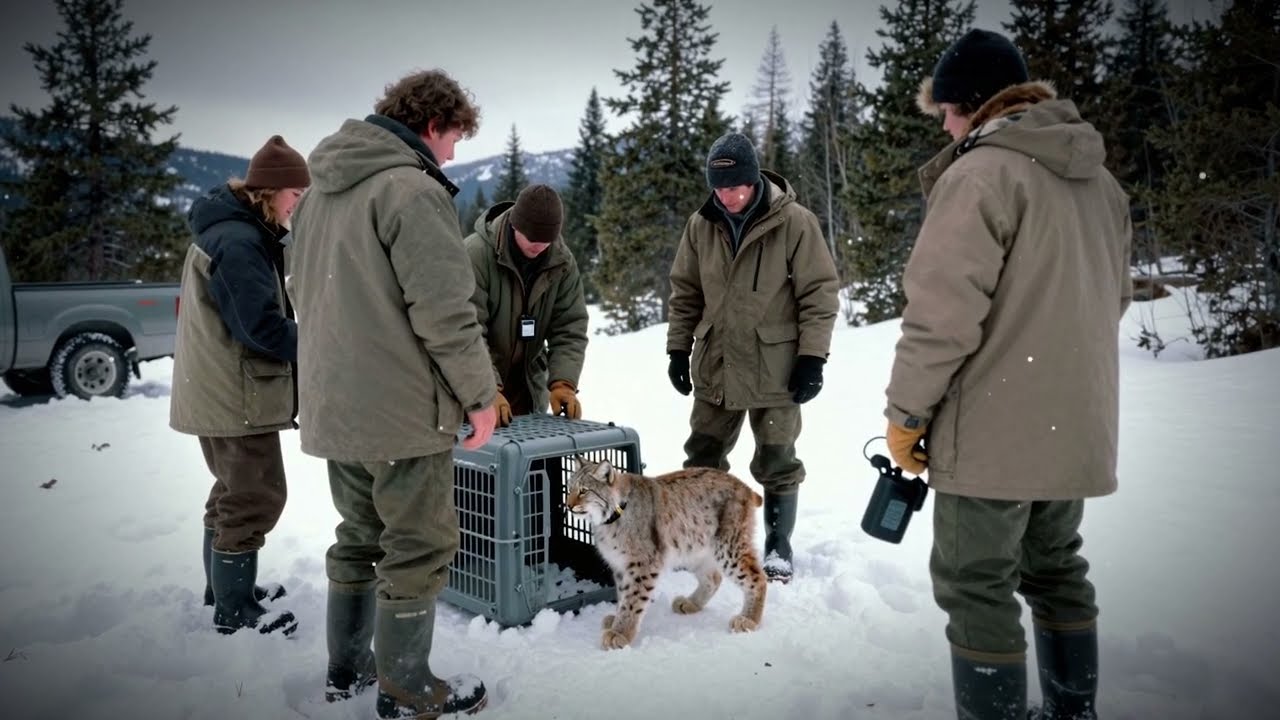
The state poured millions into a daring wildlife experiment, hoping to resurrect an animal it had wiped out over a century ago. Colorado’s Lynx Project became its most expensive conservation gamble yet, releasing dozens of the elusive cats into the towering Rockies to reestablish a vanished population.
In February 1999, Colorado wildlife officials released wild-caught Canada lynx into the San Juan Mountains as part of a reintroduction...