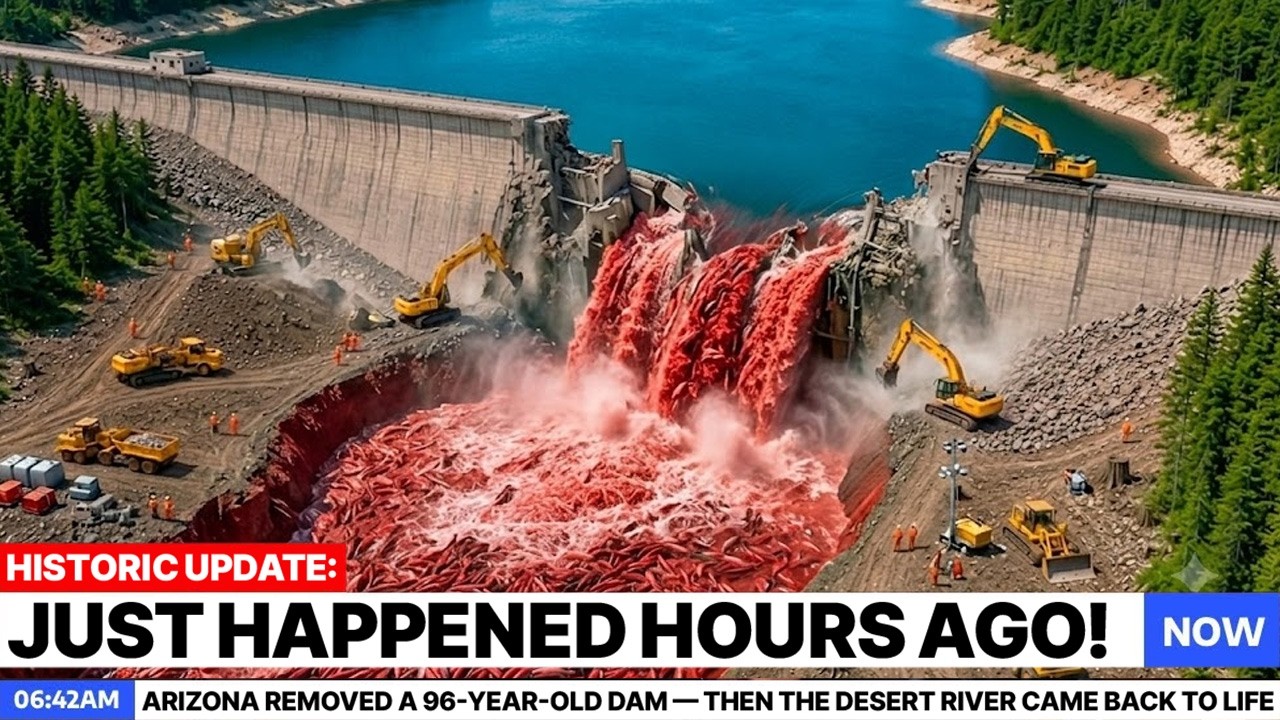
A 96-year-old dam was removed in Arizona, and the desert river it had silenced suddenly roared back to life. For nearly a century, the concrete barrier trapped water and buried the natural riverbed under tons of sediment.
For nearly a century, a concrete dam in central Arizona diverted most of the water from Fossil Creek, a desert stream that had flowed for thousands of years. The diversion dried up the streambed, reduced the creek’s signature turquoise pools, and pushed native fish populations toward collapse. In 2005, Arizona Public Service decommissioned the dam and returned the creek’s full flow to its natural channel, an action nearly unprecedented in the American Southwest. The recovery that followed was faster than scientists anticipated.
Fossil Creek runs through a deep canyon in central Arizona. Despite its name, the area contains no fossils. Early travelers found twigs and leaves coated in pale rock, a form of limestone called travertine that the water deposits as it flows. The creek carries dissolved calcium and builds solid rock wherever the current slows. Its source is a cluster of springs at the base of the canyon that release roughly 20,000 gallons per minute, a steady flow that remains at about 70 to 72 degrees Fahrenheit year-round. This consistency is unusual for Arizona, where rivers often shrink by midsummer. The constant flow and mineral-rich water created natural terraces and pools over centuries and supported one of the most diverse riparian corridors in the state, with more than 30 species of trees and shrubs and more than 100 species of birds.
Human presence in the watershed goes back thousands of years. The Yavapai and Apache peoples consider the canyon ancestral ground. In 1900, a rancher named Lou Turner filed a claim on the creek and, a year later, claimed the springs at its headwaters. Mining towns nearby needed electricity, and the reliable spring looked like a resource to harness. What followed was a difficult construction project. The nearest railroad stop was more than 40 miles away, so crews built a road through rough terrain. More than 400 mules and 600 men hauled wagons carrying turbines and cement into the canyon, which drops about 1,600 feet from rim to water. Many of the laborers were Apache and Mojave men. Some people and animals died during the work.
The Childs power plant came online on June 21, 1909, and a second plant, Irving, followed between 1915 and 1916. To feed both plants, the creek was routed through miles of flumes, and a 25-foot dam near the springs captured nearly the entire stream. By 1920, the two plants supplied roughly 70 percent of the electricity for Phoenix, powering streetlights, streetcars, and early air conditioners. The plants were recognized as a historic mechanical engineering landmark in 1976 and added to the National Register of Historic Places in 1991.
Below the dam, however, the creek was running dry. Flow downstream dropped to as little as one or two cubic feet per second, compared with the full flow of more than 40 cubic feet per second. Travertine stopped forming, pools shrank, and native fish lost most of their habitat. Non-native species moved in and preyed on or outcompeted the remaining native fish. This decline continued for most of a century.
By the 1990s, the two plants were old and produced only a small amount of power by modern standards. Environmental groups argued that the diversion had damaged the travertine formations, reduced wetlands, and hurt native species. Arizona Public Service, which owned the plants, weighed the cost of relicensing old infrastructure against the modest power the turbines generated. In 1999, the company agreed to decommission both plants and return the full flow of Fossil Creek to its natural course. No court ordered the decision. It was only the second time in United States history that a dam was removed for environmental reasons, following the removal of the Edwards Dam in Maine in 1999. Unlike that earlier project, however, the fish involved in Fossil Creek had little commercial or recreational value. The restoration was undertaken for its own sake and cost roughly $13 million.
At the shutdown ceremony, Vincent Randall, a Yavapai Apache tribal historian and councilman, spoke at the edge of the canyon. He noted that his people had helped build the dam and had been proud of its success over the decades, but that its time had passed. He asked the creek for forgiveness.
Before the water could be returned, the stretch below the dam had to be cleared of non-native fish that would otherwise multiply once full flows resumed. In the fall of 2004, about 100 people from the Forest Service, Arizona Game and Fish, and Northern Arizona University removed the invasive fish and built a barrier to keep them from returning upstream. On June 18, 2005, Arizona Public Service shut off the flume, and the full flow of Fossil Springs ran down the canyon for the first time since 1909. It filled pools and side channels gradually as scientists and local residents watched. It was the first time a desert stream in the American Southwest had been given back its full natural flow.
A team led by researcher Marks had been studying the creek for years before the water was turned back on. This was unusual because restoration projects are rarely studied in advance, since scientists seldom know which river will change. Her team had measured the starved creek’s chemistry, fish populations, and rock-building activity, and compared them with a healthy stretch upstream. When the flow returned, they could measure the recovery directly.
The results came quickly. Photosynthesis in the stream increased, and the creek’s ability to process nutrients returned to levels matching healthy upstream reaches within seasons, not decades. Travertine formation resumed almost immediately, with new dams growing more than two centimeters per year along a six-mile stretch below the springs. The turquoise pools began to refill. Native fish populations increased sharply. Sonora suckers multiplied roughly 17-fold, desert suckers about 52-fold, roundtail chub about 70-fold, and speckled dace about 150-fold. Today, Fossil Creek supports nine native fish species and is the longest reach of river in Arizona where the native fish community is free of non-native species. The restored corridor supports close to 200 species of birds, mammals, reptiles, and amphibians, and researchers have cataloged 166 plant species in the botanical area around the springs.
Interest in the restored creek grew quickly. In 2009, Congress designated nearly 17 miles of Fossil Creek as a wild and scenic river, one of only two in Arizona with that protection. Visitors began arriving in large numbers, and the increased foot traffic caused damage to the banks and left trash in the canyon. The Forest Service responded with a permitting system that limits how many people can enter the canyon each day. The springs themselves continue to run as they have for thousands of years, releasing about 20,000 gallons per minute and continuing to build stone.
Recommended Stories
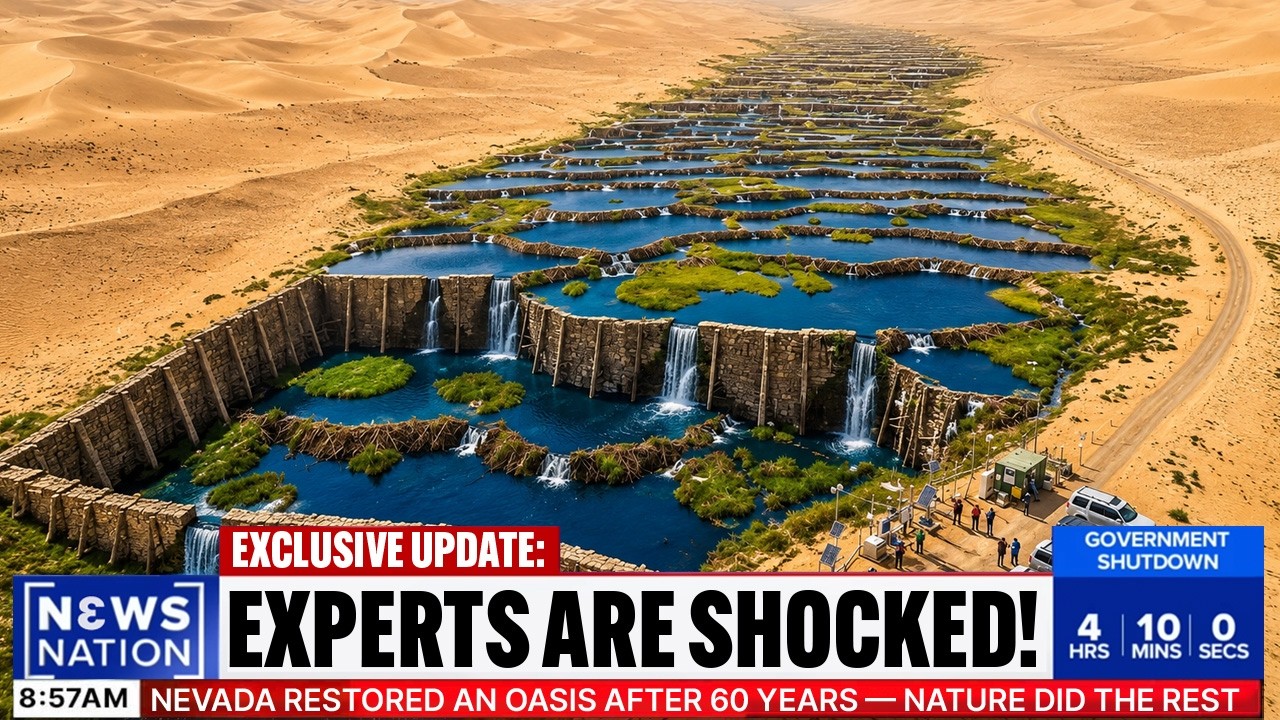
In less than three years, a barren patch of Nevada desert transformed into a lush oasis because of a single unexpected visitor. For sixty years, a dried-up basin sat lifeless after groundwater pumping drained it, leaving cracked earth behind.
The lower part of the Las Vegas Wash has experienced significant erosion affecting water flow, filtration, and local habitats. Nevada...
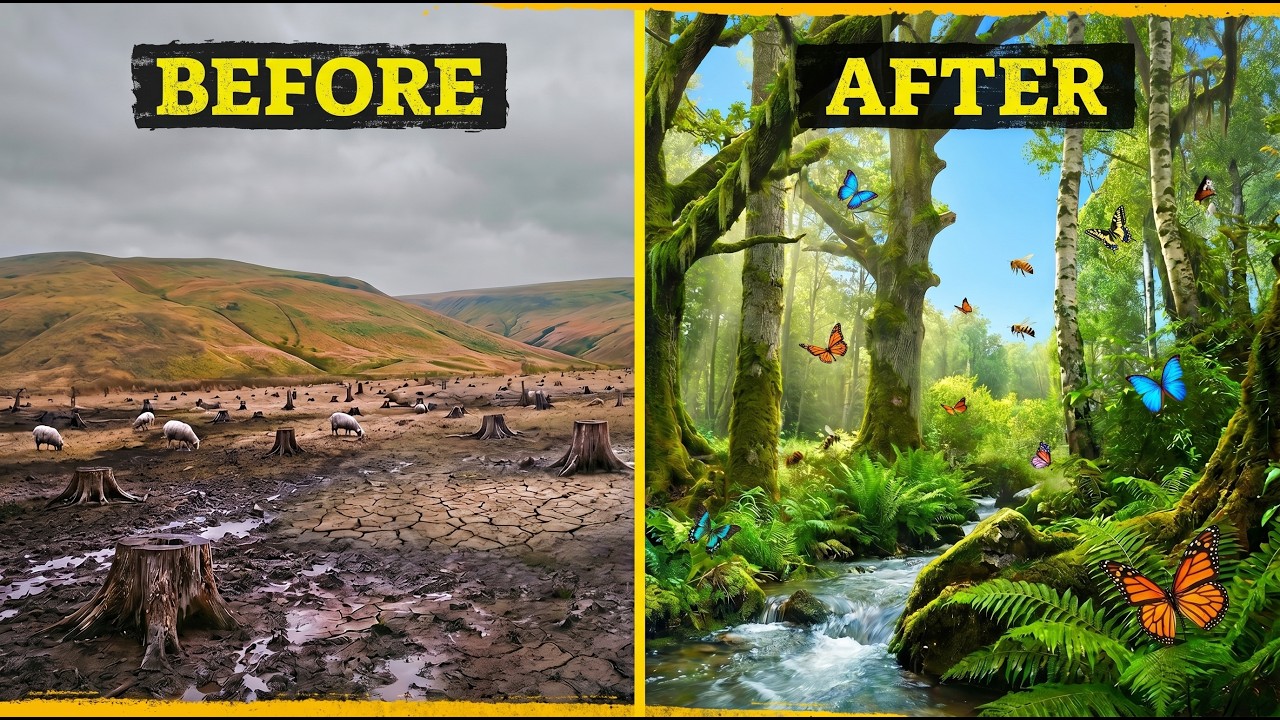
Britain’s lost rainforests are clawing back from near-extinction, and the revival may hinge on one surprising tool. These ancient temperate woodlands once blanketed the west coast but shrank to fragments after centuries of clearance.
The western Highlands of Scotland contain wooded gorges where oak trees grow sideways from rock, their branches covered in thick...

They released just 30 predators into the wild—then the snakes started vanishing. Wildlife teams had spent years tracking an invasive snake population that was devastating local species, and the plan seemed straightforward: introduce a limited number of natural hunters to regain control.
In 1979, Japan released about 30 small mongooses on Amami Oshima, a remote island in the warm waters between Kyushu...