A nine-foot great white shark’s tracking tag washed ashore months after it vanished, revealing the predator had been eaten whole—but by what? The signal pointed to something far larger, and researchers followed the tag’s data deep into uncharted waters where the trail suddenly went cold.
In 2003, researchers studying great white sharks off the southern coast of Australia recovered a data tag that had washed ashore. The tag had been attached to a nine-foot great white several months earlier as part of a routine tracking study. When the data was analyzed, it showed that the shark had died after being consumed by a larger animal.
The tag’s readings showed an abrupt dive from shallow water to a considerable depth. It then recorded a steady internal temperature of about 26 degrees Celsius, far warmer than the surrounding ocean, for several days. Researchers concluded that the tag was inside the digestive system of a larger creature that had swallowed the shark whole.
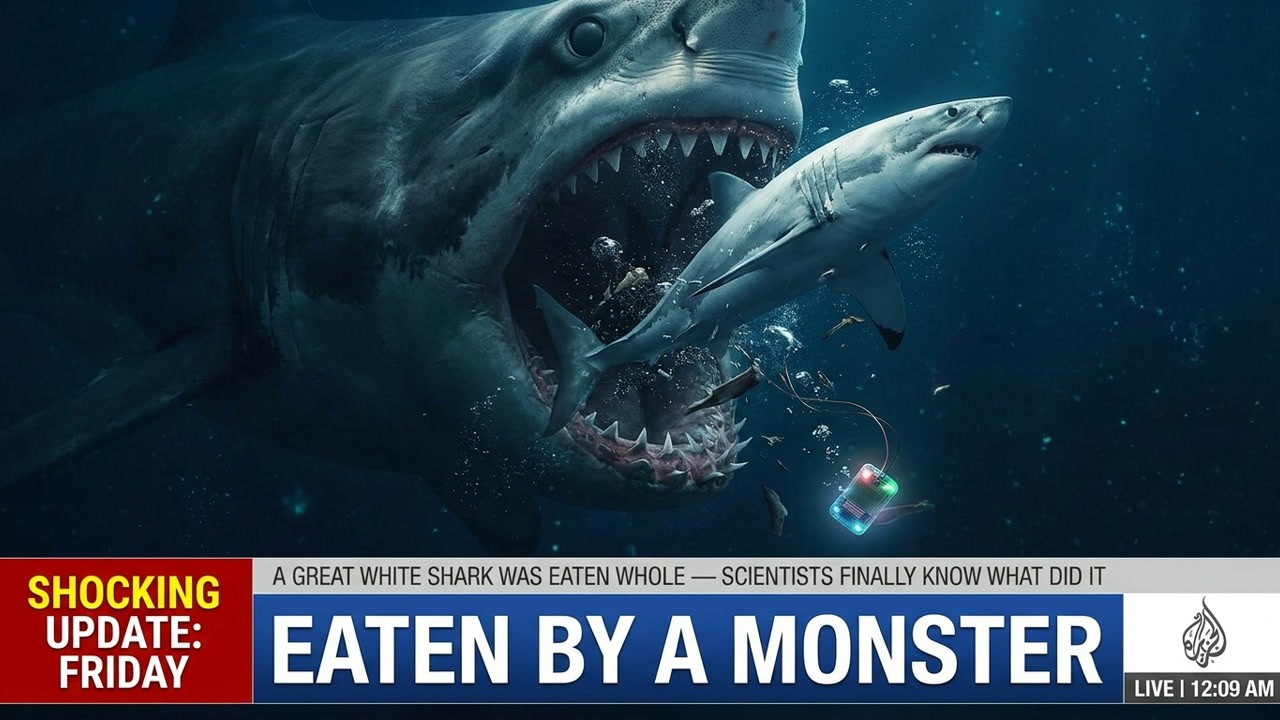
No one has ever identified the animal responsible. The event remains one of the more unusual unsolved cases in marine biology.
The researchers had fitted the shark with a pop-off tag designed to record depth, temperature, and movement before detaching and floating to the surface. For the first months of the study, the data was unremarkable. The shark moved through expected depths in cold southern waters, consistent with normal great white behavior.
That changed when the shark was taken. The tag recorded a rapid descent far deeper than a great white would typically go on its own. The temperature reading then rose sharply and stabilized at roughly 26 degrees Celsius, which is consistent with the internal body temperature of a large warm-blooded animal. The tag continued transmitting data from inside that animal for several days before eventually passing through its system and floating to the surface.
The depth readings indicated that the animal carrying the tag was moving and diving purposefully after consuming the shark. The tag did not record any images, so the identity of the predator has never been confirmed.
Marine biologists have offered a likely explanation. Great white sharks are known to be cannibalistic, and larger individuals sometimes prey on smaller ones. A great white large enough to swallow a nine-foot shark would need to be at least 16 feet long, and possibly close to 20 feet. Great whites are also warm-bodied, which would explain the temperature reading. Their known ability to dive deep also matches the depth profile recorded by the tag.
Another name has been raised in public discussion since the story spread: megalodon. The prehistoric shark, which could reach lengths of 50 to 60 feet, has been extinct for millions of years according to the fossil record. There is no scientific evidence that megalodon still exists. Mainstream researchers regard the cannibalistic great white theory as the most plausible explanation.
The case has persisted in public interest partly because of a documentary that explored the event, and partly because the predator was never observed. The tag proved that a great white was eaten, but it could not show what ate it. That absence of visual evidence has left room for speculation, even though the scientific consensus points to a larger member of the same species.
The episode is a reminder that the deep ocean remains largely unexplored. While the available data supports the cannibal shark explanation, the identity of the animal has not been confirmed. The tag remains the only record of what happened that day.
Recommended Stories

39 bison were released along a nearly vanished river—and within months, something extraordinary unfolded. The river, once drained dry by agriculture and drought, had been restored just enough to support the herd.
In the 1860s, survey crews measured the Platte River at Cozad, Nebraska, at 1,161 meters across. The river was shallow,...

Thousands of invasive Burmese pythons have swallowed Florida’s wildlife for decades, but the state just unveiled its most unusual weapon yet—one that hunts these predators in a way nobody imagined. Wildlife officials tested this strange new strategy against the relentless snakes, which have devastated native mammals across the Everglades.
Invasive Burmese pythons have caused severe declines in mammal populations across the Florida Everglades, prompting wildlife managers to consider a...
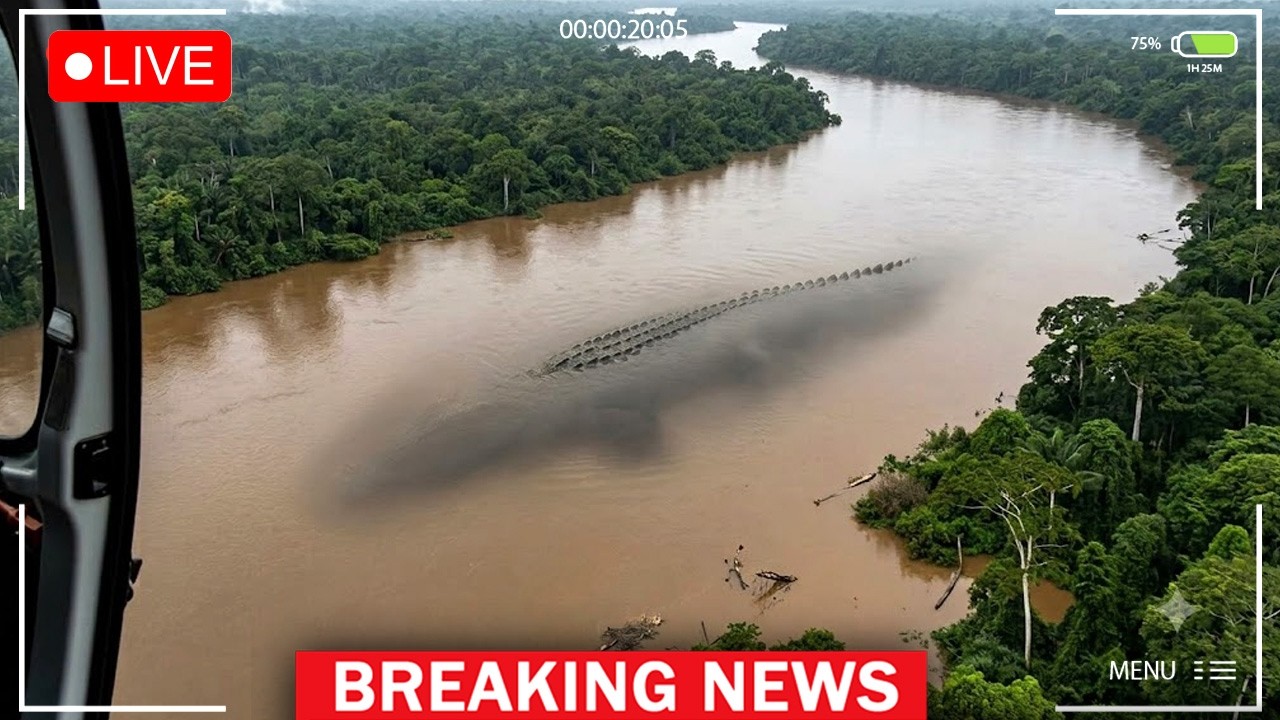
Deep in the Amazon, rangers tracking river wildlife stumbled onto a massive caiman that immediately froze them in place. What began as a routine patrol turned into one of the most jaw-dropping encounters they’d ever recorded.
In August 2026, a Brazilian wildlife team conducting an aerial survey over a remote flooded forest in the Amazon spotted...