Australia dropped over three million fire ants onto a remote island to wipe out the world’s deadliest snake, an aggressive predator responsible for countless attacks. The plan seemed like a brutal but decisive solution, flooding the terrain with biting insects engineered to overwhelm the lurking threat.
In 2001, inspectors at the port of Brisbane discovered a nest of red imported fire ants. The species, known scientifically as Solenopsis invicta, is one of the world’s most destructive invasive insects. Australia launched one of the most expensive insect eradication campaigns ever attempted. The program, still running today, has cost hundreds of millions of dollars.
Fire ants are notable for their coordinated colony behavior. During floods, they form living rafts that can float for weeks. Their sting causes a sharp burning sensation, and unlike bees, individual ants can sting repeatedly. Established colonies are extremely difficult to remove, and some can merge into super colonies containing dozens of queens.
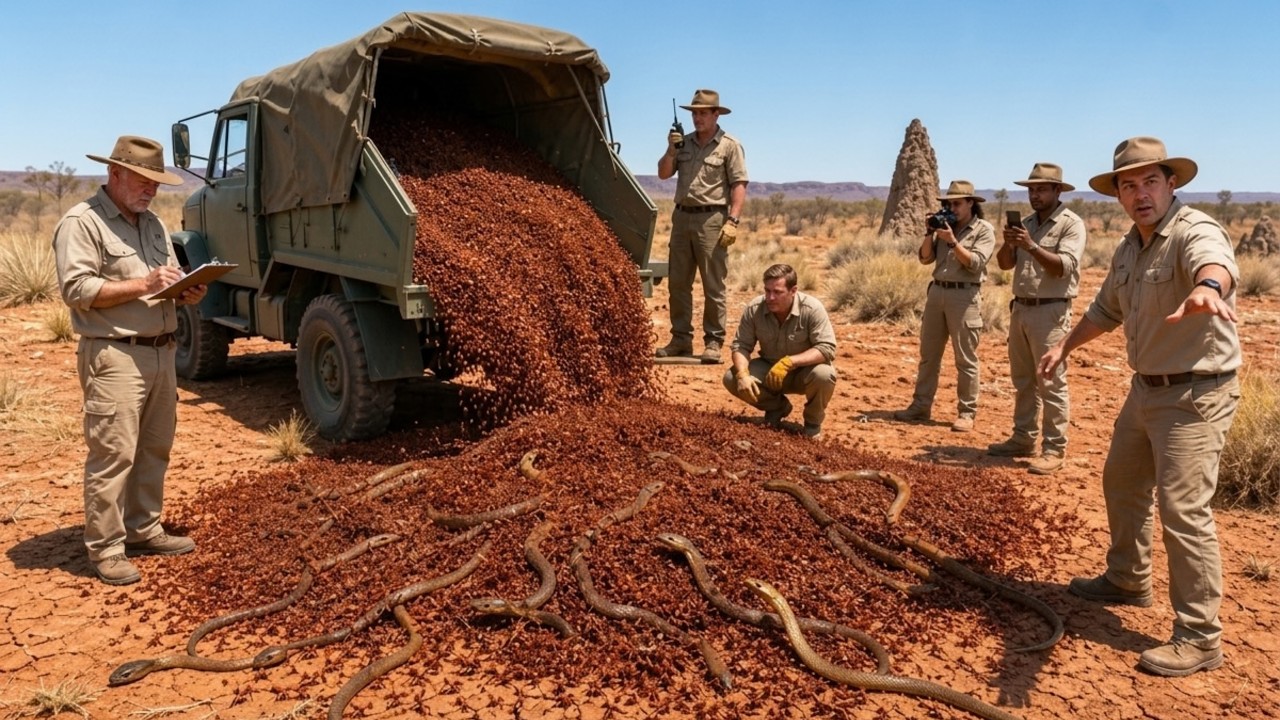
The inland taipan, native to Western Queensland and Northern South Australia, is the most venomous snake on Earth by laboratory measurement. Its venom contains a combination of toxins that affect nerve signals, blood clotting, and muscle tissue. The snake is reclusive, lives in remote areas, and rarely encounters humans. It feeds primarily on long-haired rats, which experience population booms after heavy rain.
Researchers tracking the spread of fire ants noticed something unexpected. In areas where ants were established, inland taipan numbers declined sharply. Fire ants swarming a snake can overwhelm it, and the ants also find and kill hatchlings before they can escape. Studies indicated that in some areas, as much as 70 percent of a season’s young snakes were lost.
This led to a proposal that was unusual even by Australian standards. Officials decided to deliberately release millions of fire ants into zones with heavy taipan activity. The plan was that the two invasive pressures would cancel each other out.
Australia had reason to be cautious. In 1935, sugarcane farmers imported cane toads to control beetles. The toads did not control the beetles, but they spread across the continent and poisoned native predators that attempted to eat them. A similar lesson came from the Caribbean, where mongooses imported to control rats instead preyed on native birds and reptiles.
The warnings were not heeded. Over three years, wildlife authorities released around three million fire ants into selected areas. Initial results appeared successful. Taipan sightings in target zones dropped by roughly 60 percent within 18 months, and many active nests went quiet.
The successes did not last. With the snakes thinned out, the ants turned to the long-haired rats that the entire local ecosystem depended on. Within two years, rat numbers in the release zones collapsed by around 80 percent. This set off a wider ecological shift. Wedge-tailed eagles, dingos, and goannas, which relied on the rats for food, faced shortages. Some predators moved away, and some began targeting livestock. Farmers who had welcomed the decline in snakes reported losses of lambs to eagles and dingos near their pens.
The ants themselves also changed. Colonies in former taipan areas became more aggressive and coordinated, and some produced larger soldiers with stronger stings. Native ant species were pushed out of territory they had occupied for millions of years.
The surviving taipans adapted in ways that surprised researchers. Some began climbing, an unusual behavior for the species. Others shifted to hunting at night, when fire ants are least active. Several abandoned their usual prey and switched to birds and lizards. One female left an established nest, abandoned her eggs, and traveled more than 12 miles before settling in a new area.
The places the snakes relocated to were often the towns and farms the program was meant to protect. In one year, snake encounters in neighboring regions rose by around 40 percent.
There was a further consequence. Fire ants protect aphids and similar insects in exchange for honeydew, a practice that damages native plants. Protected aphid populations drained plants and spread disease. Within three years, some regions lost around 30 percent of their native grasses. The loss of grass roots led to erosion, increased dust, and reduced water absorption in the soil. Plants that fed kangaroos, wallabies, and emus began to die.
Estimates now place the fire ant population in the affected zones at more than 15 million, far above the initial release number. The taipans did not disappear; they relocated to areas where they had not previously been common. Rat populations are slowly recovering where ants have moved on, though the process is slow. Wedge-tailed eagle numbers have dropped by as much as 25 percent in some regions.
The episode illustrates how difficult it is to predict the consequences of introducing a generalist species into an established ecosystem. A plan focused on a single target species affected the landscape far beyond it, altering plant life, predators, and the movements of the very animals it was designed to control.
Recommended Stories
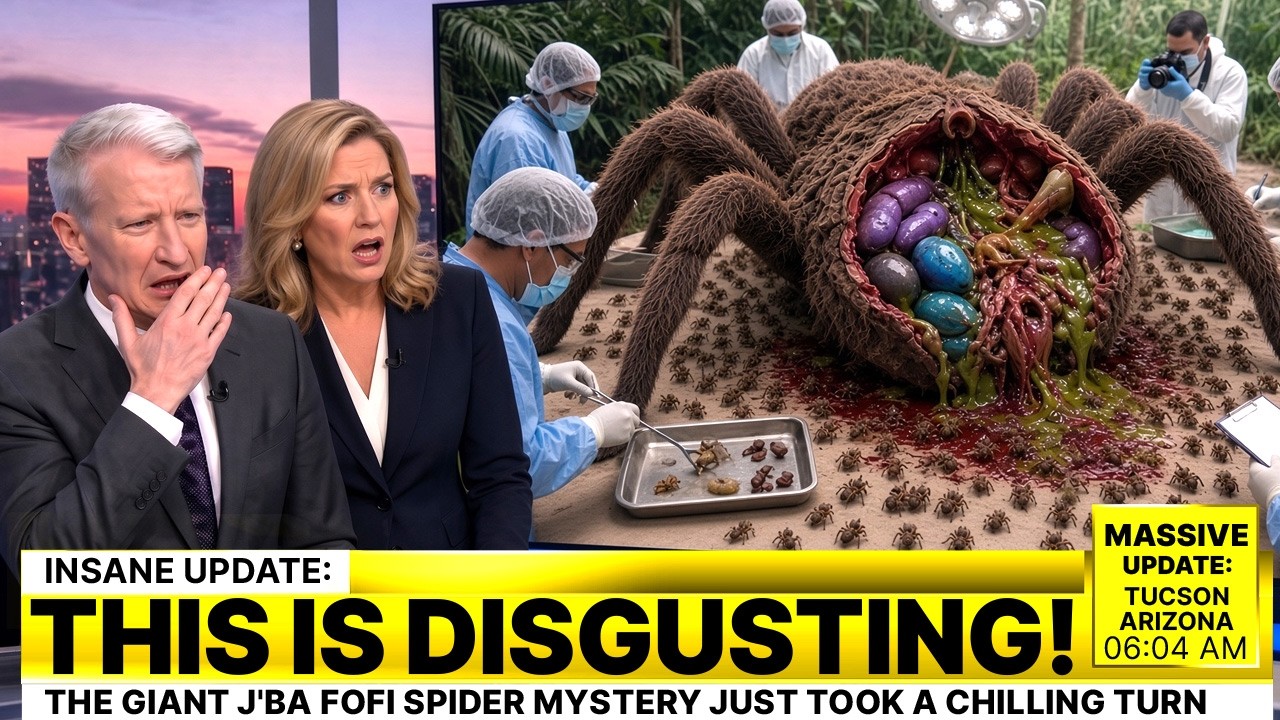
A giant arachnid spotted deep in the Congo rainforest is fueling a terrifying mystery that just took a chilling turn. For years, locals described encounters with J’Ba Fofi, a spider supposedly large enough to prey on small animals.
In 1938, a couple driving on a forest road in the Belgian Congo stopped their car because something crossed the...

They called Ted Turner crazy for 30 years, yet his 51,000 bison on two million acres have done what no one expected. After CNN, he bought broken land across New Mexico, Montana, and Nebraska, swarming it with animals that had nearly vanished by 1889, and skeptics kept laughing.
On a New Mexico plain, a bison rolls in a shallow depression in the dirt, kicking up dust. The animal...
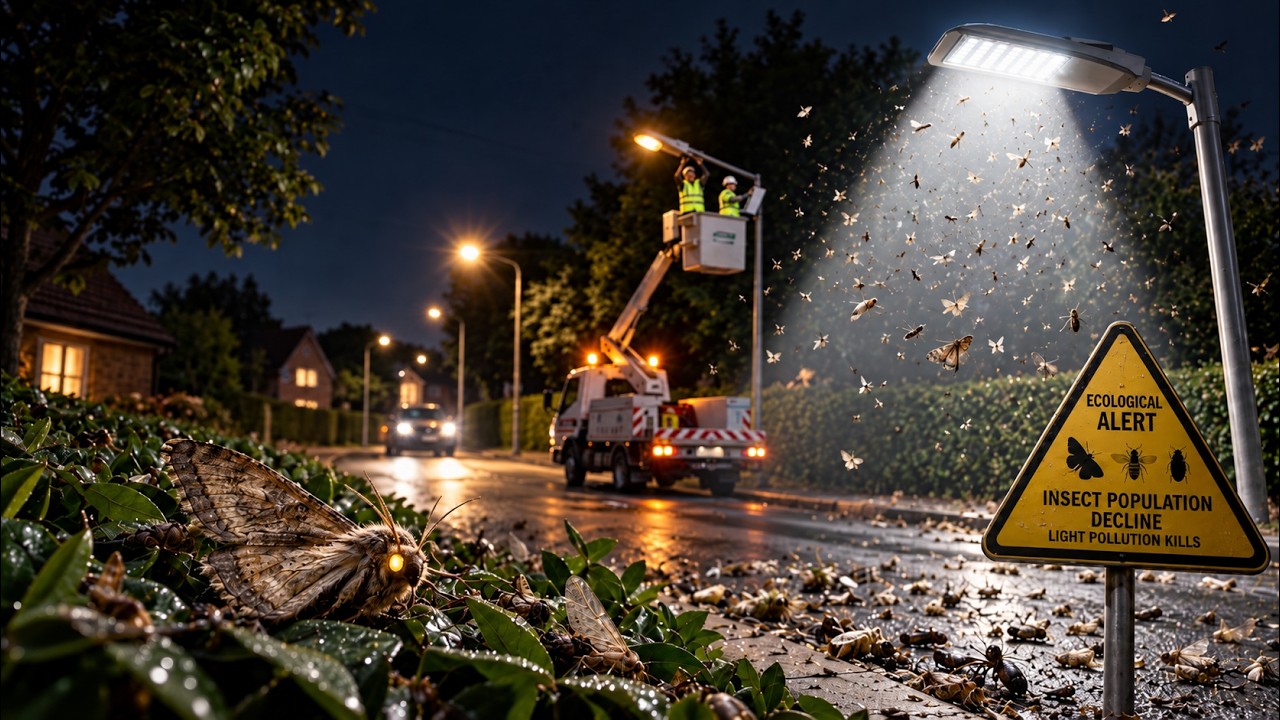
New LED street lights are silently slashing insect populations by nearly half, and the culprit is right above our heads. These modern fixtures emit specific wavelengths that disrupt nocturnal bugs’ navigation and breeding.
Across Britain and much of the world, cities have been replacing their old orange street lights with bright white LED...