Researchers cloned four wolves from DNA nearly lost to extinction, and the scientific triumph quickly turned unsettling. These pups weren’t ordinary animals, they carried genes from a mysterious ancient lineage that disappeared decades ago, making them genetic ghosts brought back to life.
Scientists reported in 2025 that they had successfully cloned four red wolves using genetic material recovered from wild canids in coastal Texas and Louisiana. The animals, born at a facility near Dallas, carry between 69 and 72 percent red wolf ancestry, the highest proportion of that species’ DNA found in living animals. The project was led by Colossal Biosciences, the Texas biotechnology company, working with researchers who had spent years documenting the presence of hidden red wolf genes in local coyote populations.
The cloning effort was part of a broader attempt to address a longstanding genetic bottleneck in the red wolf population. Every red wolf alive today descends from just 14 founders captured in the 1970s, a group that carried the genetic diversity of only eight individuals. That narrow gene pool contributed to decades of low breeding success, weakened immune systems, and reproductive problems in captivity. The cloned pups, which carry genetic material not present in the existing captive population, are intended to reintroduce that lost diversity into the official breeding program.
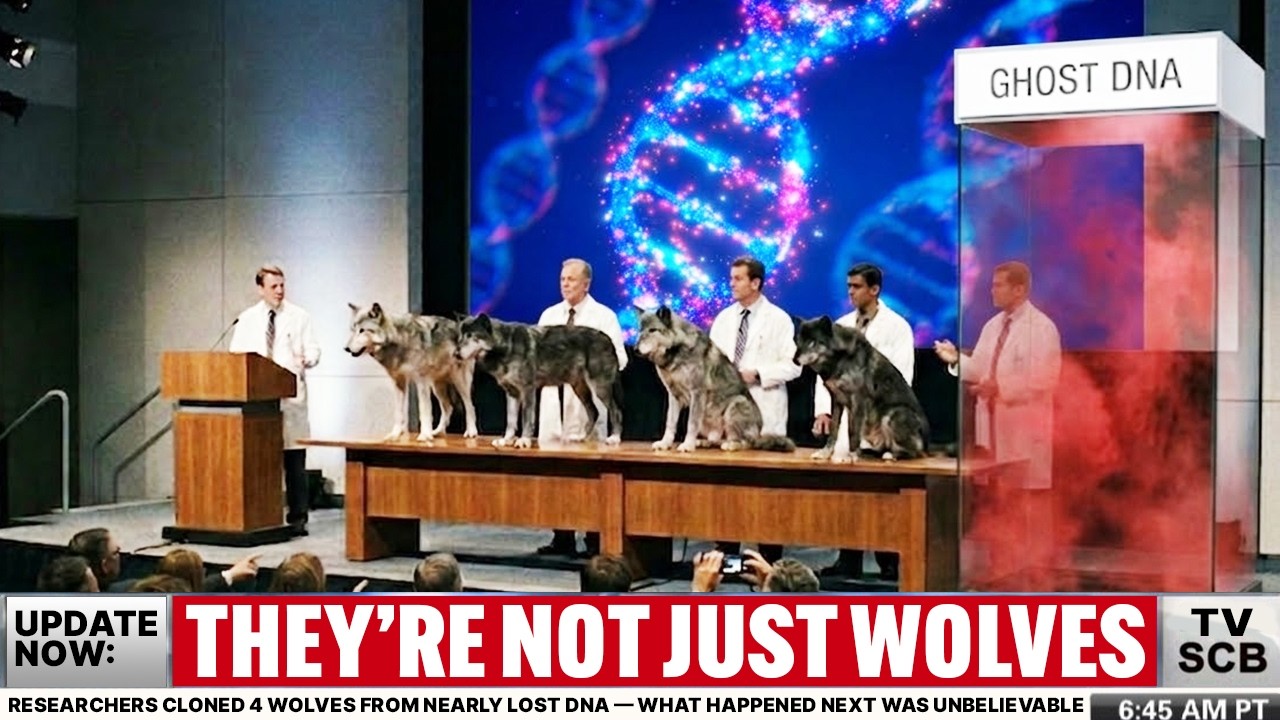
The first of the four pups, a female, was named Ahlpha by her caretakers. The Karankawa tribe of Texas, which historically lived along the same Gulf Coast where the source animals were found, gave her a second name: Nika Kaida, meaning daughter of the ghost. The Karankawa themselves were once declared extinct after being displaced and losing much of their territory. Tribal representatives said the name was intended to recognize the genetic material the wolves carry from animals that were believed to be gone.
The red wolf was once common across the southeastern United States. In 1939, biologist Stanley Young described the species as widespread in eastern Texas, noting that more than 800 were trapped that year in response to livestock attacks. He considered the animal too adaptable to be eliminated. Within forty years, however, the red wolf was declared extinct in the wild. A century of hunting, poisoning, and government predator control programs reduced the population to a small coastal area along the Texas-Louisiana border.
In the 1970s, the U.S. Fish and Wildlife Service made a final attempt to save the species by capturing as many remaining red wolves as possible. Over six years, biologists trapped more than 400 wolf-like animals. Genetic testing identified only 17 as pure red wolves, and 14 of those reproduced in captivity. That small group became the foundation for all future red wolf conservation efforts.
In 1987, biologists released captive-bred red wolves into the Alligator River National Wildlife Refuge in eastern North Carolina. This was the first time a large predator had been reintroduced to the wild anywhere in the world. The wolves adapted successfully, hunting, mating, and raising pups without human assistance. By 2012, an estimated 120 red wolves were living wild in the region.
That progress reversed in the following decade. Federal funding fluctuated, leadership changed, and enforcement of protective regulations declined. Wolves were killed by vehicle collisions, and in many cases were shot, sometimes by people who mistook them for coyotes and in other cases deliberately. The wild population fell to roughly 40 animals by 2018, then to around 14, and by 2020 only seven red wolves remained in the wild. Some of the last surviving animals also began mating with coyotes, raising concerns that pure red wolf bloodlines would disappear entirely.
Around the same time, researchers made a discovery that changed the trajectory of the species. Ron Wooten, a wildlife biologist living on Galveston Island, Texas, had noticed for years that local coyotes appeared unusually large, with long legs and heavy skulls. In 2013, he photographed one of these animals and sent tissue samples to Princeton geneticist Bridgett vonHoldt. Analysis showed that some of these coyotes carried substantial portions of red wolf DNA. In certain animals, red wolf genes made up more than a third of the genome, and several individuals carried red wolf markers at rates approaching or reaching full purity.
Scientists concluded that these genes were inherited from red wolves that had mated with coyotes in the decades before the species was removed from the wild. When the last wild red wolves in Texas and Louisiana could not find other red wolves, some bred with coyotes, passing their genes into an unintended lineage. That genetic material survived quietly in coyote populations for generations, particularly in isolated wetland areas such as Cameron Parish, Louisiana, where coyote hunting was not permitted.
Researchers named the phenomenon phantom wolves, referring to red wolf genes persisting in animals not previously recognized as carrying them. The finding also confirmed what local residents had reported for years: coyotes carrying red wolf DNA were conspicuously larger than ordinary coyotes, with heavier bodies and longer limbs, as though the wolf ancestry remained visibly expressed.
Colossal Biosciences used tissue samples from some of these animals to create cloned red wolves. The company worked with a technique involving endothelial progenitor cells, which allowed them to clone the animals using blood samples rather than more invasive tissue collection. The project also produced the first complete red wolf reference genome, giving researchers a full genetic map of the species for the first time.
The arrival of the cloned pups is considered significant because they carry red wolf genetic material not present in the existing captive population. That material can be bred into the current population in controlled pairings, widening a gene pool that had been extremely narrow for half a century.
Questions remain about the red wolf’s status as a species. Some scientists have argued that the animal is not a distinct species but a hybrid of gray wolf and coyote, which could affect its legal protections under the Endangered Species Act. Most researchers currently treat the red wolf as a valid species, but the debate continues. Critics of the cloning project have also expressed concern that biotechnology draws attention and funding away from more practical conservation needs, including habitat protection and enforcement of wildlife laws. A cloned wolf is of limited value if there is no safe wild space in which to release it.
In the meantime, the wild red wolf population in North Carolina is recovering slowly. After the wild population fell to seven animals, a federal court ordered the Fish and Wildlife Service to resume releases. The first wild-born litter in years was recorded in 2022. By August 2025, biologists counted sixteen red wolf pups in the region, and by January 2026, ten had survived. Five breeding pairs were active in the Albemarle Peninsula, and officials recommended plans for thirty-three pairs across the captive network. Hybridization with coyotes declined, as did mortality from vehicle strikes and gunfire.
In early 2025, a male red wolf was released on St. Vincent National Wildlife Refuge in Florida to pair with a female already there. By August, the two were observed with at least three pups, the first birth recorded on the island since 2019.
The first cloned pup, Nika Kaida, marked her first birthday in September 2025. According to her caretakers, she spends her days exploring her enclosure, climbing to high points, and chasing butterflies. If breeding plans succeed, her descendants may eventually be released into the eastern North Carolina refuges where the last wild red wolves nearly disappeared.
Recommended Stories
Deep in the Amazon, rangers stumbled upon a giant caiman—and this encounter completely defied expectations. The team initially spotted something massive lurking beneath dark river waters, prompting cautious investigation.
A series of wildlife videos and reports out of Florida and Brazil has drawn attention in recent months, with several...
Black wolves are no longer just a myth in the radioactive exclusion zone of Chernobyl. For decades, scientists believed the region’s harsh radiation had crippled wildlife, but recent genetic studies reveal something far more surprising.
In spring 1986, the Chernobyl nuclear disaster forced more than 200,000 people to evacuate the surrounding region. Residents were told...
Wolves vanished from this region for a century are suddenly thriving in the most radioactive soil on Earth. After the 1986 Chernobyl explosion forced hundreds of thousands of people to flee, researchers expected ecological collapse.
In late April 1986, an explosion at the Chernobyl Nuclear Power Plant in Ukraine contaminated large areas of forest in...