The deepest ocean trench remains the least explored place on Earth, yet what scientists are now finding down there has quietly stalled new missions. For decades, crews sent probes into crushing darkness, expecting empty silence—instead, they pulled up creatures thriving on toxic chemicals and total pressure.
In January 1960, Swiss oceanographer Jacques Piccard and US Navy Lieutenant Don Walsh descended nearly seven miles to the Challenger Deep, the lowest point of the Mariana Trench in the Pacific Ocean. Their vessel, the Trieste, was a steel sphere about six feet across. The descent took almost five hours, and the pressure outside reached over 1,000 times that at the surface. One outer windowpane cracked during the dive, but it held long enough for the mission to continue. When they reached the bottom at roughly 35,800 feet, they reported seeing a flat fish moving across the sediment. That claim has since been questioned, as fish are not believed to survive much past 27,000 feet. Regardless of what they saw, they had proven that a human being could reach the deepest point on the planet and return safely.
Piccard and Walsh expected further expeditions to follow within a few years. That did not happen. By the end of the 1960s, the US Navy had ended its manned deep-ocean program, limiting the Trieste and future vessels to depths above 6,000 meters. Walsh later said he found it strange that decades passed without a return trip. Filmmaker James Cameron became the second person to see the Challenger Deep in person in 2012, traveling alone in a submersible he helped design. In the decades between, only remote unmanned vehicles had reached that depth. In 2019, explorer Victor Vescovo went even deeper in a vessel called the Limiting Factor, becoming the first person to make the trip more than once.

The gap in visits was not the result of secrecy. It came down to cost, danger, and a shift in priorities. Building a vessel that can survive the pressure at Challenger Deep is closer to building a spacecraft than a submarine. Only a small number of vessels on the planet are certified for such depths. The original Trieste dive received far less public attention than the early American space missions, which attracted dedicated agencies and long-term funding. Deep-ocean exploration got a single successful dive, and then years of budget decisions that moved money elsewhere. Each certified deep submersible costs tens of millions of dollars to build and maintain, and few countries have funded one.
The danger never disappeared. In 2023, a privately built tourist submersible called Titan imploded while descending toward the wreck of the Titanic, killing all five people aboard. The incident served as a reminder that deep-ocean pressure remains unforgiving.
The lack of funding and the ever-present risk left almost the entire ocean floor unseen. Researchers at the nonprofit Ocean Discovery League have calculated that humans have visually observed less than 0.001% of the deep-sea floor, an area only slightly larger than the state of Rhode Island. By early 2026, NOAA reported that about 28.7% of the global seafloor had been mapped using modern high-resolution sonar. Mapping, however, only shows shape, not what is living there. More than 90% of the ocean sits below 200 meters, where sunlight cannot reach. A marine biology researcher once noted that we understand the surface of the moon and parts of Mars better than our own ocean floor. Most dives that have occurred were clustered near a small number of wealthy countries, leaving large stretches of ocean elsewhere barely visited. Ships like NOAA’s Okeanos Explorer now run remotely operated vehicles into these gaps, and nearly every expedition still finds a species that has never been formally described.
The limited exploration that has happened has led to discoveries that changed established scientific thinking. In 1977, researchers exploring hydrothermal vents on the deep ocean floor found thriving colonies of microbes and animals that get their energy from chemical reactions in the vent water rather than from sunlight. This process, called chemosynthesis, meant entire ecosystems could exist in permanent darkness. One researcher described the discovery as completely revolutionary, saying it rewrote the science books overnight. In 2019, researchers exploring the seafloor off California and Oregon discovered a new vent field, naming it the Apollo vent field to mark the 50th anniversary of the moon landing. NASA later built a research program around studying these vents, treating them as the closest thing on Earth to what might live inside the hidden oceans of Jupiter’s moon Europa or Saturn’s moon Enceladus.
Many deep-sea animals also produce their own light. A survey off the California coast reviewing over 350,000 sightings collected across 17 years of remotely operated vehicle dives found that roughly 76% of animals living in the water column generate their own light through a chemical reaction called bioluminescence. NOAA puts the figure higher in the mid-depth zone, where about 80% of animals between 200 and 1,000 meters can glow. Jellyfish, worms, shrimp, and squid all do this, using light to find mates, confuse predators, or lure prey. Regular cameras often cannot even pick up the dim glow many of these animals produce.
For decades, scientists believed fish could not survive past a certain depth, somewhere around 8,000 to 8,500 meters, because the pressure would break down proteins inside their cells. Then, in 2014 and 2017, researchers collected a small, pale, almost see-through fish from the Mariana Trench at depths of nearly 8,000 meters. Named the Mariana Snailfish, it turned out to be the top predator of its ecosystem, actively hunting tiny shrimp-like creatures in complete darkness under pressure that would crush a human body. In 2023, an expedition filmed a related snailfish swimming even deeper at 8,336 meters, pushing the theoretical depth limit for vertebrate life further than previously assumed. Researchers studying the snailfish’s genes found its skeleton was thin and incompletely formed, and its skull did not fully close, unusual adaptations that appear to help it handle extreme pressure.
The giant squid had been washing up dead on beaches and appearing in sailor stories for centuries, but nobody had filmed one alive in its natural habitat. Bright submersible lights scared the animal away before cameras could get close. In 2012, a Japanese research team led by zoologist Tsunemi Kubodera succeeded using a camera system called Medusa, which used red light invisible to the squid, filming a 3-meter specimen off Japan’s Ogasawara Islands. The footage showed the squid was a fast, aggressive hunter. Seven years later, a NOAA-funded expedition filmed a second live giant squid in the Gulf of Mexico, barely 100 miles from one of the world’s largest offshore oil rigs.
In 2013, researcher Andrew Sweetman was running seafloor experiments nearly 4,000 meters down in the Pacific’s Clarion-Clipperton Zone. He expected oxygen levels inside his sealed test chambers to slowly drop as tiny organisms used it up. Instead, oxygen levels rose, climbing to more than three times normal background levels within two days, with no sunlight and no photosynthesis nearby to explain it. Sweetman assumed his equipment was broken and spent close to a decade recalibrating and repeating the test before publishing the results in 2024. The source turned out to be potato-sized metal-rich rocks scattered across the seafloor called polymetallic nodules, which carry a measurable electrical charge close to that of a standard battery, potentially strong enough to split seawater into oxygen without any biology involved. Other researchers have since questioned parts of the study, and the strange oxygen readings have not been fully explained away. Those same nodules are now a target for deep-sea mining companies, which means the ecosystem sitting on top of them could be disturbed before scientists finish understanding what it is.
The decades of limited exploration do not point to a suppressed secret. They point to something more ordinary: a handful of researchers with limited money and limited submarines working through one dive at a time on an area that covers 71% of the planet. Every time they get down there, they tend to find something that breaks an assumption scientists had held for decades, from a fish living past its supposed biological limit to rocks quietly making oxygen in complete darkness to an ocean that lights itself up more often than not. The ocean floor was not truly abandoned. It was simply too big, too dangerous, and too expensive to explore quickly, which means almost everything still living down there remains completely unseen.
Recommended Stories
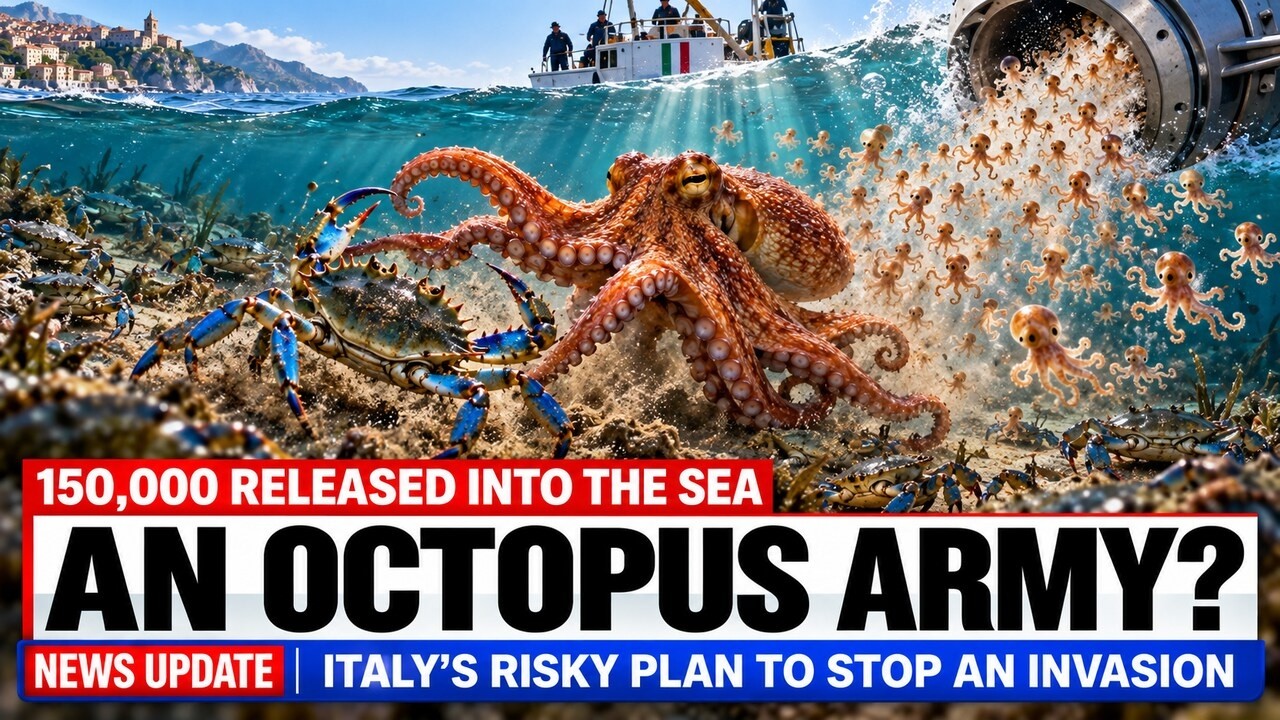
Italy Released 150,000 Predators Into the Mediterranean — Then Everything Changed. Authorities quietly introduced a massive wave of marine hunters into the sea, sparking fears that local ecosystems could collapse overnight.
Italy has been dealing with an invasive species problem in the northern Adriatic for several years. The blue crab, native...
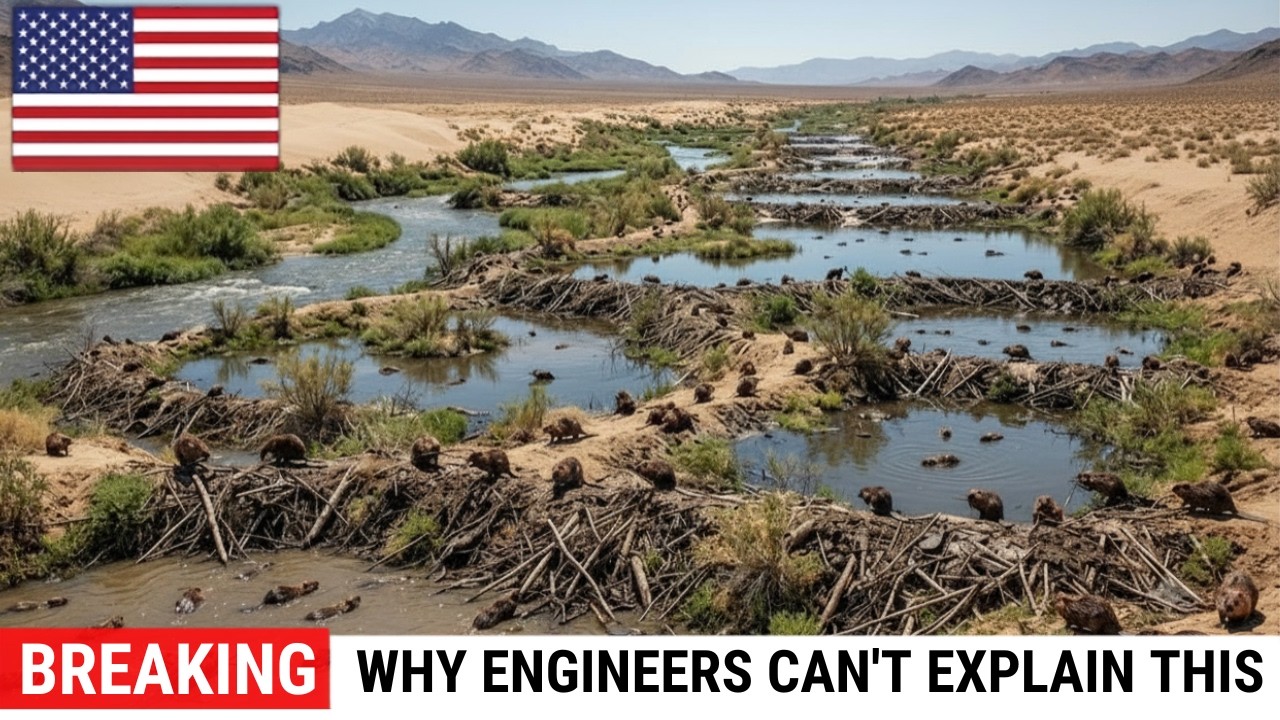
Nevada dropped five beavers into its most barren desert, but what they did to the water stunned scientists. The state released the rodents into a dry creek bed, hoping to restore a dying landscape.
In the summer of 2013, Sandra Okafor, a wildlife biologist with Nevada’s Department of Wildlife, traveled to Huntington Creek in...
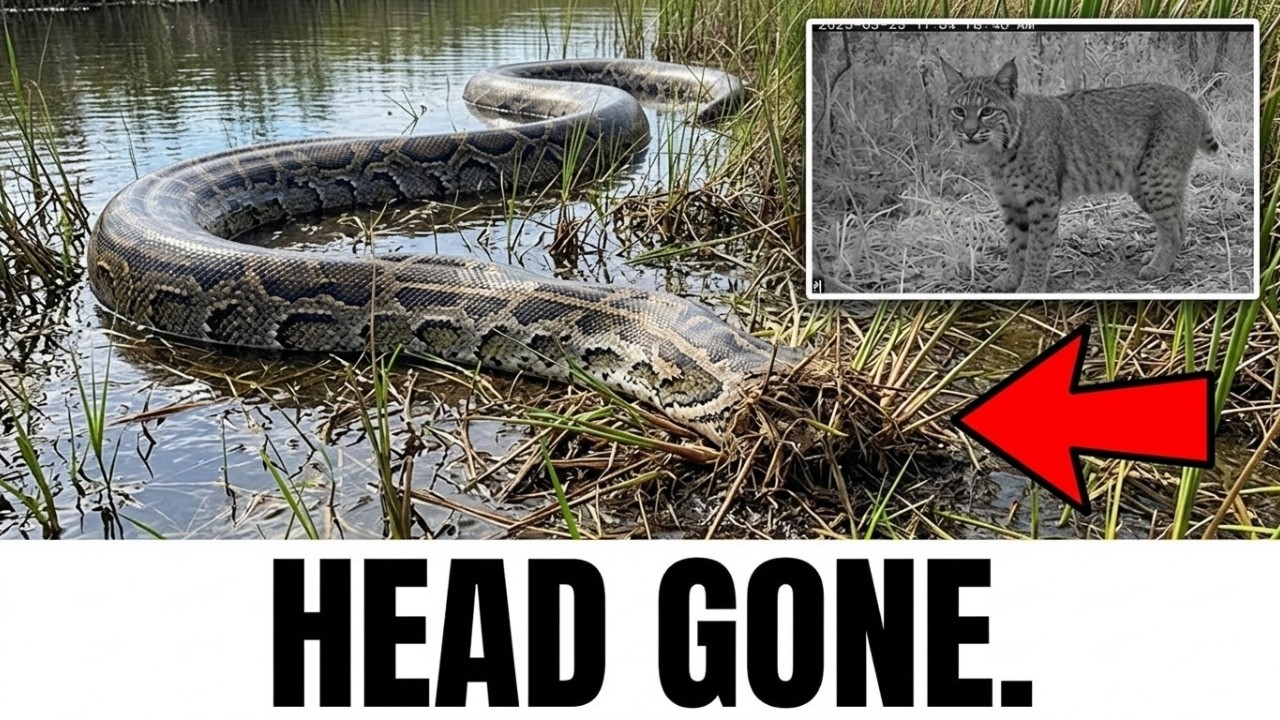
A 20-foot python was found decapitated in the wild, its massive head missing. Investigators initially suspected a rival predator.
Biologists from the Conservancy of Southwest Florida found a 20-foot Burmese python dead in pine flatwoods at the edge of...