Nevada dropped five beavers into its most barren desert, but what they did to the water stunned scientists. The state released the rodents into a dry creek bed, hoping to restore a dying landscape.
In the summer of 2013, Sandra Okafor, a wildlife biologist with Nevada’s Department of Wildlife, traveled to Huntington Creek in Elko County expecting to see the same degraded stream she had documented in previous surveys: bare gravel, a thin channel of water between eroded banks, and sagebrush creeping toward the streambed.
The region was in the middle of one of the worst droughts on record. Ranchers were hauling water to their livestock, and monitoring stations across the county reported far-below-average moisture. Okafor did not expect to find much water in the creek that July.

Instead, she found deep, shaded pools and clear water moving slowly through a network of wood debris and accumulated sediment. Dense willows lined both banks, tall enough to cast shade over the stream at midday. Stands of sedge extended from the water into ground that would normally have been cracked dry earth.
At the center of nearly every pool and wetland area stood structures made of sticks, mud, and vegetation that had not been built by any government agency or engineering crew. Over two miles of stream, Okafor counted 43 of them. She had last surveyed the area 18 months earlier, and none had been there.
The structures were beaver dams, and their presence marked the beginning of a broader shift in how Nevada manages its driest landscapes. The story of that shift did not begin in a laboratory or government office. It began in the shallow water of a desert creek, where an animal that once shaped the continent’s water systems had returned on its own and resumed working.
Nevada receives less than ten inches of rain per year on average, making it the driest state in the contiguous United States. In the eastern part of the state, where the Humboldt River and its tributaries drain a region of sagebrush, rock, and alkaline flats, precipitation is even scarcer. Summer temperatures regularly exceed 100 degrees Fahrenheit.
Most of the water in these stream systems comes from winter snowpack in the Ruby Mountains. In drought years, that snowpack diminishes, streams shrink, groundwater levels drop, fish are pushed into smaller pools, and the plants that once held streambanks together die off, leaving channels vulnerable to erosion from the next rainfall.
For most of Nevada’s recent history, this is what a stream was expected to look like: narrow, fast, shallow, and surrounded by barren ground. That assumption, however, was historically inaccurate. Understanding why requires looking back to a time before the region’s ecology was fundamentally altered.
Before the fur trade, before European contact, and before the industrial economy reshaped the American West, the continent supported an estimated 60 to 400 million beavers. Researchers have estimated that pre-colonial beaver ponds covered more than 200,000 square miles across the arid West.
In a landscape where water is the organizing element of every ecosystem, the presence of those ponds was significant. They held slow, deep water that stayed in the land for weeks and months rather than running off within hours of rainfall. They allowed water to seep into the soil and recharge groundwater aquifers across entire valleys. They spread water horizontally across floodplains, nourishing plant communities that in turn stabilized and filtered streambanks.
The fur trade brought that system to an end. Beginning in the early 17th century and accelerating through the 18th and 19th centuries, European demand for beaver pelts reduced the continent’s beaver population from tens of millions to roughly 100,000 by 1900.
The Hudson’s Bay Company, the North West Company, and dozens of independent traders pushed into nearly every accessible watershed. Mountain men in the American West built their careers on the systematic removal of beavers from the region’s driest areas.
The consequences were not visible at the scale of an individual landscape, but they were severe at the level of entire watersheds. Without beaver dams to hold water back, streams began cutting deeper into the earth. Channels deepened, groundwater tables dropped, floodplains dried out, and stream corridors narrowed and sped up. Instead of storing water, they became conduits that moved water through the landscape and out of it.
The willows and grasses that had lined riverbanks for thousands of years disappeared. Fish lost habitat, waterfowl lost nesting grounds, and amphibians lost breeding pools. The entire network of life that had depended on beaver engineering unraveled.
In Nevada’s stream systems, this process continued for nearly two centuries. By the time environmental agencies began documenting the damage in the second half of the 20th century, conditions had changed so completely that most biologists no longer remembered what these streams were supposed to look like. The narrow, eroded, vegetation-free channels that characterized the Great Basin’s riparian areas were considered natural. They were not. They were the result of removing the animal that had built them.
Thomas Wilkens, a field manager for the Bureau of Land Management, was working in the Elko District in the early 1990s when he began reviewing stream survey data across a 200,000-acre monitoring area. He reached a conclusion that most of his colleagues initially resisted: the streams in his district had not merely degraded. They had functionally collapsed.
Vegetation surveys showed barren banks. Fish counts showed populations far below historical abundance. In drought years, base flows in streams across the district dropped to levels too low to support native fish through the summer. The streams had lost their ability to hold water in the environment long enough to sustain anything.
Wilkens approached the problem from an angle no one in his district had tried. Instead of proposing expensive engineering interventions, he looked at the natural history of the streams he managed and asked what they had looked like before they deteriorated, and whether the biological processes that once maintained them could be restored.
The answer was beavers. Not as a novelty, but as a practical engineering solution to a specific hydrological problem. The streams had lost their ability to hold water because they had lost the structures that held it. The cheapest way to restore that capacity was to bring back the animal that built those structures.
The complication was that beavers could not simply be placed into a collapsed stream system and expected to thrive. The willows and grasses that beavers depend on for food and building material had disappeared from most streambanks decades earlier. Without a food source, beavers would not stay. Without willows, streambanks would not stabilize. Without stable banks, willows would not grow. The system was stuck in a degraded equilibrium that required intervention to break.
The intervention Wilkens and his team chose was minimal. They worked with local ranchers to implement seasonal grazing rotations along stream corridors, keeping cattle away from streambanks during critical growing months when plants were most vulnerable. No fences were built across entire properties, and cattle were not permanently excluded. The rotation system simply gave streambank vegetation a recovery window it had not had in generations.
Results appeared within a few years. Native grasses returned to streambanks that had been bare ground. They were followed by forbs. By the end of the decade, willow seedlings had established along stretches of stream that had been without woody vegetation for as long as anyone could remember. Streambanks began to stabilize, water clarity improved, and fish numbers increased gradually in areas with dense vegetation.
Then, in the early 2000s, the beavers arrived. They came on their own, without any relocation program or formal reintroduction effort. They came because the willows were there, and willows are what beavers need.
Within months of the first settlements, the transformation that followed made the patient wait worthwhile. A beaver dam is not just a pile of sticks. It is an actively maintained structure that fundamentally reorganizes the hydrology of the stream it occupies. Water slows as it approaches a dam, and the sediment it carries settles out. The sediment accumulates behind the dam, raising the streambed. The raised channel forces water to spread horizontally across the floodplain, where it soaks into the soil and feeds the groundwater table.
That wetter floodplain supports more vegetation. The vegetation stabilizes the banks, which traps more sediment, which raises the floodplain further, which allows more water to infiltrate, which raises the water table further. A network of dams stretched over miles of stream converts a fast, shallow, erosion-driven channel into a slow, deep system that retains water and acts as a sponge for the surrounding landscape.
Wilkens documented the number of dams across stream systems in his monitoring area over the following decade. The survey results exceeded all expectations. Dozens of dams became hundreds. Sections of stream that had been small channels became complex multi-channel stretches with deep pools, side channels, and expanded wetland meadows.
Groundwater levels in some locations rose by more than 60 centimeters in under a decade. Vegetation monitoring transects, which previously recorded bare mineral soil, showed green cover at the highest levels ever recorded in the district’s monitoring history.
When drought years returned in the early and mid-2010s, an experiment that no one had designed produced its most important results. In stream sections where beavers had been established for a decade or more, water remained through the summer months in a way it had not for generations. Deep pools built by beaver dams maintained cold water during heat waves that reduced other streams in the region to scattered puddles. Green corridors of vegetation extended across landscapes that were brown and brittle everywhere outside the water’s influence.
Ranchers, who had initially viewed beaver settlement with suspicion, began calling Wilkens to ask how they could encourage more beavers on their property. The green portions of their riparian corridors were helping their cattle survive drought conditions that were devastating neighboring operations. The beavers had solved a water storage problem that years of traditional range management had failed to address.
Meanwhile, researchers across the western United States were developing a technique to accelerate the process Wilkens was documenting. The beaver dam analog, developed by teams from Utah State University and the National Oceanic and Atmospheric Administration, is a structure built to mimic the function of a beaver dam using the same materials a beaver would use. Wooden posts are driven into the streambed, willow branches are woven between them, and mud and sediment are piled behind the structure to create a water-holding barrier.
A team of four people with hand tools can build a functional beaver dam analog in a single workday. The cost of one structure, including materials and labor, is a fraction of what traditional river restoration engineering requires. In many cases, these structures attract real beavers, which recognize them as unfinished dams, take over construction and maintenance, and expand them with their own materials until they are indistinguishable from naturally built dams.
The spread of this technique across public lands in the western United States over the past 15 years represents one of the most significant shifts in ecosystem restoration practice in the region’s history. State wildlife agencies, which once paid bounties for beaver trapping, now actively manage stream systems to support their return. Water districts that spent decades funding expensive engineering solutions now fund structures that imitate beaver dams. The difference in cost is not marginal. It is substantial.
Okafor stood on the bank of Huntington Creek in July 2013 and counted 43 beaver dams over two miles of stream that, within living memory, had been exposed gravel. She documented water temperatures in the deep ponds that were 8 to 10 degrees cooler than surrounding unoccupied sections. She found spawning habitat for Lahontan cutthroat trout, Nevada’s state fish, in areas where the species had not been recorded for decades. She photographed vegetation cross-sections showing riparian cover that matched reference conditions from historical surveys conducted more than a century earlier.
All of it was built from mud and sticks by animals that had returned to their territory and resumed the work they had done for millions of years before anyone decided to stop them.
What Nevada found at the bottom of its driest streams was not a technological breakthrough, a large-scale intervention, or engineered infrastructure. It was a decision to let vegetation recover, followed by a decision to let beavers stay, followed by a self-reinforcing cycle of restoration that accumulated over time to produce something the land had not produced in living memory.
The lesson is not easy to absorb. It requires patience in a culture that demands quick results. It requires tolerance for an animal that does not respect property boundaries, irrigation infrastructure, or the plans of neighboring landowners. And it requires acknowledging that the most effective water storage technology available to the driest parts of the American West is not man-made. It is something that already existed, working on a continental scale, until humans decided they knew better.
The before-and-after photographs from the same locations, taken from the same camera angles, show the change. The earlier images show gravel, dust, and a thin line of water flowing nowhere. The later images show a place that appears to belong to a different climate: green, deep, and alive in the middle of historical drought. The only thing that changed between the two sets of images was the appearance of a few animals that began working with what they found.
Across the western United States, the question is no longer whether beaver habitat restoration works. It is how many watersheds can be returned to conditions that support beavers, and how quickly, before the region’s water systems face a future with less snowpack, longer droughts, and higher temperatures than anything in the recorded past. The beavers are ready. They have always been ready. They are simply waiting for the same thing that brought them back to Huntington Creek in the first place: room to work.
Recommended Stories

Florida dumped half a million tons of oyster shells into the Gulf decades ago as a simple waste solution. Years later, divers discovered something unexpected forming on the artificial reef below the surface.
Florida oyster restoration programs have shown that dumped oyster shells and limestone can rebuild reefs and support marine life, but...
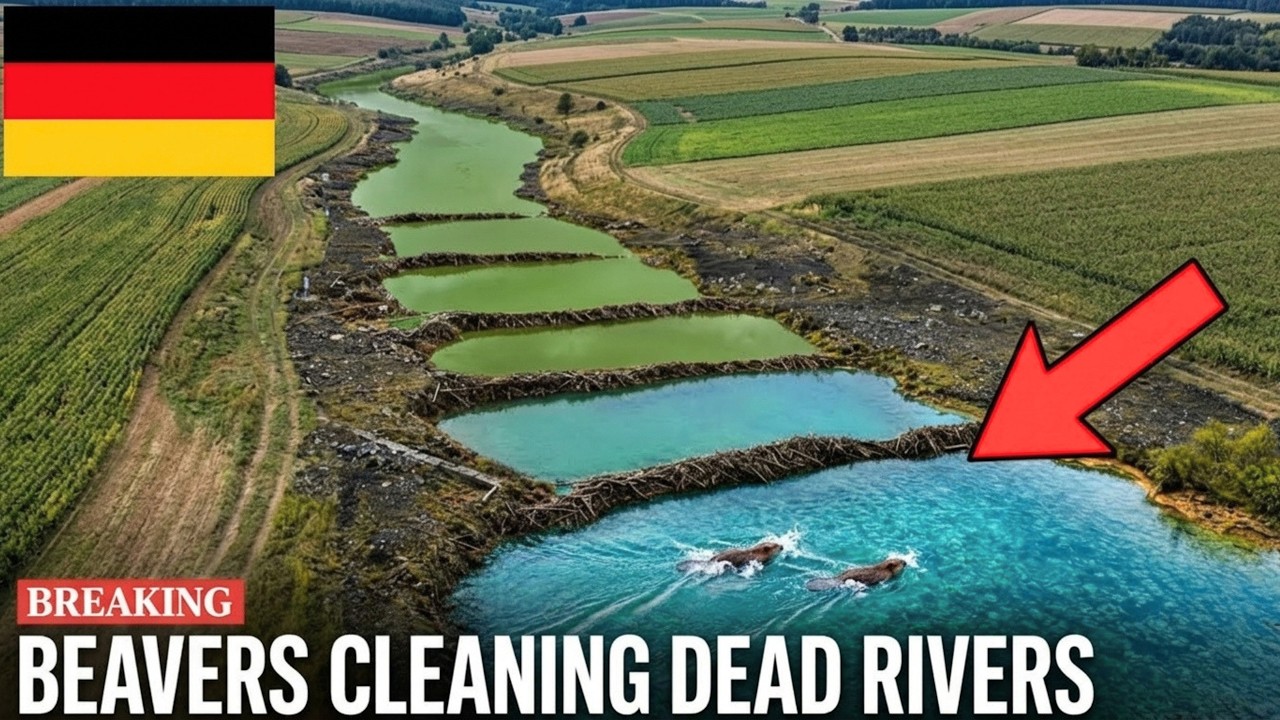
Germany released just 120 beavers, and what they did to 20,000 km of rivers defied every ecological expectation. The animals were introduced nearly a century ago in a desperate bid to reverse the damage from relentless hunting that had wiped them out.
In 1963, Bavaria released 120 beavers into its rivers. Today, the descendants of those animals are having a measurable effect...
Alberta’s wilderness hides animals so lethal that even lifelong locals refuse to step into the woods. Conservation officers have documented encounters where a single moose, territorial and massive, charged a family without warning, forcing them to abandon their hike in seconds.
Alberta is home to a range of wildlife, some of which residents and visitors routinely encounter in the province's parks,...