A peer’s grand estate let a thousand acres of England run wild—and what crawled back stunned even the scientists. The Lord and two friends abandoned farming, rewilding the land, letting thorny scrub and native trees reclaim the soil.
In Suffolk, on light sandy land his family had farmed for nearly two centuries, Baron Hugh Crossley gave an unusual order: stop draining the marsh, stop plowing it, and deliberately flood the area. Crossley, the fourth Baron Somerton, owned the land, and some tenant farmers thought he had lost his judgment. One farmer reportedly kept tearing down the small dams his estate workers built across the marsh, and the workers kept rebuilding them.
Across roughly 1,000 acres of grassland, forest, and tired sandy pasture, the estate was left to grow wild on purpose. Water buffalo, Highland cattle, and large black pigs were released behind a new fence about nine kilometers long. The man behind the project spoke publicly about reviving the lynx, a wild cat absent from Britain for more than a thousand years.

Experts were not impressed. Years earlier, Natural England had rejected an application to reintroduce wildlife nearby. When one of Crossley’s closest friends tried something similar on his farm in Norfolk, villagers called him mad.
Behind these efforts lies a quiet problem that few discuss openly. About 80 percent of England’s lowland heath has disappeared since 1800. In East Anglia, more than four-fifths of the historical heathland is gone. The broader ambition of returning a fifth of East Anglia to nature by 2070 remains distant. Somerton’s 1,000 acres are still at an early stage. But on his friend’s land in Norfolk, the soil did something nobody asked for, planted, or expected. The fields turned red.
A century ago, the land beneath those marshes, and for miles around, was part of what the country had almost entirely lost. East Anglia, the large rural region in eastern England, was once the heart of Britain’s heathland. Two areas, the Sandlings near the Suffolk coast and the Brecks inland, sat on poor, acidic, sandy soil. For thousands of years, heather, juniper, and fine grasses grew there, grazed by livestock, along with plants like stonecrop and sand sedge. It was never fertile farmland, but it was rare.
Then the twentieth century arrived, and production at any cost became the priority. In the Sandlings, only about 8 percent of the historical heathland remains. In the Brecks, roughly 86 percent was lost within fifty years. Nationally, during the 1960s, lowland heath was disappearing at a rate of about two acres per day.
The main drivers were war and then government subsidies. During World War II, the “Dig for Victory” campaign pushed marginal land into cultivation to feed a hungry nation. Afterward, agricultural subsidies rewarded one thing above all: greater yields. Wet ground was drained, uneven corners were flattened, and fields were cleared. A messy field was considered a failure. It produced food, but the cost is now visible. The State of Nature report found that UK wildlife abundance has declined by 19 percent since 1970, and nearly one in six native species is at risk of extinction. More than two-fifths of bird species are at risk, placing the UK among the most nature-depleted countries on Earth. The reason is not mysterious. Nearly 70 percent of UK land is farmed, which Rob Stoneman of The Wildlife Trusts describes as one of the main causes of the country’s species decline.
The plan was born during a long car journey to Scotland. Three former farming friends, Crossley, soldier-turned-journalist Oliver Birkbeck, and architect Angus Hardy, son of a peer, were heading north to visit a famous Scottish forest reserve. All three were landowners whose families had spent generations draining, plowing, and tidying land. Somewhere on that road, talking about the wildlife they remembered from childhood, they had an idea that seemed impractical. What if they returned 20 percent of East Anglia to nature? Not one isolated reserve, but 20 percent of an entire region, roughly 250,000 hectares scattered across churchyards, school grounds, railway edges, farm corners, and window boxes.
In 2020 they made it official, founding a charity called Wild East with a target date of 2070. Beneath decades of crops and fertilizer, the old heathland was not dead, only waiting. Seeds of plants not seen in years lay dormant in the soil. The common view at the time was that wild landscapes had to be rebuilt piece by piece at great expense. The three men bet on something different: that if people simply stopped plowing, spraying, and draining, the land might rebuild itself.
The theory was sound. When Crossley first presented his idea to Natural England in 2008, the agency declined. That might have been the end. It was not. The evidence was building about thirty miles away in Norfolk, at an estate called Massingham Heath, the land of the friend villagers had called mad. Oliver Birkbeck inherited it in 2016. During the war, the land had been plowed under the Dig for Victory campaign and remained farmland for most of his life. Birkbeck did not try to replant it. Through a decade-long partnership with Natural England, he shifted the land away from conventional farming and let two forces work together.
Rewilding is not simply a matter of stepping back. Decades of fertilization had made the soil too rich, and heathland plants are adapted to poor conditions. Heather, gorse, and wild thyme thrive specifically in thin, acidic, low-nutrient soil. After fifty years of fertilizer, the ground was like trying to grow a desert plant in compost. So alongside the dormant seed bank, the team added a carefully prepared seed mix, hand-collected from old Norfolk pastures and matched to the site. Then came the one thing the land had lacked for eighty years: grazing animals. Konik horses, Bagot goats, and Tamworth pigs were kept at low density. The horses grazed grass, the goats browsed scrub, and the pigs ate bracken.
The two estates are different in an important way. Massingham in Norfolk is the proven project, independently confirmed. Somerton, on the Suffolk border, is a larger, newer bet still in its early stages. One is evidence; the other is a work in progress.
The first question any farmer would ask deserves an honest answer: was fertile farmland taken out of food production? No. Somerton’s farm manager, Rob Raven, describes the land as highly marginal by farming standards, light, sandy, and boggy, never likely to feed a nation. Of the 1,000 enclosed acres, only about 550 were arable. The rest was rough ground, woodland, old wetlands, and a medieval lake. A small, unusual herd was placed there: four buffalo, sixteen Highland cattle, sixteen Exmoor ponies, and twelve large black pigs. That is roughly one animal per large field, and that is the point. Each species does something different. The ponies graze grass. The cattle and buffalo trample the cracked, wet ground that wetland birds need. The pigs tear up bracken so heather and seedlings can regrow. As Somerton puts it, the horses mow, the cattle tear, the pigs grub, and then the marsh is flooded.
You cannot simply abandon a drained field and expect wetland to return. Water levels must be raised, old drains blocked, shallow ponds dug, and grazing introduced. Evidence from similar Norfolk marshes, such as Burney Marshes, suggests that once water returns, birds like lapwing and redshank can breed within a few years. What looked to a tenant farmer like random flooding was actually a prepared plan.
The first sign at Massingham was the red fields. The moment harvesting stopped, poppies appeared by the millions, rising from a seed bank that had waited in the dark for decades. Nobody planted them. The land was remembering its past.
The poppies were only the start. Over nearly ten years, Massingham recovered about 1,200 acres of species-rich grassland, roughly the size of 680 football pitches. These are not the estate’s own figures. Natural England, the agency that once rejected the project, confirmed them. John Ebbage, Natural England’s nature recovery director, described the wildlife response as fantastic. Skylarks, woodlarks, and stonechats returned. Goshawks and hobby falcons came back to hunt open ground. The dingy skipper butterfly, absent for fifteen years, reappeared, along with spider-hunting wasps, oil beetles, and heath spotted orchids. Voles and wildflowers emerged from the bare soil.
Notice what happened. Nobody released those birds. A wheat field was returned to its former structure, bare ground, light, light grazing, and the wildlife came back. The chain is simple: stop the plow, the seeds wake. Wake the seeds, the wildflowers return. The wildflowers bring insects. The insects feed the birds.
How long does this take? The pattern from similar projects suggests phases: pioneering color within one to three years, real gains in breeding birds and insects over three to ten years, and fuller transformation after about twenty years. Poppies are fast opportunists waiting for light. True heath, the slow mix of heather and specialist insects, arrives gradually, delayed for years by old fertilizer still leaking from the soil. Poppies are a sprint. Heather is a marathon.
Massingham is only ten years old. Somerton is younger. To see what two full decades can achieve, you must leave East Anglia. In West Sussex, a third farm has been running the experiment longest. The NEP farm has managed 3,500 acres since 2001, and in early 2026 it published a review of its first twenty years. If Massingham and Somerton follow NEP’s path, the results are substantial: breeding bird numbers grew ninefold since 2007. Nightingale songsters rose from nine to sixty-two males at the turn of the century, meaning roughly one in a hundred of the remaining nightingales in the country live on this single farm. Dragonfly numbers rose by more than 870 percent. On one day in 2025, observers counted 283 purple emperor butterflies, one of the largest gatherings of this rare butterfly in Britain.
Twenty years. That is the lesson of the NEP experiment. Recovery at this scale is a long, patient bet, not a quick fix.
Back at Somerton, the farm points to its own growing lists: more than 900 moth species, dozens of declining birds, and marshes full of herons. These are the reserve’s own counts, not yet independently verified, and they vary across press releases. They are encouraging, but they do not carry the weight of Massingham’s documented numbers or NEP’s twenty-year data set.
There is a human side as well. At Massingham, Birkbeck says the villagers who once called him mad became, in his words, fanatical once the bird song returned. The sharpest criticism deserves a real answer. In a world facing hunger, is taking land out of food production reckless? Wild East’s response is cautious. They are not asking Britain to stop farming. Wild land forms a fifth of the productive landscape, and on most productive land the plows continue working, increasingly with regenerative methods. Even rewilded land still produces meat from wild pasture.
Economist Dieter Helm of Oxford University has warned against an idealized vision of nature without people in it. Wild East at least claims to agree. Still, the situation is not entirely smooth. Some tenant farmers complained about lost beehives in the flooded marshes. Fritton Lake, long enjoyed by local residents, is now a members’ club with subscription fees, raising questions about whether this is genuine recovery or a playground for the wealthy. Richard Bunting of Rewilding Britain warned that failing to include people in the process is a serious issue. Both things are true at once: the recovery is real, and the costs are real.
In December 2025, Wild East expanded its scope to the whole of the UK, extending its dream map across the country. The premise is strikingly democratic. You do not need a Suffolk estate. A church can donate a corner of its land, a school, a railway edge, a station garden, or a window box. Recovery, the argument goes, should not be limited to those with thousands of spare acres. Massingham already sits within a wider network in west Norfolk of sixteen farms working to double semi-natural habitat across 15,000 hectares. The project is becoming a template.
The larger dreams remain just dreams. Beavers, bison, cranes, and the famous lynx remain ambitions with pending licenses, not animals on the ground. Crossley knows this. He calls these connections absurd, then defends them anyway, because the point of an impossible dream is to expand the imagination.
Strip away those dreams, and two quiet questions remain. The first concerns value. Land is called productive only when it yields a crop. But a field full of skylarks, covered in wildflowers and churned by beetles, is it producing nothing, or is it producing something we have forgotten how to measure? The second concerns time. Crossley estimated it would take ten years before results showed. Wild East’s target is 2070. NEP’s reward took twenty years. The people who started these projects may never stand in the finished landscape. They are planting, as one founder said, so that a future generation can hear the night wind, just as our ancestors, without knowing it, were the last to hear the nightjar.
For two centuries, people assumed this land needed managing, draining, and tidying. Massingham and Somerton quietly test the opposite. Sometimes the strongest thing you can do for a landscape is to add nothing at all, to step back, hold steady, and trust that what was always there is still there, buried in the dark, waiting for light.
Recommended Stories
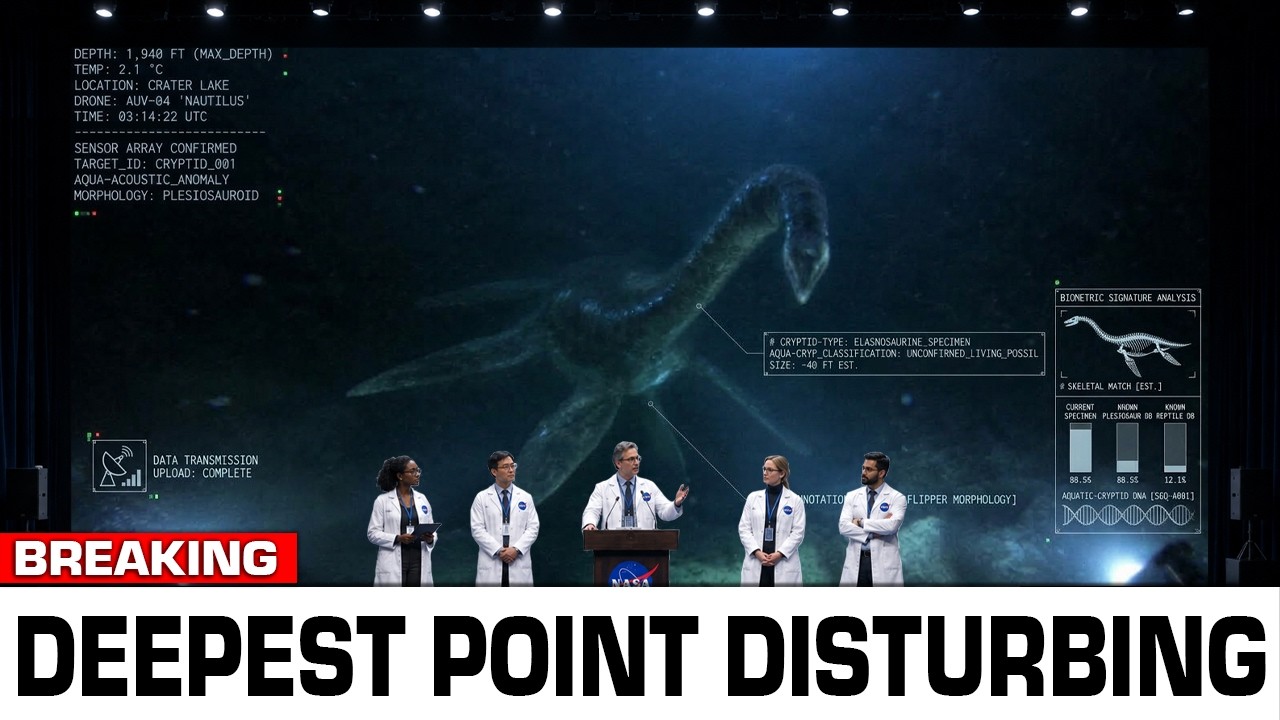
Scientists dropped a drone into Crater Lake’s depths, and the footage stunned the entire crew before they could even finish reviewing it. The team expected murky water and little else, but the device captured something massive moving below the surface, something that contradicted every official survey of the lake.
Crater Lake in southern Oregon fills the remains of Mount Mazama, a volcano that collapsed after a major eruption roughly...
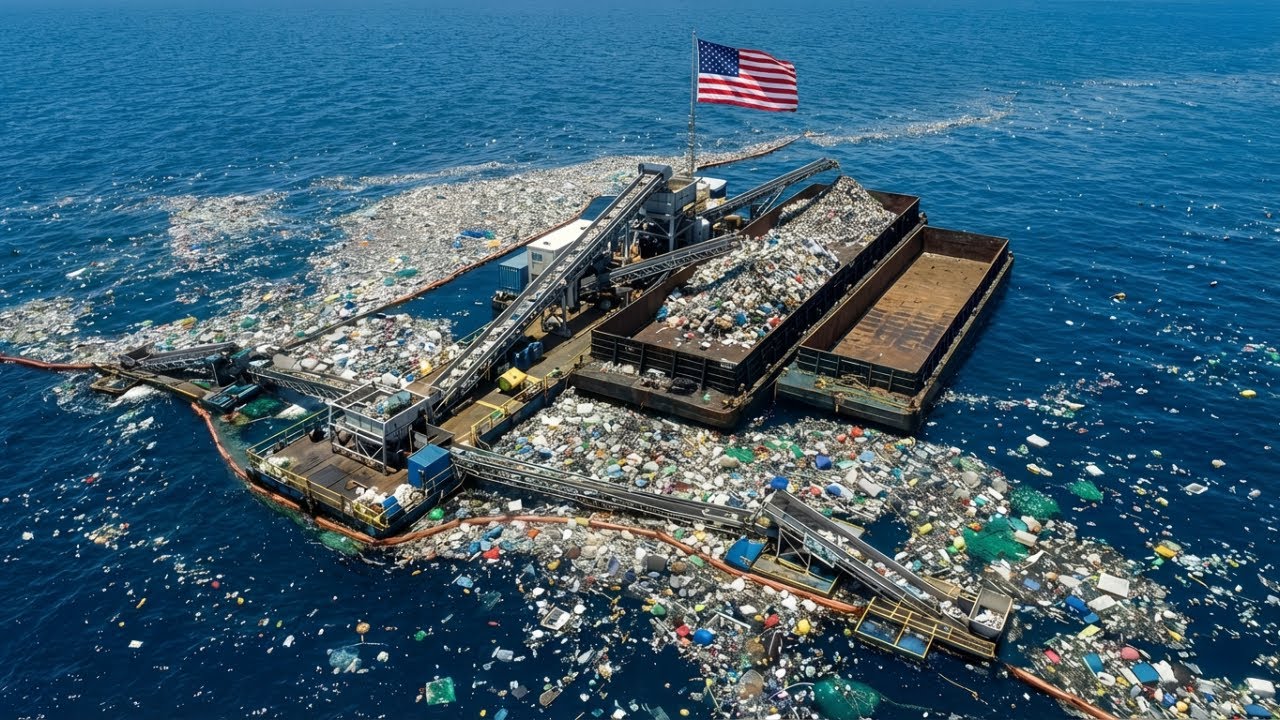
America Is Removing Millions of Tons of Plastic From the Open Ocean — and the Results Are Unreal Every minute, a garbage truck’s worth of plastic enters the sea, but one massive cleanup operation is now pulling millions of tons back out. The floating barrier system has already collected record hauls from the Pacific, with marine life returning to once-barren patches.
The Great Pacific Garbage Patch, a zone of accumulated plastic debris between California and Hawaii, contains an estimated 1.8 trillion...
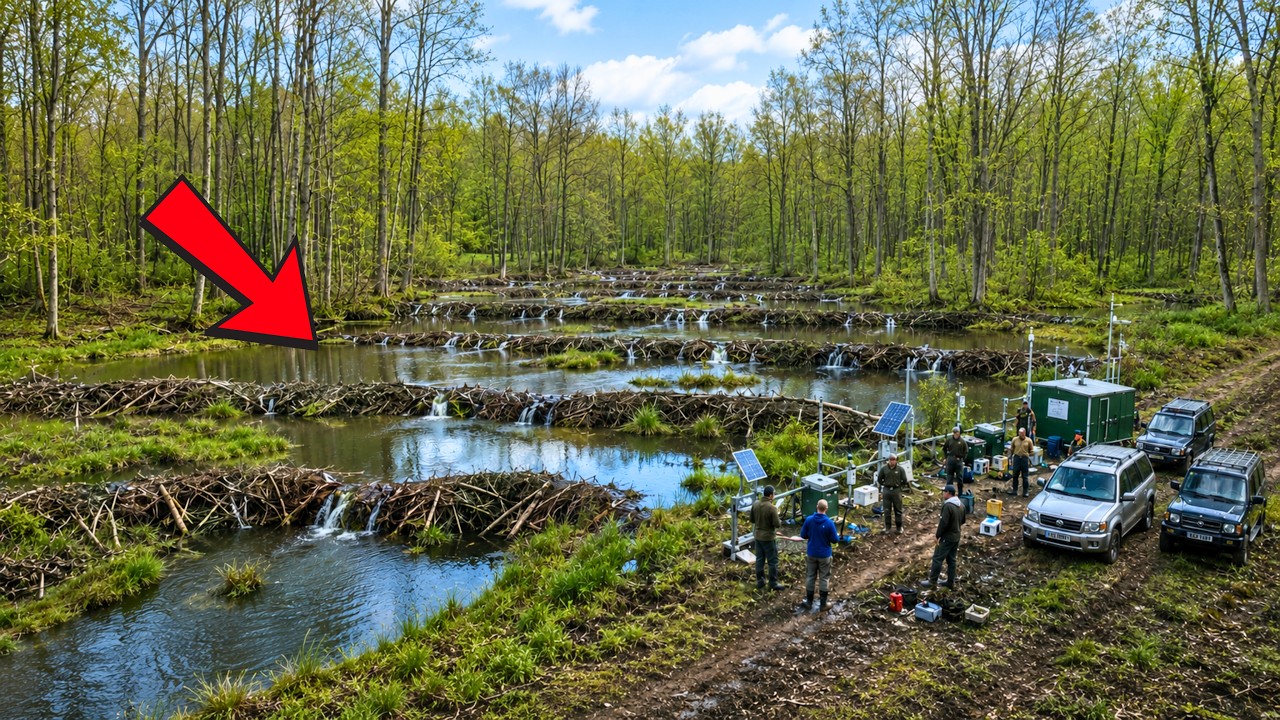
Five years ago, two beavers were released into an English forest on the edge of collapse. The landscape was parched, threatened by drought and erosion, and scientists hoped the pair could restore its natural balance.
In April 2019, two Eurasian beavers from Scotland were released into a fenced enclosure in Cropton Forest, North Yorkshire. The...