The Aral Seabed was a barren wasteland—nothing could survive its toxic, salt-crusted soil after the sea vanished. Scientists declared the region biologically dead, a haunting reminder of one of the worst ecological disasters in history.
Between Kazakhstan and Uzbekistan lies a stretch of desert that did not exist sixty years ago. The Aral Sea, once the fourth-largest lake on Earth, was drained over four decades by Soviet irrigation projects that diverted its two main rivers to supply cotton farms. Today, six million hectares of exposed lakebed form a cracked, salty crust that releases large amounts of contaminated dust into the air each year. Decades of agricultural runoff, including pesticides and heavy metals, settled into the sediment as the water disappeared. Windborne particles from the dried lakebed have been detected as far away as the Arctic and have contributed to serious health problems in nearby communities.
The lake’s collapse began in the 1950s. The Amu Darya and Syr Darya rivers, which fed the lake, were redirected through a large network of unlined irrigation canals. The largest, the Karakum Canal, stretched 1,300 kilometers and drew off nearly half of the Amu Darya’s flow. By the mid-1980s, the annual inflow of river water to the sea had dropped to almost zero. As the lake shrank, its ability to moderate the regional climate declined, leading to more extreme temperatures and faster evaporation. Salinity rose sharply, and the lake’s native fish populations died off. Fishing communities along the old shoreline lost their livelihoods.
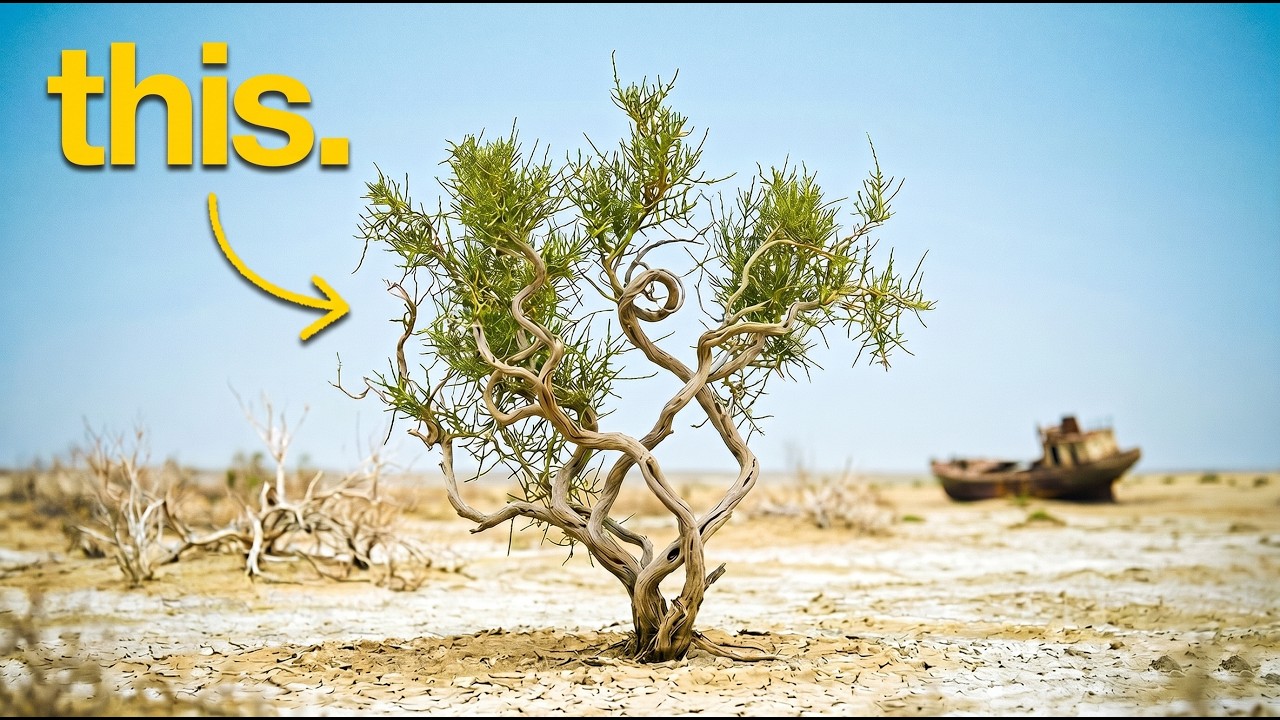
Efforts to restore part of the lake have had mixed results. A dam completed in 2005 preserved a smaller northern basin, where water levels recovered and fish returned. The far larger southern section, however, was left as a permanent desert.
For years, the exposed lakebed presented a difficult environmental problem. The surface was unstable and chemically hostile. Seeds that landed there could not germinate because there was no protective layer of clean sand to hold moisture and shield seedlings from the salt. Without plants to trap drifting sand, the surface remained bare. The system was locked in place.
What eventually helped break this cycle was a desert shrub called black saxaul. It has no true leaves and grows slowly to about six meters, but its taproot can reach 10 to 15 meters down, passing through toxic surface layers to reach brackish groundwater. The shrub can tolerate extreme temperature swings and salt concentrations far above what most plants can endure. Government agencies in Kazakhstan and Uzbekistan, with support from international organizations, began planting saxaul across the exposed seabed. The aim was not primarily ecological restoration but basic public health: reducing the amount of contaminated dust reaching populated areas.
Early attempts at planting failed because bare-root saplings had no protection against the chemistry of the raw salt crust. A revised method addressed this by growing seedlings in soil blocks so the root systems remained intact during transplanting. Each root ball was coated with a small amount of moisture-retaining gel or a clay-and-manure mixture. That small step raised seedling survival rates from roughly 2 percent to about 78 percent on suitable soil.
The planting method also required physical preparation of the ground. Heavy tractors carved trenches a meter deep into the lakebed, spaced ten meters apart. These furrows captured drifting sand, which gradually buried the toxic surface layer beneath a clean layer of sediment. The trapped sand also created the conditions needed for saxaul to anchor its roots and for other native seeds to later germinate.
The seabed was not uniform. Soil surveys showed a mix of sandy loam, dunes, and hard clay crusts. Survival rates were high on sandy ground but remained below 5 percent on the hardest crust. The project began targeting only the most suitable areas, using satellite imagery and soil sampling to guide planting effort.
The first couple of years after planting looked unremarkable. The saxaul shrubs appeared as bare twigs in long furrows. During the first summer, some areas required manual irrigation from wells drilled into the seabed. On at least one site, delays in drilling contributed to the death of about a third of the initial seedlings. Rodents and hares also damaged young plants. But the surviving saplings eventually pushed their roots below the toxic layer and reached the brackish water table, after which they no longer needed human irrigation.
By year five, mature stands of saxaul were measurably reducing wind speeds near the ground. In a landscape where bare salt offers no resistance to moving air, the shrubs slowed the wind and caused it to drop sand around their bases. Over time, these micro-dunes buried more of the toxic crust and created beds where other salt-tolerant plants, such as saltwort and tamarisk, appeared on their own.
Ecological surveys later recorded 91 species of birds using the new plantations for nesting and migration, including a number of protected species. Goitered gazelles, foxes, wild boars, and other animals also moved into the area. Hundreds of plant species were found growing in the formerly barren lakebed. The project, originally conceived as a environmental barrier, had produced a functioning ecosystem.
The financial case for the planting effort is straightforward. The collapse of the Aral Sea has been estimated to cost the Kazakh economy over six billion dollars a year in health care, agriculture losses, and desertification. Planting a single saxaul shrub costs about one dollar. Together, the two countries have now treated millions of hectares. Kazakhstan has planted over 50 million seedlings across 1.2 million hectares, and Uzbekistan has planted a larger area still. Much of the nursery work is done by women from former fishing villages, who grow saplings at home and sell them to restoration crews.
The new forest remains sensitive to weather. Drought years sharply reduce the survival of new plantings, and heat waves can kill young shrubs. Established stands are more resilient because their roots reach deep water, but the expanding edge of the forest depends on continued replanting and maintenance. Climate models suggest the forest also absorbs notable amounts of carbon dioxide, and carbon credit programs have helped fund further expansion.
In 2025, Kazakhstan completed feasibility studies for designating part of the new forest as a protected nature reserve. The forest now covers ground that was open water within living memory, then bare toxic crust, and then, in roughly two decades, the basis of a new ecosystem. The water that once filled the basin is not coming back. The rivers remain diverted for agriculture. But the shrubs planted on the dried lakebed have become the foundation of something that was not present at the start of the project.
Recommended Stories
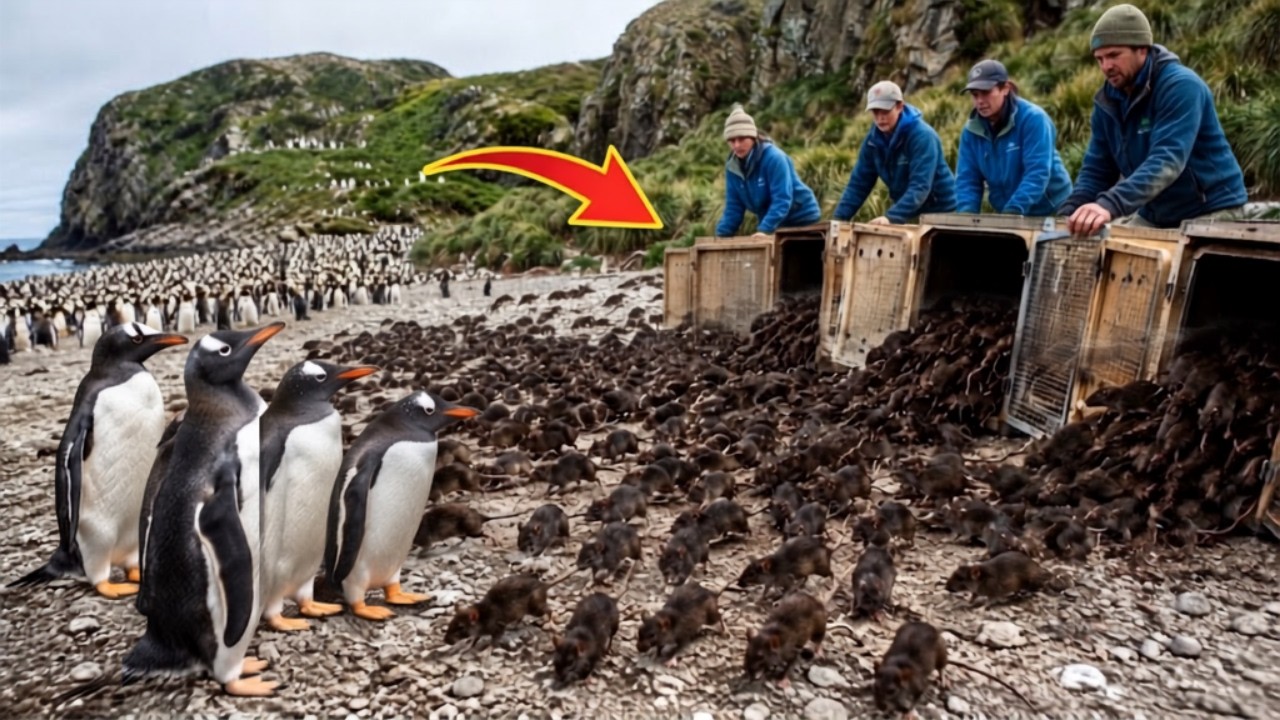
They left thousands of rats on an island full of penguins—24 years later, nobody expected this. The rodents were accidentally introduced decades ago, and by the time researchers returned, the rat population had exploded into the millions, devastating the penguin colonies.
In 1810, the first sealing ship anchored off an island in the Southern Ocean, roughly midway between Tasmania and Antarctica....
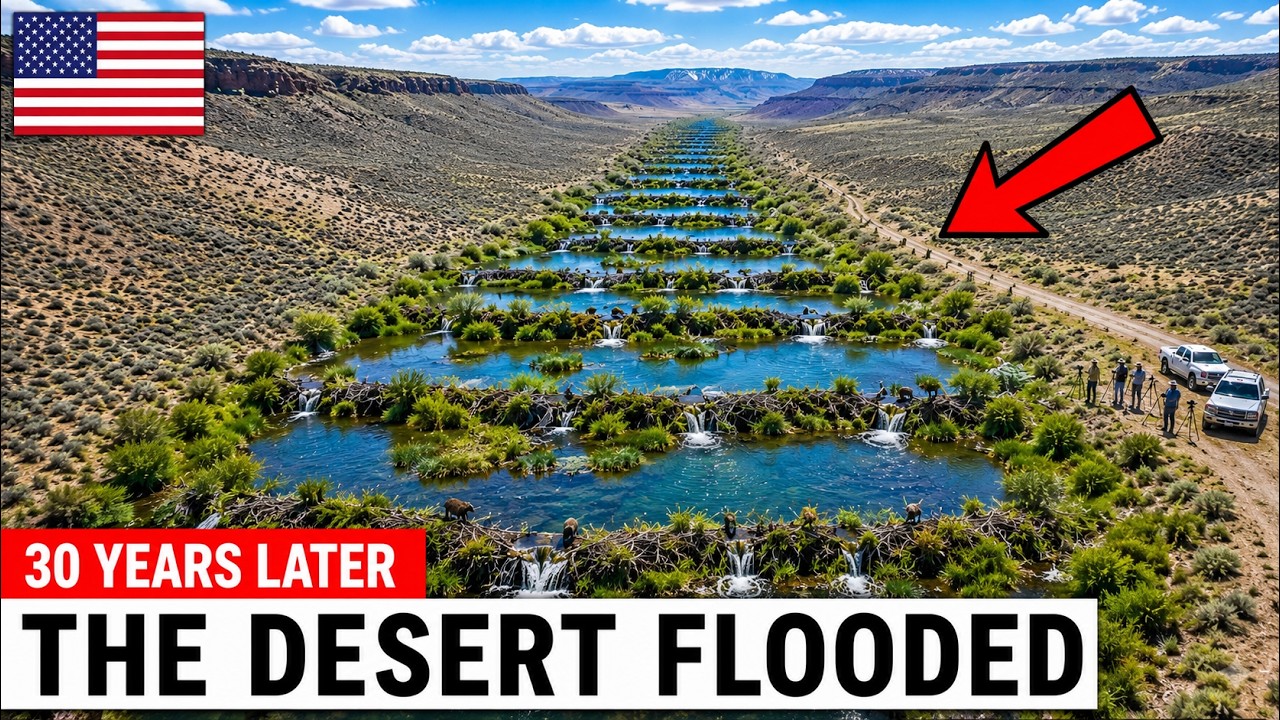
A U.S. rancher let the beavers back and the water did something insane.
In 1990, Maggie Creek was drying up every summer. The water ran fast and shallow, and by August it turned...
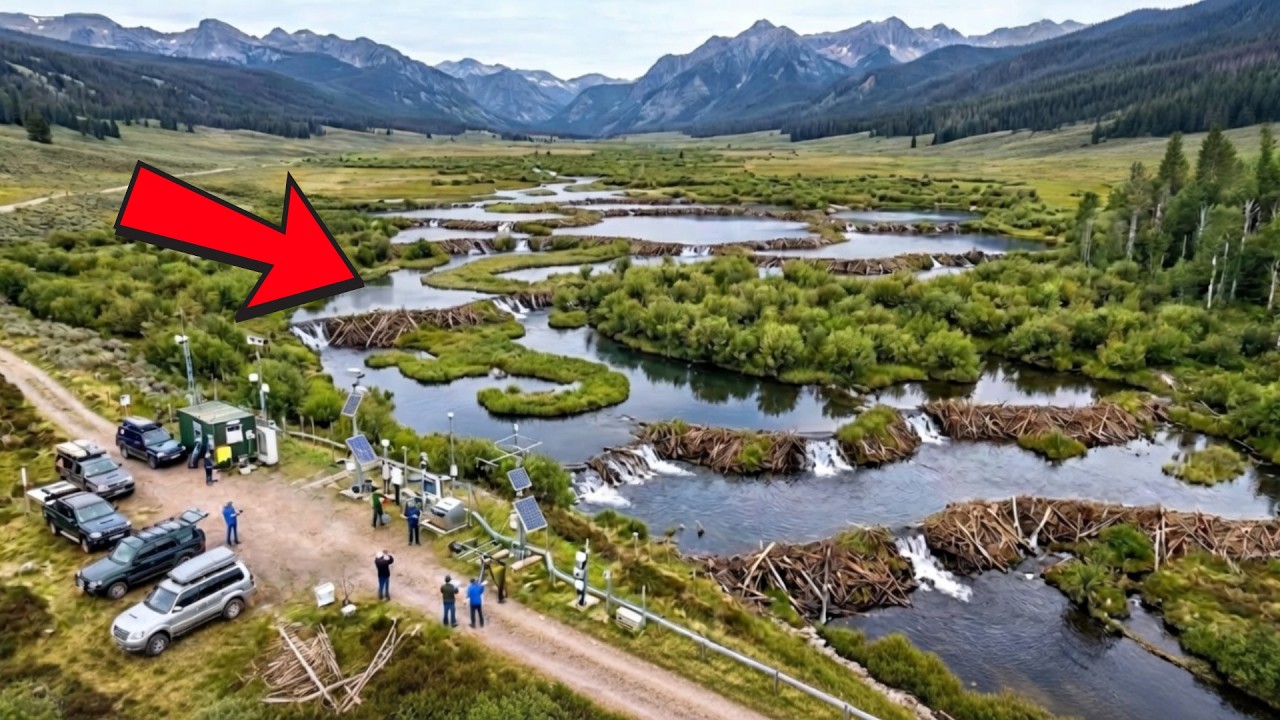
Yellowstone’s elk had nearly destroyed the park for decades, but one surprising reintroduction changed everything. For 70 years, without natural predators, the land was stripped bare, rivers eroded, and entire species vanished.
In January 1995, the United States released 14 gray wolves into Yellowstone National Park. Over the following three decades, their...