New York just dropped 34 beavers back into the Adirondacks, and what happened over 80 years has stunned researchers. The animals had been completely wiped out from the region by the 1800s, leaving waterways barren.
In 1671, a single Dutch shipping season brought 80,000 beaver pelts to European markets. By 1895, a New York State zoologist reported that the beaver was effectively extinct across the entire region. The animal that had maintained the Adirondacks’ wetlands for 10,000 years was gone, with fewer than ten survivors hiding in one family colony near Saranac Lake.
What no one knew at the time was that a small group of conservationists was about to attempt something unprecedented in scale. Between 1901 and 1907, they released just 34 beavers into the Adirondacks. Within 80 years, those 34 animals had multiplied to over 50,000, rebuilt an entire ecosystem, and accidentally created one of the most effective climate defense systems on the continent. This is the story of the most successful wildlife reintroduction in American history.
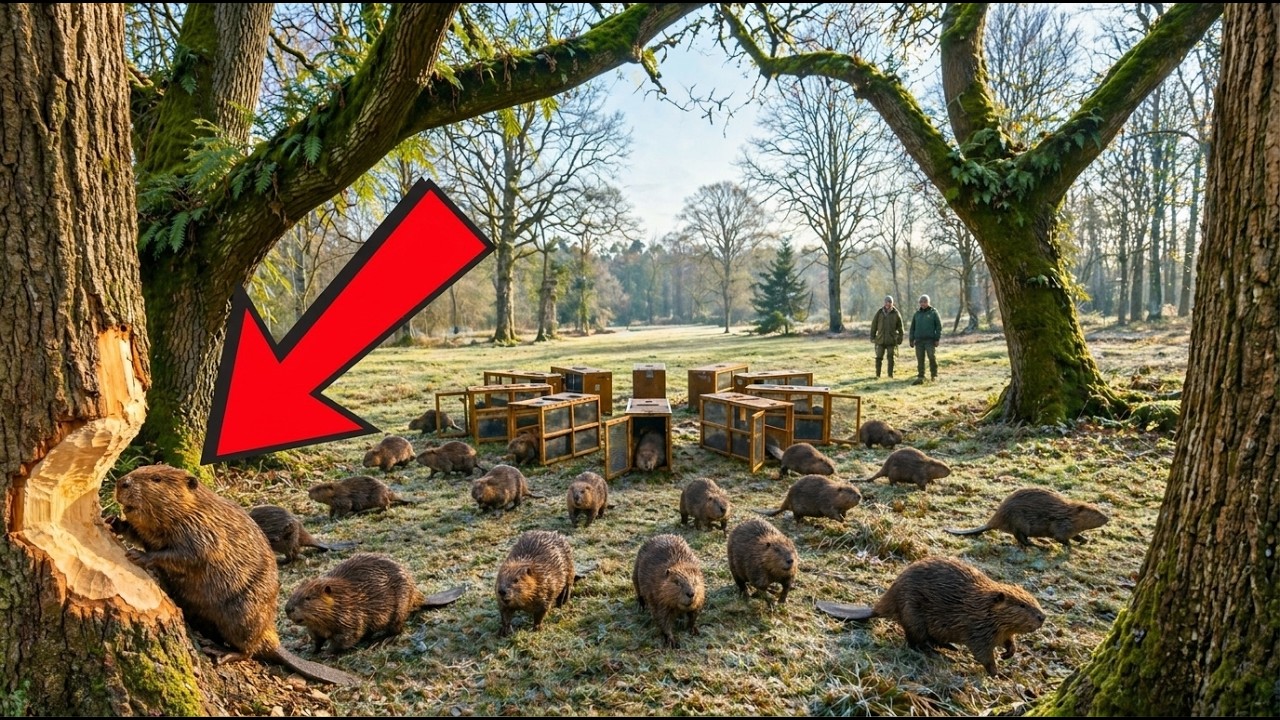
Four hundred years before that effort, the Adirondacks did not resemble the forest known today. In the early 17th century, before the first European trapper set foot in the region, an estimated 100,000 beavers lived in what is now Adirondack Park—roughly nine beavers per square mile across an area the size of Vermont.
Conservationist Harry Radford described the original landscape in 1907 in near-mythical terms. Every lake and pond was populated with beavers. Every river, stream, and waterway, from the largest to the smallest, teemed with these industrious animals. The Adirondack Mountains were not simply a forest with ponds. They were an archipelago of wetlands built and maintained by a single animal species, dam by dam, generation after generation, over thousands of years.
Much of the water visible on modern maps of the Adirondacks—the swamps, meadows, and ponds—exists because beavers designed it. Then, in less than two centuries, that entire community was erased.
The collapse began in the 1620s. The first Dutch ships sailing the Hudson River quickly recognized that the New World’s most valuable commodity was not gold or silver but fur, specifically beaver fur. European hat makers had discovered that beaver underfur, treated with mercury, produced the finest felt known to the world. Beaver hats became a status symbol across Europe. In 1663, a single hat could sell for over four pounds sterling, representing several months’ wages for an ordinary worker.
Demand was nearly unlimited, and so was supply, at least initially. Between 1626 and 1632, in just six years, Dutch traders shipped 52,584 beaver pelts to Holland. By 1671, that number had risen to 80,000 pelts annually from New Netherland alone. The Hudson’s Bay Company later exported 175,000 pelts in a single year across all its territories.
Dutch traders alone were harvesting more beavers in one year than remained in the entire state by 1900. The calculations were unforgiving, and the trend moved in only one direction. By 1640, beavers had been eliminated from nearly all of what is now New York State. The only survivors were colonies hiding deep in the Adirondack Mountains, but trappers followed them there. By 1840, only a few beavers remained in the entire mountain range. By 1893, the species was considered functionally extinct. By 1895, when the state finally passed a law protecting the few survivors, fewer than ten animals remained, all gathered in one small family near Saranac Lake. Two hundred seventy years of trade had reduced the Adirondacks from 100,000 beavers to single digits.
So this was the situation in 1900. One species had nearly disappeared, and the ecosystem that depended on it had largely disappeared as well. No one fully understood the scale of the loss because no living generation had seen the Adirondacks without beavers until that one.
The first attempts to bring beavers back were not government programs. They were private projects funded by wealthy conservationists who owned land within the park. In 1901, a man named Edward Litchfield released a small group of beavers on his private preserve between Long Lake and Tupper Lake. A year later, Timothy Woodruff brought beavers to his private preserve on Lake Cora. These were experiments, and no one was certain the animals would survive their first winter.
In 1903, the New York State Legislature allocated $500 to support statewide reintroduction efforts. Then, in 1904, the program received its most unusual opportunity. The Louisiana Purchase Exposition opened in St. Louis that year—the largest international fair America had ever hosted—and Canada had brought a wildlife exhibit that included seven live beavers. After the fair closed, New York State purchased those seven beavers directly from the Canadian pavilion and shipped them by train to the Old Forge fish hatchery in the Adirondacks.
The beavers spent the winter at the hatchery. In April 1905, two were placed in a zinc-lined box inside a rowboat and transported from Old Forge to Inlet, where they were released into the south branch of the Moose River. Two beavers in a rowboat. That is how the recovery actually began.
Over the following two years, the state added more animals from Ontario, plus 14 yellow-furred beavers brought from Yellowstone National Park. By 1907, the total number of beavers released across the entire Adirondacks stood at 34. That was the founding population—34 animals scattered across 6,000 square miles of forest. No one, including the people who released them, had any idea what would happen.
By 1915, just ten years after that boat trip from Old Forge to Inlet, the state estimated New York’s beaver population had reached 15,000. Thirty-four founders, ten years, 15,000 descendants. By 1921, the number had surpassed 20,000. The recovery was so rapid and aggressive that the state faced a problem no one had anticipated: there were too many beavers.
Property owners filed complaints about flooded fields, fallen trees, and blocked streams. Trout habitat was being flooded. Deer wintering areas were turning into ponds. By 1924, the same state government that had spent $500 to save the species was forced to reopen hunting season simply to control it. In the first two seasons of 1924 and 1925, hunters took 6,000 beavers. A species that had been functionally extinct 20 years earlier was now abundant enough to require population control.
But the real story of what those beavers were doing in the Adirondacks was not in their numbers. It was in what those numbers were building. A single beaver family needs one to two tons of food to survive an Adirondack winter, which requires a large, deep, stable pond. To create that pond, they cut trees and build dams. Most beaver dams average 100 to 200 feet in length and 5 to 7 feet in height, though some dams in the Adirondacks have been measured at over 2,000 feet long and 10 feet high.
Every dam creates a pond. Every pond floods a forest floor. Every flooded forest floor becomes a wetland. And every wetland changes the species composition of everything around it. In a long-term aerial photo study conducted in east-central Alberta between 1948 and 2002, researchers documented that the return of beavers was associated with a ninefold increase in open water across the study area. In another long-term ecological study, areas occupied by beavers for 12 years showed a 46% increase in average plant species richness per plot and a 148% increase in the cumulative number of species recorded across the system. Habitat complexity, measured by how different plots were from one another, increased by 71%.
These numbers are startling. One animal returns to a landscape, and within a decade or two, there is nine times more water, a 50% increase in plant species, and far greater habitat diversity. All the species that depend on wetlands returned as well. Mink, muskrats, otters, herons, bitterns, wood ducks, spotted salamanders, and red-legged frogs returned because beavers built the infrastructure they needed to live there.
By the 1970s, beavers had recovered so fully that New York State made them the official state mammal. By the early 2000s, the Adirondack beaver population was estimated at 50,000 to 75,000 animals. In 2007, for the first time in over 200 years, a beaver was seen in the Bronx River within New York City. The species had not only returned; it had reclaimed every river system in the state.
Then, beginning around 2015, scientists began noticing something else—something no one was looking for when the original 34 beavers were released. The wetlands those beavers built, and the tens of thousands of square miles of beaver-engineered landscape that spread from them, were doing something unexpected. They were storing enormous amounts of carbon. A study published in 2018 estimated that beaver ponds and meadows across North America were sequestering up to 470,000 tons of carbon every year. The animal reintroduced to fix an environmental error caused by the fur trade was, by accident, one of the most efficient carbon-storage engineers on the continent.
Further discoveries followed. In 2024, a research team led by Dr. Emily Fairfax of California State University Channel Islands examined wildfire damage across the western United States. The team looked at riparian areas—bands of vegetation along rivers and streams—across five states, comparing areas with active beaver activity to those without. The result was consistent enough to seem like an error. Riparian areas with active beavers suffered one-third of the wildfire damage compared to areas without them. Three times less burning.
Fairfax described beaver-created riparian areas as essentially piles of wet sticks, and wet sticks do not burn. Geomorphologist Joe Wheaton of Utah State University put it more simply: water does not burn. During California’s Dixie and Sugar fires, beaver-engineered wetlands remained green and intact while surrounding forests were destroyed. In a separate study under drought conditions in the western United States and Canada, researchers found that beaver-modified landscapes retained nine times more water during drought periods than comparable areas without beavers.
An economic analysis estimated that beaver ecosystem services in the United States are worth approximately $133 million annually in habitat and biodiversity protection, plus another $75 million per year in greenhouse gas sequestration value.
The animal hunted to local extinction for the hat trade in the 18th century. The animal that survived in such tiny numbers at a single Adirondack location in 1895. The animal that returned via a rowboat trip in 1905 with fewer than thirteen breeding pairs. By accident, it has become one of the most economically and environmentally valuable species in North America.
Beaver reintroduction to the Adirondacks matters because it is not just a wildlife story. It is a reminder of how much one species can shape an entire continent, and how much its absence can empty a landscape. The story does not end at the Adirondacks either. The same pattern—the same exponential recovery, the same unintended climate benefits—is now being studied and replicated by conservation programs across the United States and Canada. On the northern Great Plains, ranchers are building artificial beaver dam analogs to mimic what the real animals do. Wildfire researchers are mapping beaver activity as part of regional fire mitigation strategies. Wetland restoration projects in Washington State have found that beaver dams produce 80 times more juvenile salmon per pond than comparable ponds created by wood debris.
What began in 1901 with one man releasing a few animals on his own land in northern New York became, over 80 years, a working model for ecological recovery on a continental scale. Thirty-four beavers, one rowboat, and $500. An ecosystem that took two and a half centuries to destroy took about two decades to begin rebuilding itself once the right species was allowed to return.
The Adirondack forests today are not simply forests with beavers living in them. They are forests that beavers are continuously rebuilding, dam by dam, pond by pond, wetland by wetland. And as it turns out, that is exactly what the entire continent needs.
Recommended Stories
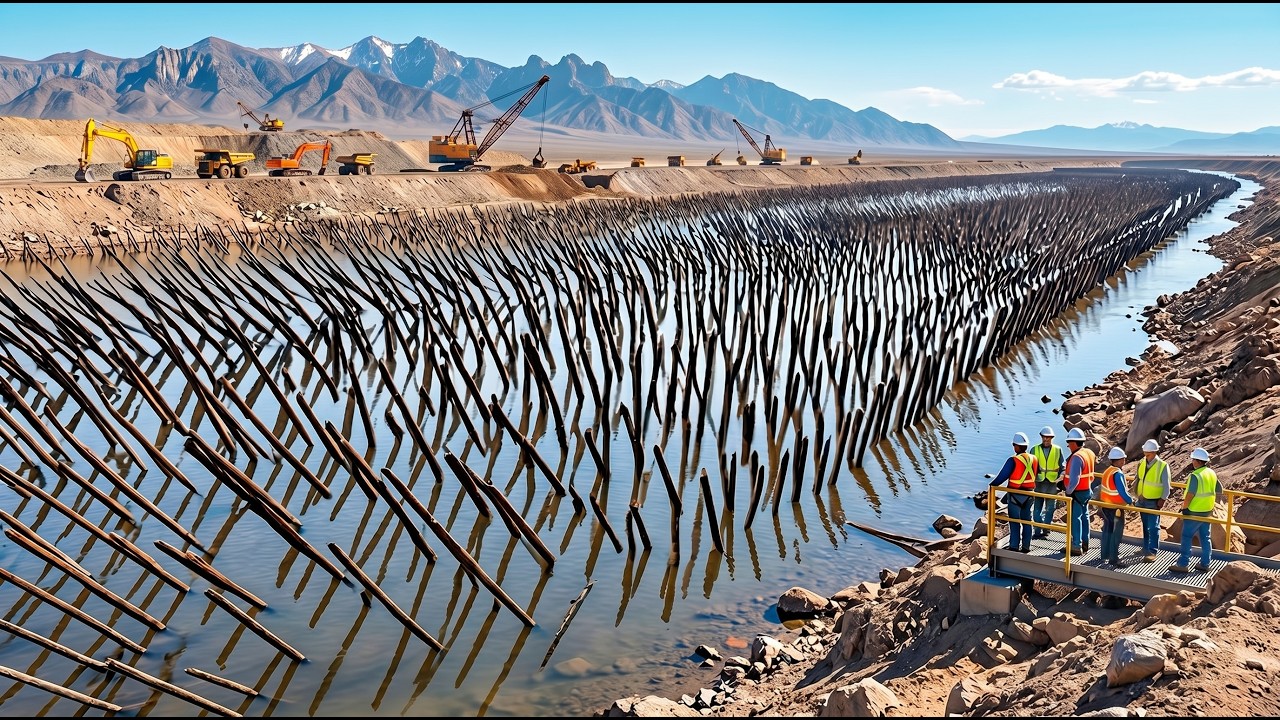
Wildlife officials placed 76 fake beaver dams across a dying river, hoping to trick nature into restoring itself. The structures slowed the water and raised its level, which should have worked.
In 2009, a restoration project in eastern Oregon installed 76 simple wooden structures along a degraded stretch of Bridge Creek,...
Deep in Siberia’s frozen wilderness, a fur trapper’s decades-old account still haunts scientists today. He described two massive, dark, hairy animals with inward-curving tusks standing in a river, pouring water over their backs before vanishing into the trees.
The far north of Siberia is a landscape of extremes. In summer, the tundra softens as the permafrost thaws, and...

Alaska’s real-life jaws just surfaced, and it’s bigger than anyone ever imagined. Divers off the coast spotted a massive creature that left even seasoned researchers stunned.
Scientists scanning the depths of Loch Ness reported detecting a large unidentified object on sonar. In 1942, a bush pilot...