Australia finally found a way to stop feral cats — and it’s changing everything they know about predator control. For decades, these invasive hunters have devastated native wildlife, pushing countless species toward extinction with no effective solution in sight.
Feral cats have been a major factor in the decline of native Australian wildlife since they were introduced to the continent in 1788, when the first fleet brought them aboard ships to control rats. By the 1820s, feral populations were recorded in Sydney, and farmers were intentionally releasing them to manage rodents and rabbits. The cats spread rapidly, occupying more than 90 percent of the mainland by 1890, and today they are present across virtually the entire country.
Australia had no native predators that could keep the cat population in check, and native mammals had no evolutionary experience with a nocturnal hunter of this kind. The result has been severe: feral cats kill more than a billion wild animals each year, and at least 33 mammal species have disappeared over the past 250 years. That is the highest rate of mammal extinction in the world. The CSIRO estimates the annual economic damage from feral cats at more than 18.7 billion dollars, exceeding the combined impact of other invasive species such as rabbits and foxes.
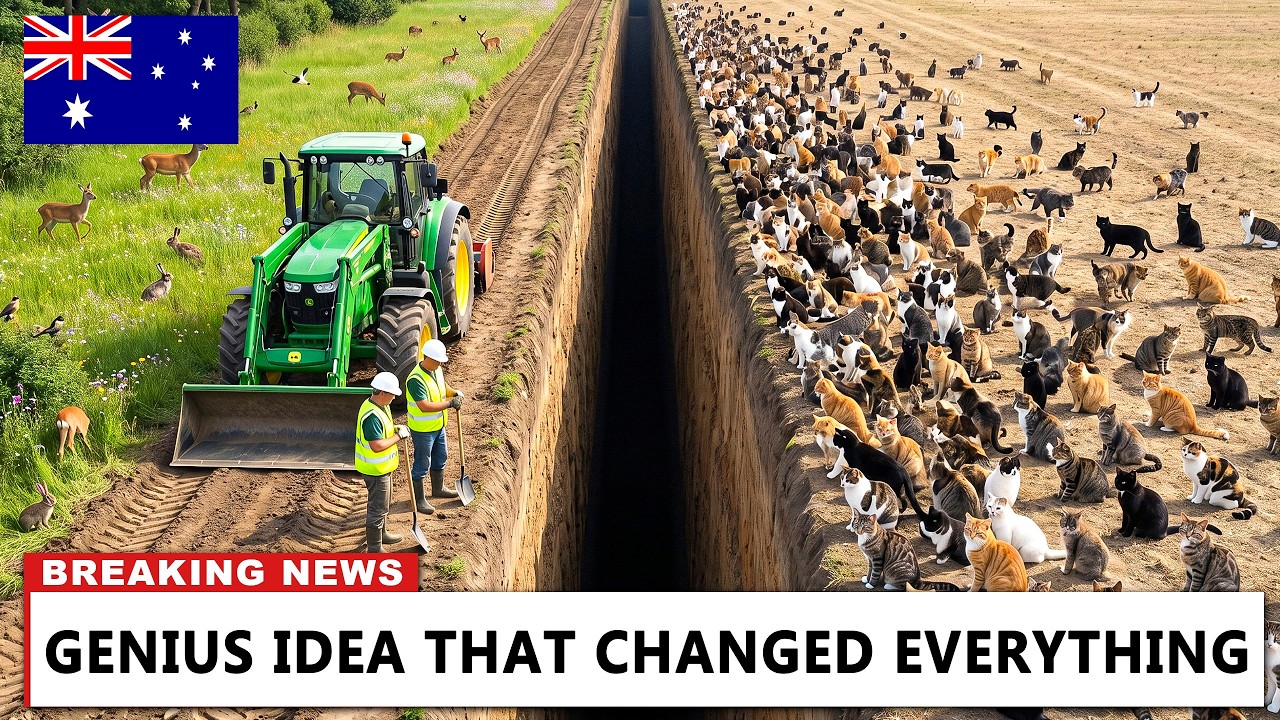
For decades, the government attempted to control cats with poison, shooting, and traps. These methods proved largely ineffective. A feral cat can cover up to 10 kilometers in a single night, avoids unfamiliar baits, and learns to avoid traps after one failed attempt. A single cat in the bush eats an average of 791 animals per year, and nationwide, cats kill roughly three million mammals, one million birds, and one and a half million reptiles every day.
In 1989, Martin Copley, an Englishman who had made his fortune in insurance, visited the Warrawong Sanctuary in South Australia, where ecologist John Wamsley had built a fence that kept cats out entirely. The visit shaped his thinking. In 1991, Copley and his wife Lorraine bought a plot of bush near Chidlow, about an hour from Perth, and named it Karakamia. The first fence, 6.5 kilometers long, was completed in 1994. The team removed foxes and cats from inside the perimeter and began releasing native species such as woylies, quendas, and tammar wallabies.
Before the fence, only three species of native mammal remained on the land. Today, 23 species of mammal, 124 species of bird, and 34 species of reptile are recorded across the same 268 hectares. Some were deliberately reintroduced, while others returned on their own. The yellow-footed antechinus, which no one released, re-entered the forest once the predator that had made it easy prey was gone.
Not everything worked immediately. The numbat, an emblem of Western Australia, was among the first species released at Karakamia, but the population never established. The territory was too small to support a viable group of animals that require a large foraging range for termites. The answer, it became clear, was scale. The Western Australian Department of Conservation had been running its own numbat reintroduction program since the mid-1980s, and the data showed that success depended on two things: the size of the territory capable of feeding the species, and consistent predator control. This understanding shaped every subsequent project by the Australian Wildlife Conservancy, the organization Copley founded.
The fencing method was refined over time. A standard fence stands 1.8 meters high, with an angled upper section and a floppy top that sags under a cat’s weight, preventing it from climbing over. A mesh apron buried at the base stops animals from digging underneath. Even with these measures, complete eradication is not guaranteed. At the Mali Cliffs project, a single fox evaded traps for six months while the fence was under construction. Workers had to bury an additional 11 kilometers of mesh apron before the territory was declared clean.
After a fence is completed, the team removes every cat and fox inside using traps, poison baits, and night shooting with thermal imagers. Monitoring continues for months, using cameras and sand tracks to confirm the area is truly predator-free. The standard is strict: almost clean does not count. Only zero cats or foxes count.
On December 22, 1994, the premier of Western Australia officially opened Karakamia, and on the same day the team released the first woylies and quendas. It was the first release of an endangered species at a private sanctuary in the state’s history. Copley understood the financial commitment early on. Each kilometer of fencing costs tens of thousands of dollars, and maintenance is ongoing. Floods tear the mesh, trees fall on posts, and fires require controlled burns around the perimeter each year.
In 1998, the project expanded to Peronah, a corridor between two national parks. Then came Faure Island in Shark Bay, where the team removed not only cats but also more than 2,000 feral goats. The island, at 4,500 hectares surrounded by ocean, was a different kind of challenge. The team tracked the last cats for months, trap by trap, until no tracks remained. When a year passed without a single cat print, the island was officially recognized as free of the predator. At that time, it was the third largest island in the world from which feral cats had been completely removed. Today, four mammal species live there that had been absent for decades, including the Shark Bay mouse.
The organization continued to learn from each project. Larger territories were established, thicker aprons were buried, and species were selected more carefully to match the specific landscape. The numbat was eventually reintroduced successfully, but not at Karakamia. It took hold in the larger properties of Scotia and Yookamurra, where there was enough space.
The impact of even one cat was demonstrated at a bird sanctuary near Mandurah, where more than 200 chicks of an endangered tern species hatched over one season. A single white, neutered cat without a collar entered the colony repeatedly. Within a few weeks, almost all the chicks were gone, and the adults abandoned the nesting site. The colony that had formed over years collapsed in one season. Investigators confirmed the cause from tracks in the sand and the remains of the birds.
Between 1999 and 2006, the woylie population across the country fell by 90 percent, from about 250,000 individuals to 33,000. The cause has not been definitively established, though foxes, cats, and possibly disease have been suggested. But at Karakamia, the population remained steady at 400 to 500 animals year after year, behind the fence Copley had built 17 years earlier. While the species was disappearing elsewhere, the 268 hectares near Perth remained the one place where the decline did not occur.
The last fence Copley saw completed was at Mount Gibson, in June 2014. It ran 43 kilometers and enclosed 7,800 hectares, with plans to reintroduce at least 10 species, including the numbat and the bilby. Copley died five weeks later, on July 30, 2014. At the time of his death, the organization he founded was managing 23 sanctuaries across more than three million hectares. His personal financial contribution over 23 years is estimated at $70 million.
A year after his death, the team he built launched the Newhaven project, one of the largest feral cat eradication efforts on the planet. The territory covered 9,450 hectares, and the fence eventually grew to 44.2 kilometers, with more than 8,500 posts and 400 kilometers of wire. It remains the largest such fence in the Southern Hemisphere.
The method that began on a single plot of land has become a nationwide system. The Australian Wildlife Conservancy has moved representatives of 32 species between its territories over the years. Each translocation involves capture, veterinary examination, transport, and months of post-release monitoring. The network now includes more than 240 kilometers of fencing across 10 territories. The organization directly manages 6.8 million hectares and protects a further 6.1 million hectares through partnerships. It safeguards 74 percent of Australia’s mainland mammal species and 88 percent of its bird species. Since 2013, the patron of the organization has been Prince Charles, now King Charles III. Sir David Attenborough is among its supporters, and a field station in the Artesian Range bears his name.
There are limitations to the model. The fenced territories are islands of safety within a much larger landscape where cats continue to hunt. Australia’s largest fenced sanctuaries together cover only a few hundred square kilometers, while the mainland spans 7.6 million square kilometers. Researchers from the National Environmental Science Program noted that in recent years, newly built fences have often duplicated protection for species that already had refuge, rather than adding new ones. Dozens of species in critical need still have no fenced territory. The animals inside the fences are wild, but they live within boundaries defined by humans. Whether this represents true salvation for a species or a network of cageless zoos is still debated within the Australian conservation community.
The organization is testing ways to address this. In 2025, at Karakamia, it piloted SmartGate, an AI-based gate that identifies the species of an animal in real time and opens only for native creatures. The idea is to let wildlife move beyond the fence and return without allowing cats or foxes in. Initial tests with woylies were promising, though whether the technology can be scaled to thousands of kilometers of fencing is not yet clear.
The Australian Wildlife Conservancy has announced a plan to spend $100 million by 2035 to expand its area of influence to 5 percent of Australia’s territory, an area larger than Germany, and to increase by 50 percent the number of species protected from cats and foxes. Chief executive Tim Allard said, “The extinction crisis is here, now, and we need to act at scale.” Whether enough fences can be built across a continent of this size remains an open question.
In December 1994, when Copley stood beside the newly opened Karakamia and watched the first woylies disappear into the scrub, he already understood the central point of his approach: stopping a catastrophe created by human activity does not necessarily require a large budget or a government decree. It requires a person willing to buy a plot of land, make mistakes, try again, and keep going until the country recognizes that the approach works.
Recommended Stories
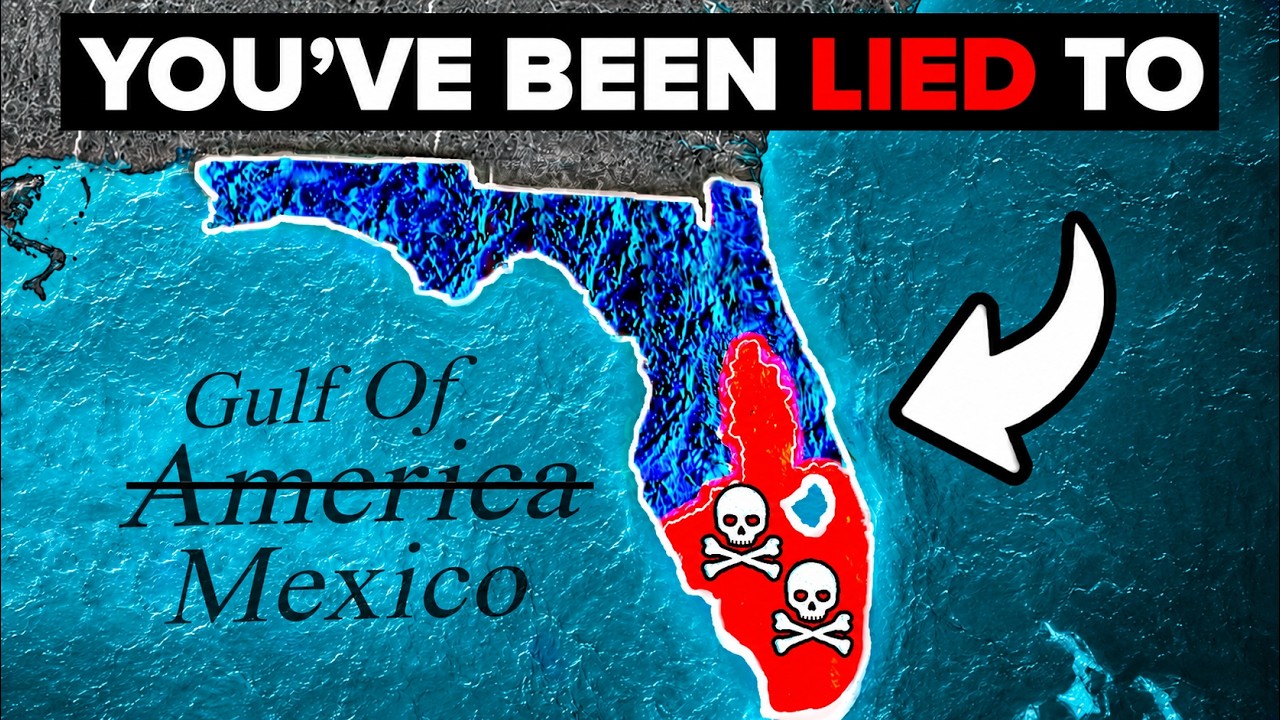
A mysterious force is devastating Florida’s Everglades, and the culprit has wildlife experts bracing for an ecological disaster. Pythons, invasive predators that can grow over twenty feet long, are strangling the natural food chain, and state officials have declared an all-out war.
The Everglades, a vast wetland at the southern tip of Florida, is often described as a swamp, but it is...
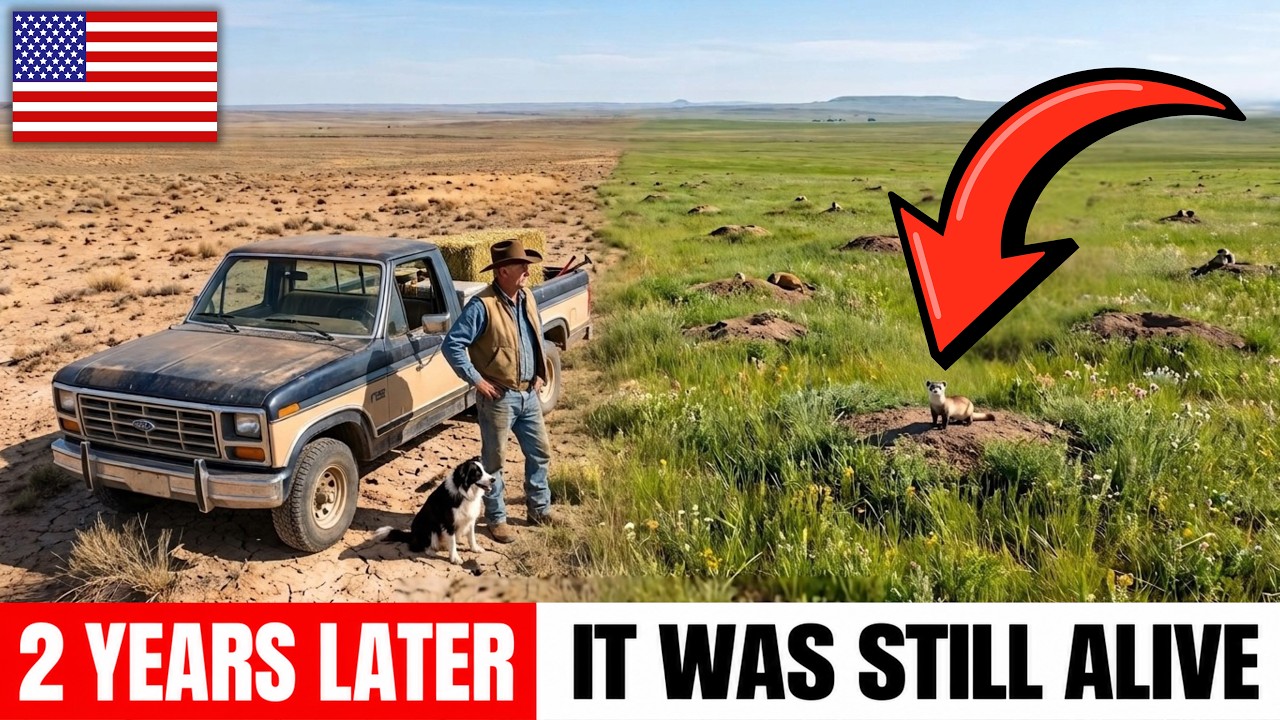
In September 1981, a ranch dog named Shep dropped a dead animal on the Hoggs’ Wyoming doorstep, and the species they identified had been declared extinct just two years earlier. Scientists had written off the black-footed ferret in 1979, yet the dog found one in a place biologists had abandoned.
In September 1981, a ranch dog named Shep brought a dead animal to the doorstep of John and Lucille Hogg's...
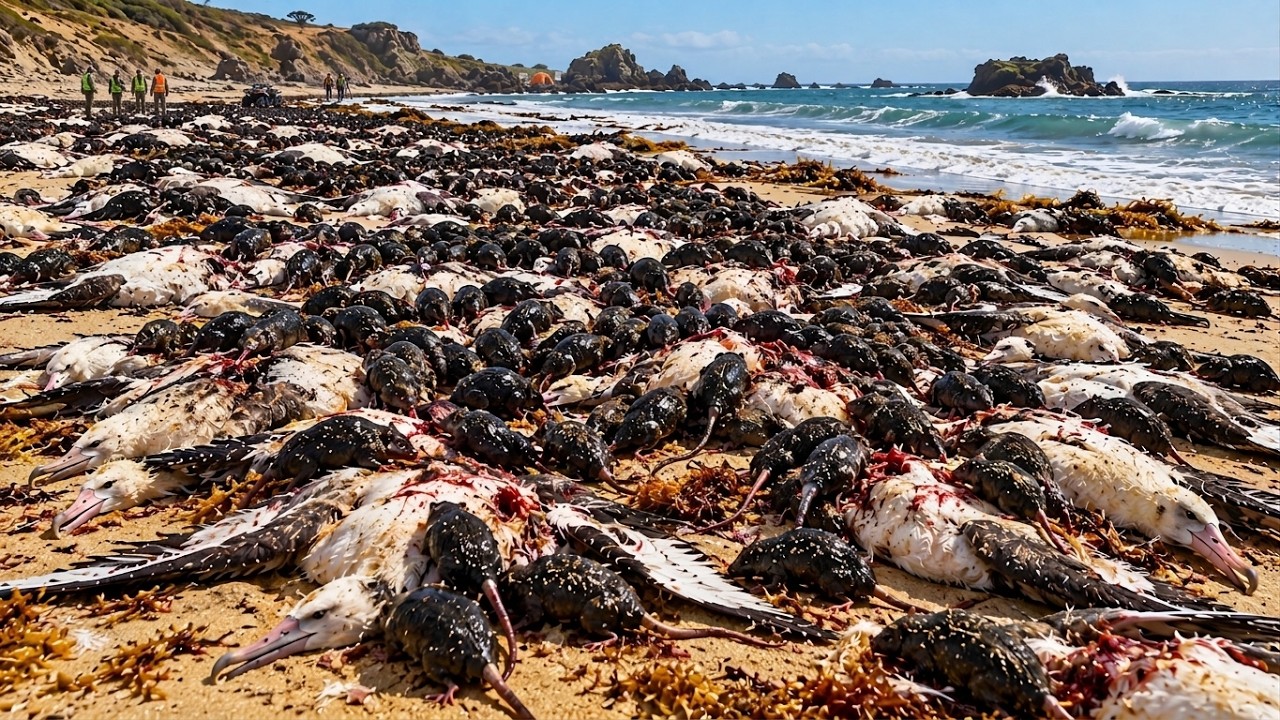
On a remote island, mice were no longer nibbling seeds—they were gnawing on living albatross chicks, feasting on them alive. Conservationists documented the gruesome shift as invasive rodents overwhelmed the world’s largest seabirds at their breeding colony.
On a remote island in the South Atlantic, a population of house mice has been causing severe harm to one...