On a remote island, mice were no longer nibbling seeds—they were gnawing on living albatross chicks, feasting on them alive. Conservationists documented the gruesome shift as invasive rodents overwhelmed the world’s largest seabirds at their breeding colony.
On a remote island in the South Atlantic, a population of house mice has been causing severe harm to one of the world’s largest seabirds. The Tristan albatross, a species with a wingspan of roughly three meters, breeds almost exclusively on Gough Island. Nearly all of the approximately 1,700 remaining breeding pairs nest there. The mice, which arrived with sealers in the 1800s, have grown larger and more numerous than typical house mice, and they have been attacking and killing albatross chicks.
Gough Island is a jagged volcanic landmass about 1,600 kilometers from the nearest continent. It receives more than three meters of rain annually and supports more than ten million seabirds. For most of its history, the island had no land mammals. Albatross chicks evolved to defend against threats from the air, such as skuas and giant petrels, but developed no defenses against predators approaching from the ground. This made them vulnerable when mice began preying on them.

The Tristan albatross has an unusually slow breeding cycle. An egg is laid around New Year’s and hatches in March. A parent guards the chick for about a month, after which both parents return to sea to hunt. The chick remains alone on its nest through the southern winter and does not fledge until November. Because raising a single chick takes so long, most pairs breed successfully only every other year. This means each lost chick represents a significant reproductive loss for the population.
Mice were first recorded on Gough Island in the 1800s, arriving as stowaways on sealing vessels. For more than a century, they were not considered a threat. A naturalist in 1953 described them as probably harmless. However, the island environment changed them. With no cats, rats, owls, or competitors, the mice grew roughly 50 percent larger than ordinary house mice. Population densities reached up to 266 mice per hectare in some areas, with total numbers estimated at over one million. During the harsh winter months, when natural food sources became scarce, the mice turned to the island’s seabird chicks.
In 2001, researchers noticed that Tristan albatross chicks were dying at unusually high rates. A team from the University of Cape Town, led by Ross Wanless, launched an investigation in 2004. Using infrared cameras to monitor nests at night, they recorded mice climbing onto chicks and biting into their bodies while the chicks were still alive. In one instance, around ten mice fed on a single chick at once. By late September of that year, 100 of the 256 chicks under observation had died. The chicks showed little defensive response, even as the attacks continued. The findings were published in 2007 under the title “Can predation by invasive mice drive seabird extinctions?”
Further research in 2014 clarified how the mice operated. Attacks occurred only at night, typically beginning with a single mouse climbing onto a chick and biting a specific spot repeatedly until the skin broke. The chick would attempt to shake the mouse off, but the mouse would return within seconds. Even when a parent was present, it rarely intervened effectively. The attacks caused wounds and disrupted the chicks’ sleep, leaving them progressively weaker. On average, chicks died about four days after their first bite. Of the 15 chicks that died during that study, 14 were killed by mice. That year, only 9.6 percent of Tristan albatross pairs on Gough raised a chick successfully. Researchers counted 163 large chicks on the island in 2014, compared to 1,129 in 1999.
The mice also began preying on other seabird species. They killed chicks of Atlantic petrels, great shearwaters, and MacGillivray’s prions. The prions’ breeding success fell to around six percent. Initially, summer-breeding species appeared safe, since mice were hungriest during winter, when Tristan albatross chicks are on the nest. But in the 2009–2010 season, researchers recorded the first mouse attacks on yellow-nosed albatross chicks, a summer-breeding species. About two percent of those chicks were affected.
In February 2018, a field researcher observed a more rapid escalation. A yellow-nosed albatross chick in her study area, roughly ten to twelve weeks old and seemingly healthy, died within about an hour of being attacked by mice. The chick had been alert enough at first to brush the mice away, but it weakened quickly and could not lift its head again. By the next morning, nothing remained but feathers and bones. That season, 27 percent of hatched chicks in her monitoring area died from suspected mouse attacks, up from two percent less than a decade earlier.
In 2019, researchers reported that mice were attacking adult albatrosses on their nests. In 2021, a 35-year-old adult Tristan albatross was confirmed to have been killed by mice. This was a significant development, because an adult albatross can produce many chicks over its lifetime. The loss of adults threatened the species’ long-term future.
By that point, the only remaining solution was the complete removal of mice from Gough Island. Attempts had succeeded elsewhere, including on South Georgia and Macquarie Island, but eradicating mice requires killing every last individual. A single surviving pregnant female can allow the population to recover. The Royal Society for the Protection of Birds and its partners spent more than a decade planning the operation, at a budget of roughly nine million pounds.
In June 2021, the research ship SA Agulhas 2 arrived at Gough with four helicopters and specially prepared bait. The poison pellets were distributed across the island. Two of Gough’s native land birds were taken into temporary captivity to prevent them from consuming the bait. The head of the RSPB described the effort as the conservation equivalent of landing on the moon. The baiting was completed by August 2021.
Initial results were encouraging. The following breeding season, Tristan albatross breeding success jumped to 76 percent, compared to an average of about 32 percent. More than 1,000 chicks fledged, the first time this century that the population had produced enough young to sustain itself. MacGillivray’s prions improved from roughly six percent success to 82 percent. Atlantic petrels reached 63 percent. For one season, the island’s seabird populations appeared to be recovering.
The success was short-lived. In mid-December 2021, a motion-triggered camera captured footage of a single mouse. An emergency search followed, and within weeks, four more mice were caught in two other locations. The eradication had failed. A small number of mice had survived on the island, and by the end of summer 2022, their numbers were increasing again. The record-breaking breeding season had been a temporary reprieve, occurring when mice were too few to exhaust their normal food supply and turn to seabirds. By the next season, signs of mouse predation on prion chicks had already returned.
The mice are now breeding again on Gough Island. The RSPB has stated that it intends to return and complete the eradication effort. Researchers are investigating where and why some mice survived, with the aim of avoiding the same outcome in a future attempt. The Tristan albatross remains critically endangered, facing pressure both from fishing lines at sea and from mice on land. However, the successful breeding season demonstrated that the birds can recover quickly once mice are removed.
The situation on Gough Island illustrates how a small number of introduced animals can reshape an ecosystem over time. The mice that arrived with sealers in the 1800s adapted to their new environment and multiplied. The albatrosses evolved in an environment without ground predators and were not equipped to cope with them. Once introduced, the mice proved difficult to remove completely. A small number survived the baiting effort, each capable of restarting the population. The island remains home to the mice, and the long-term recovery of its seabird populations depends on completing the eradication.
Recommended Stories
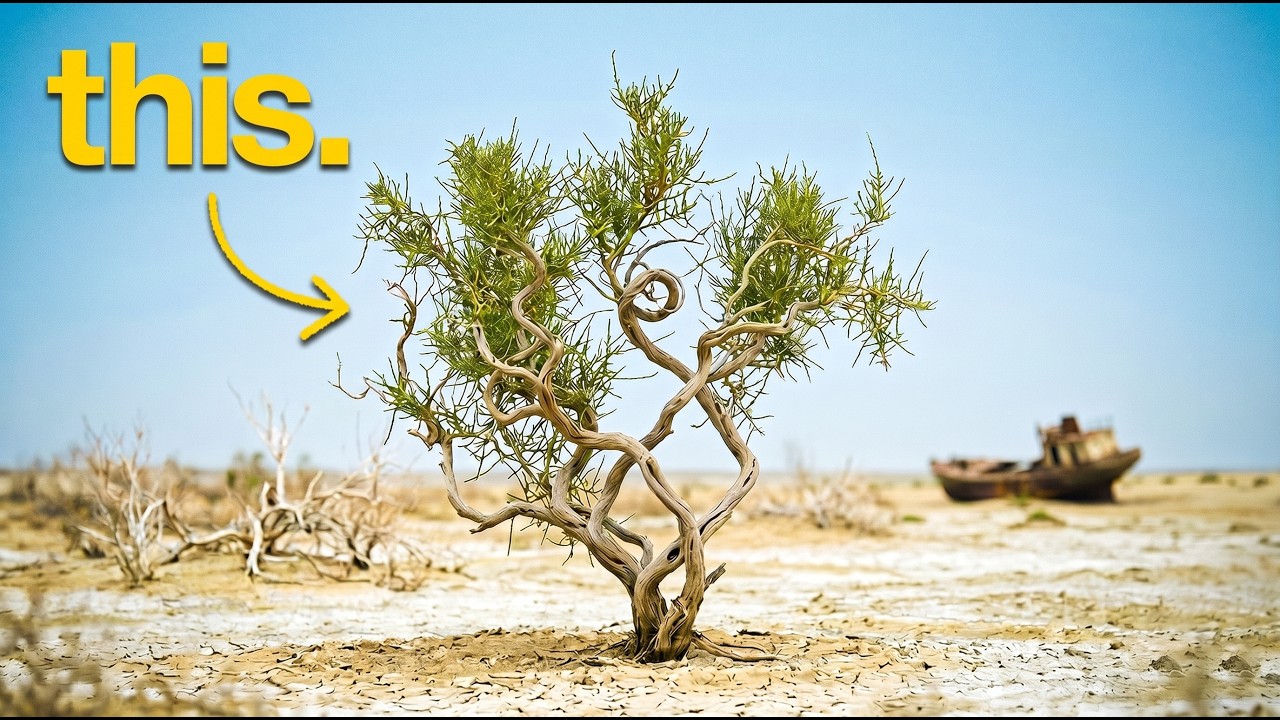
The Aral Seabed was a barren wasteland—nothing could survive its toxic, salt-crusted soil after the sea vanished. Scientists declared the region biologically dead, a haunting reminder of one of the worst ecological disasters in history.
Between Kazakhstan and Uzbekistan lies a stretch of desert that did not exist sixty years ago. The Aral Sea, once...
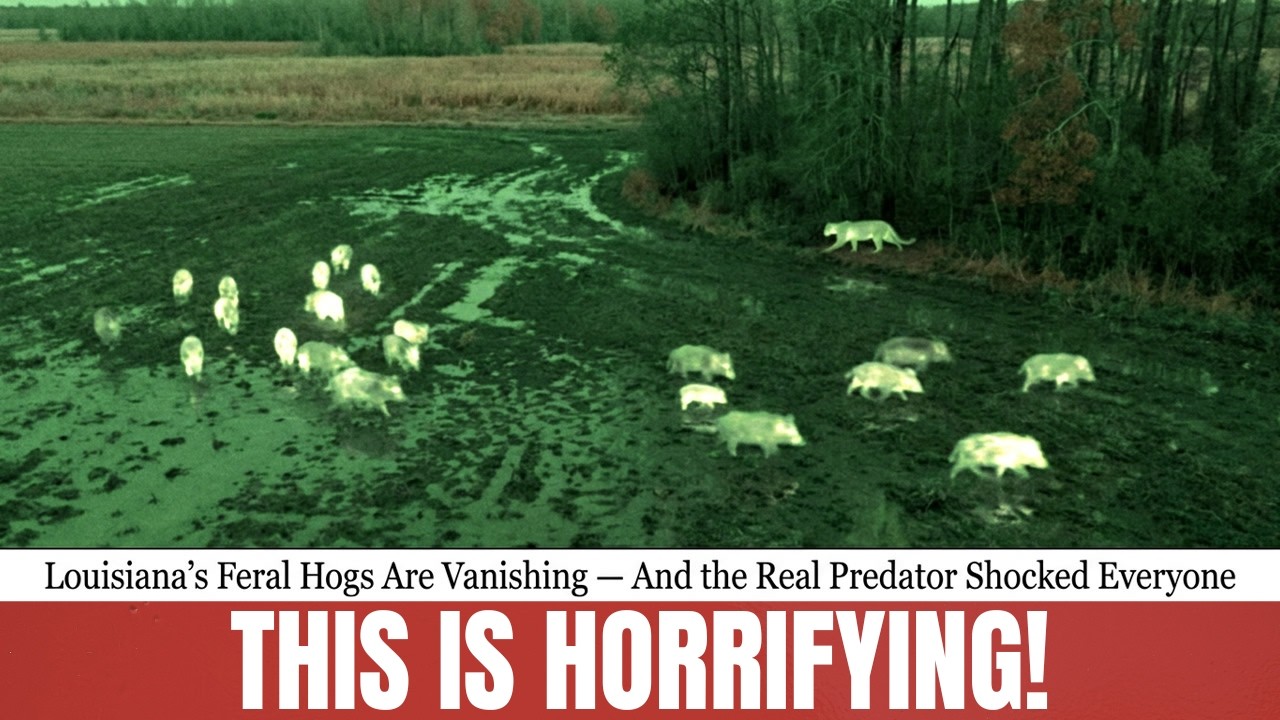
Louisiana’s wild hogs are vanishing—and thermal drones captured a predator that shocked even veteran hunters. At 3 a.m.
At 3 a.m. in Avoyelles Parish, Louisiana, Wade Carion was watching a thermal drone feed over a rice field when...
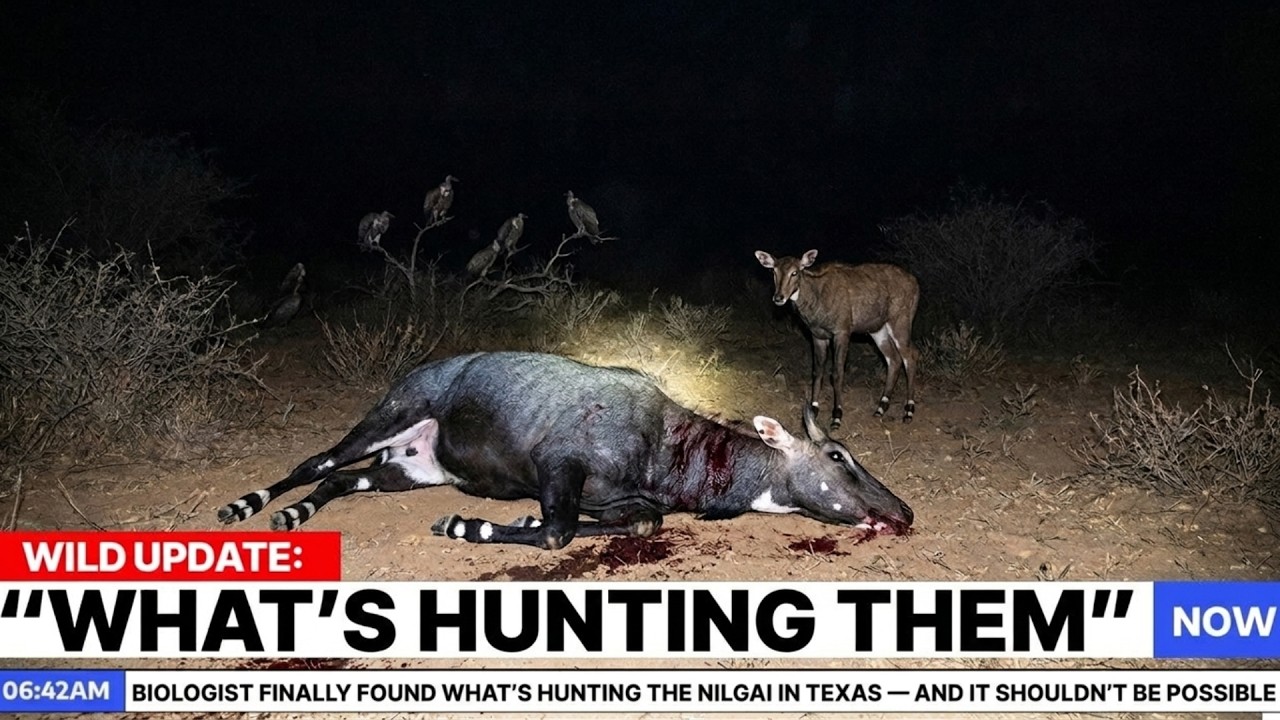
A top predator suddenly stalking Texas nilgai has biologists rethinking everything they knew about the region’s wildlife. The antelope, introduced decades ago, now faces a hunter that shouldn’t logically exist in that ecosystem.
In the brush country of South Texas, researchers have found evidence that mountain lions are killing adult nilgai, a large...