They unleashed cannibal snails to wipe out a pest, but the predators hunted the wrong species. Hawaii introduced the rosy wolf snail in the 1950s after a garden snail threatened crops.
In 1955, Hawaii released a predatory snail, the rosy wolf snail, as a biological control agent. The target was the giant African land snail, which had become a serious agricultural pest after its arrival in the islands in 1936. The wolf snail, which hunts other snails, spread through Hawaii and was later introduced to other islands. Over time, it became one of the most destructive biological control introductions ever made, contributing to the extinction of multiple native island snail species.
The giant African land snail was introduced to Hawaii and quickly became a problem. Its shell can grow to about 20 centimeters long. Because each adult can lay hundreds of eggs per year, populations expanded rapidly. The snail damaged farms and gardens across Oahu, eating a wide variety of plants. It could also carry rat lungworm, a parasite associated with a rare form of meningitis in humans.

Before the arrival of the giant African land snail, Hawaii had a rich diversity of native land snails. Scientists estimate there were roughly 750 species across the islands, most of them found nowhere else on Earth. The tree snails of Oahu, known as Achatinella, were particularly notable for their small shells, which displayed bands of yellow, black, green, white, and brown. In Hawaiian tradition, land snails are called Kahuli, and old stories describe them singing in the trees at night.
These native snails lived slowly. A Hawaiian tree snail could take about five years to reach adulthood and produced only a few live young each year. For millions of years, they evolved on islands with almost no natural predators. That pace of life left them poorly equipped to recover from a sudden new predator.
The rosy wolf snail, native to the southeastern United States, is a specialist hunter of other snails. It can move faster than most snails and follows chemical traces in the slime trails left by its prey. Small snails are swallowed whole, while larger ones are eaten through the opening of their shells. The plan in Hawaii was to use the wolf snail to control the giant African land snail population without relying on pesticides or manual collection.
Hawaii had previously attempted a similar approach with mixed results. In 1883, sugarcane planters imported the small Indian mongoose to control rats. But the mongoose hunted by day while rats were active at night, so the two species rarely met. Instead, the mongoose preyed on ground-nesting birds, contributing to a decline in native bird populations that continues to have consequences today.
The wolf snail spread through the islands, and in some areas, giant African snail numbers fell. Officials at the time treated this as a success. However, research later suggested a more complicated outcome. Feeding experiments in Hawaii found that wolf snails readily ate small native snails, while large adult giant African snails were difficult prey due to their size. A major review of evidence from multiple countries found no convincing proof that the wolf snail had controlled the giant African snail. Populations of the invasive species often rise and fall on their own after an invasion, which may have accounted for the observed decline.
The wolf snail also proved capable of reaching the native tree snails, which lived in the forest canopy. Studies of wolf snail movement in Hawaii found that it climbs trees, following slime trails wherever they led.
The release of the wolf snail was replicated in other parts of the Pacific and Indian Oceans. One of the most documented cases occurred on Moorea in French Polynesia. The island was home to Partula tree snails, a group studied by biologists as a well-known example of evolution. The wolf snail arrived there in 1977, and within about a decade, the native Partula species had vanished from the wild. Some survived only because scientists had collected the last individuals and bred them in facilities far from the island.
The same pattern repeated across other islands. The Gerlach review linked the wolf snail to the extinction of a significant number of island snail species, and it is widely considered one of the most damaging biological control introductions ever made.
Hawaii’s forests contained other pressures on native snails as well. Black rats, introduced by ships, were documented eating snails in large numbers. Later, Jackson’s chameleons, imported from East Africa as pets, also preyed on snails. With only a few young produced each year, native snail populations were worn down gradually over generations.
In January 2019, a tree snail named George died in a laboratory at the University of Hawaii. George was about 14 years old and was the last known individual of the species Achatinella apexfulva. Scientists had searched for a mate for him without success.
The giant African land snail remains present in Hawaii today. The wolf snail also remains in the islands, and Hawaii’s native snails have experienced one of the most severe extinction waves of any animal group on Earth. Many native land snail species are gone, and most surviving populations are limited to small pockets of forest.
The state’s snail extinction prevention program currently works to protect the remaining species. Teams maintain predator-proof enclosures in mountain areas, designed to keep out wolf snails, rats, and chameleons. They search forests for survivors and breed endangered tree snails in laboratories, with the aim of returning them to safer habitats in the future.
The wolf snail introduction in 1955 did not eliminate the giant African land snail. It did, however, have a lasting impact on Hawaii’s native snail populations, contributing to the loss of many species that existed nowhere else.
Recommended Stories
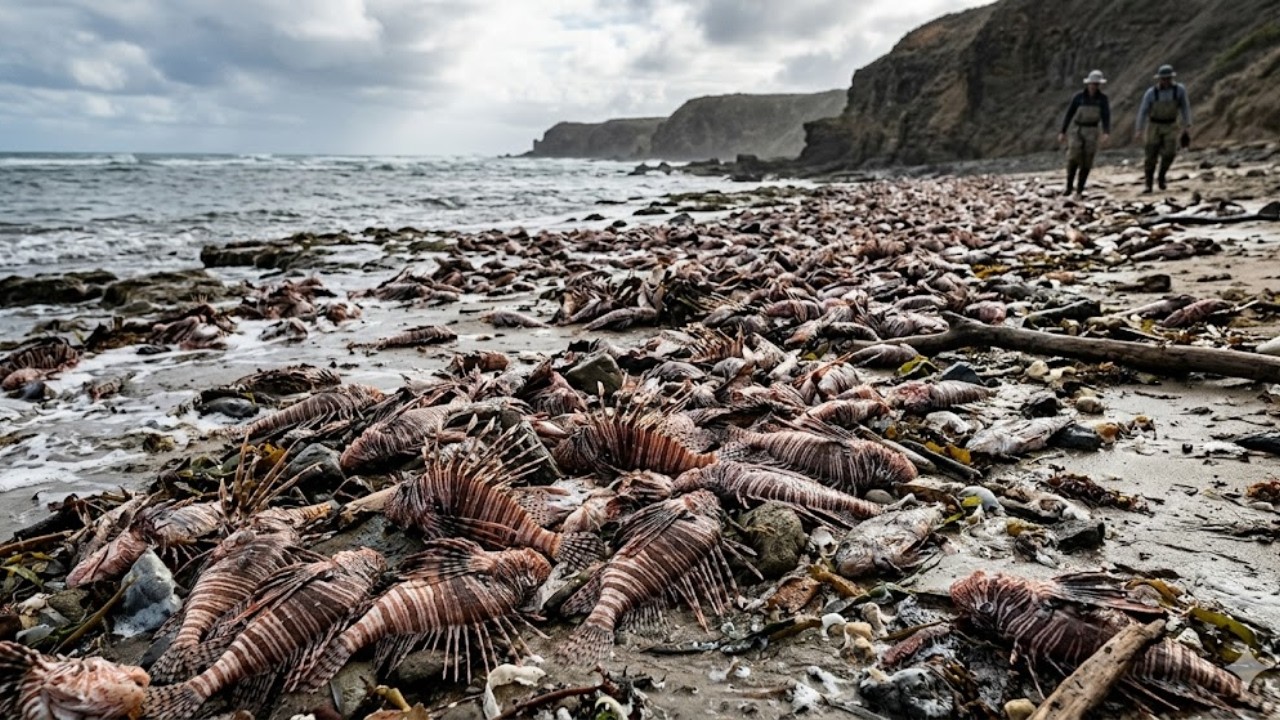
Scientists are baffled—lionfish, the invasive species that overran Florida reefs, are vanishing. Native predators weren’t supposed to touch them; their venomous spines made them almost untouchable.
Between the mid-1980s and the late 2000s, lionfish, a venomous species native to the Indo-Pacific, established themselves across the Atlantic...
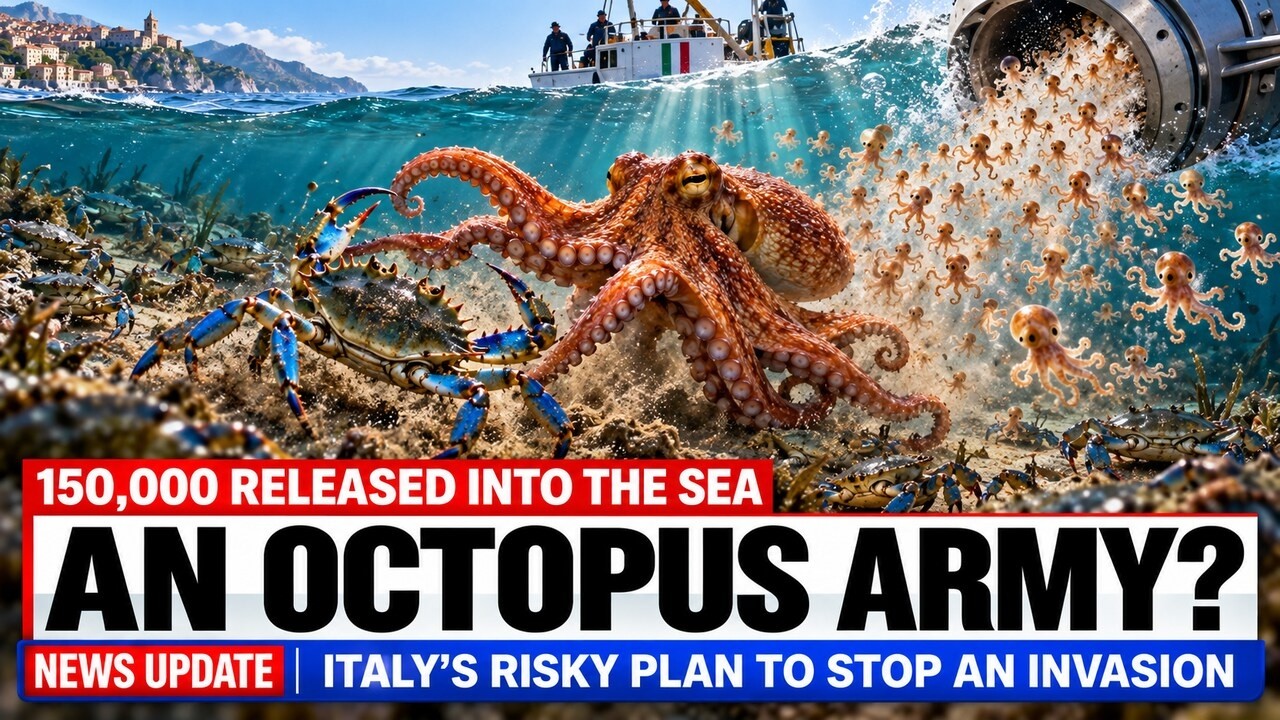
Italy just released a staggering 150,000 predators into the Mediterranean, and the sheer scale of that single decision is already sending shockwaves through the region’s delicate marine ecosystem. The massive release, intended to tackle a growing environmental crisis, was meant to restore a natural balance.
Italy has taken an unusual step in its fight against an invasive species: it is releasing roughly 150,000 laboratory-raised octopuses...
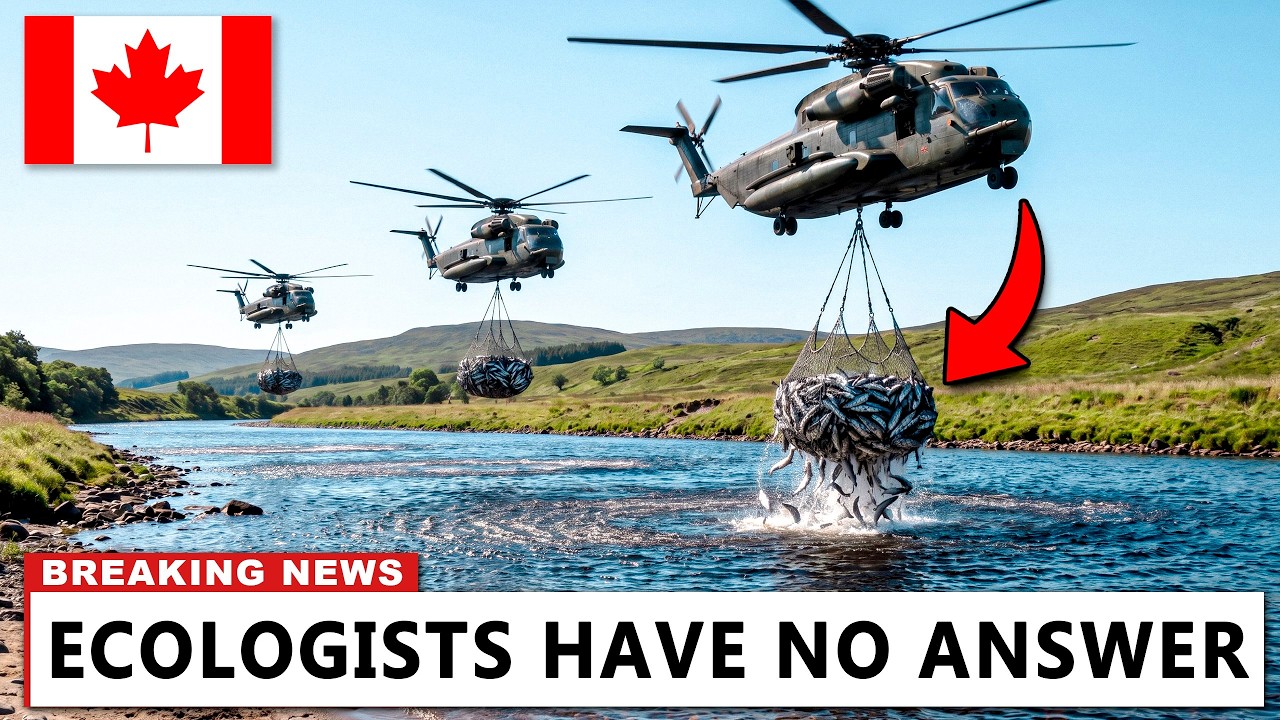
Canada airlifted 13,000 salmon into a dead river, and two years later, scientists were stunned by what they found. The fish were dumped into a body of water devoid of life, a last-ditch effort to restore a collapsing ecosystem that had left local communities devastated.
In 2016, a helicopter carried dozens of Atlantic salmon in water tanks over the upper Salmon River in New Brunswick....