Alaska’s version of Jaws is real—and it’s far bigger than anyone imagined. A massive, elusive predator has been terrorizing remote coastal waters, leaving local fishermen baffled and communities on edge.
Lake Iliamna is the largest lake in Alaska, a remote body of fresh water roughly 80 miles long and 25 miles wide. Its shoreline is largely unpopulated, and no roads lead directly to it. Despite its quiet appearance, the lake has been the subject of local stories for generations. People who live nearby describe unusual events on the water, including damaged nets, unexplained boat damage, and large shapes moving beneath the surface.
The lake is connected to the sea through the Kvichak River, which flows into Bristol Bay and the Bering Sea. This connection allows marine animals to enter the lake. Seals and beluga whales have been observed in Iliamna, which is unusual for a body of water so far inland. The lake is also deep, with sections dropping more than 1,000 feet. A layer of warmer water sits above colder, denser water, and visibility drops sharply below that boundary. These conditions make it difficult to see what lives beneath the surface.
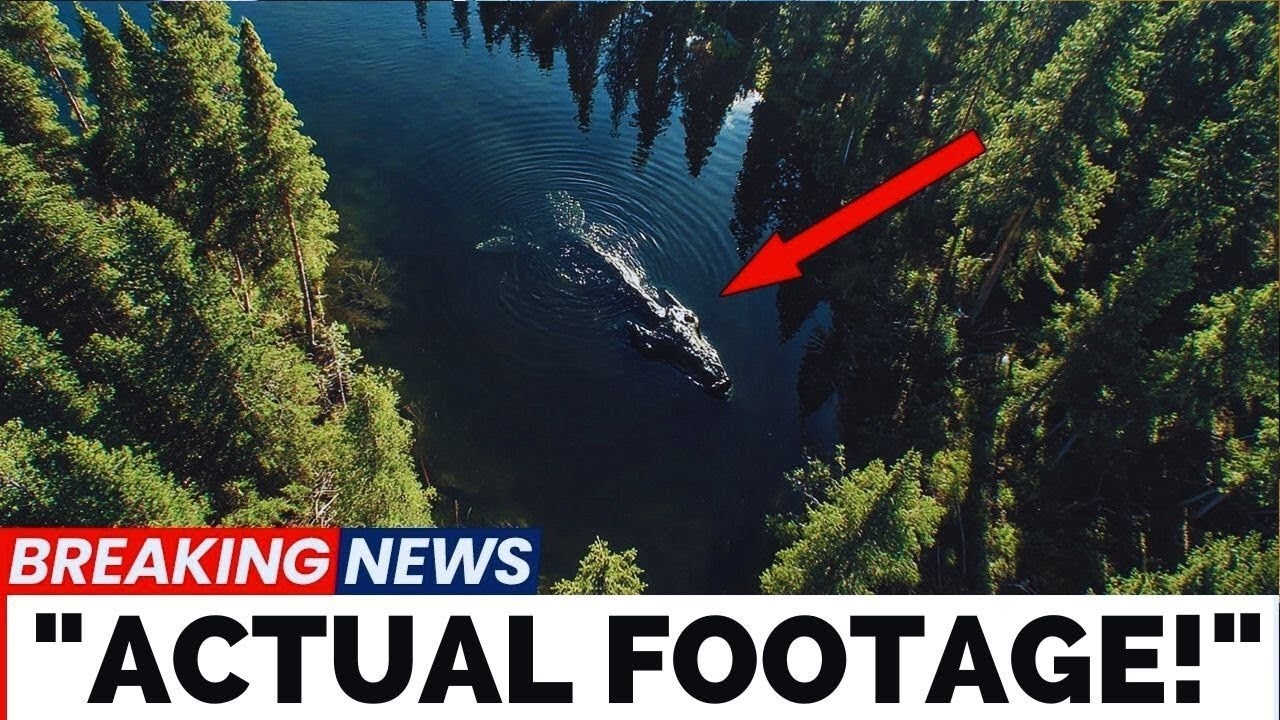
Indigenous communities in the region have long passed down warnings about large animals in the lake. Athabaskan stories describe a creature called Ganicodite, said to be powerful enough to capsize canoes. Alutiiq traditions mention Jignook, animals that reportedly hunted in groups and attacked boats from below. These accounts described long animals with pointed fins and metal-like coloring. Similar descriptions appear in reports from Russian fur traders who arrived in the area in the 18th century. Their journals mention boats being struck from below and crew members lost overboard.
One of the most commonly cited modern sightings occurred in 1942. Bush pilot Babe Ellsworth was flying over the lake with Bill Hammersley, a government wildlife agent. Ellsworth reported seeing more than a dozen large animals moving in a line beneath the plane. He compared their length to the aircraft’s wingspan and described their backs as shining in the sunlight. Hammersley corroborated the account. The report attracted attention outside Alaska, including from Tom Slick, a businessman known for funding expeditions to investigate unexplained animals. Slick’s teams interviewed residents and attempted to gather evidence, but no conclusive proof was found.
Further sightings were reported over the following decades. In 1977, pilot Tim LaPorte said he and a companion saw large shapes break the surface. In 1988, a group of 17 people reported watching several large animals moving together in the water. In 1979, the Anchorage Daily News offered a $100,000 reward for solid evidence of a creature in the lake. The resulting search included sonar sweeps, underwater microphones, and submarine dives. Some sonar readings suggested large moving objects, and hydrophones picked up sounds that did not match known fish species. No clear evidence was obtained.
In recent years, researchers have proposed possible explanations for the sightings. Biologist Bruce Wright suggested that sleeper sharks, which can grow longer than 20 feet and tolerate cold water, might enter the lake from the sea through the Kvichak River. This theory accounts for some large sightings but does not easily explain reports of animals 30 to 60 feet long observed swimming in coordinated groups.
Environmental DNA sampling has detected fish and seals in the lake, along with genetic sequences that do not match known species. Thermal imaging from aircraft has registered large heat signals near the surface, and seismic instruments have recorded rhythmic disturbances in the water. None of this evidence has produced a confirmed identification.
The lake has also been compared to other bodies of water with similar legends, including Loch Ness in Scotland, Lake Okanagan in Canada, and Lake Champlain in the northeastern United States. These locations share a pattern of reported large aquatic animals and long histories of local stories.
Lake Iliamna differs from many of these sites in the volume of eyewitness reports from pilots, government officials, and large groups of people, as well as the physical damage to fishing equipment that has been described. It also sits in a remote location with limited human activity, which would make it easier for a large animal population to remain undetected.
The question of what, if anything, lives in the lake remains unresolved. Researchers continue to study the area using new tools, and there is no scientific consensus on the source of the reported sightings. Some evidence supports the presence of large animals in the water, but no specimen, photograph, or other proof has been recovered. The lake’s depth, its connection to the sea, and the limited visibility below the surface mean that a definitive answer may take further investigation.
Recommended Stories
Scientists read the Tasmanian tiger’s DNA and uncovered a warning that arrived far too late. The extinct thylacine’s genetic code revealed a devastating pattern of decline hidden deep inside its last specimens.
In October 1966, two cave explorers descended into a narrow sinkhole on the Nullarbor Plain, near Eucla on the western...

Italy Released 150,000 Predators Into the Mediterranean — Then Everything Changed. Authorities quietly introduced a massive wave of marine hunters into the sea, sparking fears that local ecosystems could collapse overnight.
Italy has been dealing with an invasive species problem in the northern Adriatic for several years. The blue crab, native...

They released 5,000 bison into a Texas desert—years later, their jaws dropped. The massive herd was meant to restore a dying ecosystem, but the vast scrubland offered little of what the animals needed.
In 2019, a herd of approximately 5,000 bison was released onto 150,000 acres of degraded ranchland in Texas. Two years...