A single 40-pound rodent reverse-engineered Britain’s failing flood defenses, beating millions in concrete. After 400 years of extinction, beavers quietly reappeared in Devon, while officials planned to trap and kil*** them over biosecurity fears.
In the winter of 2015, flooding caused an estimated 1.6 billion pounds in damage across England. The government’s response focused on conventional engineering: taller walls, deeper channels, and faster drainage. However, in Devon, a different approach was already being tested by a 20-kilogram rodent, the Eurasian beaver, a species that had been extinct in Britain for 400 years.
In 2014, officials planned to trap and kill beavers that had appeared on the River Otter, citing biosecurity risks. That decision was reversed eight years later, when the government granted them protected status. The reversal came after years of scientific trials demonstrated that beavers were performing flood mitigation work more effectively and cheaply than the concrete infrastructure the government had proposed elsewhere.
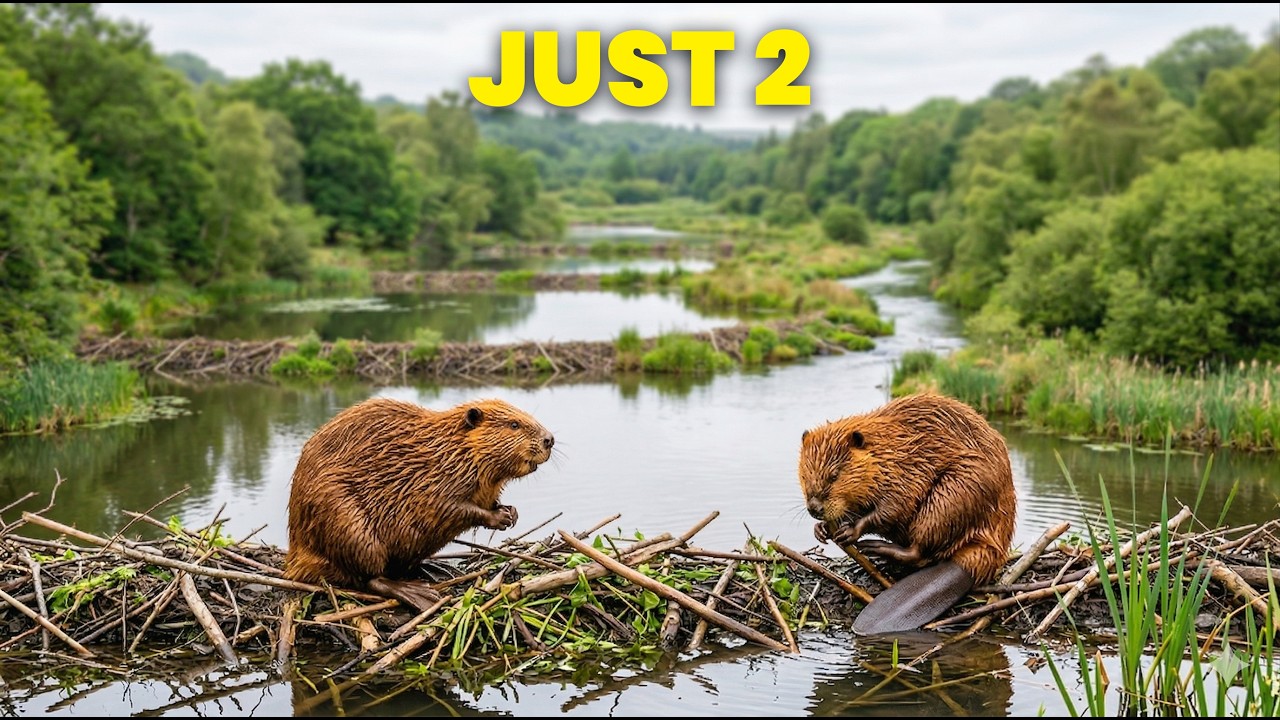
The town of Pickering in North Yorkshire offered a direct comparison between these two approaches. After severe flooding in 2007, the Environment Agency proposed a 20 million-pound concrete flood wall through the town center. The Treasury rejected the plan because the cost-benefit analysis did not justify the expense. With no structural defenses, the town was left with a high risk of future flooding.
Instead of concrete, the town implemented a project called Slowing the Flow. It involved installing 167 woody dams and 187 heather bale dams across the upper catchment to hold water back naturally. Some of these structures were later damaged in floods, but the beavers that also colonized the area built their own dam, which proved more resilient and self-maintaining.
During the severe Boxing Day floods of 2015, the combined natural measures reduced the flood peak by 15 to 20 percent. Properties that had flooded in earlier events stayed dry, and the annual probability of flooding dropped from 25 percent to less than 4 percent. The entire scheme cost roughly 2 million pounds, about one-tenth of the proposed concrete wall, and delivered a benefit-cost ratio of 5.6 to 1, far higher than the concrete alternative.
The scientific basis for this approach was established through the River Otter Beaver Trial in Devon. After the government reversed its eradication order, the Devon Wildlife Trust ran a five-year study on a wild beaver population. Researchers from the University of Exeter monitored over 1,000 storm events in the watershed. They found that peak flows leaving beaver-modified sites were, on average, 30 percent lower than the flows entering them. During extreme storms, that reduction reached 60 percent.
The beavers’ dams work differently from concrete flood barriers. Rather than blocking water outright, they are semi-porous, capturing water in ponds and forcing it to slow down and spread across the floodplain. This delay is significant: water that might have reached a town in two hours now took three. That extra hour can be the difference between a manageable river level and an overwhelmed defense system.
Beyond flood mitigation, the beavers improved water quality and increased biodiversity. In a territory of just 1.8 hectares, 13 ponds captured over 100 tons of sediment, including 15 tons of carbon. Nitrogen and phosphorus from agricultural runoff filtered out of the water as it passed through the ponds. Water leaving a beaver site contained three times less sediment than water entering it.
In Cropton Forest above Pickering, the biological impact was equally noticeable. Before the beavers arrived in 2019, researchers found six clumps of frog spawn. One season later, the number was uncountable. Fish abundance in beaver pools measured 37 percent higher than in untreated sections of stream. Kingfishers and otters returned to the area.
The reintroduction efforts were not entirely smooth. On five sites along the River Otter, beaver activity caused waterlogging of agricultural drainage systems, and one organic potato farmer lost part of a crop to elevated water levels. In Scotland, some unlicensed releases without adequate community engagement led to local opposition and culling. These examples highlighted that the beavers’ success depended on cooperation between scientists, local residents, and policymakers.
By 2019, a majority of the British public supported beaver reintroduction. By 2020, the River Otter population had grown to 13 territories. Four of those territories alone stored more than 24 million liters of water, roughly the equivalent of 10 Olympic swimming pools.
In October 2022, the UK government granted beavers full protected species status in England, making it a criminal offense to harm them. The same species that officials once proposed to exterminate became a legally protected part of the national strategy for climate resilience. The government has since committed 10.5 billion pounds to flood defenses through 2036, with nature-based solutions now central to that plan.
The final scientific report on the River Otter Beaver Trial concluded that the ecosystem services and social benefits of the beavers outweighed the financial costs. The trial demonstrated that a small animal, a pile of sticks, and a network of ponds could provide flood defense at a fraction of the cost of conventional engineering, while also improving water quality and supporting wildlife.
Recommended Stories

Australia finally found a way to stop feral cats — and it’s changing everything they know about predator control. For decades, these invasive hunters have devastated native wildlife, pushing countless species toward extinction with no effective solution in sight.
Feral cats have been a major factor in the decline of native Australian wildlife since they were introduced to the...
A swamp full of hungry predators and giant pythons had Florida scientists desperate for a solution. For years, invasive Burmese pythons wiped out native wildlife across the Everglades, and typical removal methods simply could not keep pace.
Burmese pythons in Florida can swallow an adult deer whole. The snakes have severely reduced raccoon, rabbit, and fox populations...
A decades-long Loch Ness investigation claims the mystery has finally been decoded, and the experts’ conclusion is shocking: they say the monster is real. After years of sonar scans, underwater cameras, and water samples, researchers believe a massive creature genuinely inhabits the deep, dark loch.
No scientific organization has confirmed the existence of a creature in Loch Ness, and decades of searches have produced no...