In 2023, only six beavers remained in a Colorado valley that once held 630. That valley feeds the Colorado River, the water source for roughly 40 million people.
In 1940, 630 beavers lived in the Kawuneeche Valley in Colorado’s Rocky Mountain National Park. By 2023, only six remained. Willow stands had thinned, wetlands had dried, and roughly 90 percent of the valley’s surface water was gone. The valley sits at the headwaters of the Colorado River, which provides drinking water for about 40 million people along its 1,450-mile course through the American West. Ecologists had begun referring to the area as a willow graveyard.
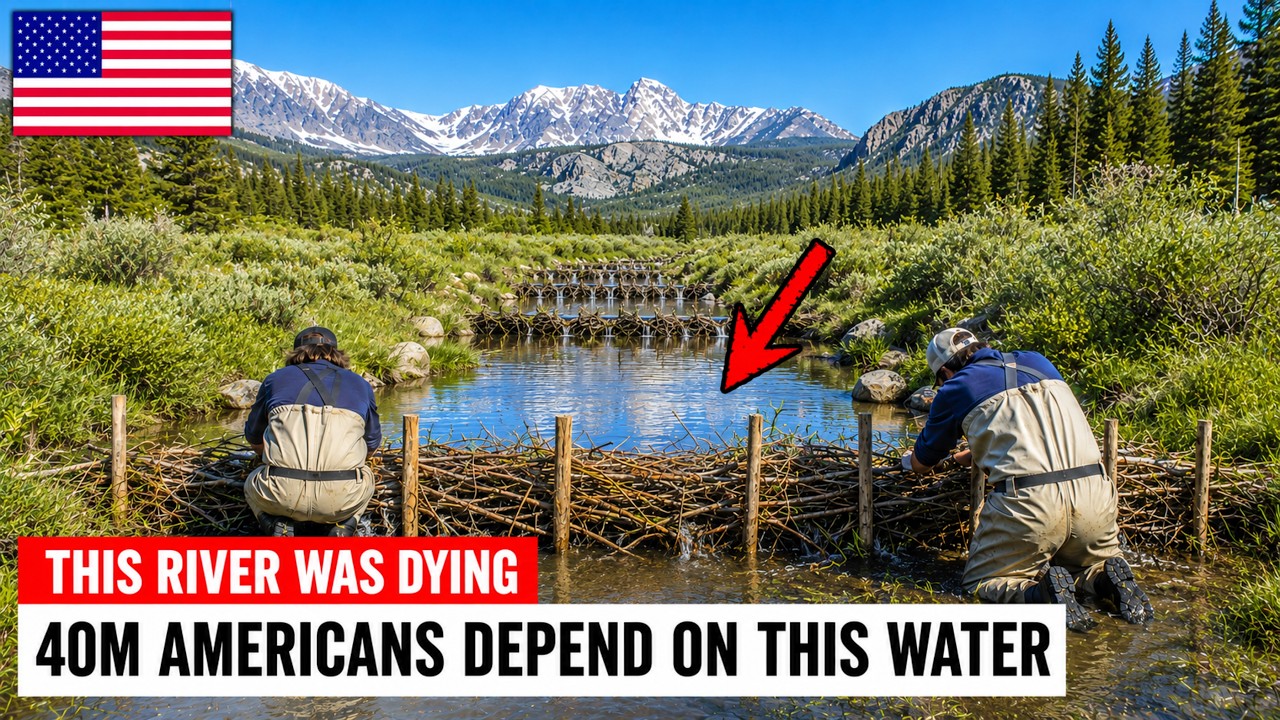
In 2024, a small team of scientists entered a dying section of the valley, about two hours northwest of Denver, carrying wooden posts, willow branches, and buckets of river stone. They built 29 structures by hand, with no concrete or steel. The structures were temporary, leaky dams built the way a beaver would build them.
For more than a century, the American West treated beavers as pests. Within this same valley, a homestead established by the Holzwarth family in 1917 still stands as a National Historic Site. A son who inherited the family’s trap line once boasted of catching 28 beavers in 31 days. That was considered normal livelihood at the time. In the 1940s, the National Park Service hired trappers who killed more than 200 beavers here between 1941 and 1949, describing them as pests.
Initially, scientists predicted recovery would take a decade or longer, with modest gains in vegetation and water retention. But when hydrologists returned in the summer of 2025, they found changes their computer models had not anticipated. Groundwater rose within a single growing season. Aquatic insects that require clean, cold, oxygen-rich water reappeared downstream. By spring 2025, water accumulating behind the structures had flooded an area roughly the size of one and a half football fields, resembling conditions from 1940.
The question became why an 80-year decline appeared to reverse in 18 months.
The valley is a 15-mile stretch of mountain meadows between the Never Summer and Front Range mountains. For most of the past 10,000 years, it was not a meadow at all but a connected wetland, with beaver dams running the length of the valley and dense willow thickets. In 1913, naturalist Enos Mills, whose advocacy helped establish the park, described the beaver as a primary conservationist. His description was not poetic metaphor; the beavers had built the valley’s ecosystem.
Its collapse followed three decisions made over a century by three different groups, none of whom intended to destroy anything.
The first decision was a ditch. Between 1890 and 1936, a private irrigation company called the Water Supply and Storage Company dug a 14.3-mile channel along the mountainside. The Grand Ditch still operates today, diverting water from the western side of the Continental Divide to farms on the eastern side, averaging about 20,000 acre-feet annually and sometimes capturing up to 40 percent of snowmelt from the Never Summer range. Under Colorado water law, senior rights are protected like property deeds. The park cannot close or reduce the ditch, and the water is not wasted; it irrigates roughly 40,000 acres of farmland in Weld and Larimer Counties, crops that feed people who may never visit the park’s western slope.
The second decision came from the park agency itself. The Holzwarths were private trappers, but the National Park Service also classified beavers as pests in the 1940s, citing tree damage and flooded roads. Blood tests conducted years later on surviving beavers found no disease. Trapping continued for a decade.
The third decision involved 12 moose. In 1978, Colorado wildlife managers, seeking hunting opportunities and road-based tourism, relocated 12 moose from Utah to mountains just west of the park. In 1979 they brought 12 more from Wyoming. Moose eat willow, which makes up about 90 percent of their summer diet. A single adult moose can consume up to 50 pounds per day, roughly equal to what 15 elk consume. The park has no wolves, no grizzly bears, and no hunting. By 2025, an estimated 240 moose lived inside the park. The moose are not at fault; they behave according to their biology. What is missing is any predator to keep their numbers in check.
The willow, already stressed by a century of the Grand Ditch, could not withstand the pressure. Once willows declined, the system unraveled. Beavers starved and stopped building dams. The stream cut a deeper channel, lowering the water table beneath the meadow, killing more willows. Ecologists call this state hysteresis, meaning a system so degraded that fixing the original cause is no longer sufficient.
David Cooper observed the change firsthand. He arrived in 1987 and walked into a wetland where willows stood taller than his head. He returned the next year, and the year after that. He began photographing the same location in 1994 and has continued since then. The standard approach to beaver restoration was straightforward: bring in healthy beavers from another river, let them build, and step back. Cooper did not believe that would work here. The calculation was simple: beavers need willows for food and construction. In a valley where more than three-quarters of tall willows had been lost, relocating 10 beavers would likely mean starvation by winter or a return downstream where food existed. What remained of the willow, ecologist Isabelle de Silva described as zombie willow, grazed season after season by moose, able to grow only a few inches above ground.
The obvious solution, reintroducing the animal, was the wrong one because the habitat had failed first. Jeremy Shaw, Cooper’s colleague at Colorado State University, said the situation had degraded so far that beavers could no longer do the work themselves. The idea was to work in reverse: build the dams beavers would have built, using the same materials, then wait for water to pool, sediment to settle, and willows behind fences to grow tall enough to support a beaver colony. Only then, if beavers returned on their own, could the valley sustain them.
Funding for this thesis was slow. Then, on May 30, 2003, the mountain delivered a related crisis. Two miles south of La Poudre Pass, the Grand Ditch broke. Water poured through the breach, carrying 47,600 cubic yards of rock, mud, and timber into Lulu Creek and the headwaters of the Colorado River. An estimated 20,000 trees were lost, and 22 acres of hillside were scoured to bedrock. The Justice Department sued the Water Supply and Storage Company. The case settled in 2008 for $9 million, the largest natural resource damages award in the history of the Park System Resource Protection Act. Cooper testified as an expert witness for the government. The settlement covered the damage from that single day. A century of quieter damage to willows, beavers, and groundwater went unaddressed. The legal system penalized the loud failure but could not see the slow one.
In 2020, eight organizations signed an agreement to attempt restoration: Colorado State University, the National Park Service, The Nature Conservancy, Northern Water, the U.S. Forest Service, Grand County, the Town of Grand Lake, and the Rocky Mountain Conservation Society. Together they formed the Kawuneeche Valley Restoration Collaborative. Initial funding reached $5 million, with a final budget near $20 million across four sites: Beaver Creek, Upper Baker Creek, Lower Baker Creek, and Onahu Creek.
The technique they selected is called low-tech process-based restoration, or LTPBR, developed by hydrologists at Utah State University. In practice, it resembles a construction crew using hand tools. On a Saturday morning at Beaver Creek, eight people stand in a shallow, winding stream. One drives a wooden post into the gravel with a mallet. Another weaves willow branches between posts. A third stacks river stones at the base. The finished structure spans the creek at about 15 feet wide. It is not sealed or welded but designed to leak, to shift, and to be rebuilt later by animals. Its formal name is a beaver dam analog, or BDA. There are now 29 of them in one section of Beaver Creek. Around that section, a fence encloses about 35 acres, tall enough that moose cannot jump it. Cooper was direct about this: without the fence, everything they rebuilt would disappear within one season.
The obvious question is why not remove the moose instead. Most of the herd lives inside a park where hunting is prohibited. In 2026, a study led by William Taylor at the University of Colorado Boulder found evidence that moose may have lived in Colorado for thousands of years before European settlement, meaning the 1970s relocations may have been an unintentional reintroduction of an animal without any of its historical predators.
Funding has trickled in: $216,700 from Colorado Parks and Wildlife in 2023, $300,000 from the National Park Foundation in 2025 for 6,000 feet of new fencing at Onahu Creek, and a total of about $20 million to imitate a rodent, to build what beavers once did for free.
No one is currently planning to truck beavers into Kawuneeche Valley, not now, not within five years, perhaps never. The team is betting that beavers will find the valley on their own once willows inside the fences grow tall enough. Four acres of mature willow, according to Cooper’s general rule, can feed a colony indefinitely. But only about six beavers remain in the entire Colorado River basin within this park. The habitat must be ready when they eventually arrive.
Scientists expected recovery to take a decade or longer. They were wrong. Within one growing season, the water table under Beaver Creek began to rise. Within 18 months, aquatic invertebrates that live only in clean, cold, oxygen-rich water appeared in samples collected downstream. Canada thistle, one of the most aggressive weeds in the American West, began retreating before native sedges. In spring 2025, water behind the BDAs accumulated enough to flood an area the size of one and a half football fields, resembling 1940 conditions. De Silva, the ecologist leading monitoring, said she expected vegetation recovery to take longer, but it was nearly immediate after the first season. She described the first year as about 90 percent successful.
What has not returned is any vertebrate life. There are no fish yet; the streams are still too small. If beavers do not return on their own, the collaborative could eventually adopt the approach used at Birch Creek in Idaho, relocating a small colony into prepared habitat. But Cooper’s stated preference has always been patience.
Standing on the creek bank, one can see two possible futures at once. Inside the 35 protected acres, willow height has increased by up to 500 percent since the fence went up. Outside the fence, along the same creek, willows remain less than a quarter of their height from the 1990s. Same soil, same water, same climate. The only variable is who is allowed to eat.
Cooper has taken 37 photographs of the same scene: 1994, 1999, 2005, 2010, 2015, 2021, and so on, covering 27 years of patient documentation. In the first photo, willows were so dense they formed a wall of green, hiding the water entirely. In the last, the water is visible because nothing remains to hide it. The willows had collapsed into a low gray mat of grazed trunks, and the stream had cut a raw channel through what was once a natural sponge. Cooper published the photo series in Conservation Biology in 2025 with the numbers he had spent decades collecting: 94 percent of beaver pond surface area lost since 1953, 77 percent of tall willows lost since 1999. Asked what he sees in his own photographs, he told the National Park Conservation Association that it was a horror film for an ecologist.
On the collaborative’s website, two aerial photos show the same section of Beaver Creek. The 2023 photo shows a single sharp stream channel. The 2025 photo shows a silvery, braided sheet of water spreading laterally into the meadow. In two years, the shape of the water changed more than it had in the previous four decades.
But one thing the photos do not show: after two years, no new beaver colony has been reported inside the fence. Given how much height the willow still needs, and Cooper’s rule of four acres of mature willow per colony, the site likely needs at least a decade before it can host a family of engineers. The scientists are not restoring the beaver community. They are setting the table and waiting for guests.
The next site is Onahu Creek, with 6,000 more feet of fencing and 35 additional fenced acres. But two things the collaborative cannot fix remain. The Grand Ditch is still owned by the same private company and still holds a legal right to 20,000 acre-feet of water per year. Even if every restoration site succeeds, this valley will not be as wet as it was in 1889. The moose remain as well; one wolf arrived in the park on its own in 2023, but a single wolf cannot control a population of 240 moose, so the fences will likely stand for as long as anyone alive today can imagine.
There is also the river itself. What the collaborative is rebuilding is only 35 acres. The Colorado River runs 1,450 miles and is asked to carry more water than the sky provides. Since 2000, the American Southwest has been in a megadrought unmatched in more than 1,200 years of tree-ring records. A 2022 study in Nature Climate Change estimated that about 42 percent of the soil moisture deficit is attributable to human-caused warming. Brad Udall, a water climate scientist at Colorado State University, has said the river’s laws were written for a river that no longer exists.
What is happening at Beaver Creek is a proof of concept, not a rescue. The lesson is quiet: beavers did not disappear on their own. Their food, tools, and predators were removed in sequence over 80 years. Reversing that requires more humility than simply reintroducing wolves. Sometimes the most powerful restoration tool is not a wolf or a dam. Sometimes it is a fence, a stick, and a commitment to stay there for another 40 years.
Recommended Stories
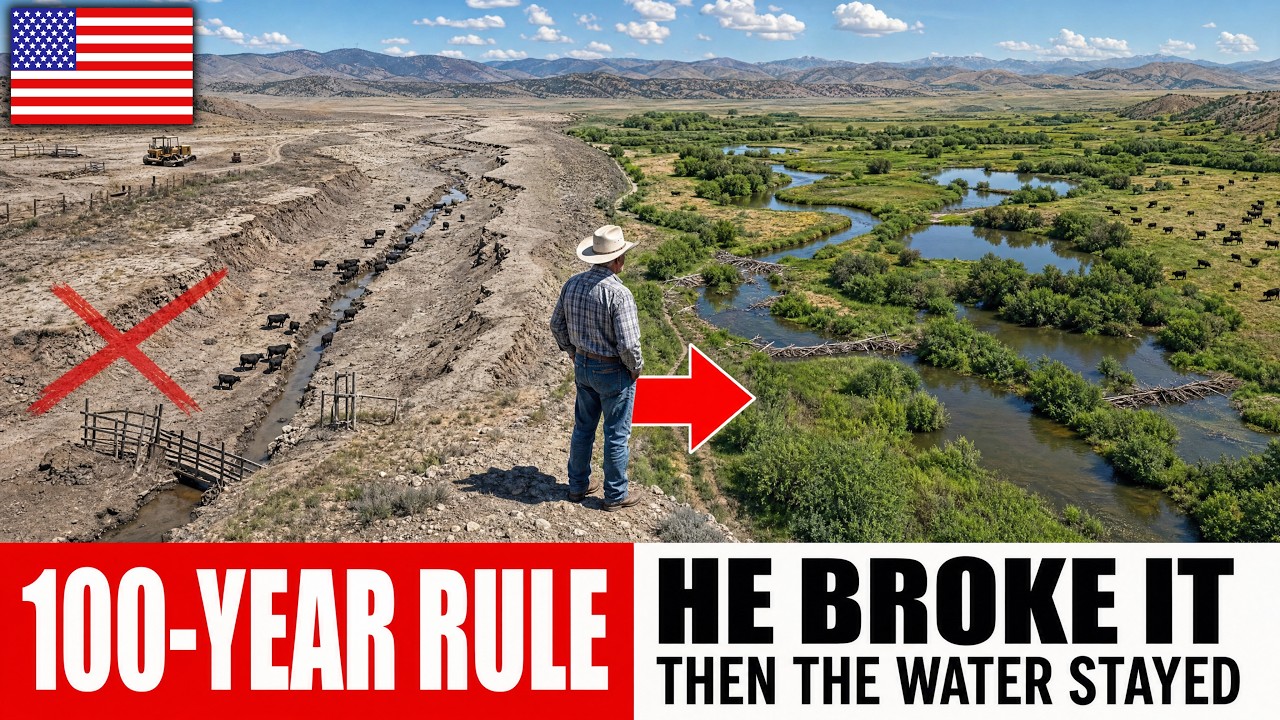
For a century, the Smith family ranch had one ironclad rule: beavers were the enemy, and the patriarch once walked the ditches with dynamite to blow up their dams. His son A.J.
Around a hundred years ago, the rule at this family ranch in the high desert of northeastern Nevada was absolute:...
The monster shark lurking off Alaska’s coast turned out to be far bigger than anyone expected. Marine researchers tracking the apex predator initially estimated its size from brief surface sightings, but new measurements revealed a shocking discrepancy.
The question of what swims in the deep waters of Lake Iliamna, Alaska's largest lake, has persisted for centuries. The...
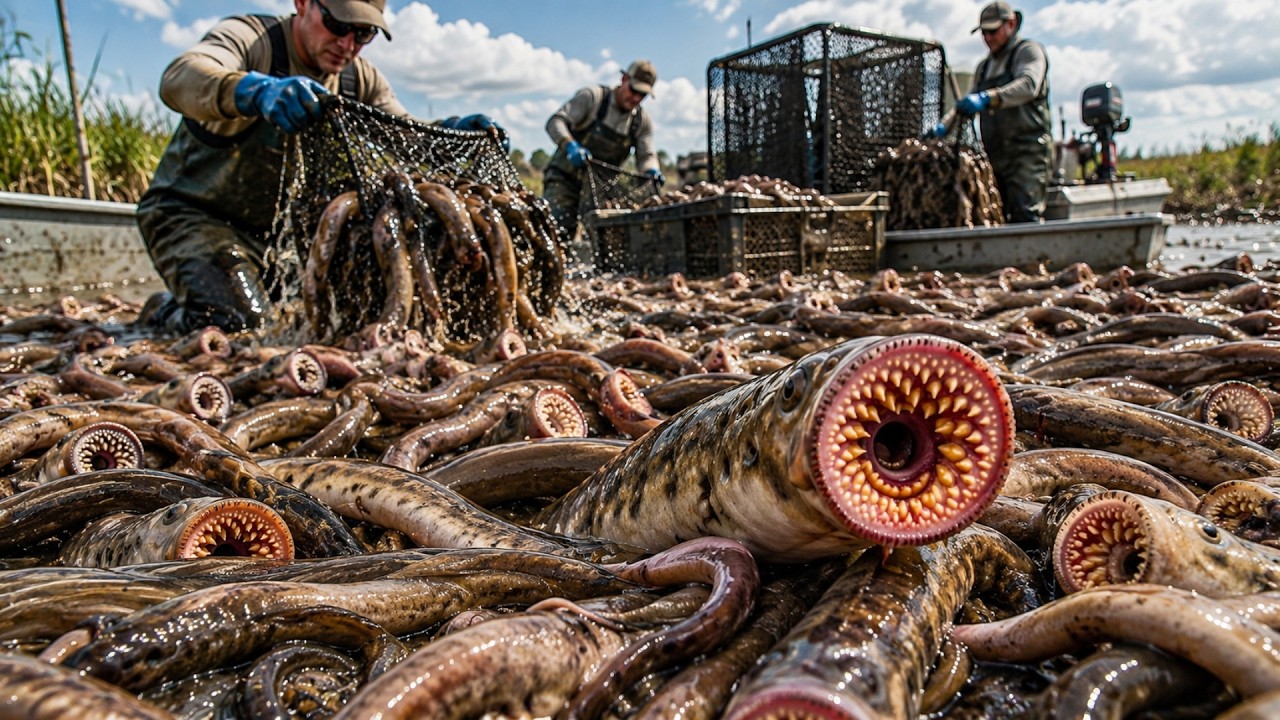
Scientists sounded the alarm about a new Florida invader that experts say could outmatch the state’s infamous python problem. The species, documented across the Everglades’ fragile ecosystem, is reproducing at an alarming rate, and researchers admit its presence defies prior biological expectations.
Florida’s invasive species list includes the well-known Burmese python, but wildlife researchers say a less visible animal may now be...