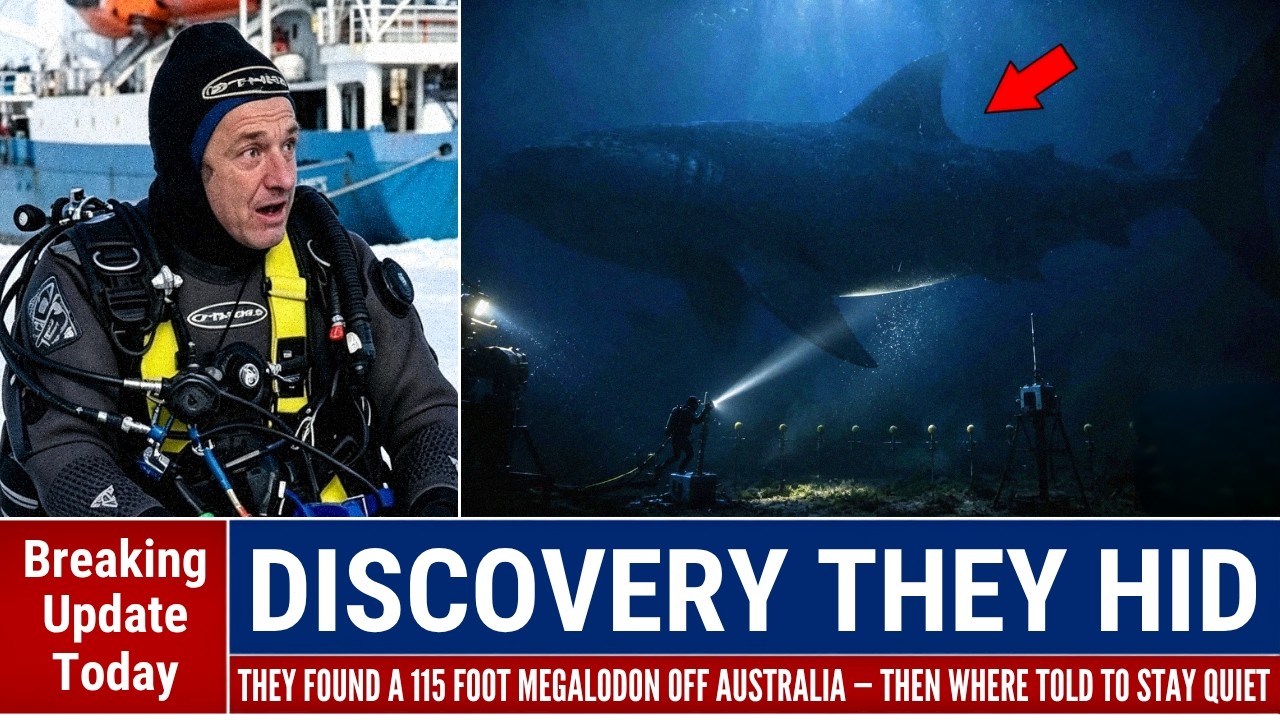
A 115-foot Megalodon captured off Australia’s coast, then silenced—except the real science tells a very different story. No complete skeleton exists, and every published size estimate comes from teeth or vertebrae alone, so researchers rebuilt the extinct shark’s proportions using data from 170 other species in 2025.
Every published estimate of Megalodon’s size has been built from teeth and scattered vertebrae. No complete skeleton has ever been found, because shark skeletons are made of cartilage, which rarely survives long enough to fossilize. In 2025, a team of researchers rebuilt Megalodon’s possible shape using proportions from 170 other shark species, and the result differed from the long-standing image of a scaled-up great white shark.
Australia has produced some of the richest fossil shark records on Earth, and none of the relevant discoveries were kept secret. Beaumaris Bay, about 30 kilometers from Melbourne, is considered the country’s richest marine fossil site, preserving roughly 5 to 10 million years of ancient sea life along a two-kilometer stretch of shore. Researchers working with Museums Victoria have documented teeth from at least 20 shark species there, including confirmed Megalodon teeth, alongside dugong bones, seabird fossils, and land mammal remains washed out to sea by an ancestral version of the Yarra River. The mix of land and marine fossils in the same rock layers has made the site important for dating the evolution of Australia’s marsupial wildlife.
Museums Victoria publishes a free identification handbook for amateur fossil hunters at the site and encourages visitors to bring unusual finds to museum staff. That openness produced a notable discovery in 2015, when school teacher Philip Mullaly spotted a partial tooth inside a boulder along Victoria’s Great Ocean Road. Mullaly reported it to Museums Victoria, and senior curator Erich Fitzgerald confirmed the teeth belonged to Carcharocles angustidens, an extinct shark that grew past nine meters and hunted small whales and penguins roughly 25 million years ago. Fitzgerald described the find as internationally significant, since multiple associated teeth from a single individual are rare. The teeth were donated to the Melbourne Museum for public display.
Sharks do not have bony skeletons. Their structure is built from cartilage, which breaks down after death, leaving only teeth and occasionally vertebrae dense enough to calcify and preserve. Every Megalodon size estimate ever published has therefore been based on partial evidence, either teeth compared against related living sharks or vertebrae compared against other species. No scientist has ever measured a complete skeleton, because none exists.
Much of the public image of Megalodon traces back to a single museum exhibit built more than a century ago. In 1909, the American Museum of Natural History in New York constructed a large reconstructed Megalodon jaw using genuine fossil teeth arranged into a frame scaled up from the jaw proportions of a modern great white shark. The reconstruction was never claimed to be a real fossilized jaw. It was built because researchers needed a physical way to display the teeth they had, using the best comparative model available at the time. That exhibit shaped popular assumptions for decades, but later research would challenge the idea that Megalodon simply resembled an enlarged great white.
For most of the 20th century, researchers estimated Megalodon size by comparing fossil tooth height against the known body length of modern great white sharks. A widely cited 2019 study by paleontologist Kenshu Shimada proposed a maximum length between 15 and 18 meters, based on the largest confirmed teeth available. A separate 2021 study led by Victor Perez, analyzing a nearly complete set of teeth from a single individual, produced broadly similar figures. These tooth-based estimates became the standard figures cited in documentaries, textbooks, and museum exhibits. Even at the upper end, they never approached anything close to 115 feet.
A significant shift came from vertebral evidence. In 1978, paleontologists excavating the Gram Clay Pits in Denmark recovered roughly 20 vertebrae from a single Megalodon individual, including one specimen measuring 23 centimeters across, the largest confirmed Megalodon vertebra ever documented. In 1989, the specimen was severely damaged while being moved between storage facilities. For years, size estimates based on it had to rely on old photographs. Paleontologist Frank Oseka had quietly saved the broken fragments in a box that was largely forgotten for decades.
In 2022, a research team led by Shimada compared the Danish vertebrae against a more complete vertebral column recovered from Belgium and noticed a contradiction. Adding up the length of each vertebra in the Belgian specimen produced a minimum column length of 11.1 meters, yet the standard formula for estimating total body length from vertebra width produced an estimate of only 9.2 meters. Since a shark’s total length cannot be shorter than its own spinal column, the older calculation method was clearly in need of revision.
Shimada’s team, joined by 28 researchers specializing in shark biology, fossils, and comparative anatomy, built a new reconstruction method using body proportion data from 170 different shark species, both living and extinct, rather than relying solely on a great white comparison. Co-author Phillip Sterns, a biologist at SeaWorld San Diego, stated that the resulting figure represents the largest possible reasonable estimate for Megalodon that can be justified based on science and the present fossil record.
The new reconstruction suggested Megalodon more closely resembled the body proportions of a modern lemon shark, with a more slender, elongated body plan than the bulkier great white template. The team also estimated the animal’s head measured around 1.8 meters and its tail roughly 3.6 meters. By counting growth bands inside the vertebrae, they estimated newborn Megalodons were likely already 12 to 13 feet long at birth. Applying the new model to the Belgian specimen produced an estimated length of roughly 16.4 meters. Scaling the model to match the larger Danish vertebra produced a theoretical maximum length of approximately 24.3 meters, close to 80 feet.
In 2026, a follow-up effort led by researchers including Meta Elstrop of the Museum of Southern Jutland rediscovered the original Danish vertebra fragments in storage, allowing the team to confirm the 23-centimeter maximum diameter that had underpinned the 80-foot estimate for years. Shimada described the rediscovery as a true delight, since it finally let researchers verify a number the field had been relying on without being able to check it against the physical fossil.
Even taking the most generous published scientific reconstruction at full face value, the absolute theoretical maximum length proposed by credentialed researchers sits at roughly 24.3 meters, about 80 feet. Shimada and his co-authors described that figure as a theoretical upper biological constraint rather than a typical adult size, and stressed that it depends on an unverified assumption that the single largest known vertebra represented the largest point in that animal’s body. Tooth-based studies published in 2019 and 2021 placed the maximum lower, somewhere around 15 to 18 meters.
A claim describing a 115-foot Megalodon sits more than 35 feet beyond even that generous theoretical maximum. That specific figure appears to trace back to a 1918 account of an unusually large shark reportedly encountered by fishermen off Port Stephens, Australia, where witnesses compared the animal’s size to the length of a nearby wharf building. That account involved no Megalodon identification and no scientific confirmation, and the witnesses themselves gave wildly inconsistent size estimates. Whatever the origin of the 115-foot claim, it does not correspond to any published size estimate from any credentialed paleontologist.
Paleontologists have placed Megalodon’s extinction at approximately 3.6 million years ago, based on the point in the geological record where its teeth stop appearing across multiple independent sites. A 2023 study published in the Proceedings of the National Academy of Sciences added a biological explanation. Chemical isotope analysis determined that Megalodon maintained a body temperature warmer than the surrounding seawater, a trait called regional endothermy. Maintaining that elevated temperature required enormous amounts of food, which likely became impossible to sustain once global ocean temperatures cooled sharply, forcing the large whale species Megalodon depended on to die out or migrate toward colder waters. Research examining fossilized Megalodon scales found that the spacing between ridges suggests the animal was an actively swimming predator rather than a slow-moving giant. The documented extinction date, backed by multiple fossil sites and a testable biological mechanism, leaves no scientifically credible pathway for any surviving population.
Every piece of Megalodon research described here reached the public because researchers published it openly. The 2025 reconstruction study involved 28 named scientists from multiple countries and was published in a peer-reviewed journal. The rediscovered Danish vertebrae were announced publicly with named researchers and photographs. Australia’s Megalodon finds were reported directly to public museum staff by ordinary members of the public, studied by named curators, and placed on public display. A stolen Megalodon tooth from Ningaloo Coast in 2019 became public news because Western Australian park authorities tweeted about the theft themselves.
Academic careers in paleontology are built on public credit for genuine discoveries, not on quietly sitting on important findings. Museums Victoria’s public fossil reporting program, which actively invites beachgoers to bring in anything unusual, represents the functional opposite of an agency trying to suppress a discovery.
No complete Megalodon skeleton has ever been found anywhere on Earth. Australia has produced genuine, extensively studied Megalodon fossils at publicly accessible sites, reported by ordinary people directly to museum curators. Size estimates have evolved considerably over the past century, moving from the 1909 museum jaw reconstruction through tooth-based estimates of 15 to 18 meters to the 2025 vertebral reconstruction proposing a theoretical maximum of roughly 24.3 meters, a figure its authors described as an upper biological limit rather than a typical size. That number was confirmed in 2026 once the original Danish vertebrae were rediscovered and remeasured.
Megalodon’s extinction roughly 3.6 million years ago, driven by the inability to sustain its warm-blooded metabolism once prey died out or migrated during a period of global ocean cooling, closes off any realistic possibility of a surviving population today. No credentialed scientist has ever published anything close to a 115-foot size estimate. The entire body of real research reached the public because the scientists involved built their careers on publishing it openly and inviting the public to keep bringing forward whatever new fossils the ocean continues to reveal.
Recommended Stories
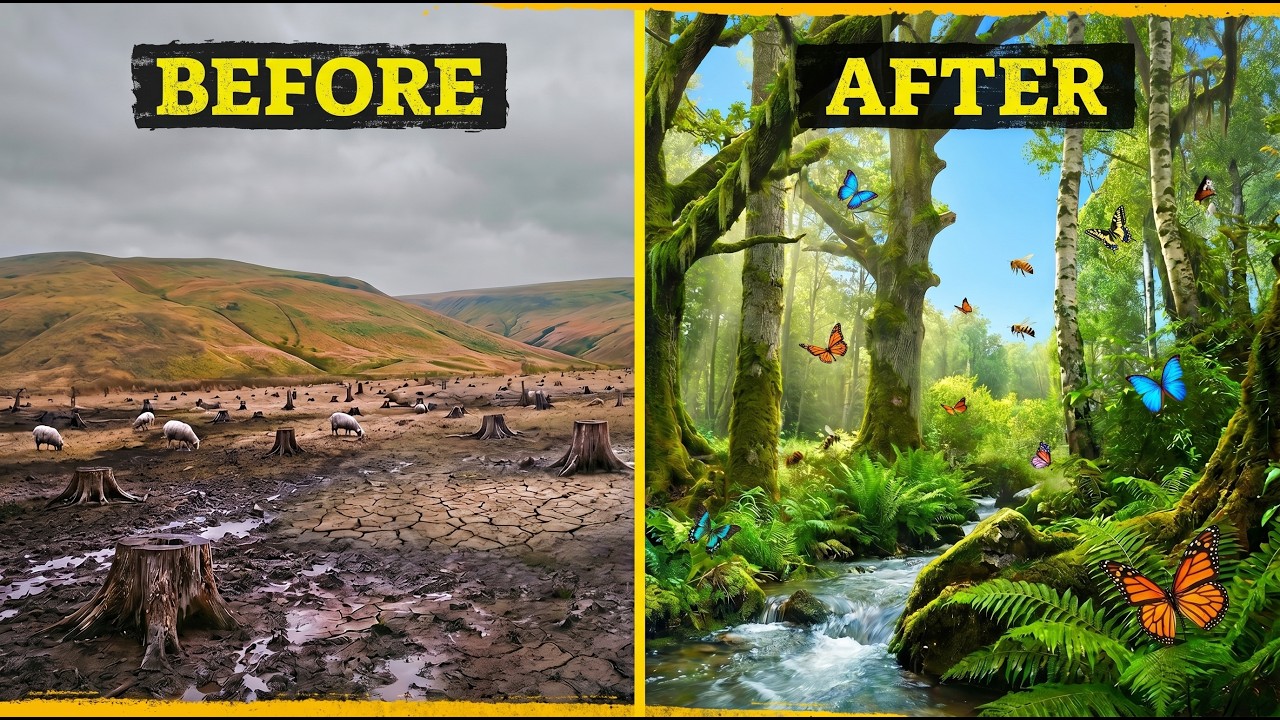
Britain’s lost rainforests are clawing back from near-extinction, and the revival may hinge on one surprising tool. These ancient temperate woodlands once blanketed the west coast but shrank to fragments after centuries of clearance.
The western Highlands of Scotland contain wooded gorges where oak trees grow sideways from rock, their branches covered in thick...
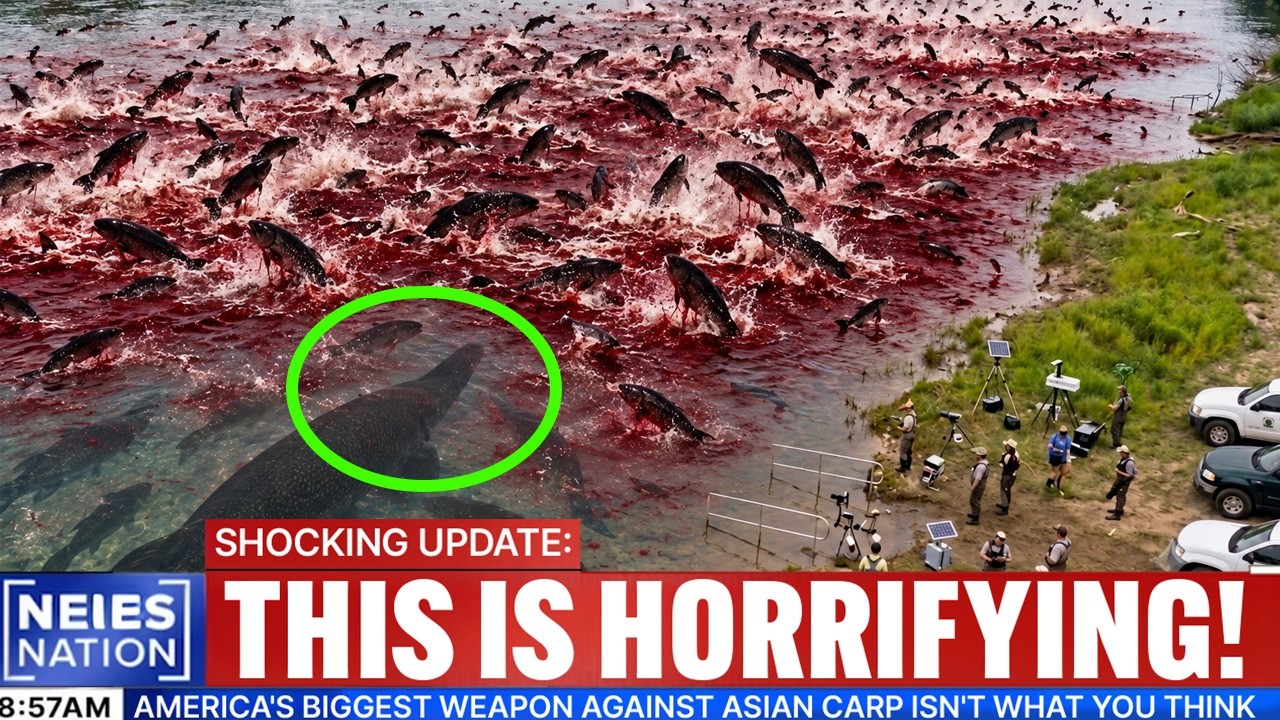
Illinois spent nearly a billion dollars on electric and steel barriers to stop invasive carp, yet its most powerful weapon arrives by truck. The state has quietly reintroduced alligator gar, a predator hunted to local extinction in Illinois by the 1960s, with release sites deliberately kept secret from the public.
Illinois has spent close to a billion dollars on concrete, electricity, and steel barriers meant to stop the spread of...
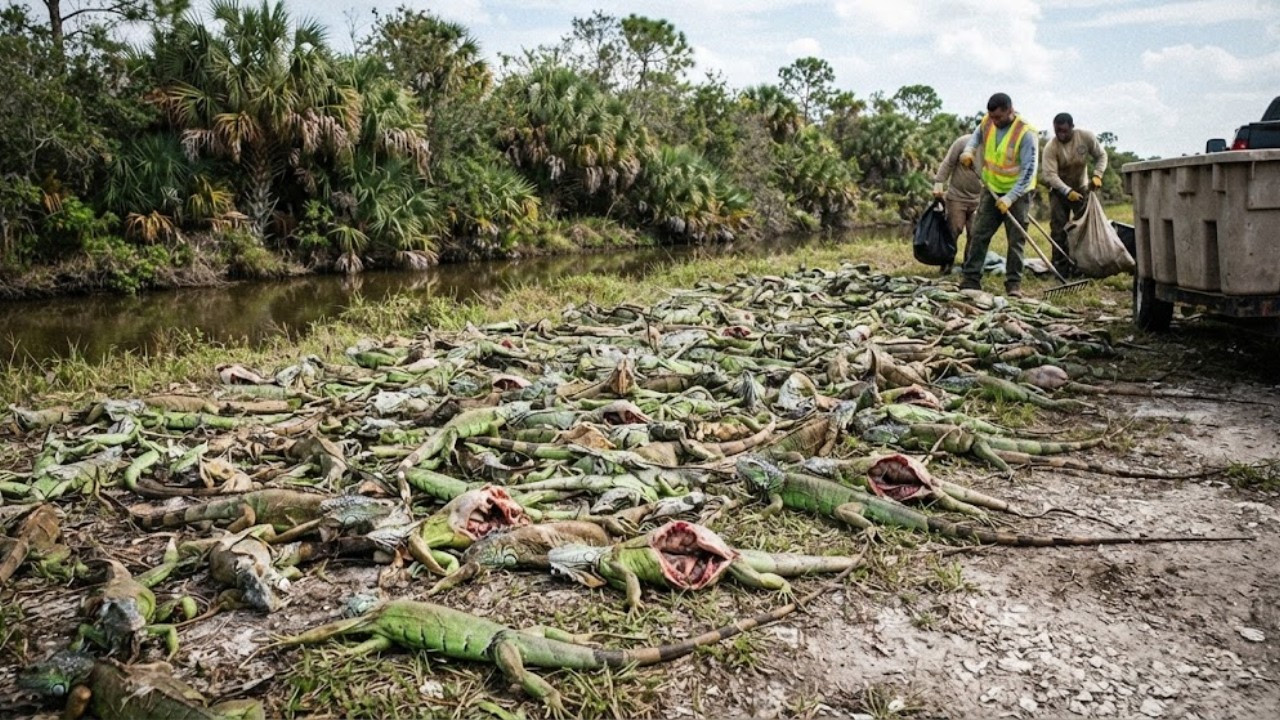
The invasive green iguana is vanishing from Florida’s landscape faster than anyone expected, and scientists say it’s not just because of the cold. For years, residents battled the reptiles tearing up seawalls and gardens, only for the population to suddenly crash in recent years.
Dr. Claire Mats had spent three years conducting green iguana surveys along the canal networks of the central Florida Keys....