The world’s largest reptile now has a taste for poison, and the ecosystem may never recover. Scientists tracking saltwater crocodiles in Australia discovered their stomachs full of cane toads, an invasive species packed with lethal toxins.
Cane toads, introduced to Australia in 1935, have spread across the country’s north, causing significant harm to native wildlife. In response, local rangers and researchers are studying how some predators are adapting to the toads’ presence, and whether these natural adaptations can help reduce the damage.
The toads were originally brought from Hawaii to Queensland to control beetles damaging sugarcane crops. They were ineffective for that purpose but multiplied rapidly and spread across Queensland, the Northern Territory, and into Western Australia. The main problem is not what they eat, but what happens when native animals eat them. Glands behind the toads’ heads contain a cardiac toxin that can cause convulsions and heart failure in predators such as goannas, quolls, snakes, and freshwater crocodiles. Native Australian species had never encountered this type of toad, so they had no natural warning system to avoid them.

Control efforts, including volunteer collection and traps, have had limited success. A single female cane toad can lay up to 30,000 eggs at a time, making it difficult to reduce their numbers. Researchers are exploring a range of possible solutions, including genetically modified tadpoles that would eat other toad eggs and die before reaching adulthood. Government agencies have acknowledged that eliminating cane toads is not realistic, and the current goal is to limit the damage.
One notable observation occurred in April 2016 on the Daintree River. David White, a boat operator with nearly 30 years of experience on the river, saw a young saltwater crocodile capture a cane toad, hold it in its jaws for 25 minutes, and then swallow it. Five days later, the same crocodile was seen with two toads in its mouth. White photographed the event and sent the images to Professor Rick Shine, a biologist who has studied cane toads for decades. The photographs raised a question that had not been seriously considered: whether one of Australia’s top predators had been learning to eat cane toads safely.
Research soon indicated that saltwater crocodiles may have a natural advantage. Their range extends across Southeast Asia and parts of India, where similar toxic toads have long existed. Over many generations, saltwater crocodiles may have developed a degree of tolerance to the toxin. Freshwater crocodiles, which evolved in isolation in Australia, did not share this exposure and have suffered major losses where cane toads have appeared.
There is also a behavioral factor. Saltwater crocodiles typically shake and submerge their prey during feeding. When they do this with a cane toad, some of the toxin is released into the water rather than into the crocodile’s system. This method, combined with their large body size, appears to allow saltwater crocodiles to consume small numbers of cane toads without fatal effects.
Researchers have tried to teach freshwater crocodiles to avoid the toads. In the Kimberley region, rangers set out bait made from cane toad legs, which contain lower amounts of toxin, treated with a nausea-inducing chemical. The crocodiles that ate the bait linked the taste of toad with feeling sick and subsequently avoided toad bait, while still eating other food. After the program began, the number of dead crocodiles found in the area dropped significantly.
A similar training approach has been used with northern quolls, a small carnivorous marsupial. Researchers produced “toad sausages” from ground toad meat mixed with a nausea-inducing chemical and dropped them from helicopters across quoll habitats before the toad front arrived. Tests with wild quolls found that a significant percentage of animals that ate the bait developed an aversion to cane toads.
Some native animals have adapted without human help. Water rats in the Kimberley were observed cutting open cane toads and eating only the heart and liver, avoiding the toxic skin and glands. Australian white ibises have been seen shaking toads vigorously to trigger toxin release, then washing them in water before eating. Invertebrates such as ants, beetles, and spiders also prey on toad eggs, tadpoles, and adult toads. Some snake species have shown increased toxin resistance through natural selection over a short number of generations.
At a wetland site near Darwin called Fogg Dam, researchers recorded a 98 percent decline in cane toad numbers over 27 months. The cause was not clear, but a breeding population of saltwater crocodiles had established in the area. Whether the crocodiles were responsible for the decline is uncertain, but the observation suggests that even a partial reduction in toad numbers can give native species room to recover.
Recovery, however, is slow. Goanna populations fell sharply after the toads arrived, and many have not returned to their previous levels even 12 years later. Some smaller species have increased as larger predators disappeared, indicating that the ecosystem is not static. As toad numbers fall, these relationships may shift again.
The broader picture is that Australia will not eliminate cane toads. The toad front continues to move westward at a rate of roughly 30 miles per year, and the reproductive capacity of the species remains enormous. But the pattern of damage is no longer a one-sided event. A growing number of native species are avoiding, tolerating, or consuming cane toads in limited ways. The combined effect is uncertain, but the ecosystem is gradually adjusting to the toad’s presence rather than remaining entirely vulnerable to it.
Recommended Stories
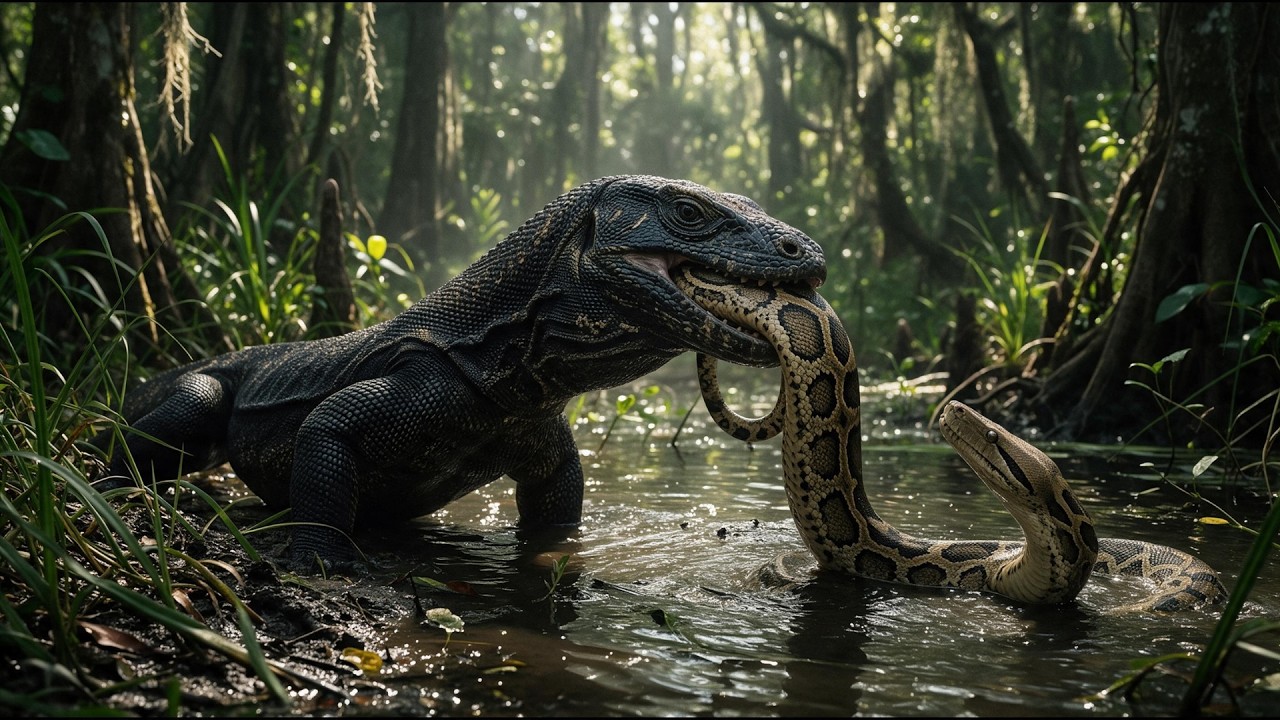
Scientists finally identified Florida’s newest apex predator, and it’s swallowing invasive pythons whole. For years, researchers watched Burmese pythons devastate native wildlife, but now another creature is fighting back in an unexpected twist.
In 2018, scientists working in South Florida’s swamps confirmed the presence of a native predator that had begun preying on...
A decades-long Loch Ness investigation claims the mystery has finally been decoded, and the experts’ conclusion is shocking: they say the monster is real. After years of sonar scans, underwater cameras, and water samples, researchers believe a massive creature genuinely inhabits the deep, dark loch.
No scientific organization has confirmed the existence of a creature in Loch Ness, and decades of searches have produced no...
A fried chicken executive spent millions on the worst land in Texas, a barren stretch experts said could never recover. He ignored the warnings, poured in resources, and slowly watched life return to the scorched earth.
In 1969, a former vacuum cleaner salesman who had become an executive at a fried chicken company purchased roughly 3,000...