Scientists finally identified Florida’s newest apex predator, and it’s swallowing invasive pythons whole. For years, researchers watched Burmese pythons devastate native wildlife, but now another creature is fighting back in an unexpected twist.
In 2018, scientists working in South Florida’s swamps confirmed the presence of a native predator that had begun preying on young Burmese pythons, one of the region’s most damaging invasive species. The animal in question was the indigo snake, the longest native snake in the United States, and its role in controlling hatchling pythons has since drawn attention from wildlife researchers.
The Burmese python population in Florida has grown steadily since the species was first recorded in the wild in 1979. Most of the early snakes were released or escaped pets, and the population expanded further after a python breeding facility south of Miami was damaged by Hurricane Andrew in 1992. By 2000, park scientists confirmed that the snakes were breeding on their own in the Everglades. A 2018 genetic study found that the entire Florida population descended from a relatively small founding group, and that some individuals carried DNA from the closely related Indian python, which may allow them to tolerate drier habitats.
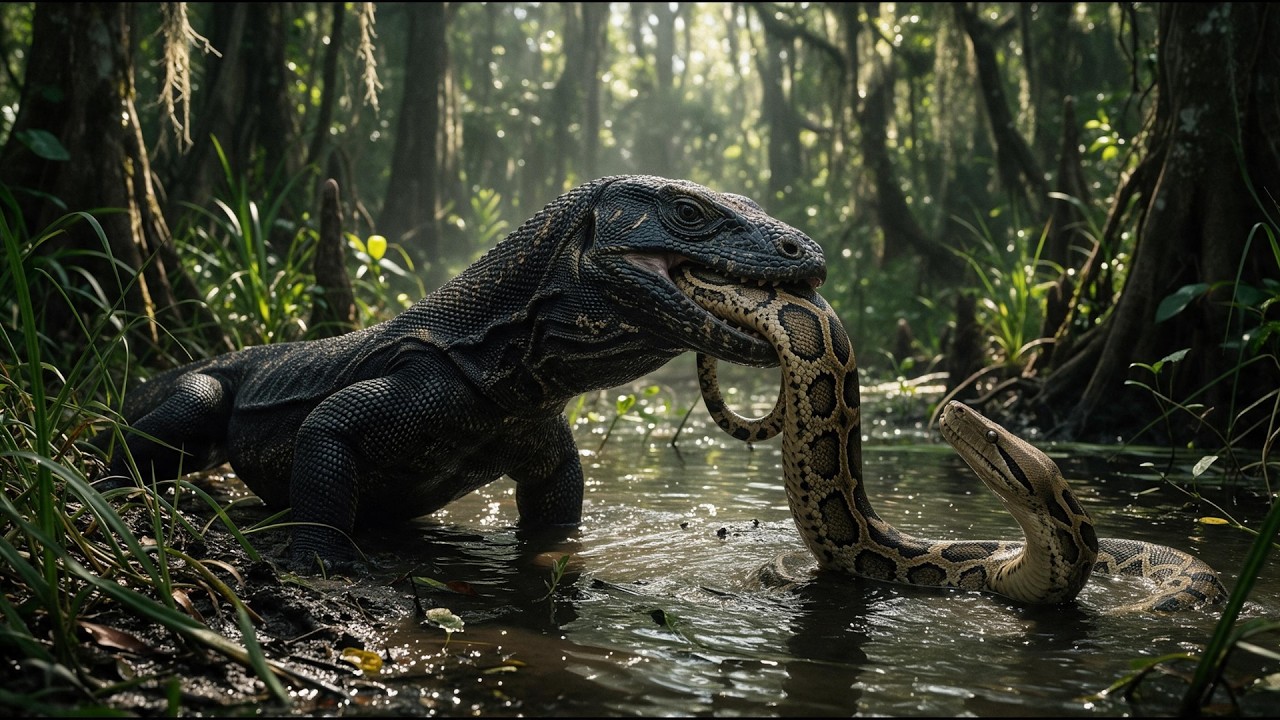
In January 2010, a cold snap killed a large portion of the monitored python population, but the survivors showed genetic changes related to temperature sensing and metabolism. That freeze acted as a filter, leaving behind snakes better suited to Florida’s climate. Subsequent road surveys conducted between 2003 and 2011 found steep declines in native mammal populations in Everglades National Park, including raccoons, opossums, white-tailed deer, and bobcats. Researchers later confirmed through radio-tracking experiments that pythons were directly responsible for a large share of those losses.
Native predators have not been entirely defenseless. A multiyear study that tracked 28 hatchling pythons from southwest Florida found that only about a third survived their first six months, and just two survived three years. The leading cause of death was predation. Among the predators documented were alligators, mammals, cottonmouths, and indigo snakes. In 2018, researchers reported an indigo snake eating a young python. Later observations recorded cottonmouths consuming juvenile pythons, and in 2022, a Florida kingsnake was documented eating a hatchling python for the first time. A bobcat was also recorded raiding a python nest and eating eggs, and one adult python was killed by a bobcat.
The indigo snake’s hunting style gives it an advantage against young pythons. It is active during the day, tolerates cooler temperatures well, and actively searches for prey rather than waiting in ambush. It feeds on a range of animals, including other snakes, and can overpower a hatchling python by pinning it down and holding it until it stops struggling. While a fully grown python would not be vulnerable to an indigo snake, the native snake’s effectiveness against hatchlings is significant because pythons produce large clutches and rely on sheer numbers to ensure some offspring survive.
The indigo snake’s own status is fragile. It has been listed as threatened under the Endangered Species Act since 1978. Much of its historic range across the southeastern coastal plain has been lost to development, farming, and logging. The snake depends heavily on gopher tortoise burrows, which provide shelter from cold weather and serve as nesting and hunting sites. The loss of tortoise populations has therefore directly affected indigo snake numbers. Decades ago, rattlesnake hunters also drove indigo snakes out of burrows by pouring gasoline into them, a practice that is now illegal but caused lasting damage. Roads pose an additional threat, as indigo snakes range over large areas and are frequently killed while crossing pavement.
Conservation efforts have focused on breeding indigo snakes in captivity and releasing them into protected areas. The Orian Center for Indigo Conservation at the Central Florida Zoo raises hatchlings for two years before releasing them, allowing them to grow past the most vulnerable stages of life. The first releases took place in 2017 at the Apalachicola Bluffs and Ravines Preserve in the Florida Panhandle, where the last wild indigo had been recorded in 1982. By spring 2025, the program had released nearly 500 indigos across Florida and southern Alabama. Released snakes have been found alive years later, and in 2022 and 2023, wild-born hatchlings were discovered in release areas, indicating that the reintroduced populations are breeding on their own.
The relevance of these reintroductions to python control extends beyond the immediate areas where the snakes are released. Some pythons in Florida carry genetic traits that may allow them to spread north into drier, sandier habitats similar to the longleaf pine forests where indigo snakes are being restored. Indigo snakes tolerate cold better than most snakes in their range, while freezes have historically caused significant python mortality. It is possible that restored indigo populations could serve as a natural check on young pythons in areas where both species overlap.
No single species is expected to solve the python problem by itself. Since 2000, more than 23,000 pythons have been removed from Florida and reported to the state. Contractors working with state and water management agencies have removed more than 16,000 additional snakes since 2017. During a 2025 state-sponsored python hunting challenge, participants removed 294 pythons over ten days, a record for the event. Scout snake programs, which use radio-tagged male pythons to locate large breeding females, have removed more than 40,000 pounds of pythons since 2013. Despite those efforts, the population remains established across the region.
The most realistic outcome involves a combination of approaches. Humans are most effective at removing large adult pythons, while native predators such as the indigo snake are better suited to targeting hatchlings in the difficult terrain of the Everglades. Protecting gopher tortoise burrows and longleaf pine habitat supports the indigo snake’s recovery, and that recovery may in turn contribute to reducing python numbers at an early stage of their life cycle. The indigo snake is federally protected, and encountering one in the wild carries no threat to people, but it may be one of the few animals in Florida that will prey on a young python.
Recommended Stories
Scientists read the Tasmanian tiger’s DNA and uncovered a warning that arrived far too late. The extinct thylacine’s genetic code revealed a devastating pattern of decline hidden deep inside its last specimens.
In October 1966, two cave explorers descended into a narrow sinkhole on the Nullarbor Plain, near Eucla on the western...

Lee Asher, the animal rescuer behind The Asher House, built a massive following showing his dogs living in apparent freedom. But recently, those seemingly perfect videos took a dark turn.
Lee Asher, a former finance professional who became a well-known animal rescue figure on social media, has spent recent years...
Florida released a swamp rodent meant to destroy pythons from the inside, and the plan took a shocking turn. These aggressive creatures target snake eggs, gutting entire nests to curb the invasive python explosion gripping the Everglades.
Invasive Burmese pythons have thrived in the Florida Everglades for more than two decades, despite an array of control efforts...