Kazakhstan’s tiger reintroduction is not the homecoming scientists expected. After 70 years of absence, they released big cats into the Caspian region, and the initial signs looked promising.
Kazakhstan released a tiger into the wild in late July 2026 as part of a long-running reintroduction project, marking the first time a tiger has lived in the country’s wilderness in roughly 70 years. The animal, a female Amur tiger named Umit, meaning “hope” in Kazakh, was released on 31 July 2026 into a nature reserve near Lake Balkhash. Weighing around 180 kilograms, Umit is one of four tigers brought from Russia in May 2026. The project’s long-term goal is to establish a self-sustaining wild breeding population.
Umit left her transport enclosure at around 6:00 a.m. local time. After briefly testing the ground and wind, she disappeared into the reeds. Sergey Aramilev, director general of the Amur Tiger Center, was present for the release. The tigers arrived in Kazakhstan in two groups. A pair from a big-cat care center in the Netherlands arrived in September 2024. Those two, a female named Bogdana and a male named Kuzya, will not be released into the wild. They are expected to breed in a large enclosed area, with the hope that their cubs, raised with minimal human contact, may eventually be prepared for wild life.

The four tigers transported from Russia included adult male and female tigers, as well as two younger tigers named Turan and Oussi. The name Turan is notable, as the Caspian tiger was historically known in parts of its range as the Turan tiger. The animals flew from Russia to Moscow, then to Almaty on an Airbus A330, and were then transported by helicopter to the reserve.
Before Umit was released, each tiger had to pass several tests. They were housed in enclosures with natural vegetation and monitored by cameras and thermal imaging equipment. The first test involved hunting live prey, specifically the local hoofed animals they would encounter in the wild. The second test assessed their reaction to humans. According to the Amur Tiger Center, when the tigers detected people roughly 150 meters from their enclosures, they moved away and avoided being seen, showing no curiosity or aggression. Turan and Oussi are still maturing and may need more time before they can be released. Each released tiger will be fitted with a satellite tracking collar.
The reintroduction effort follows the extinction of the Caspian tiger, a large feline that once ranged from eastern Turkey and northern Iran through the Caucasus and into Central Asia. The Caspian tiger lived in a distinct habitat of riverine forests and reed beds along desert rivers, known as tugai forests. Its decline was driven by human settlement, hunting, and habitat loss. By the late 1940s, confirmed sightings in Kazakhstan had largely ceased, and by around 1970, the subspecies was considered extinct across its entire range.
In 2009, a team led by geneticist Carlos Driscoll examined DNA from museum specimens of the Caspian tiger and compared it with that of living tigers. The analysis indicated that the Caspian tiger was closely related to the Amur tiger of the Russian Far East. This genetic link provided a realistic path for reintroduction, as the Amur tiger could serve as a close substitute for the extinct subspecies.
In 2010, Kazakhstan announced plans to restore tigers to the region. Preparation took about 15 years. The first step was identifying a suitable habitat. A feasibility study led by conservationist Hartmut Jungius for the World Wildlife Fund identified the Ili River delta and the southern shore of Lake Balkhash as the most promising location. In 2018, Kazakhstan established the Ile-Balkhash State Nature Reserve.
Restoring the habitat involved substantial work. Around 37,000 tree seedlings and cuttings were planted to restore tugai forests and reed beds. The reserve also needed an adequate prey base. Roughly 205 Bukhara deer, a rare subspecies of red deer, were moved into the reserve, each fitted with a tracking collar. More than 100 kulans, a wild Asian ass, were also brought in. Fenced breeding areas allowed these animals to increase their numbers under protection before being released into the wider reserve. Automatic watering systems were installed, and supplementary food was provided during the acclimation period. Local wild boar and roe deer populations were allowed to recover, and anti-poaching patrols were established.
The choice of first prey was unexpected. About ten days after her release, thermal cameras confirmed that Umit had hunted and killed a wolf. She fed on the carcass for several days. Her second confirmed kill was a wild boar. There were no confirmed cases of Umit killing any of the reintroduced Bukhara deer during those first ten days. Aramilev stressed that researchers should not approach the kill sites, as doing so could frighten the tiger and cause her to abandon the carcass.
The presence of a tiger is expected to have broader ecological effects beyond direct predation. Scientists refer to this as a “landscape of fear,” where prey animals change their behavior in response to the presence of a predator, which can in turn affect vegetation patterns. A 2019 study in Mozambique’s Gorongosa National Park showed that bushbucks returned to wooded areas when recordings of tiger and wild dog sounds were played, demonstrating that the mere signal of danger can alter prey behavior. Whether a single tiger, and eventually a few dozen, can produce such effects across the Ili delta will require years of monitoring.
A significant factor beyond the reserve’s control is the Ili River itself. The river originates in Xinjiang, China, and carries roughly 75 to 80 percent of the water flowing into Lake Balkhash. The reserve’s fences can keep out poachers and livestock, but they cannot stop reduced water flow. Low water levels could dry out wetlands and reduce vegetation, affecting the prey base. In the 1970s and 1980s, the filling of the Kapchagai reservoir, along with climate conditions and water use, contributed to a drop in Lake Balkhash’s water level by about two meters by 1987, which put pressure on local fisheries. The lake later recovered somewhat, but the lesson remains that upstream water decisions can affect everything downstream.
The project also depends on the cooperation of local communities. Families living near the reserve will need to feel safe with a large predator in the area. The WWF and its partners have been working directly with these communities. Umit’s satellite collar will provide data on her movements, giving researchers time to assess and respond if she moves toward populated areas. The success of the project will be measured not only by tiger tracks but also by whether local families can live without fear of losing livestock or facing danger.
The project’s long-term ambition extends beyond the four tigers currently in Kazakhstan. The country hopes to establish a self-sustaining population of about 50 wild tigers across the Ili delta and southern Balkhash region by 2035. The recent kills by Umit are early signs that she can hunt effectively on her own, but the larger test involves whether she can maintain a territory through summer and winter, whether other tigers will pass their tests and join her, and whether there will be enough water in the Ili River to support the entire ecosystem. Real success will come when new generations of tigers are born here, grow up here, and learn to survive independently while people in the surrounding areas remain safe.
Recommended Stories
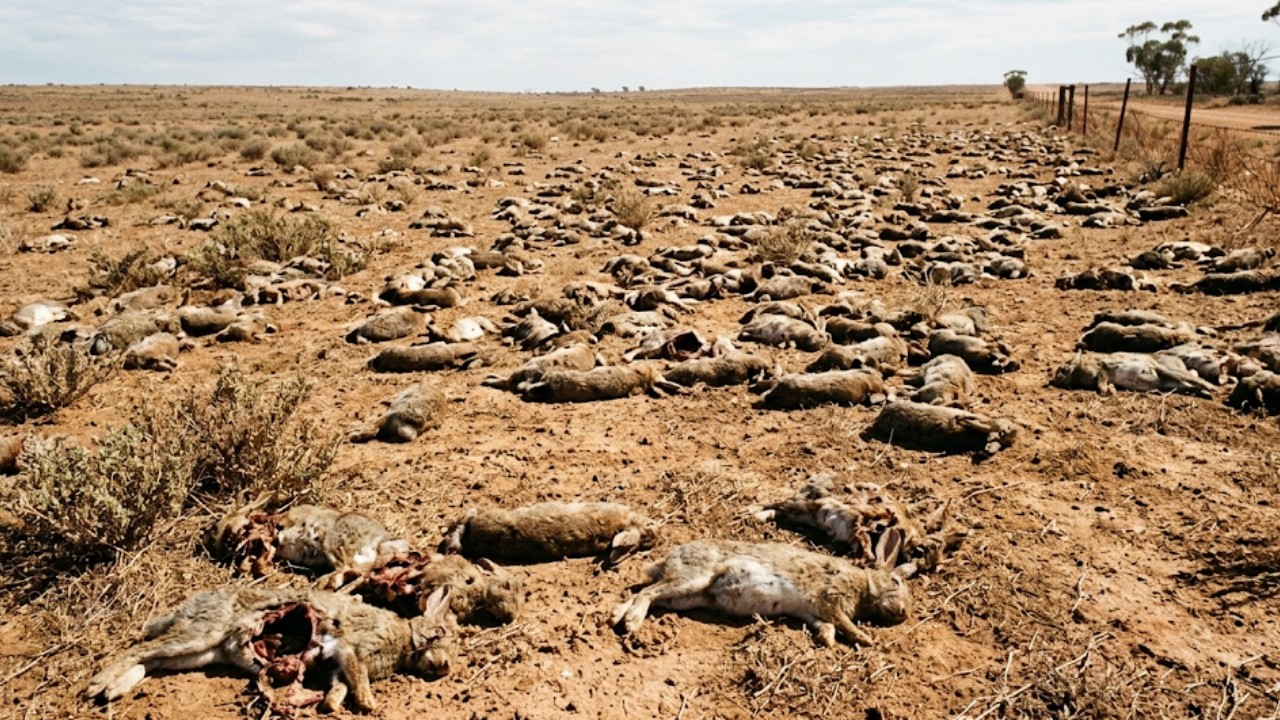
Millions of rabbits have vanished across South Australia, and scientists say they’ve finally identified the culprit. For decades, the region’s rabbit population thrived, defying control efforts and devastating farmland.
Dr. Sarah Negoian had been conducting rabbit population surveys across the Murray Mallee rangelands of South Australia for nine years...

The deepest ocean trench remains the least explored place on Earth, yet what scientists are now finding down there has quietly stalled new missions. For decades, crews sent probes into crushing darkness, expecting empty silence—instead, they pulled up creatures thriving on toxic chemicals and total pressure.
In January 1960, Swiss oceanographer Jacques Piccard and US Navy Lieutenant Don Walsh descended nearly seven miles to the Challenger...
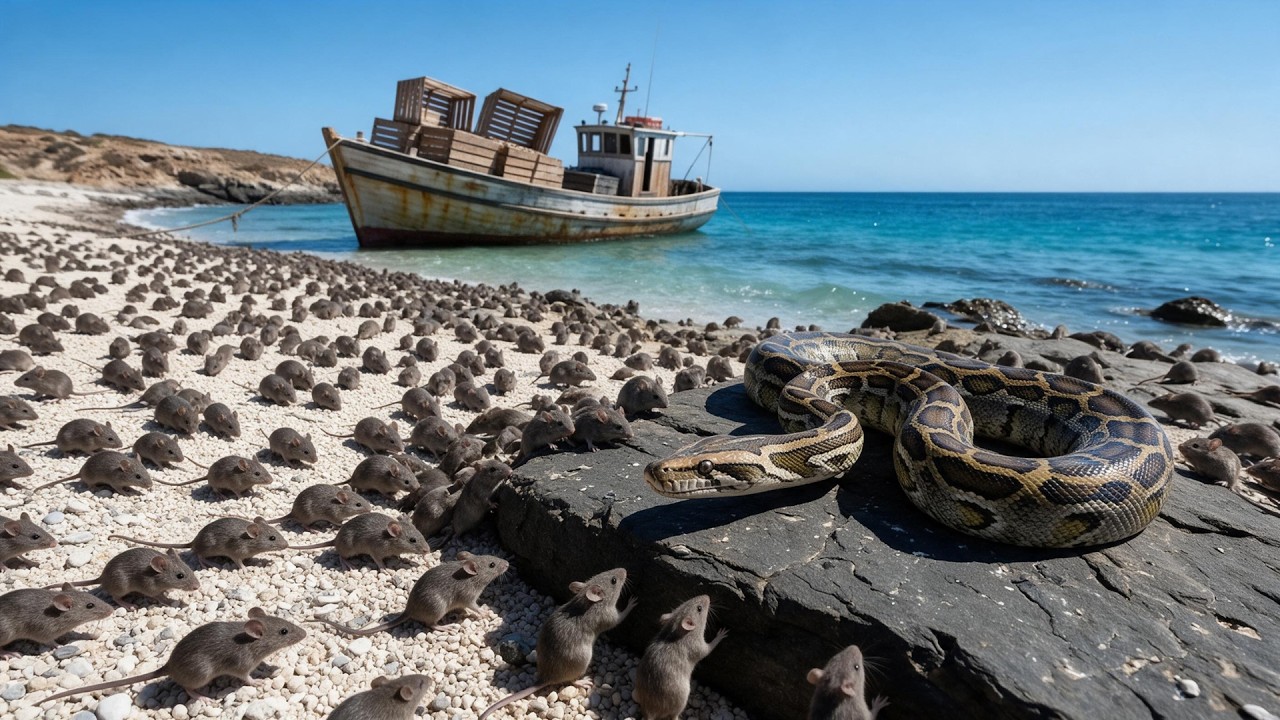
In 1949, the U.S. military air-dropped thousands of mice onto Guam, a move that shockingly backfired and nearly destroyed the island’s ecosystem.
The brown tree snake, an invasive species native to the southwestern Pacific, arrived on the island of Guam in the...