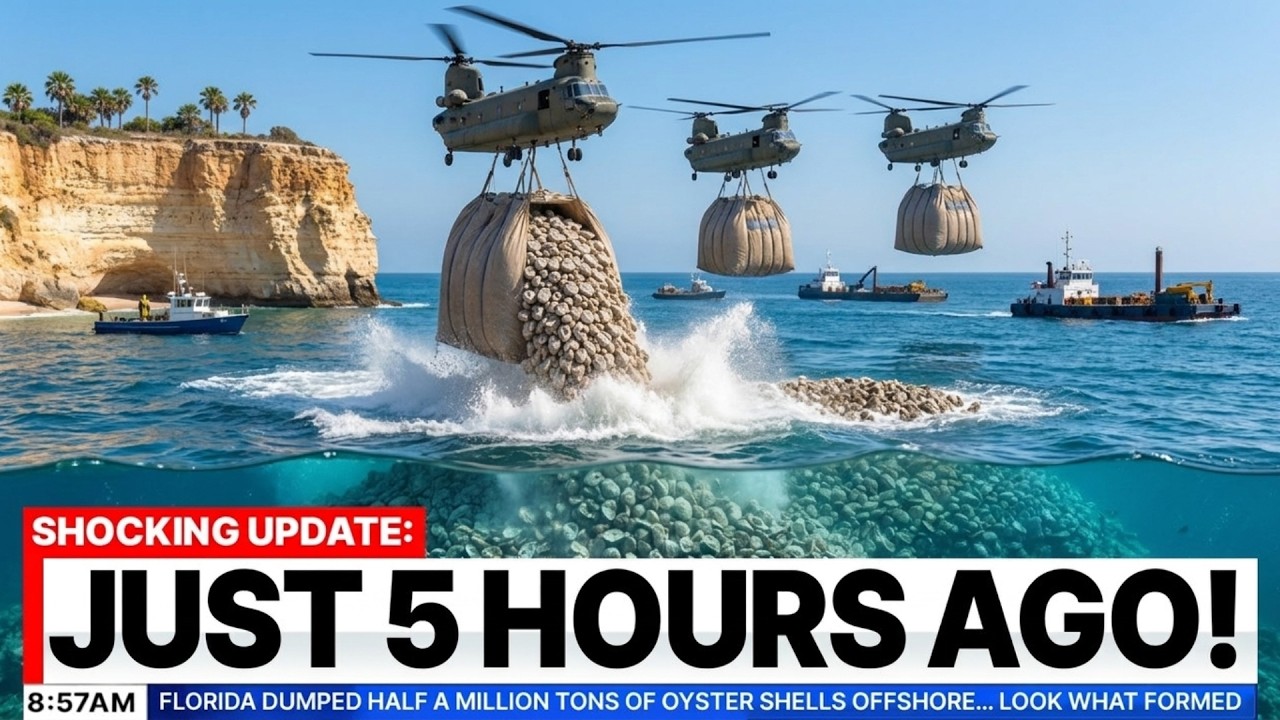
Florida dumped half a million tons of oyster shells into the Gulf decades ago as a simple waste solution. Years later, divers discovered something unexpected forming on the artificial reef below the surface.
Florida oyster restoration programs have shown that dumped oyster shells and limestone can rebuild reefs and support marine life, but the results vary significantly depending on location and conditions. In one case, a reef near Cedar Key on Florida’s Big Bend coast rebounded from near zero oysters to a dense population within years. In another bay, however, many restored sites saw little improvement.
Restaurant oyster shells have also been recycled into reef-building material along the Gulf Coast. The evidence indicates that oyster reefs can increase fish and crab populations and filter water, though their long-term survival depends on new oysters settling and building shell faster than the ocean breaks it down.
The most concrete success story took place at Lone Cabbage Reef near Cedar Key. University of Florida survey crews counted live oysters along fixed lines on the reef after it was rebuilt. At four stations, the count started near zero. Six months later, it averaged 91 oysters per square meter. By year five, that figure reached 244.
The reef had previously been shrinking. Locals had harvested oysters there for generations, but the reef lost about 70% of its size between 1982 and 2010. A team from the University of Florida rebuilt it using dolomite limestone to restore its original height, aiming for roughly the footprint it had in the 1800s. The rebuilt reef stretched about three miles as 22 separate segments.
In 2018, local oystermen working with the university moved about 3,000 bushels of live oysters off the old reef during construction. Once the rock was in place, the oysters were put back on top, and a layer of oyster shell about an inch deep was spread over the new reef. Tom Kelch of the National Fish and Wildlife Foundation, which helped fund the project, called Lone Cabbage one of the most successful oyster projects his program had funded.
The results at other locations were less encouraging. In 2017, Florida placed roughly 24,840 cubic yards of fossilized oyster shell across 124 acres of Apalachicola Bay as part of restoration tied to the Deepwater Horizon oil spill. A separate project spread about 95,000 cubic yards of lime rock across another 317 acres of the bay.
University of Florida researcher Bill Pine reviewed the results from about 30 restoration sites in the bay that used shell or limestone. Some sites showed an early increase in oysters, mostly where baby oysters were drifting through at the time. But at most sites, oyster counts did not go up after restoration, and very few legal-sized oysters appeared anywhere.
One reason appears to be that oyster shell dissolves in seawater. A field study in Mississippi Sound tracked shell on a reef starting in 2016 and estimated its half-life at between 2.6 and 5.1 years. In Delaware Bay, researchers found that half of the shell added to an oyster bed in a given year was gone within 2 to 10 years. Burrowing worms and sponges riddle the shell with holes, seawater dissolves it, and sediment buries what remains.
For a reef to survive, living oysters must grow, die, and leave their shells behind faster than the ocean can break them down. If oysters cannot keep up, the reef shrinks back toward mud regardless of how much material was placed at the start.
Modeling by scientists suggests the Gulf sits at the high productivity end of the oyster’s range, meaning a working fishery and a growing reef can coexist there. In mid-Atlantic estuaries, however, harvesting more than about 5% of the fishable oysters per year tends to erode the reef itself.
Oyster reefs also support fish populations. A 2021 study led by Finan Zu Emgassine combined surveys from across the northern Gulf comparing young fish and crabs on oyster reefs with the bare bottom next to them. The researchers focused on animals born that same year, since young animals of that age are most likely using the reef as a nursery. They estimated that oyster reefs add roughly 650 grams of extra fish and mobile invertebrates per square meter per year across about 20 species.
Among the habitats in that study, oyster reefs were the only one that boosted stone crabs, a commercially valuable catch. In Texas, scientists tracking Half Moon Reef in Matagorda Bay, which had been fished out in the early 1900s and then rebuilt, measured stone crab production about 10 times higher than earlier estimates.
The shelter that reefs provide makes the difference. A young fish or crab on bare sand has no place to hide, while a reef offers thousands of gaps, ledges, and holes, plus a steady supply of small food living on the shells.
Adult oysters also filter water. A single adult oyster can filter up to 50 gallons of water a day, pulling out algae, sediment, and excess nutrients. Clearer water lets sunlight reach seagrass, and the same 2021 study found seagrass beds to be even more productive nurseries than the reefs themselves, at around 1,370 grams per square meter per year.
Oyster populations along the Gulf Coast are down 85% or more from historic levels due to overharvesting, oil spills, and sediment dumped by storms.
Restaurant shell recycling has become a common approach. The Alabama Coastal Foundation had collected 22.6 million shells from restaurants by 2024. Tampa Bay Watch launched its Shells for Shorelines program in 2022, with volunteers hanging strings of recycled shell off docks and seawalls and checking them for baby oysters. In the Florida Panhandle, the Pensacola and Perdido Bays Estuary Program is designing a baywide restoration plan across 4,482 acres.
One Houston chef who works with the Galveston Bay Foundation said his kitchens recycled 16 tons of shell in a year. The system involves a bin by the dish pit that gets wheeled out to the dumpster area for pickup.
Hurricane Michael tested several of these restoration sites on October 10, 2018. The storm came ashore near Mexico Beach, west of Apalachicola Bay, with winds around 160 mph and a storm surge of roughly 14 feet. It was later upgraded to a Category 5 hurricane, the strongest on record to hit the Florida Panhandle. It was directly responsible for 16 deaths and about $25 billion in damage.
Researchers from the University of Florida and the state wildlife commission found that much of the rock planted on an area of the bay called Cat Point had stayed in place, and fresh baby oysters had settled on it.
Louisiana ran a similar test. According to the National Oceanic and Atmospheric Administration, an earlier shell reef built on Pointe-au-Chien tribal land held up against Hurricane Ida, the second most damaging hurricane to hit Louisiana after Katrina. In 2023, tribal members and volunteers armored 400 feet of shoreline around an ancient burial mound with 200 tons of bagged oyster shell. Gulf studies cited by NOAA show oyster reefs can cut wave energy by 76 to 99%.
On January 1, 2026, Apalachicola Bay reopened to wild oyster harvesting after five years of closure, but only in a limited area. Commercial harvesters were limited to one bag a day, about 60 pounds, during a short season running through the end of February. The annual harvest is capped at 10% of the available oysters, and only Florida harvesters with a record of legal landings from the bay between 2012 and 2020 qualified for the first commercial endorsements.
The bay reopened on just four reefs, all in the Cat Point area. According to the local paper in Franklin County, the restored reefs were the only places in the bay with enough oysters to support a harvest.
It is worth noting the scale of these results. Even the Lone Cabbage team points out that their project replaced only about 3 to 4% of the reef area lost across the Big Bend. In July 2026, Pine and his colleagues published 14 years of data from Lone Cabbage under a title that states plainly that restoration is a partial but not complete solution. Their conclusion was that rebuilding reef structure is an essential first step, and that fishing rules or good river flow on their own are unlikely to replace it.
The reefs that formed on the Gulf bottom remain alive only if they keep building their own foundation faster than the sea can remove it. The rock and shell buy time, and the living oysters pay back the loan.
Recommended Stories
Florida drained a protected wetland to build homes, and then biologists made a discovery that paused the entire project. The wetland had been carefully surveyed before the water was removed, yet something unexpected surfaced once the land was exposed.
During a routine drawdown of a water treatment area in South Florida, researchers uncovered a large underground network of invasive...
The monster shark lurking off Alaska’s coast turned out to be far bigger than anyone expected. Marine researchers tracking the apex predator initially estimated its size from brief surface sightings, but new measurements revealed a shocking discrepancy.
The question of what swims in the deep waters of Lake Iliamna, Alaska's largest lake, has persisted for centuries. The...
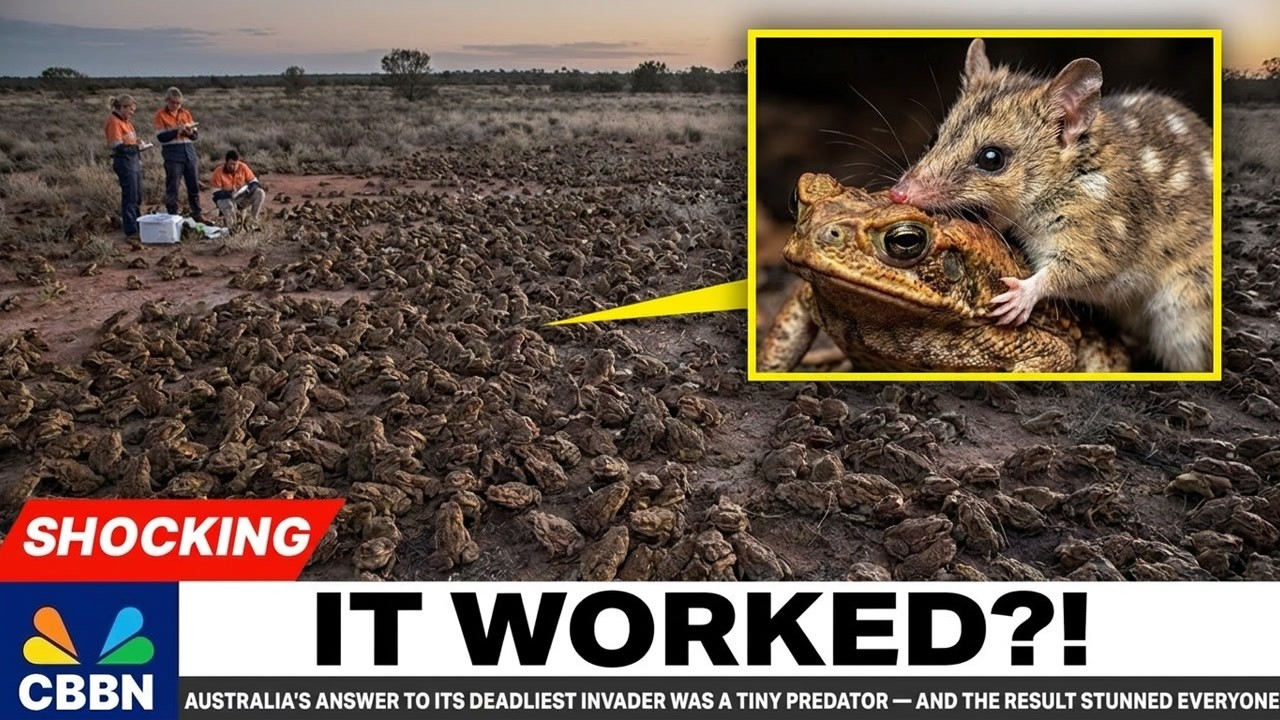
Australia’s deadliest invader met a surprising adversary: a tiny predator that officials deployed to stop its spread. The plan seemed straightforward—release this pint-sized hunter to curb an unstoppable menace disrupting ecosystems and agriculture across the country.
The cane toad is a medium-sized amphibian, typically no more than a few inches long. It has no notable features,...