A 55-foot “sea serpent” washed ashore in Scotland in 1808, dismissed for two centuries as a myth. Now, new analysis of the original eyewitness sketches and preserved skeletal fragments suggests the discovery may have been entirely genuine.
In September 1808, after a three-day storm, residents of Stronsay, an island in Scotland’s Orkney chain, found a large animal carcass washed up on the rocks near a place called Rothiesholm. The islanders, experienced fishermen and farmers, initially assumed it was a whale. When they approached, they saw it was not an animal they could identify.
The carcass was roughly 55 feet long, with a long slender neck, a small head, and what appeared to be three pairs of limbs. Along its spine ran a mane of stiff bristles that witnesses said seemed to shimmer when wet. The men measured the animal carefully, with one using a carpenter’s folding rule. They recorded the length over several attempts.
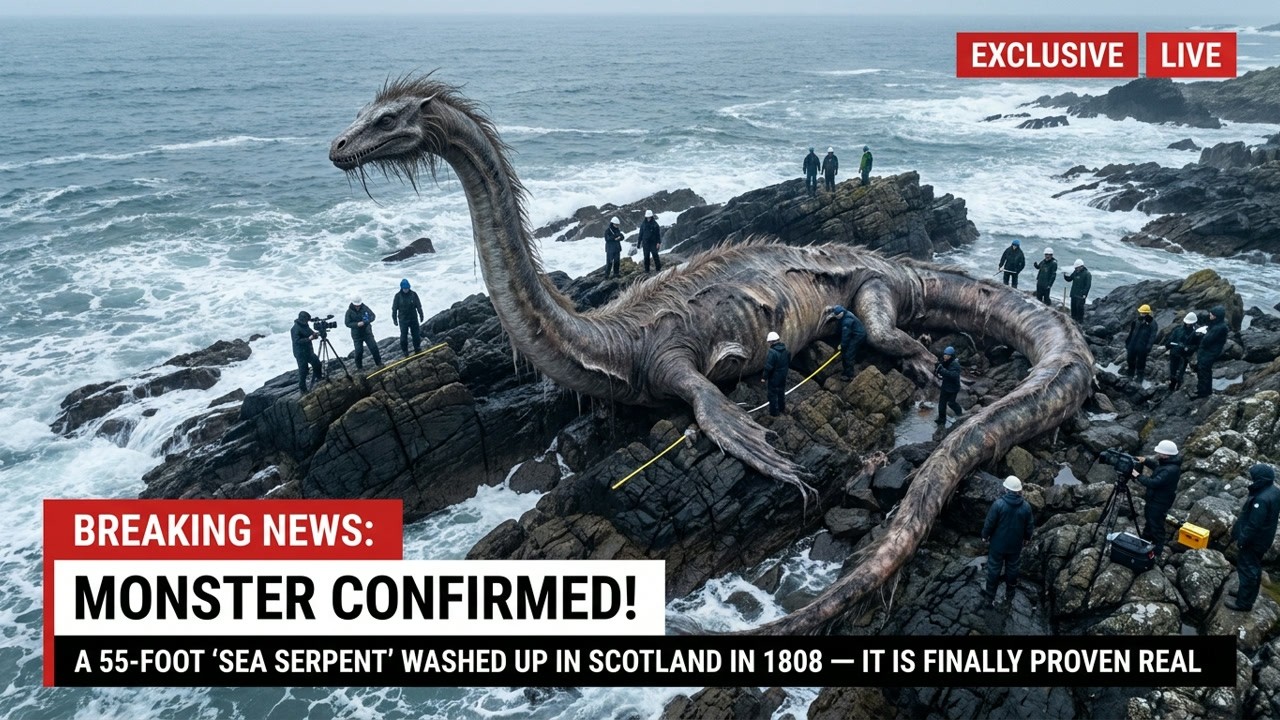
News of the discovery spread from the island to the Scottish mainland and eventually reached naturalists and learned societies in the south. Witnesses were asked to give sworn statements about what they had seen. Based on these accounts, a formal scientific name was given to the creature, Halsydrus pontoppidani, meaning “sea snake.” The name honored Erik Pontoppidan, an 18th-century Norwegian bishop who had argued that sea serpents and other deep-sea creatures were real animals not yet documented by science.
Most of the carcass was lost to the tide and decay, but some vertebrae and other fragments were preserved for study. Not long afterward, a prominent anatomist in London challenged the identification. He argued that the carcass was a decomposing basking shark, a large but well-known species common in northern waters. According to this explanation, basking sharks lose their jaws, gills, and smaller fins early in decomposition, leaving a long backbone with a small skull attached, which can resemble a serpent. The bristled mane, he said, was likely exposed connective tissue, and the paired limbs were probably the remnants of fins.
This explanation accounted for most of the animal’s unusual features and was widely accepted. However, one detail has remained difficult to reconcile with the shark theory. Basking sharks are known to reach lengths of about 40 feet at most. The Stronsay carcass was measured at 55 feet. The discrepancy has never been fully resolved. Some have suggested that a decomposing body can stretch, and that measurements taken from a carcass may exceed the animal’s original length. Others have noted that the measurements were taken carefully by multiple witnesses. The preserved vertebrae have been examined over the years, with experts reaching differing conclusions.
The Stronsay beast is generally regarded as an example of a pseudo-serpent, a rotting shark that appears to be something else. The case remains a point of interest mainly because of the 15-foot gap between the measured length and the known maximum size for the species. Since the carcass was largely reclaimed by the sea, a complete answer has never been possible.
Recommended Stories

A peer’s grand estate let a thousand acres of England run wild—and what crawled back stunned even the scientists. The Lord and two friends abandoned farming, rewilding the land, letting thorny scrub and native trees reclaim the soil.
In Suffolk, on light sandy land his family had farmed for nearly two centuries, Baron Hugh Crossley gave an unusual...
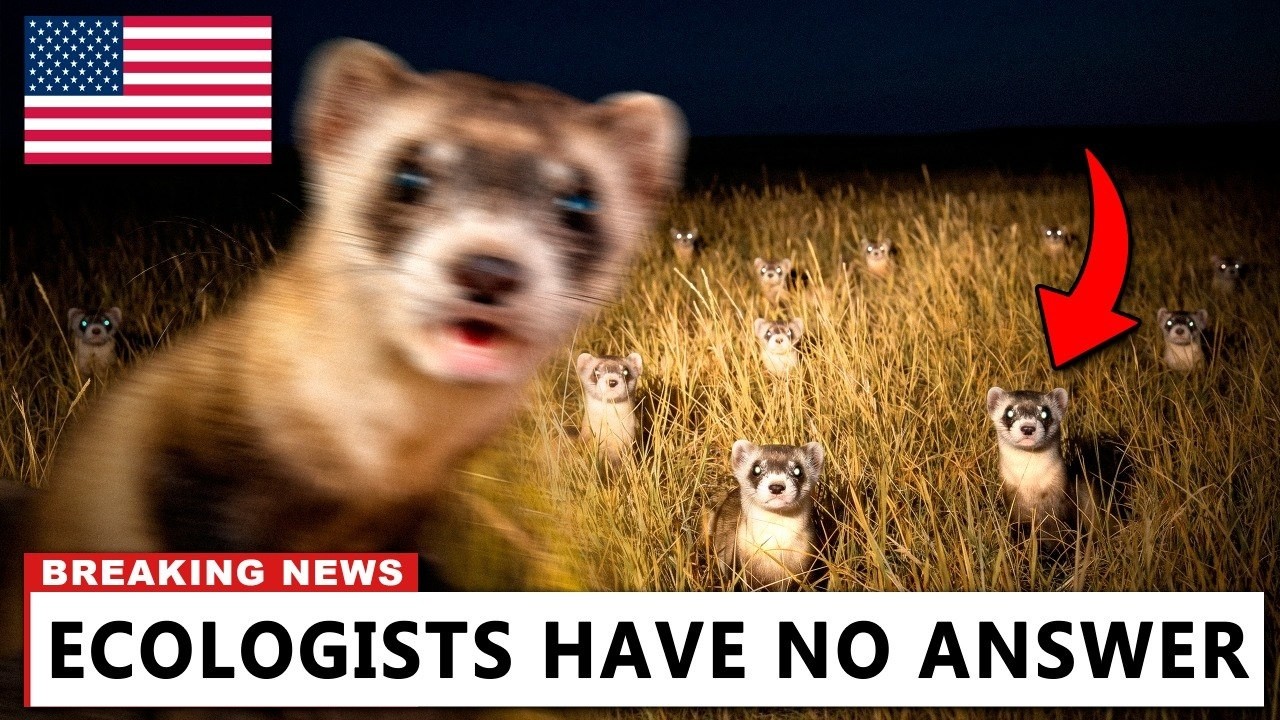
American wildlife officials made a stunning discovery: only 129 of these animals remain on Earth. The number alone was alarming enough to warrant immediate emergency action.
In 1979, the last known black-footed ferret in captivity died at a research center in Maryland. For years, biologists had...
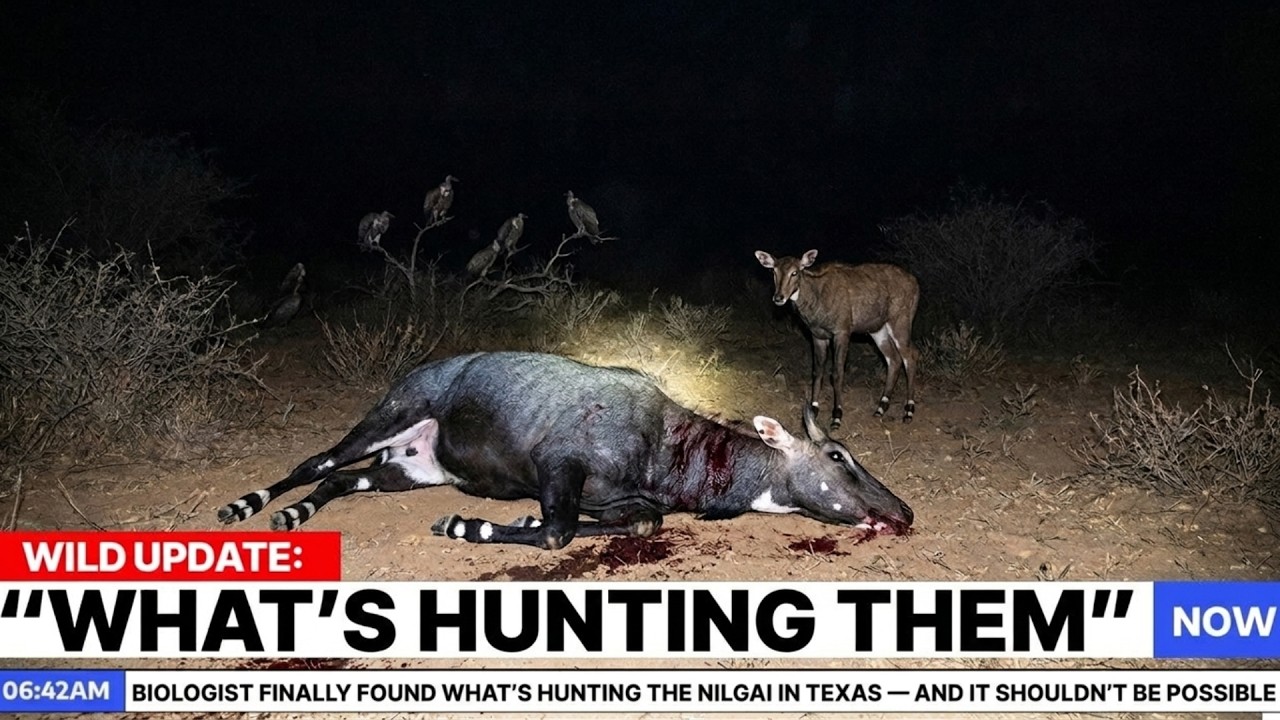
A top predator suddenly stalking Texas nilgai has biologists rethinking everything they knew about the region’s wildlife. The antelope, introduced decades ago, now faces a hunter that shouldn’t logically exist in that ecosystem.
In the brush country of South Texas, researchers have found evidence that mountain lions are killing adult nilgai, a large...