Scientists just watched Australia unleash its largest carnivorous marsupial, and the reaction from feral cats left them stunned. The predator, a species once wiped from the mainland, was reintroduced into a controlled landscape crawling with invasive cats.
On September 10, 2020, wildlife officials released 26 Tasmanian devils into a fenced sanctuary in the Barington Tops forest of New South Wales. It was the first time the species had lived on the Australian mainland in roughly 3,000 years. Actor Chris Hemsworth and his wife Elsa Pataky helped with the release. Tim Faulkner, president of the conservation group Aussie Ark, described the moment as the beginning of a long-term ecological restoration project.
Within about six months, researchers reviewing camera trap footage noticed a change. Feral cats, which kill an estimated two billion native animals in Australia each year, had become less active across the sanctuary. They appeared less frequently, stayed for shorter periods, and in some areas stopped using the land altogether. The devils were not eating the cats. Their presence alone appeared to be altering cat behavior.

The result offered a possible answer to a problem that has frustrated Australian conservationists for two centuries: how to manage invasive predators that are difficult to trap, bait, or control by other means.
For most of the last few million years, the Tasmanian devil lived across the entire Australian continent. It is primarily a scavenger, with a powerful jaw capable of crushing bone, and it feeds on parts of carcasses that other animals avoid. Around 3,200 years ago, the devil disappeared from the mainland. The leading explanation is competition with the dingo, which arrived in Australia and outcompeted the smaller, mostly solitary devil. The dingo never reached Tasmania, allowing the devil to survive there.
In 1996, a photographer in Tasmania documented a devil with tumors on its face. Researchers later identified the cause as a transmissible cancer, a condition in which living cancer cells pass from one animal to another through biting. Devils commonly bite each other on the face during fights over food and territory. A bite can transfer tumor cells directly into a wound. This disease, known as DFT1, spread through the Tasmanian population and caused severe declines. A second, separate transmissible cancer, DFT2, was identified in 2014. The Tasmanian devil is the only mammal known to have developed two distinct transmissible cancers.
In the hardest-hit areas of Tasmania, the devil population fell by more than 90 percent, from hundreds of thousands to roughly 25,000 animals. The loss of devils had a measurable effect on other species. Feral cats became bolder and spent more time feeding at carcasses in areas where devils had disappeared. A team from the University of Tasmania, led by ecologist Menna Jones, documented this pattern using camera traps.
Cats are not native to Australia. They arrived with European settlers from 1788, spread across the continent, and now number between 1.4 and 5.6 million in the wild. Each feral cat kills an estimated 740 native animals per year. Cats are considered a leading cause of the country’s mammal extinction record, which is the worst on Earth. Around 34 mammal species have been lost since colonization, and cats are a factor in roughly two-thirds of those extinctions.
Cats are difficult to control through baiting because they prefer live prey and rarely scavenge poison baits. Red foxes, introduced by British settlers in the 1800s, are also a major problem. Foxes spread quickly and kill native animals that did not evolve alongside them. Foxes also engage in surplus killing, killing more prey than they need. Significantly, foxes never established a population in Tasmania, the one place where devils remained present.
The concept of mesopredator suppression suggests that the presence of a larger predator can limit the behavior and numbers of smaller predators. The decline of devils in Tasmania offered a natural experiment: where devils disappeared, cats became more active. The question for conservationists was whether restoring devils would reverse that trend.
Some researchers argued against reintroduction. Ecologist Bronwyn Fancourt and others pointed out that the evidence for devils suppressing cats was inconsistent, particularly in drier, fragmented landscapes. They cautioned that introducing a predator into a new environment could have unforeseen effects. Both sides made reasonable arguments, and the decision to proceed was made with that uncertainty in mind.
Before any reintroduction could happen, Aussie Ark spent a decade building a disease-free population on the mainland. The animals were intentionally raised without hand feeding or other forms of care that would dull their natural instincts. They had to compete for food and dig their own dens.
The release site at Barington Tops was a 400-hectare area of eucalyptus forest surrounded by a predator-proof fence. Feral cats and foxes were removed from the enclosed area before the devils arrived. The first 15 devils were released as a trial. Once radio tracking showed they were exploring and settling, the final 11 were released in September 2020.
After that, human involvement ended. The devils had to find their own food, claim territories, and mate without assistance. In May 2021, health checks revealed that at least seven joeys had been born inside the sanctuary. The births confirmed that the devils could survive and reproduce in the wild on the mainland.
The mechanism behind the change in cat behavior is not direct predation. Devils are scavengers, not efficient hunters of cats. The effect works through avoidance. A carcass in the open is a food source for a cat, but it is also a lure for a larger, stronger scavenger. When devils are present, cats face the risk of encountering a more powerful animal at a food site. In response, cats feed less openly, change their routines, or avoid certain areas altogether.
Biologist Callum Cunningham and colleagues in Tasmania measured this pattern. Cats scavenged freely where devils were rare and became notably more cautious where devils were common. The behavioral change appeared months before any change in cat population numbers.
Ecologists refer to this as a landscape of fear, an invisible pressure that shapes how animals move and behave. No trapping or poisoning program in 200 years has achieved a comparable result at similar cost.
The broader ecological goal of the project extends beyond cats. The animals most affected by cats and foxes are small digging mammals such as bandicoots, bettongs, potoroos, and bilbies. These species are important to soil health. A single southern brown bandicoot digs around 45 foraging pits per night, moving nearly four tons of soil per year. These pits catch seeds and water, and the animals spread underground fungi that many Australian plants depend on. Without the diggers, the soil loses fertility and the forest declines.
The theory is that restoring devils reduces pressure from cats and foxes, which allows digging mammals to survive and rebuild the soil. Cunningham’s team has described this as a chain of effects: an apex predator protecting smaller mammals, which in turn maintain the ecosystem.
There are limits to what the Barington project has proven. It has demonstrated that devils can survive and breed on the mainland. It has not yet demonstrated that devils can suppress cats and foxes in open country beyond the fenced sanctuary, or that they can spread without the protection of a barrier. The effect varies by habitat and is weaker in dry or farmland areas.
In May 2025, a severe weather system caused flooding and tree falls that damaged sections of the sanctuary fence. Devils had to be recaptured and moved to safety. In October 2025, a group of 14 devils was returned to Barington after health checks and treatment. The incident highlighted that the project remains dependent on active human management.
Barington Tops is part of a larger plan. Aussie Ark intends to introduce additional species to the same area: eastern quolls, brushtail rock wallabies, rufous bettongs, long-nosed potoroos, parma wallabies, and southern brown bandicoots. The idea is that no single species can restore a forest alone, but a combination of animals performing different roles may eventually allow the ecosystem to function without ongoing intervention.
The project represents a different approach to conservation. Instead of attempting to eliminate invasive predators directly, it aims to restore the natural balance that kept them in check in the past. Whether this approach can scale from a fenced sanctuary to a larger landscape remains an open question.
Recommended Stories

Ted Turner reintroduced a tortoise extinct in America for 10,000 years, and now the species faces survival without its founder. The billionaire turned conservationist launched a bold rewilding project, breeding giant tortoises on his private land to restore a lost ecosystem.
On the evening of September 22, 2023, biologists placed 20 tortoises in a large desert enclosure at Ted Turner's Armendaris...
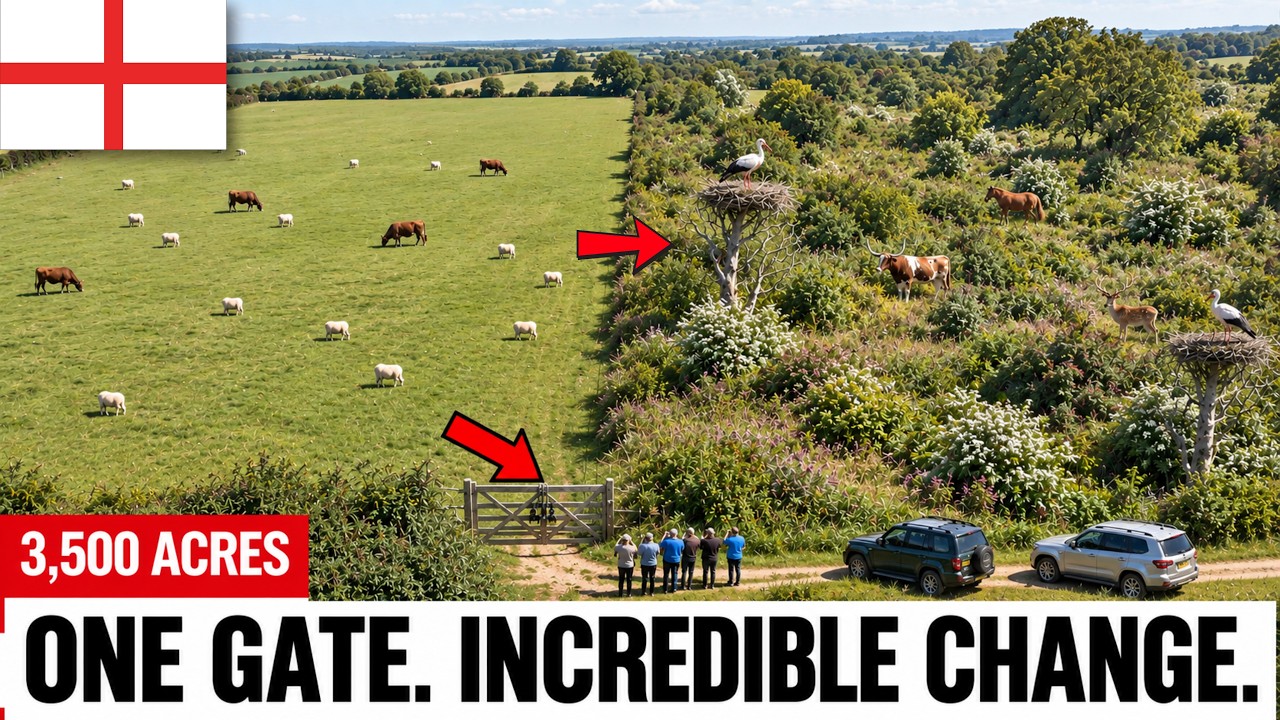
For 20 years, they let 3,500 acres of English farmland sit completely untouched, blocking out all human interference. No planting, no harvesting, no management of any kind—just pure neglect.
In 2001, an English baronet opened all the gates of his 3,500-acre estate and walked away. He planted nothing. He...
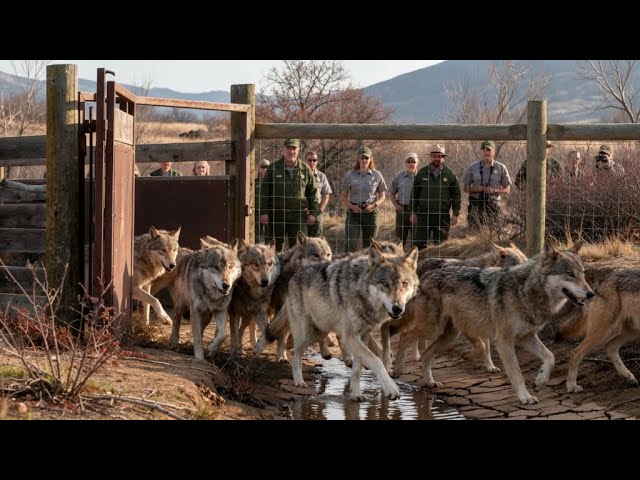
The U.S. released 14 wolves into a dying national park, and the results stunned scientists.
Yellowstone National Park had been without wolves for nearly seven decades when federal officials decided to bring them back in...