Canada released 16 bison into a dead valley, and what they did with their hooves and wallows turned out to be unbelievable. The arid landscape had lost its fertility, with the soil too hard for most life to return.
In February 2017, Parks Canada released 16 plains bison into the Panther Valley of Banff National Park. The animals were placed on ground that had not supported wild bison in more than 140 years. By 2024, the herd had grown to more than 130 animals. The bison spread across 1,200 square kilometers of backcountry, adapted to high-elevation mountain terrain, and began affecting the valley in ways that were not fully anticipated.
The reintroduction was officially a pilot project. Seven years in, it has produced ecological effects that researchers are still working to characterize. Project managers have acknowledged that some of what the bison are doing to the land does not match the models that were written before the release. The following account is drawn from Parks Canada’s official project reports, the 2023 final report on the plains bison reintroduction pilot, and a peer-reviewed paper published in Frontiers in Conservation Science by the project’s manager.
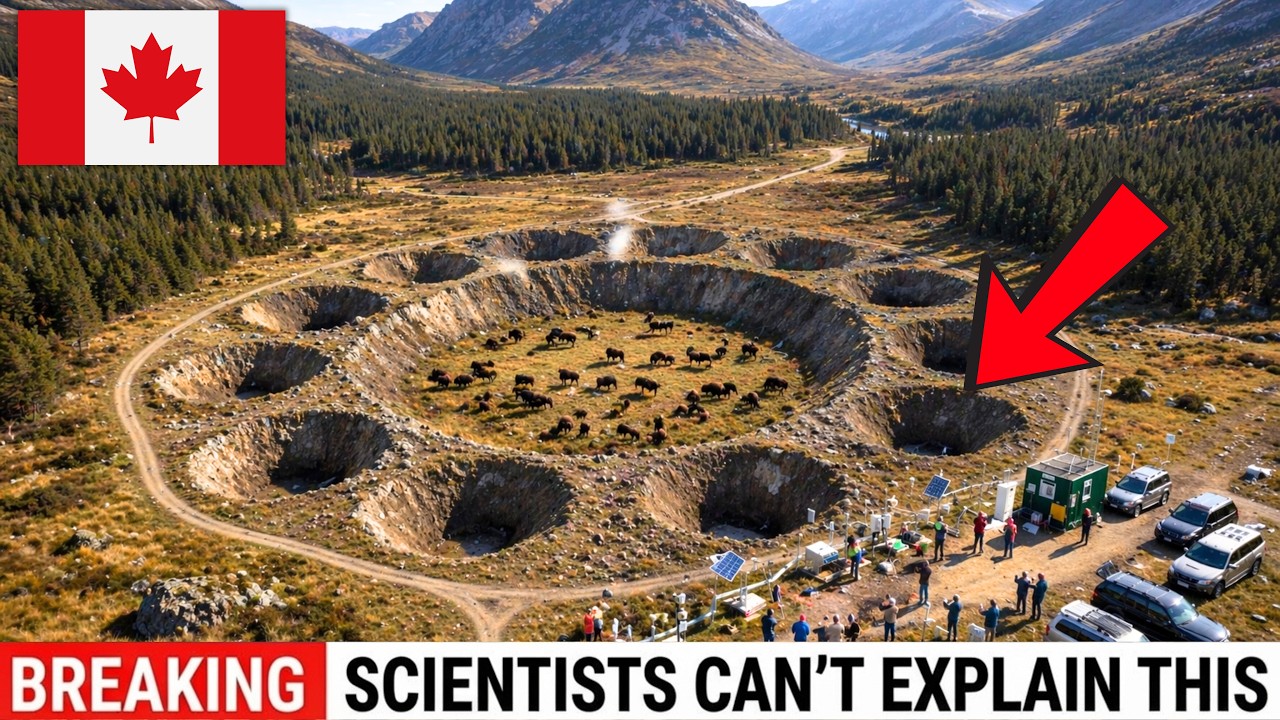
The plains bison is an ecosystem engineer. An adult bull can weigh up to 900 kilograms, and a cow around 500 kilograms. The animals graze on grasses and sedges, but the pattern of their grazing matters. They move constantly and graze in patches, leaving some areas heavily cropped and others untouched. This creates a mosaic of grassland structures that a single-species grazer cannot replicate. Bison also wallow, rolling in dirt to shed parasites and winter coats. Each wallow leaves a bare soil depression that becomes habitat for insects, amphibians, and pioneer plants that cannot colonize dense grass. They trample ground, redistribute nutrients through dung and urine, and create trail networks used by other species.
Scientists describe bison as a keystone species whose grazing, wallowing, trampling, herding, and migratory behavior drives energy flow and nutrient cycling at the landscape scale. The loss of that species changes the ecosystem. Between 1860 and 1885, tens of millions of plains bison were killed across the Great Plains, the foothills, and the front ranges of the Rocky Mountains. A population that had numbered between 30 and 60 million was reduced to fewer than 1,000 survivors. According to the peer-reviewed Banff case study, the slaughter was carried out largely with the colonial intent to destabilize and remove the independence of indigenous groups who relied on bison, so that their historic homelands could be more easily settled.
The consequences were widespread. Grasslands that had evolved with bison grazing for tens of thousands of years changed structure without them. Wallow-dependent species lost their habitat. Indigenous peoples whose material and spiritual cultures were built around the bison suffered severe disruption. In the eastern slopes of the Canadian Rockies, in what would become Banff National Park, the bison disappeared entirely.
Around 1907, the Canadian government purchased several hundred descendants of the last wild bison from two Montana ranches and shipped them to Elk Island National Park in Alberta. That small founder population, now considered one of the purest genotypes of wild plains bison remaining anywhere in the world, became the source for bison reintroductions across Canada, the United States, and Russia over the next century.
Discussions of reintroducing wild plains bison to Banff began in the late 1990s, when a small fenced tourist herd inside the park was shut down to restore a wildlife corridor. Feasibility studies identified suitable habitat for up to 1,000 wild plains bison inside the park, with a low risk of disease transmission to the nearest cattle, which graze 20 to 50 kilometers away. A formal reintroduction plan was published in 2015, emphasizing both ecological and indigenous cultural benefits.
In February 2017, 16 plains bison—10 pregnant cows and six young bulls, all disease-free—were captured at Elk Island National Park, loaded into shipping containers, and transported more than 400 kilometers west into the Panther Valley on the eastern slopes of Banff. The terrain is rugged, high-altitude Rocky Mountain country with steep slopes, long winters, and snowpack lasting into June. These animals, bred from Great Plains genetics, had to prove they could adapt to mountains.
They were released into a 1.2 square kilometer soft-release pasture, a fenced enclosure designed to let the herd bond, calve, and imprint on the landscape before being turned fully loose. The soft release lasted 18 months. The bison stayed together, calved, and learned the valley. In summer 2018, the fence was opened, and the herd walked into a 1,200 square kilometer free-roaming zone in the backcountry of Canada’s oldest national park.
The bison adapted to the mountains faster than the models predicted. GPS collars fitted to a portion of the herd showed animals moving to high-elevation summer forage, the kind of altitudinal migration that historic Rocky Mountain bison populations would have performed, even though no living bison in this herd had ever done it. The herd mostly stayed within 30 kilometers of the release site, established core home ranges, and began producing calves every spring.
By the end of the 2017-to-2022 pilot, the population had grown from 16 to approximately 80 animals. The average annual growth rate was 33 percent, at the high end of what is biologically possible for plains bison. Natural mortality was less than 1 percent per year. By 2024, Parks Canada confirmed that more than 130 plains bison were roaming the Banff backcountry, more than eight times the original release size in seven years.
Karsten Heuer, the Parks Canada project manager who has led the reintroduction since its beginning and who co-authored the peer-reviewed case study, said the reintroduced herd has grown from 16 to over 100 animals, and that the eco-cultural approach has increased the resilience of the rewilding project. He also said that bison need to be wild, like other species, and that they want to move across human-made boundaries. How society meets that request, he said, will determine the long-term success of the project.
The bison used the terrain in ways that were not in any model. They climbed to high-elevation summer forage, grazing in subalpine meadows above tree line seasonally, then descended to lower valleys for winter. This behavior pattern was documented historically for Rocky Mountain bison but had disappeared for 140 years along with the animals that performed it. The herd rediscovered it in under a decade without human teaching.
Parks Canada’s monitoring showed no negative effects on elk, bighorn sheep, wolves, or vegetation at current bison densities. One of the primary objections to bison reintroduction in mountain landscapes had been the concern that bison would outcompete native ungulates or overgraze sensitive vegetation. Seven years of data showed the opposite. Early qualitative rangeland assessments showed healthy forage use with no signs of overgrazing across the 1,200 square kilometers of home range.
What the bison were producing instead was heterogeneity. Patches of heavily grazed ground sat next to ungrazed areas. Wallows, the rolling depressions bison create that become microhabitats for specialized plants and invertebrates, appeared in meadows where there had been no wallows for 14 decades. Trail networks wove through willow and aspen stands. Bare soil patches that pioneer species could colonize began to appear. The bison were adding a pattern of disturbance that only bison produce, and the grassland mosaic that depends on that pattern was beginning to return.
The Banff reintroduction was designed as an eco-cultural project, not a purely ecological one. A peer-reviewed case study published in Frontiers in Conservation Science in 2023 documents how indigenous ceremonies, cultural knowledge, and monitoring were woven into every phase of the reintroduction. The Stoney Nakoda Nations, Siksika Nation, Piikani Nation, Kainai Nation, Tsuut’ina Nation, Ktunaxa, Shuswap, Samson Cree, and the Rocky View Métis District all contributed to the project.
The authors of the case study concluded that the eco-cultural approach increased the resilience of the rewilding project. Parks Canada is now exploring regulated indigenous harvest of bison as part of long-term herd management. If realized, it would make the Banff reintroduction the first major conservation project in North America to explicitly integrate indigenous hunting back into modern wildlife management.
The Banff herd is currently the fifth free-roaming, unfenced plains bison population in the world. The others, most concentrated in the Yellowstone area, represent fewer than 8,000 animals across less than 1 percent of the species’ historic range. Of more than 500,000 plains bison now alive in North America, only 4 percent are managed for conservation. The rest are in the ranching industry, where selective breeding for weight and fecundity is steadily altering the bison genome away from its wild form.
Against that backdrop, the Banff reintroduction is strategically significant. The herd is one of the few places on Earth where plains bison exist as wildlife, not livestock or tourist attraction, but wild animals making their own decisions about where to graze, when to migrate, and how to shape the landscape around them.
Sixteen bison, seven years, a home range of 1,200 square kilometers in the Canadian Rockies, and a herd that has grown by more than 800 percent. The animals adapted to mountain terrain, began reshaping a valley, and became part of a partnership between Parks Canada and the First Nations of the Rocky Mountains that turned an ecological reintroduction into a restoration of both a species and a relationship.
Recommended Stories

A 115-foot Megalodon captured off Australia’s coast, then silenced—except the real science tells a very different story. No complete skeleton exists, and every published size estimate comes from teeth or vertebrae alone, so researchers rebuilt the extinct shark’s proportions using data from 170 other species in 2025.
Every published estimate of Megalodon's size has been built from teeth and scattered vertebrae. No complete skeleton has ever been...

Deep beneath the Pacific, a remotely operated vehicle captures footage that has scientists questioning everything they know about the ocean’s most mysterious frontier. The Mariana Trench was long considered a near-lifeless abyss, crushed by pressures that should make survival impossible.
Recent viral videos claim that new footage from the Mariana Trench shows a creature moving at depths where life should...
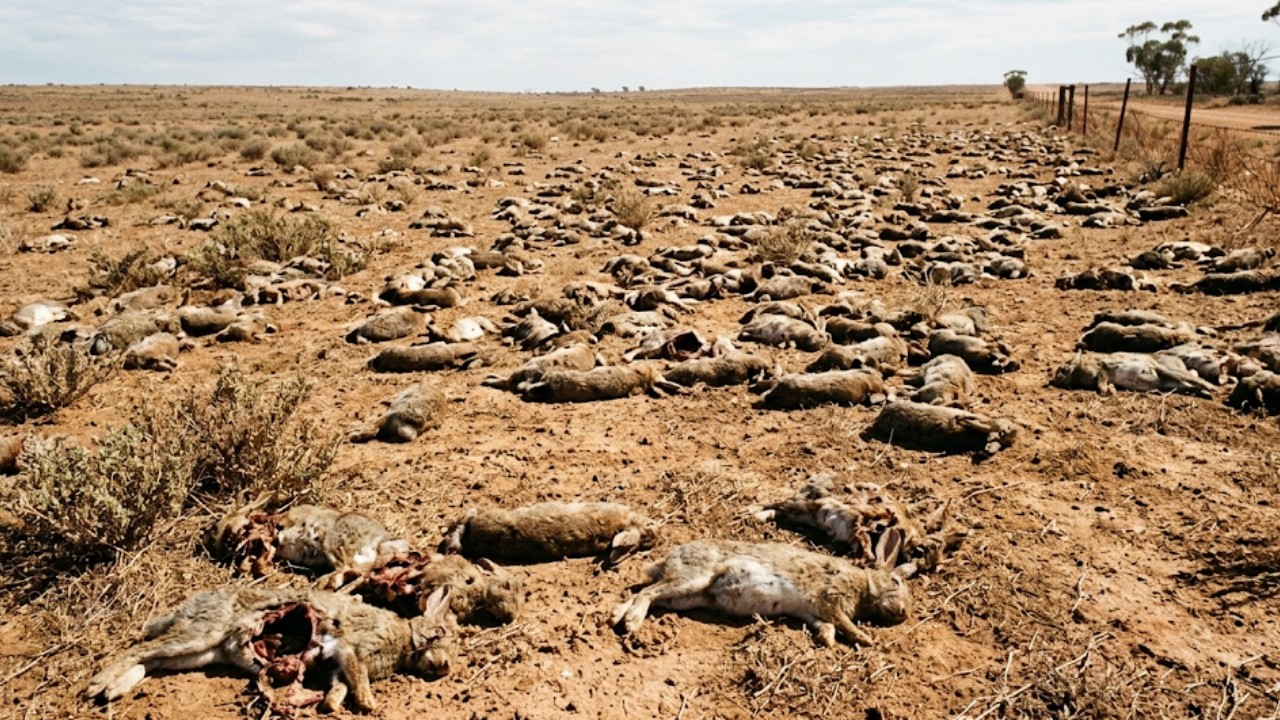
Millions of rabbits have vanished across South Australia, and scientists say they’ve finally identified the culprit. For decades, the region’s rabbit population thrived, defying control efforts and devastating farmland.
Dr. Sarah Negoian had been conducting rabbit population surveys across the Murray Mallee rangelands of South Australia for nine years...