Four red wolves were released into a vast North Carolina forest, empty of their kind for decades, and what happened over the next thirty years stunned conservationists. Wildlife officials had hoped the pack would simply survive, restoring a top predator missing from the region’s ecosystem.
In 1980, the U.S. government declared the red wolf extinct in the wild. The only remaining individuals, 14 animals, were held in a captive breeding facility at Point Defiance Zoo in Tacoma, Washington. These animals carried the entire genetic future of a species that once ranged from Texas to Pennsylvania.
In 1987, federal biologists took a significant step. Four breeding pairs were released into the Alligator River National Wildlife Refuge in eastern North Carolina. It was the first time anyone had attempted to return a large carnivore that was extinct in the wild back to its natural habitat. The experiment would become the longest and most contested wildlife reintroduction in U.S. history.

Before the extinction, the red wolf was the apex predator of the American Southeast. A federal extermination campaign, habitat loss, and interbreeding with coyotes reduced the population to the Texas and Louisiana coast by the early 1970s. In 1973, biologists captured every red wolf they could find. Of more than 400 animals trapped over seven years, only 14 were confirmed to be pure red wolves rather than coyote hybrids. The entire wild population was built from those 14 individuals.
The 1987 release at Alligator River took place on a 120,000-acre refuge surrounded by private property. The first wild pups were born in 1988, and the program appeared to be succeeding. In the early 1990s, a second release site was established in the Great Smoky Mountains National Park. The attempt failed. From 1991 onward, around 40 pups were born in the park, but none survived. The cause was parvovirus, which killed the litters before they could establish themselves. The effort in the Smokies ended in 1998, with many of the released wolves dead or recaptured after wandering onto private land.
At Alligator River, the eastern population continued to grow. By 2012, the wild population reached 120 wolves. Biologists also developed a strategy to manage coyotes moving into the area. Sterilized coyotes were released to occupy territory without producing hybrid pups. For several years, this reduced the rate of hybridization. The recovery effort received the North American Conservation Award from the Association of Zoos and Aquariums.
The success was short-lived. In 2012, the North Carolina Wildlife Resources Commission allowed nighttime coyote hunting on private land within the five-county recovery zone. Coyotes and red wolves are difficult to distinguish in the dark, and several red wolves were shot in the months after the change. Environmental groups filed lawsuits, and a federal court blocked the nighttime hunts in 2014. But the relationship between the wildlife program and local landowners had already deteriorated.
The U.S. Fish and Wildlife Service slowed active management. Releases from captivity stopped, and coyote management was wound down. In 2015, a breeding female with a documented history of producing large litters was shot on private property. The animal was not near livestock, and her area had no livestock to protect. She was removed because the landowner did not want her there.
By 2018, the wild population had fallen to roughly 40 animals. In 2019 and again in 2020, no pups were born in the wild. By the end of 2020, the population had collapsed to seven known individuals. After more than 30 years of work, the species was once more at the edge of extinction in the wild.
Legal pressure from conservation groups continued. Lawsuits argued that the Fish and Wildlife Service was not meeting its obligations under the Endangered Species Act. In 2021, the agency resumed releasing captive-born wolves and began placing captive-born pups into wild dens, a technique called cross-fostering. In 2023, the agency settled the lawsuit and committed to an eight-year recovery plan that included annual releases and renewed coyote management.
The population began to recover slowly. By August 2025, multiple litters had been confirmed, and 16 pups were alive on the landscape. By January 2026, ten of those had survived their first winter. The most recent Fish and Wildlife Service update placed the wild population between 28 and 31 animals, up from seven in 2020. No red wolf deaths from gunfire had been confirmed since May 2023.
A separate development addressed the risk of vehicle strikes. In December 2024, the Federal Highway Administration awarded $25 million to build 11 wildlife underpasses along U.S. Route 64, which cuts through the refuge. In late 2024, the North Carolina Wildlife Resources Commission, which had once asked the federal government to end the program, passed a resolution committing to work with the Fish and Wildlife Service on red wolf recovery.
The Alligator River project influenced later reintroductions, including gray wolves in Yellowstone in 1995, Mexican wolves in the Southwest, and restoration programs for California condors and black-footed ferrets. The federal recovery plan now targets 740 wolves across three wild populations. If stable, growing numbers are maintained for at least ten years, the species could be removed from the endangered species list. The agency estimates that could take about 50 years. The red wolf population has moved from 14 animals in captivity, to seven in the wild, to the current low but growing population in eastern North Carolina.
Recommended Stories

They dropped 16 plains bison into a forgotten Canadian valley with zero fanfare. Their hooves and wallows churned soil, scattered seeds, and carved watering holes that resurrected a landscape scientists had written off.
In February 2017, Parks Canada released 16 plains bison into the Panther Valley of Banff National Park. The area had...

Texas is losing the war against super pigs—a hybrid boar that destroys crops, carries disease, and reproduces at alarming speed. Hunters say traps are failing, and the population keeps exploding.
Texas has the country's most serious feral hog problem, according to researchers. Estimates place the state's wild pig population at...
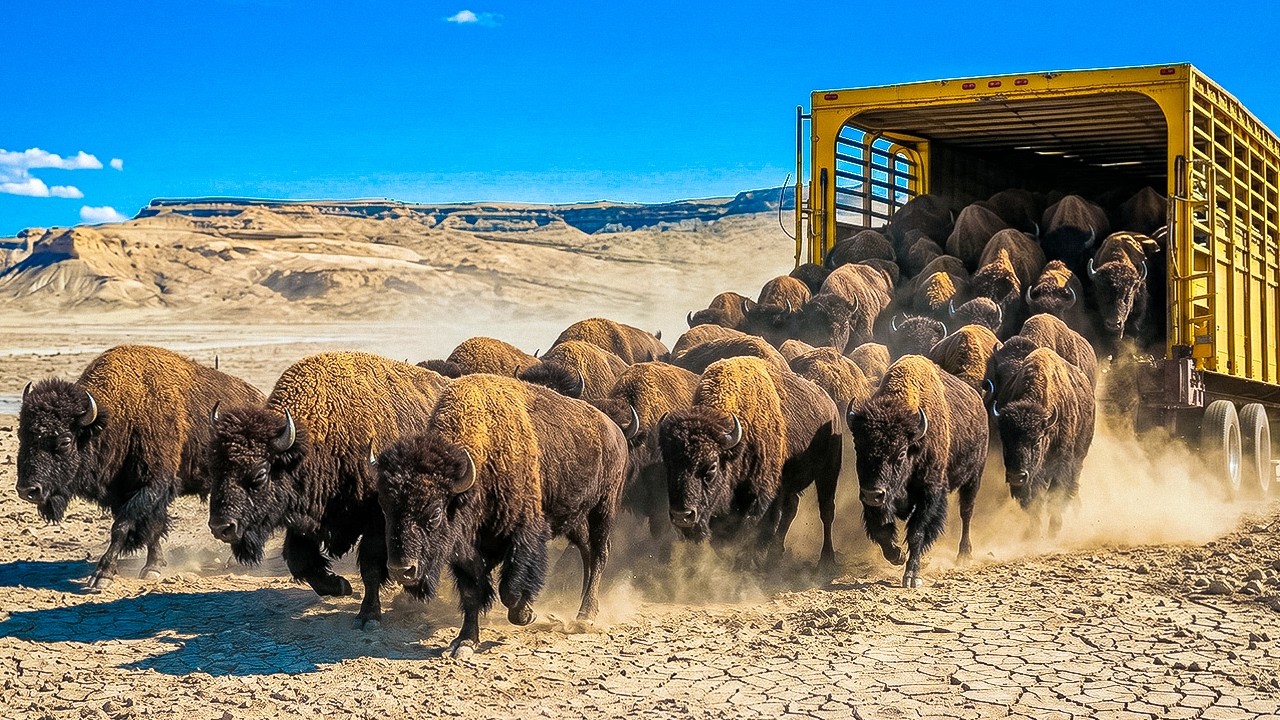
39 bison were released along a nearly vanished river—and within months, something extraordinary unfolded. The river, once drained dry by agriculture and drought, had been restored just enough to support the herd.
In the 1860s, survey crews measured the Platte River at Cozad, Nebraska, at 1,161 meters across. The river was shallow,...