Hawaii released cannibal snails to kill a pest — but they hunted the wrong species. The predatory snails were introduced to wipe out a damaging invasive slug, a mission they seemed ready to complete.
In 1955, Hawaii introduced a predatory snail to control an invasive pest, the giant African land snail. The rosy wolf snail, brought from the southeastern United States, did hunt its prey, but its impact was not limited to the intended target. Over subsequent decades, the wolf snail was linked to the decline of many native snail species in Hawaii and elsewhere, a consequence that continues to shape conservation efforts today.
The giant African land snail arrived in Hawaii in 1936, reportedly brought in as a garden curiosity. It was a serious agricultural pest that ate hundreds of plant species and carried a parasite that can cause meningitis in humans. By the 1950s, it had spread across Oahu and caused considerable damage to farms and gardens.

At the time, Hawaii had a large population of native land snails. Estimates suggest there were roughly 750 species across the islands, most found nowhere else. The most well-known were the tree snails of Oahu, a group called Achatinella. These small snails, about the size of a fingertip, had patterned shells in various colors. They moved slowly, taking years to mature and producing only a few offspring annually.
To address the pest problem, officials released the rosy wolf snail. This predator tracked other snails by following their slime trails. It swallowed small prey whole and consumed larger prey from within their shells. On paper, it seemed a suitable answer to the snail infestation.
The experiment had been tried in Hawaii before. In 1883, the small Indian mongoose was imported to control rats in sugarcane fields. Because the mongoose hunts by day and rats are active at night, the two animals rarely encountered each other. The mongoose instead preyed on ground-nesting birds and their eggs. It remains a threat to native bird populations today.
The rosy wolf snail had a different problem. It was a generalist, and it preferred easier prey. Researchers later found that the large adult giant African snails were too big to be easy targets, while the thin-shelled native snails were readily eaten. In some areas, giant African snail numbers did fall after the introduction, but a major review found no convincing evidence that the wolf snail was responsible. Those populations often rise and fall on their own after an invasion.
The wolf snail’s ability to climb trees also proved significant. The native tree snails lived in the canopy, but studies showed the wolf snail moved between the ground and the branches, following trails wherever they led. There was no height that offered protection.
The Hawaii release was treated as a model and copied elsewhere. The wolf snail was taken to other Pacific and Indian Ocean islands to fight the same pest. In Moorea in French Polynesia, the wolf snail arrived in 1977. Within about a decade, the island’s native Partula tree snails were gone from the wild. Some survived only because scientists collected them and bred them in facilities abroad. The same pattern repeated across islands. The Gerlach review cited the wolf snail as one of the most destructive biological control introductions ever made.
The native tree snails of Hawaii also faced other introduced predators. Black rats, brought by ships, ate snails in large numbers. Jackson’s chameleons, imported from East Africa as pets, also fed on them. With a species that produces only a few young each year, even small losses added up. Populations were worn down over generations rather than eliminated in a single event.
In 2019, a tree snail named George died in a laboratory at the University of Hawaii. He was about 14 years old and belonged to the species Achatinella apexfulva. For years, he had been the last known member of his species. Scientists had searched for a mate for him without success.
The giant African land snail remains present in Hawaii today. The wolf snail is still there as well, hunting through the forests. Hawaii’s native land snails have experienced one of the worst extinction waves of any animal group on Earth. Many species are gone, and survivors exist only in small, isolated pockets.
The state’s snail extinction prevention program is working to protect remaining populations. Teams maintain predator-proof enclosures in mountain areas, designed to exclude wolf snails, rats, and chameleons. They search for surviving snails and breed endangered species in the lab, with the goal of eventually returning them to safer habitats.
The broader lesson is not about snails alone. It is about the difficulty of predicting the effects of introducing a new species into an established ecosystem. A decision made in the 1950s, with limited information then available, had consequences that continued for generations.
Recommended Stories
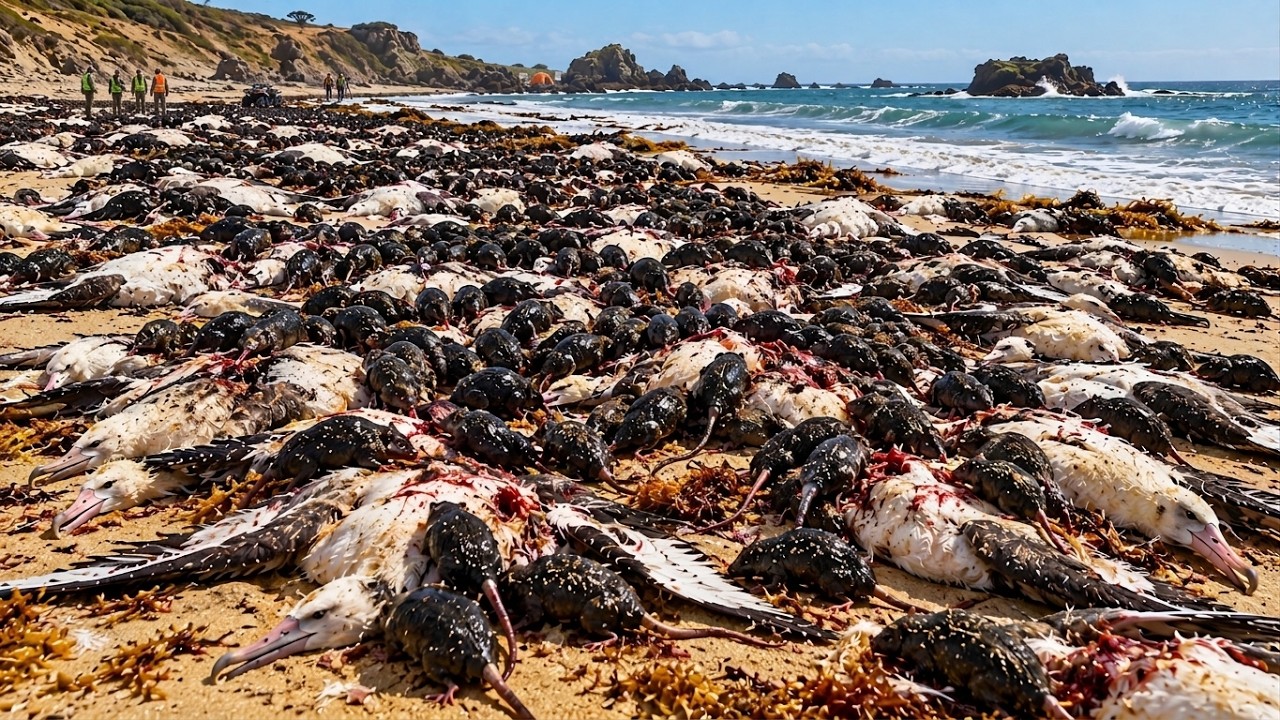
On a remote island, mice stopped eating seeds and began attacking albatross chicks, gnawing at the living birds until they bled out, decimating the colony. Researchers realized these tiny predators had developed a deadly taste for the massive seabirds, preying on them around the clock.
On a remote island in the South Atlantic, an invasive population of house mice has been causing severe harm to...
Texas is losing its fight against super pigs, the destructive hybrids wrecking farms and waterways—yet the one tool proven to stop them is nowhere in the state’s arsenal. Hunters and officials have watched these aggressive animals outsmart traps and breed at staggering speed.
Texas has spent decades trying to control one of the largest wild pig populations in the United States, using helicopters,...
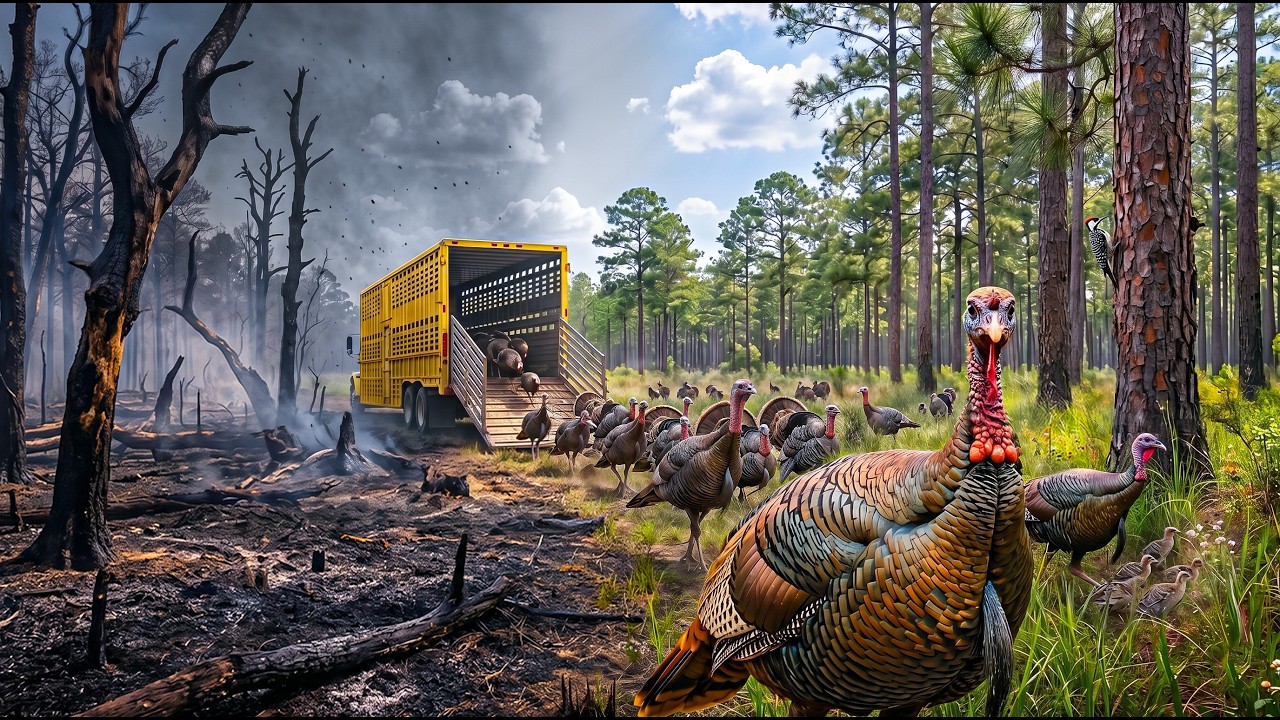
A Virginia insurance salesman launched a hunting group in 1973 with just $10,000 to rescue wild turkeys, whose numbers had collapsed to 1.3 million across the South. His solution wasn’t breeding birds—it was chainsaws and fire.
In 1973, an insurance salesman in Virginia started a hunting organization with $10,000 of his own savings and a box...