In 2016, Arizona quietly released eleven captive Mexican wolves into the wild—a last-ditch effort to save the species. For decades, these animals were tracked but rarely seen, their comeback shadowed by fierce rancher opposition and deadly conflicts.
In late 2025, the official population count for Mexican gray wolves in the American Southwest reached 319. That number is one animal short of the four-year average of 320 that would allow federal officials to consider reclassifying the species from endangered to threatened under the Endangered Species Act.
The count, compiled from trail cameras, GPS collar data, aerial surveys, and field observations, represents 60 documented packs across Arizona and New Mexico. It also marks the tenth consecutive year of population growth for a subspecies that had disappeared entirely from the wild in the United States for roughly 25 years.
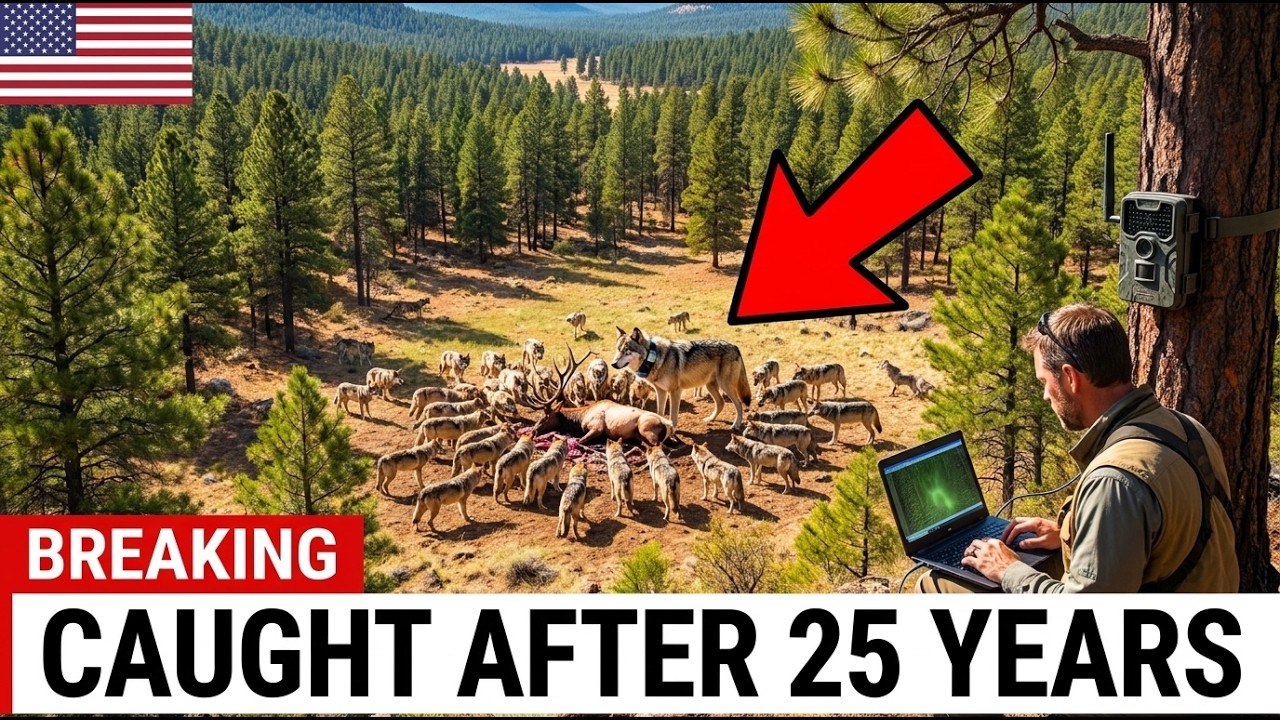
The Mexican gray wolf, or el lobo, is the smallest gray wolf subspecies in North America. Males rarely exceed 80 pounds. The animals once ranged from central Mexico through Arizona, New Mexico, West Texas, and into parts of the southern Rocky Mountains. They evolved alongside elk, mule deer, and the pine forests of the Sierra Madre.
Their decline began in the early 1900s as cattle ranching expanded across the Southwest. Starting in 1915, federal hunters, state agencies, and private trappers carried out a systematic campaign using poison baits, leg-hold traps, and aerial gunning. By 1927, the wolf was effectively extinct in New Mexico. By the 1950s, it was gone from Arizona. The last documented wild Mexican wolves in Texas were killed within weeks of each other in December 1970.
A small population remained in the mountains of northern Mexico, estimated at fewer than 50 animals. In 1976, the Mexican wolf was listed as endangered under the Endangered Species Act. The following year, the U.S. Fish and Wildlife Service hired Roy T. McBride, a Texas-born trapper who had spent his career removing wolves from ranching country, to do the reverse: capture the remaining wild wolves alive and bring them into a captive breeding program.
Between 1977 and 1980, McBride live-trapped five wolves in the mountains of Durango and Chihuahua, including a young pup later named Don Diego. Those five animals, combined with two wolves already in U.S. zoos, became the founding population for the entire recovery effort. The genetic pool was extremely narrow, and biologists questioned whether long-term recovery was feasible.
After years of managed breeding, the three captive lineages were combined in 1995. In March 1998, the U.S. Fish and Wildlife Service released 11 wolves from steel pens into the Apache National Forest in eastern Arizona. Within a week, one of the released packs killed an elk on its own, a sign that hunting instincts had not been lost during captivity.
The early years were difficult. Several released wolves were shot. Others were trapped or poisoned. Some pairs failed to breed, and pups died from disease and exposure. In 2002, a wolf born in the wild to wild parents produced her own litter, the first such birth in the United States in over five decades.
The narrow genetic base remained a concern. To address it, biologists developed a practice called cross-fostering. Newborn pups from captive breeding facilities are placed into wild dens alongside a wild mother’s own pups within days of birth. The wild mother typically accepts them, and the fostered pups grow up wild, eventually mating and passing their genetics into the population.
Early attempts often failed, but the first successful cross-fostering occurred in 2014. By 2024, a record 27 captive-born pups were placed into wild dens, and the program passed its 100th fostered pup milestone. Some previously fostered wolves have now produced their own wild litters, and some of those offspring have reproduced as well.
The recovery area spans about 98,000 square miles across Arizona and New Mexico, including the Apache and Gila National Forests. The Gila Wilderness, established in 1924, lies at the center of the habitat. Trail cameras operated by a coalition of federal, state, and tribal agencies monitor the population each winter.
Scientific findings have been more encouraging than earlier projections. Surveys have recorded large average litter sizes and only weak evidence of inbreeding depression. Clay Crowder, an assistant director at Arizona Game and Fish, said the program is “knocking on the door of recovery.”
The comeback has not been without conflict. Ranchers in the region report losses of livestock to wolf depredation. In 2024, Mexican wolves killed 99 confirmed livestock animals, a decrease from 111 the previous year and 137 in 2022. Arizona’s Livestock Loss Board has paid out just over $1 million in compensation to ranchers over the past five years, an amount some ranchers consider insufficient.
Arizona’s House of Representatives has passed legislation that would allow landowners to obtain permits to kill wolves on private property in defense of livestock. A federal bill has also been introduced to remove the species from the Endangered Species Act entirely.
Illegal killings have been a persistent problem. From 2008 to 2019, illegal killings accounted for about half of all wolf mortalities. Prosecution has been complicated by a Justice Department policy requiring proof that a shooter knew the animal they killed was a wolf, which has made it difficult to pursue cases where a shooter claims they mistook a wolf for a coyote. In the fourth quarter of 2025, four wolves died across Arizona and New Mexico, and the annual mortality total reached 29 documented deaths.
The ecological effects of the wolves’ return extend beyond the animals themselves. As a keystone predator, the Mexican wolf influences the broader ecosystem. When wolves were removed, elk populations expanded, leading to overgrazing, degraded riparian corridors, and reduced regeneration of aspen and willow stands. The return of wolves has brought measurable changes to these dynamics. Trail cameras near wolf kills have documented scavengers including black bears, ravens, vultures, coyotes, and foxes feeding on carcasses, effectively redistributing nutrients through the food web.
Maggie Dwyer, deputy Mexican wolf recovery coordinator for the U.S. Fish and Wildlife Service, noted that wild population studies show large litter sizes and rapid growth, indicating that the combination of captive breeding, cross-fostering, and successive wild generations is working faster than originally expected.
The program now faces budget constraints. Severe federal funding cuts in 2025 have strained the agencies responsible for the recovery effort, and program leadership has acknowledged that the pace of recovery may slow.
As of the 2025 count, the wild population stands at 319 wolves. Another 380 live in captivity at more than 60 facilities in the United States and Mexico. Every one of those animals is descended from the seven founders captured or held in the late 1970s.
Roy McBride, now 86, still runs a cattle ranch in West Texas. The wolves he helped preserve now occupy the same mountain ranges where they had been absent for half a century. Trail cameras continue to record packs that did not exist a decade ago, including wild-born females raising litters of their own. The recovery program is one animal short of the threshold for downlisting, and the political and practical challenges of coexistence with the livestock industry remain unresolved.
Recommended Stories

For over a century, Vermont’s Lake Champlain has been the hunting ground of Champ, a serpent-like monster spotted by over 300 witnesses—long before anyone ever whispered Nessie’s name. Farmers, sailors, and even a circus owner all swore they saw something massive breaking the water’s surface, its dark coils stretching mysteriously before vanishing.
Lake Champlain sits along a roughly 120-mile stretch where New York, Vermont, and Quebec meet. The lake covers about 490...

Deep beneath Mexico, divers found a flooded chamber sealed since the Ice Age—but its contents defy the story that made it famous. The pit, called Hoyo Negro, trapped giant sloths, saber-toothed cats, and a teenage girl named Naia.
In 2007, cave divers mapping underwater passages near Tulum, Mexico, discovered a large submerged chamber they named Hoyo Negro. Inside,...
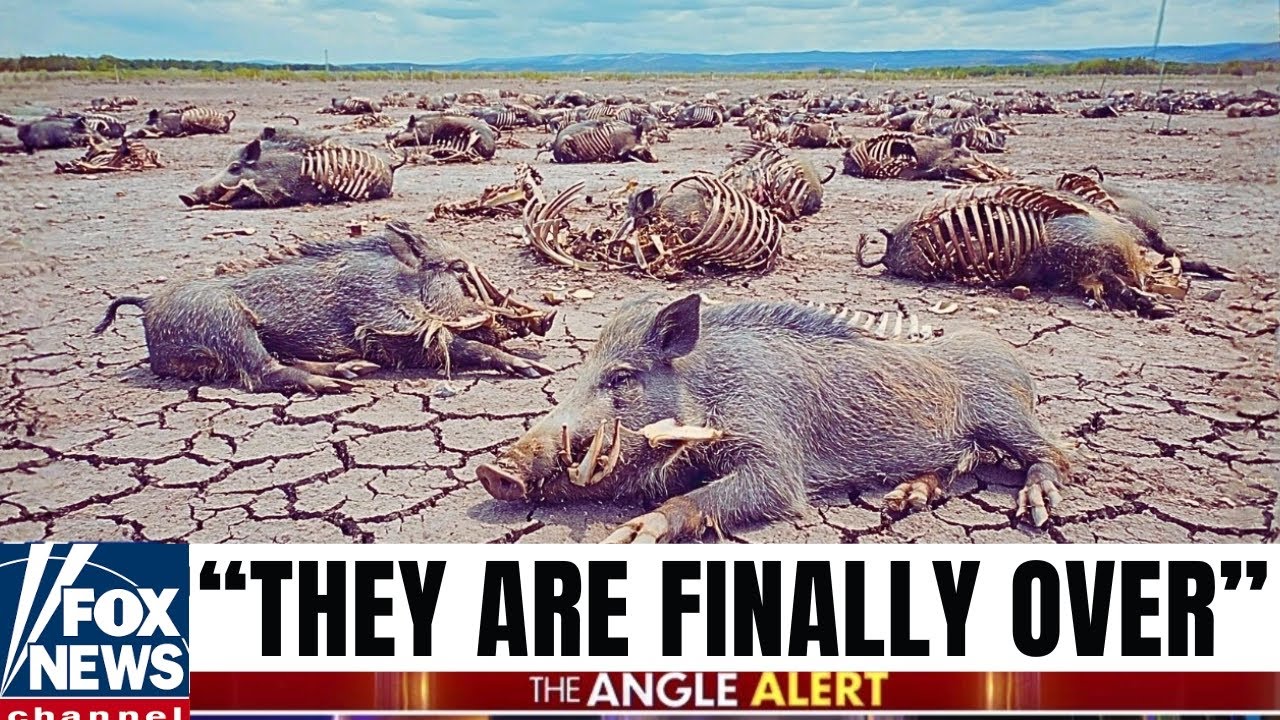
A helicopter pilot over Texas spots hundreds of wild hogs tearing through farmland, a swarm so destructive it seems unstoppable. Aerial eradication crews move in with precision, dropping from the sky to cull the massive population in one explosive operation.
The spread of feral hogs in Texas has grown from a localized nuisance into a statewide problem, prompting aggressive control...