On a remote island, mice stopped eating seeds and began attacking albatross chicks, gnawing at the living birds until they bled out, decimating the colony. Researchers realized these tiny predators had developed a deadly taste for the massive seabirds, preying on them around the clock.
On a remote island in the South Atlantic, an invasive population of house mice has been causing severe harm to one of the world’s largest seabirds, the Tristan albatross. The mice, which arrived on Gough Island in the 1800s aboard sealing ships, have attacked and killed albatross chicks. Conservationists launched a major eradication effort in 2021, spending around 9 million pounds to drop poison bait across the island. The attempt nearly succeeded, but a small number of mice survived, and their population is now recovering.
The Tristan albatross is one of the planet’s great wanderers, with a wingspan of about 3 meters. Nearly the entire species breeds on Gough Island, a rugged volcanic landmass roughly 1,600 kilometers from the nearest continent. The island receives more than 3 meters of rain a year and hosts more than 10 million seabirds. Only about 1,700 pairs of Tristan albatrosses remain, and almost all of them nest there.

The birds have an unusually slow breeding cycle. Eggs are laid around the New Year and hatch in March. A parent guards the chick for about a month, then both parents leave to forage at sea. The chick remains alone on its nest for the entire southern winter, not fledging until November. Because raising a single chick takes so long, successful pairs typically breed only every other year.
For millions of years, no land mammals lived on Gough Island. The albatross chicks evolved to defend against aerial predators such as skuas and giant petrels, but had no experience with threats approaching from the ground. Mice arrived in the 1800s as stowaways on sealing vessels. For more than a century, they were considered harmless. In 1953, a naturalist described the island’s mice as probably harmless.
Over time, the mice adapted to their new environment. With no cats, rats, owls, or competing predators, their numbers expanded. They also grew larger, roughly 50 percent bigger than typical house mice. In some areas, researchers counted up to 266 mice per hectare, with the total population likely exceeding one million. During the harsh winter months, food becomes scarce, and the mice turned to the island’s abundant seabird chicks.
In 2001, researchers noticed that Tristan albatross chicks were dying at unusually high rates, with some bearing strange open wounds. In 2004, a team led by Ross Wanless of the University of Cape Town monitored hundreds of nests and set up infrared cameras to record nighttime activity. The footage showed mice climbing onto chicks and feeding on them while the birds were still alive. In one video, about ten mice fed on a single chick at once. By late September, 100 of the 256 monitored chicks had died. The chicks showed little defensive reaction, even as the mice fed on them. The researchers compared the situation to a house cat attacking a hippo.
In 2007, the team published findings under the title “Can predation by invasive mice drive seabird extinctions?” A follow-up study in 2014 placed motion-activated cameras around 20 chicks and documented the attacks in detail. The mice attacked only at night, usually beginning with a single mouse targeting the same spot until the skin broke. The chicks would shake the mice off, but the mice returned within seconds. Even when a parent was present, the attacks continued. The chicks lost sleep and weakened over several nights. On average, chicks died about four days after the first bite. Of the 15 chicks that died during that study, 14 were killed by mice.
That year, only 9.6 percent of Tristan albatross pairs successfully raised a chick. Researchers counted 163 large chicks on the island, compared to 1,129 in 1999. The mice also began attacking the chicks of other seabird species, including Atlantic petrels, great shearwaters, and MacGillivray’s prions. For the prions, breeding success fell to around 6 percent.
The attacks then expanded to summer-breeding albatross species, which had previously been considered safe because they breed when food is more plentiful. In the 2009–2010 season, researchers recorded the first mouse attacks on Atlantic yellow-nosed albatross chicks, affecting about 2 percent of them. By February 2018, a field researcher observed a yellow-nosed chick die within about an hour of mice beginning to feed on it. That season, 27 percent of hatched chicks in her monitoring area died from suspected mouse attacks.
In 2019, researchers reported the first cases of mice attacking adult albatrosses on their nests. In 2021, a 35-year-old adult Tristan albatross was confirmed to have been killed by mice. This was significant because an adult bird can produce many chicks over its lifetime, so the loss of adults threatens the species’ future more directly.
By that point, conservationists concluded that removing every mouse from the island was the only viable option. Similar eradications had been carried out on South Georgia and Macquarie Island, but mouse eradications require absolute completeness. If even a single pregnant female survives, the population can rebound.
The Royal Society for the Protection of Birds and its partners spent more than a decade planning the effort. In June 2021, the research ship SA Agulhas 2 arrived at Gough with four helicopters and specialist bait manufactured in New Zealand. The bait, a rodenticide pellet, was spread across every square meter of the island. Two of the island’s native land birds were temporarily taken into captivity to keep them from consuming the poison. The head of the RSPB described the operation as the conservation equivalent of landing on the moon.
The baiting was completed by August 2021, and early results were encouraging. In the following breeding season, Tristan albatross breeding success rose to 76 percent, compared to an average of about 32 percent. More than 1,000 chicks fledged, the first time that had happened in decades. MacGillivray’s prions improved from around 6 percent success to 82 percent, and Atlantic petrels reached 63 percent. For one season, the island appeared to be recovering.
However, in mid-December 2021, a motion-activated camera captured footage of a single mouse. An emergency search followed, and within weeks, researchers caught four more mice in two other locations. The eradication had failed. A small number of mice had survived, likely in areas where they never encountered the bait. By the end of summer 2022, their numbers were climbing again.
The record-breaking breeding season had been a temporary reprieve, a period when the mouse population was too small to deplete its normal food sources and turn to the birds. By the following season, signs of mouse predation on prion chicks were already being recorded again.
The mice are now breeding and spreading across the island. The RSPB has stated that it remains committed to returning to Gough and completing the eradication. Researchers are investigating where and why some mice survived, in hopes of improving the next attempt. The Tristan albatross remains critically endangered, facing threats from both fishing lines at sea and mice on land. However, the one successful breeding season demonstrated that the birds can recover quickly once the mice are removed.
The situation on Gough Island highlights how a small number of stowaway animals can have lasting consequences for an entire ecosystem. The mice did not become aggressive by design; they simply adapted to an environment without predators and with abundant food. The albatrosses, in turn, were not weak, but were adapted to a world that no longer exists, one without ground-based predators. An island functions as a closed system, and once a new species enters, it can be extremely difficult to remove. A few mice slipped through that door in the 1800s, and two centuries later, an extensive eradication campaign could not fully close it.
Recommended Stories
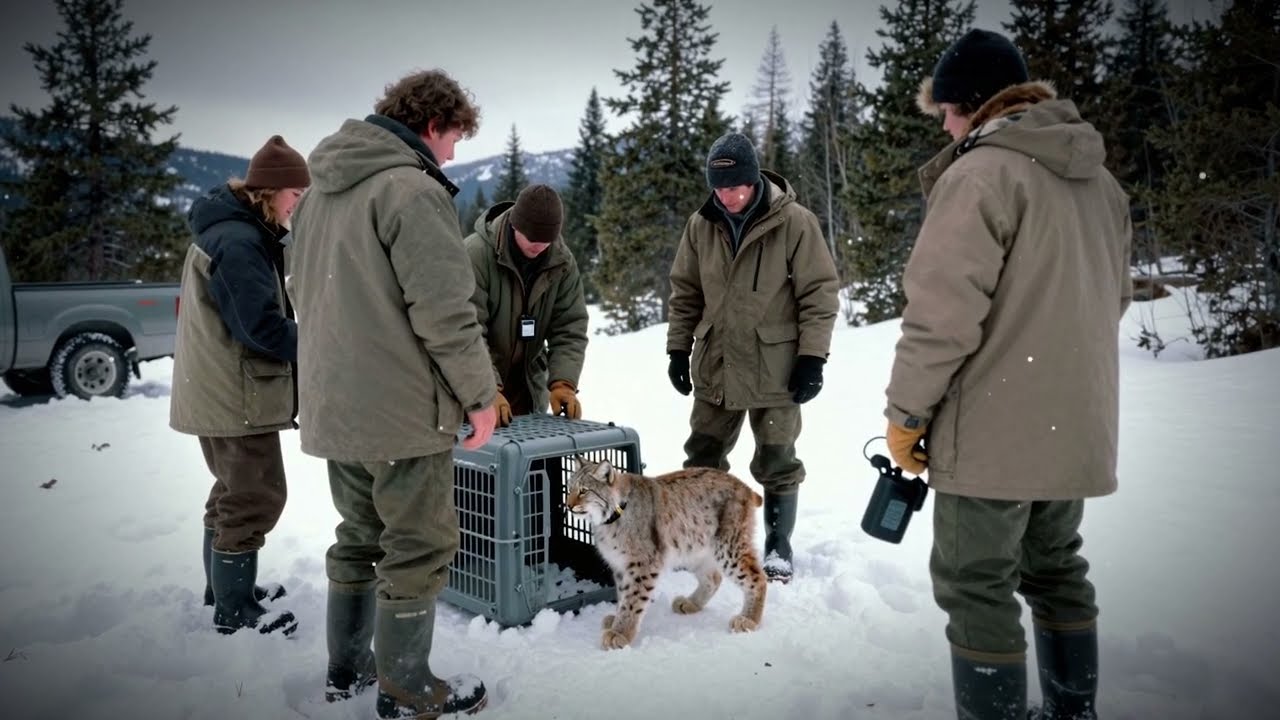
The state poured millions into a daring wildlife experiment, hoping to resurrect an animal it had wiped out over a century ago. Colorado’s Lynx Project became its most expensive conservation gamble yet, releasing dozens of the elusive cats into the towering Rockies to reestablish a vanished population.
In February 1999, Colorado wildlife officials released wild-caught Canada lynx into the San Juan Mountains as part of a reintroduction...

Something Bigger Than a Python Is Hunting in Florida — Cameras Captured It. Locals thought the massive tracks belonged to an oversized python, but a trail cam caught something far stranger lurking near the Everglades.
Researchers at the Conservancy of Southwest Florida found a dead Burmese python roughly 15 miles deep in the Everglades. They...

Minnesota was America’s last wolf refuge—until something impossible happened there. For decades, the state’s forests sheltered the only significant wolf population in the lower 48, a rare conservation success story that researchers carefully monitored.
By the mid-20th century, the United States had nearly eliminated the gray wolf from the continental map. Once among the...