America introduced an African animal into its desert—and the fallout turned ecological. In the 20th century, a single species was brought in to address a growing problem, but its impact quickly spiraled beyond expectations.
In 1969, New Mexico wildlife officials began introducing gemsbok, a large African antelope, into the Tularosa Basin on the White Sands Missile Range. The goal was to provide hunters with an African-style safari opportunity within the United States. State researchers at the time predicted the population would stabilize at around 500 or 600 animals and remain contained within the basin, but none of these projections held.
The plan was part of a longer tradition of introducing non-native species. In the 1800s, acclimatization societies in Europe, Australia, and America shipped plants and animals between continents, believing they could improve new environments. Examples include the release of European rabbits in Australia in 1859 for hunting, which spread widely, and the release of European starlings in New York’s Central Park in 1890, which grew into a large North American population.

In the American Southwest, the Army experimented with camels in the 1850s for desert supply routes. The experiment ended after the Civil War and the arrival of railroads, and the camels were eventually sold or released. The animals vanished from the wild within a few decades. The oryx introduction followed a similar idea but had a very different result.
Frank Hibben, an archeology professor at the University of New Mexico and chairman of the state’s Game Commission, was the driving force behind the oryx project. He had hunted in Africa and viewed the Chihuahuan Desert as an empty niche for a large game animal. Through the 1950s and 1960s, the state ran a broader program to stock foreign big game in what were considered empty habitats, bringing in Barbary sheep and Persian ibex. The oryx made the final cut.
The first 18 wild oryx were trapped in Africa, quarantined, and held in captivity because federal law did not permit direct release of foreign wild animals. Only their captive-born offspring were released onto the missile range. Hibben’s career included the Sandia Man archaeological claim, which was later rejected by archaeologists, but his confidence in the oryx plan was supported by wildlife researchers who concluded the animals could survive in New Mexico.
The oryx thrived for several reasons. The gemsbok is native to the Kalahari and Namib Deserts, where it gets most of its water from food, including roots, tubers, and wild melons. In New Mexico, it switched to yucca, buffalo gourds, and mesquite bean pods, which are similar to its African diet. The animal also tolerates heat by allowing its body temperature to rise during the day and releasing the heat at night, reducing the need to sweat and conserving water.
Another advantage was reproductive. Oryx can breed and give birth year-round, unlike many native deer and antelope. The biggest difference, however, was the lack of predators. In Africa, gemsbok are hunted by lions, leopards, spotted hyenas, and African wild dogs. In New Mexico, the main predator was the mountain lion, a solitary hunter that mostly targets calves. Adult oryx, which weigh around 500 pounds and carry long horns, were too dangerous for a lone mountain lion to take on.
The location also contributed to the population growth. The White Sands Missile Range covers roughly 3,200 square miles and is largely closed to the public. Without regular hunting pressure, the range became a safe haven. The herd grew to thousands of animals, spreading beyond the basin into the San Andres Mountains and onto private ranches and nearby air force land.
The expansion created problems. Oryx competed with native mule deer, pronghorn, and desert bighorn sheep for water and food. A 2001 study found that many oryx tested showed exposure to diseases that can affect native deer and sheep. Meanwhile, the desert bighorn population in the San Andres National Wildlife Refuge declined sharply, with the native herd reportedly reduced to a single ewe by 1997, though disease and mountain lions were also factors.
The oryx also entered White Sands National Monument, where they trampled the fragile gypsum dunes and ate vegetation. In 1996, the National Park Service built a 67.6-mile fence around the monument at a cost of $1.04 million, but more than 200 oryx were found inside the enclosure. After animal rights protests against a proposed shooting, the Park Service used helicopters to dart, bag, and airlift the animals out over the fence. The operation removed 228 oryx at a cost of just under $400,000, and they were released onto the missile range.
Hunting became the primary management tool. The first public hunt took place in 1974 with four permits. By 2001, the state and the army issued 895 permits for hunts on the range and 500 more for oryx that had wandered off it. Hunts on the missile range involve a mandatory safety briefing and can be interrupted by military tests. By then, hunters had killed roughly 5,000 oryx, yet the population remained well above state targets.
Over time, the state’s goal shifted. Managers said they wanted no oryx outside the range and about 1,000 on it. But oryx tags became some of the most sought-after hunting draws in the West, with hunters waiting years for a permit. After a 2013 survey estimated the herd at roughly 2,300 to 2,800 animals, the state cut the number of licenses to keep the population stable or slightly growing, effectively managing the invasive species as a game resource.
The desert bighorn situation improved with captive breeding, new releases, and mountain lion control. The population climbed from fewer than 70 in 1980 to roughly 1,300 in recent estimates, and the species was removed from the state endangered list in 2011. Hunters, including those paying for oryx tags, helped fund the recovery through license revenue.
Some have suggested the oryx serves as a backup for a threatened species, but the gemsbok is not endangered and remains common in southern Africa. A separate project in Arizona illustrates a different approach. In 1962, a British expedition captured three wild Arabian oryx in southern Arabia, and those animals, along with donated ones, were brought to the Phoenix Zoo. The group became the foundation of a captive breeding program. After the last wild Arabian oryx were killed in 1972, captive-bred animals were released back into Oman in 1982. In 2011, the Arabian oryx became the first species to recover from extinct in the wild to vulnerable.
Today, wild gemsbok continue to graze on the White Sands Missile Range, near the historic Trinity site where the first atomic bomb was tested. The wildlife biologist who worked on the range has said the species should never have been brought there, while Hibben later expressed satisfaction with how well the animals adapted. The herd remains a permanent and controversial part of the New Mexico landscape.
Recommended Stories

Beneath the quiet soil of Central Texas, scientists uncovered an underground anomaly so massive it defied every expectation. The discovery emerged during routine geological imaging, when equipment suddenly registered a dense, hidden structure deep below the surface.
Under a limestone ridge in central Texas, a submerged cave has yielded a dense concentration of Ice Age fossils, offering...
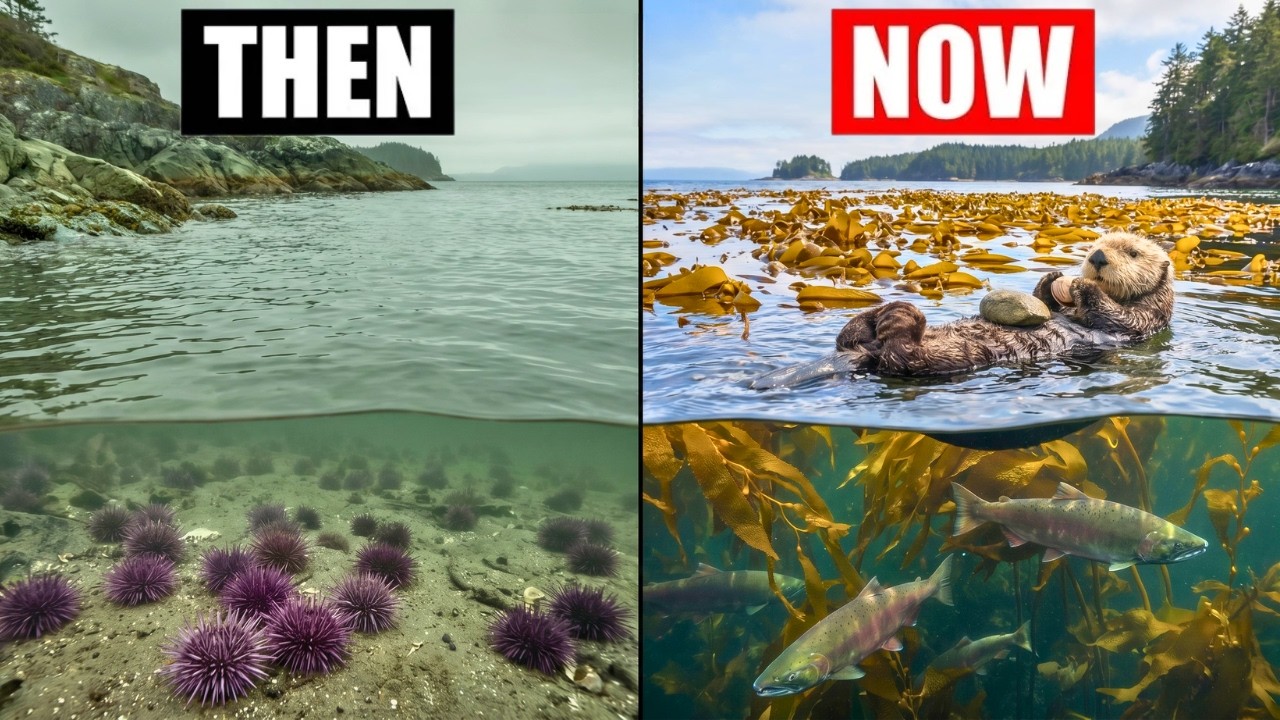
Canada released 89 sea otters into a dead bay—what they did to 1,000 km of coast stunned scientists. Once hunted to near extinction for their fur, the otters vanished, leaving kelp forests destroyed and the ecosystem collapsing.
In 1969, Canada’s Pacific coast had no sea otters. That year, 89 animals were released into a bay in British...
Researchers think Grok AI just uncovered something hidden in whale language, and they’re stunned by what the pattern might mean. Feeding thousands of hours of recorded whale calls into the model, the team noticed a structure far more complex than simple songs, hinting at a possible grammar-like system.
In 2023, researchers off the coast of Alaska conducted an experiment in marine biology. They anchored a small research vessel...