Alabama’s feral hogs are vanishing at a suspicious rate, and scientists just pinpointed what’s behind their sudden disappearance. Hunters first noticed the massive swine populations thinning across the state, a welcome surprise that quickly turned unsettling when the decline accelerated beyond natural causes.
In the spring of 2022, Dr. Timothy Stury, a researcher at Auburn University who had been tracking Alabama’s black bear population for eleven years, noticed something unexpected in his data. A female bear he had been monitoring in the Talladega National Forest Corridor was moving in a pattern he had not seen before. Rather than behaving like a bear with newborn cubs, she appeared to be returning repeatedly to a fixed location with a reliable food source. When Stury compared her GPS data with feral hog survey information collected across the same area, he found a clear overlap between the bear’s foraging patterns and areas with high hog density. He contacted the Alabama Department of Conservation and Natural Resources to share his findings.
The observation pointed to a development that had not been documented before in this region: black bears were preying on feral hogs in ways that appeared to be reducing hog populations. This was happening inside the Talladega National Forest and surrounding timber corridors, areas where trapping programs, aerial removal operations, poison baiting, and year-round hunting with no bag limits had failed to produce meaningful reductions in hog numbers. Trail cameras set up near wallows and creek crossings captured footage of bears working the same sites where hog activity had been declining.

Feral hogs have been a persistent problem in Alabama for decades. Spanish explorers brought domestic swine to the southeastern coast in the sixteenth century, and later, Eurasian wild boar were stocked on private hunting preserves and frequently escaped into surrounding forests. The resulting hybrid population combined the size of European wild boar, the reproductive rate of domestic swine, and the adaptability of animals that had been living semi-wild for generations. A single sow can produce two litters per year, with four to six piglets per litter, and reaches reproductive age at eight months. Under optimal conditions, the population doubles within twelve to eighteen months.
By 2020, feral hogs had established themselves in all 67 Alabama counties. The state’s Department of Conservation and Natural Resources documented tens of millions of dollars in annual damage to native wildlife habitat, stream banks, wetland vegetation, and agricultural production. Hunting regulations allowed year-round pursuit with no closed season and no bag limits, but the population absorbed these removal efforts and continued to grow. Wildlife managers had concluded that without a native predator capable of targeting sow reproductive output, the hog population could not be reduced in a sustained way.
Stury’s research had been focused on the recovery of black bears in Alabama, a species classified at the highest conservation concern level by the state. He was not studying feral hogs. But by 2021, his GPS location data showed bears moving repeatedly to the same creek drainage systems across multiple seasons. When he compared those locations with feral hog survey grids, the correspondence was consistent. The bears were deliberately returning to hog habitat.
Black bears are the largest native land predators in Alabama. Adult males can weigh between 250 and 600 pounds depending on season and food availability, and can cover twelve to fifteen miles in a single night. They have strong spatial memory and return to productive foraging sites across multiple seasons. The bears in the Talladega drainage were applying standard foraging behavior to an invasive prey species. Farrowing sows select dense vegetation adjacent to water for their piglets, which is precisely the habitat bears concentrate on in spring when their protein demand is highest after emerging from dens. For a bear, a farrowing site is a high-calorie food source in familiar cover.
The predation pressure operates on two levels. The first is direct predation: piglets in their first four weeks of life cannot escape a bear, and while a sow can mount an aggressive defense, she cannot sustain that defense across repeated visits by the same bear. The second is behavioral compression. When sows experience predation pressure at their preferred farrowing sites, they relocate to lower quality habitat, such as higher elevations, more exposed slopes, and areas with less protective cover and greater distance from water. Piglet survival in those conditions drops substantially. The bear does not need to eliminate every piglet; it only needs to make optimal farrowing habitat behaviorally unavailable.
Black bears once ranged across every county in Alabama. By the early twentieth century, they had been eliminated from most of that range through market hunting, predator bounty programs, and clearing of forest systems. A remnant breeding group survived in the Mobile-Tensaw Delta, but the rest of the state was functionally empty of bears for generations. No formal reintroduction program was ever funded. The recovery happened through natural dispersal: North Georgia’s bear population expanded for decades under regulated management, and young male bears began dispersing southwest across the Alabama state line along ridgelines and river corridors.
By the time Stury established his first monitoring network, a small reproducing group was already using the Little River Canyon area of DeKalb County. By 2020, documented observations extended through DeKalb, Cherokee, Etowah, Calhoun, and Cleburne counties. Litter sizes of three and four cubs indicated a population in strong condition with access to good habitat. The Talladega National Forest corridor sits directly within the center of that expanding range. Two biological processes had been running in parallel: feral hog expansion through every available habitat corridor and native black bear recovery moving in from the state line. Nobody had compared both datasets before.
Two additional native predators were also applying pressure to hog populations in the same corridor. Coyotes, which reestablished across Alabama by the 1990s, operate at sustained high density through the creek systems and timber edges of the Talladega watershed. Coyotes cannot take adult hogs, but they consistently prey on piglets in the first six weeks of life. A coyote pack working a drainage where a bear has already forced sows away from optimal farrowing cover encounters piglets in stressed conditions with less maternal protection. Bobcats add a third layer. Native to every forested system in Alabama, they take piglets weighing up to approximately ten pounds and specialize in the dense edge cover that represents the highest quality farrowing habitat. Three predators, three separate hunting windows, three habitat layers: one hog population unable to sustain recruitment through all of them simultaneously.
Stury returned to the Choccolocco drainage three times across the 2023 survey season, running camera trap arrays at wallow complexes and creek crossings. At one site that had produced consistent sow and piglet group documentation across four consecutive seasons, the wallows were intact and fresh rooting sign was visible, but the recent camera footage contained no sow and piglet groups. What it had recorded instead, across two separate nights, was a bear working the edge of the wallow complex in a systematic search pattern. The footage showed an animal returning to habitat its kind had occupied for thousands of years before their removal became a management decision.
The central question for researchers is whether the bear recovery can expand south and west through the Talladega corridor and into the river bottom systems of central Alabama quickly enough to establish meaningful predation pressure across the full geographic range of the feral hog population. Stury continues to analyze his data each survey season to determine whether the pattern holds as both populations change over time.
Recommended Stories
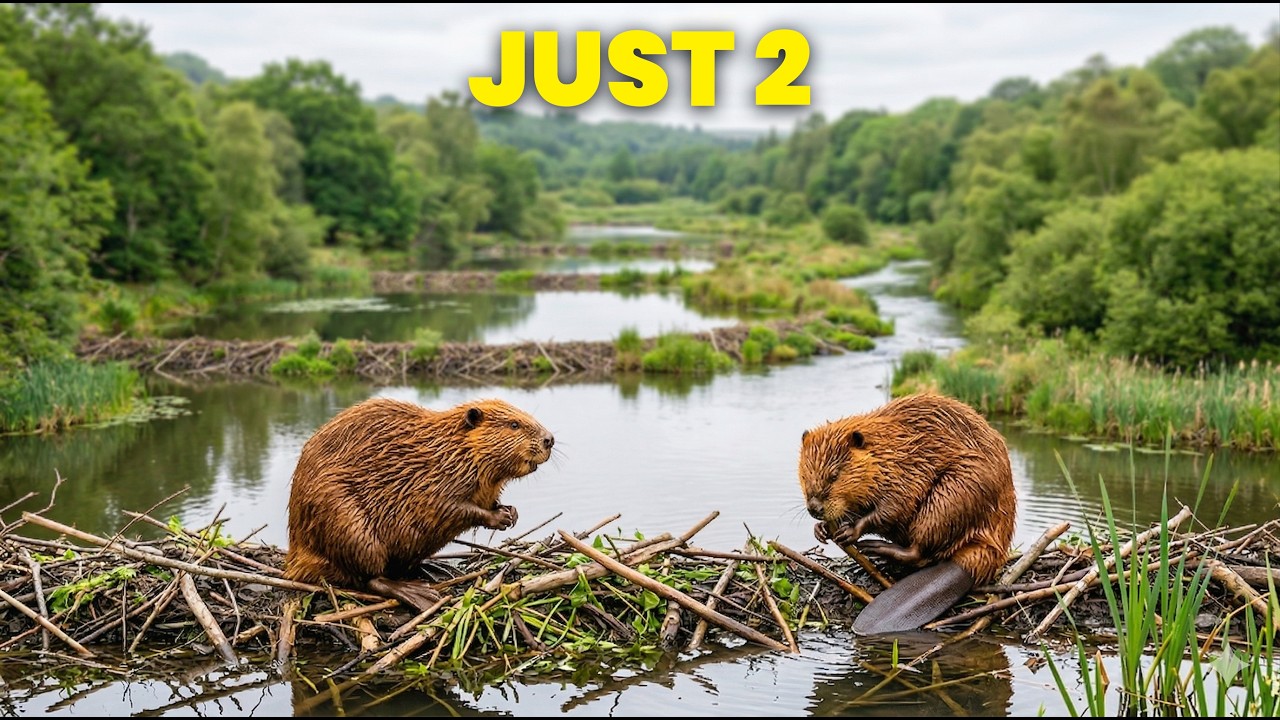
A single 40-pound rodent reverse-engineered Britain’s failing flood defenses, beating millions in concrete. After 400 years of extinction, beavers quietly reappeared in Devon, while officials planned to trap and kil*** them over biosecurity fears.
In the winter of 2015, flooding caused an estimated 1.6 billion pounds in damage across England. The government's response focused...

An underwater drone plunged into the Devil’s Sinkhole, and the footage left scientists terrified. The team had sent the device down to map the unexplored depths of the notorious cavern, expecting nothing more than rock and water.
The Devil’s Sinkhole is a large natural pit in Edwards County, Texas, about eight miles northeast of the town of...
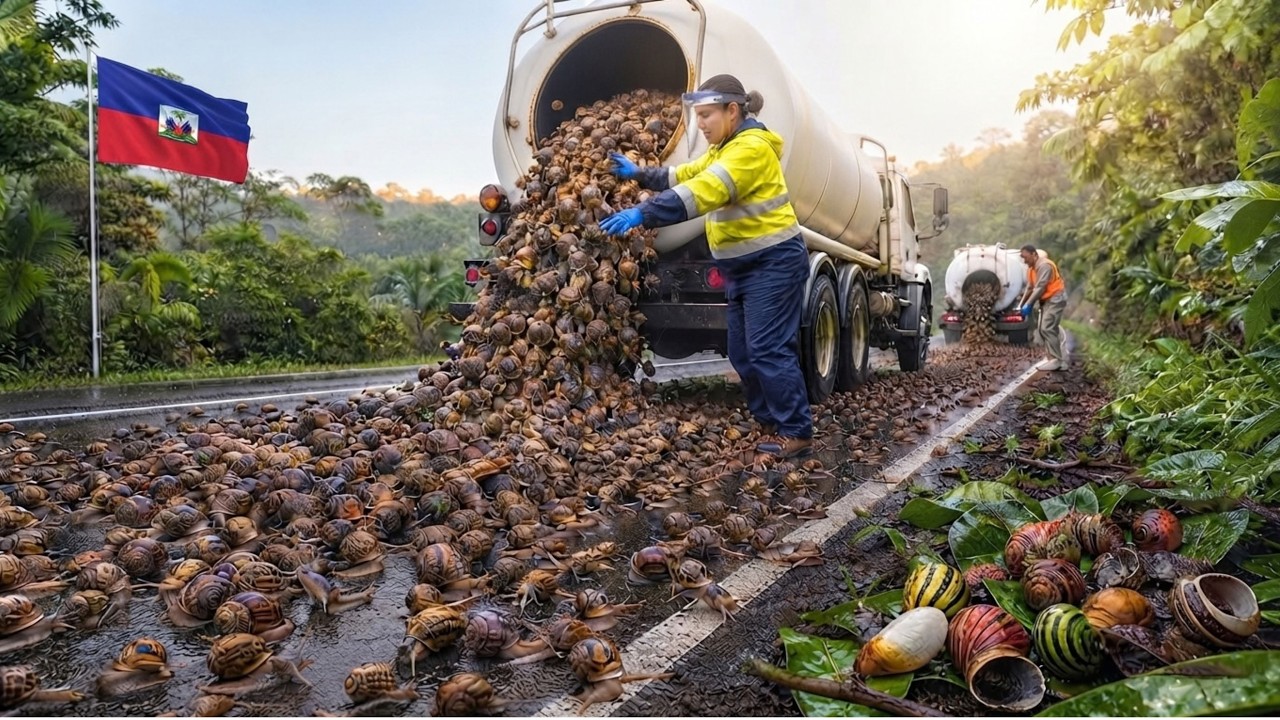
Hawaii released cannibal snails to kill a pest — but they hunted the wrong species. The predatory snails were introduced to wipe out a damaging invasive slug, a mission they seemed ready to complete.
In 1955, Hawaii introduced a predatory snail to control an invasive pest, the giant African land snail. The rosy wolf...